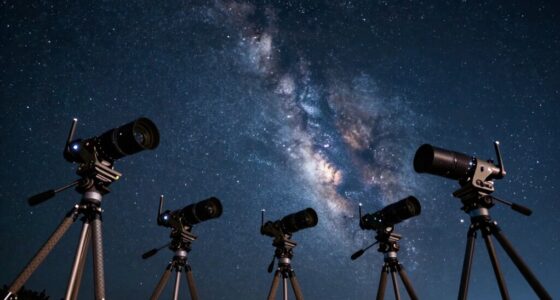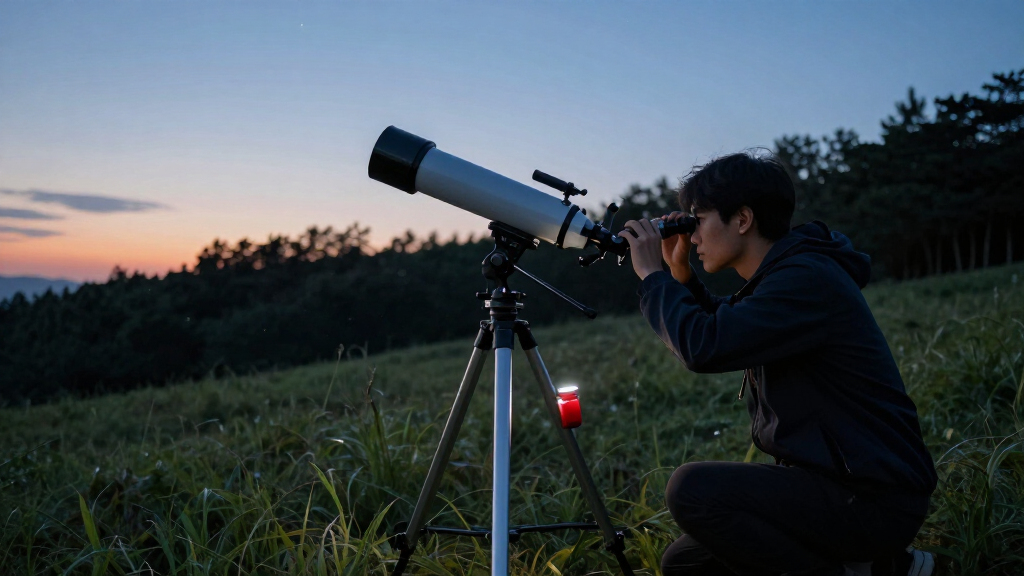
Apochromatic refractor telescopes use corrected optics to reduce color fringing, making them appealing for both astrophotography and sharp visual observing. I rank the Askar 71F as the best overall for its 71mm ED quadruplet design and built-in flat field, while the Sky-Watcher Evostar 80EDX is a straightforward doublet option and the SVBONY SV550 122mm offers more aperture in a triplet design. The main tradeoffs are aperture versus portability, simpler optics versus a flatter imaging field, and telescope size versus the mount and accessories needed to support it. A guide scope such as the EvoGuide 50 DX serves a different role from a main observing or imaging telescope. Read on for the full comparison and help matching each design to your setup.

Prime made for students and young adults
- Fast, free delivery for dorm and study essentials
- Prime Video and Amazon Music included
- Member-only deals
Key Takeaways
- The Askar 71F is the most balanced imaging pick: its ED quadruplet design combines a compact 71mm aperture with a flat-field approach, reducing the need to plan around separate field correction.
- The largest aperture comes with a substantial system tradeoff: the Explore Scientific ED 152mm offers far more light gathering than the 50–122mm models, but its long f/8, 152mm form calls for more capable mounting and transport arrangements.
- Triplet and quadruplet designs suit different priorities: the SV550 80mm and 122mm triplets emphasize corrected optics, while the Askar 71F adds a flat-field quadruplet layout for imaging convenience.
- Not every APO-shaped product is a general-purpose telescope: the EvoGuide 50 DX is a guide scope, so its 50mm aperture and intended mounting role make it a poor substitute for a main observing instrument.
- The SV503 70mm and SV550 80mm serve different compact-system goals: the SV503 includes a built-in field flattener, while the 80mm SV550 uses a triplet design and offers a larger aperture.
| SVBONY SV503 70mm ED Refractor Telescope with Built-In Field Flattener |  | Best Compact Flat-Field Pick | Aperture: 70mm | Focal ratio: f/6.78 | Optical design: ED refractor with built-in field flattener | VIEW LATEST PRICE | See Our Full Breakdown |
| Explore Scientific ED 152mm Carbon Fiber Edition f/8 Air-Spaced Apochromatic Telescope |  | Best for Maximum Aperture | Aperture: 152mm | Focal ratio: f/8 | Focal length: 1216mm | VIEW LATEST PRICE | See Our Full Breakdown |
| Askar 71F Flat-Field Telescope, 71mm f/6.9 ED Quadruplet APO Refractor OTA |  | Best for Flexible Wide-Field Use | Aperture: 71mm | Focal ratio: f/6.9 | Focal length: 493.9mm | VIEW LATEST PRICE | See Our Full Breakdown |
| Sky-Watcher Evostar 80EDX APO Doublet Refractor Telescope |  | Best for Beginner-Friendly Versatility | Optical design: Apochromatic doublet refractor | Objective lens diameter: 80mm | Focal length: 600mm | VIEW LATEST PRICE | See Our Full Breakdown |
| SVBONY SV550 122mm f/7 Triplet APO Refractor Telescope |  | Best Deep-Sky Upgrade | Aperture: 122mm | Focal ratio: f/7 | Focal length: 854mm | VIEW LATEST PRICE | See Our Full Breakdown |
| Sky-Watcher EvoGuide 50 DX 50mm Apochromatic Doublet Guide Scope |  | Best Compact Guide Scope | Optical design: Apochromatic doublet refractor | Objective aperture: 50 mm | Focal length: 242 mm | VIEW LATEST PRICE | See Our Full Breakdown |
| SVBONY SV550 80mm f/6 ED Triplet Apochromatic Refractor Telescope OTA |  | Best Fine-Focus Imaging Pick | Optical design: Air-spaced triplet apochromatic refractor | Aperture: 80 mm | Focal ratio: f/6 | VIEW LATEST PRICE | See Our Full Breakdown |
| apochromatic refractor telescope | Focal ratio | Optical design | Focuser | Aperture |
|---|---|---|---|---|
| SVBONY SV503 70mm ED Refractor | f/6.78 | ED refractor with built-in field flattener | Dual-speed | 70mm |
| Explore Scientific ED 152mm Ca | f/8 | Air-spaced apochromatic | — | 152mm |
| Askar 71F Flat-Field Telescope | f/6.9 | Air-spaced ED quadruplet APO | 360-degree rotatable; manual focus | 71mm |
| Sky-Watcher Evostar 80EDX APO | f/7.5 | Apochromatic doublet refractor | 2.8-inch Crayford-style, 11:1 | — |
| SVBONY SV550 122mm f/7 Triplet | f/7 | FPL-51 ED triplet apochromatic refractor | 2.5-inch dual-speed | 122mm |
| Sky-Watcher EvoGuide 50 DX 50m | f/4.8 | Apochromatic doublet refractor | 1.25-inch helical, manual | — |
| SVBONY SV550 80mm f/6 ED Tripl | f/6 | Air-spaced triplet apochromatic refractor | 2.5-inch magnesium alloy dual-speed toothed focuser | 80 mm |
More Details on Our Top Picks
SVBONY SV503 70mm ED Refractor Telescope with Built-In Field Flattener
The SV503’s built-in field flattener makes it a focused choice for wide-field astrophotography: it is designed to keep stars sharper toward the image edges without requiring a separate flattener. Its 70mm ED optics and dual-speed focuser also support visual use and careful focus adjustment. Compared with the Askar 71F, it offers a similar compact aperture and flat-field intent, while the Askar’s quadruplet design and rotatable focuser offer more flexibility for composing camera framing. The SV503’s f/6.78 focal ratio is close to the Askar’s f/6.9, but its smaller aperture limits light gathering next to the Sky-Watcher Evostar 80EDX and larger refractors in this lineup. I’d choose it for a compact setup where edge correction matters; buyers should account for the limited listed accessories and modest aperture.
Pros:- Built-in field flattener is designed to reduce field curvature at image edges.
- ED glass helps reduce chromatic aberration.
- Dual-speed focuser allows both quick and fine adjustments.
- Mounting clamp is designed to improve stability and reduce vibration.
Cons:- 70mm aperture gathers less light than the 80mm Evostar 80EDX and larger refractors in the roundup.
- The listed included accessory is limited to a 2-inch to 1.25-inch adapter.
Best for: Astrophotographers who want a compact 70mm ED refractor with field flattening built in and fine manual focus control.
Not ideal for: Observers prioritizing maximum light gathering or buyers who want a package with a broad set of included accessories.
- Aperture:70mm
- Focal ratio:f/6.78
- Optical design:ED refractor with built-in field flattener
- Focuser:Dual-speed
- Construction:2-inch CNC aluminum components
- Included accessory:2-inch to 1.25-inch adapter
Our verdict“Choose the SV503 if built-in flat-field correction and a compact ED optical tube matter more to you than larger-aperture light gathering.”
Explore Scientific ED 152mm Carbon Fiber Edition f/8 Air-Spaced Apochromatic Telescope
With a 152mm aperture, this Explore Scientific is the light-gathering choice in the group, giving deep-sky observers more collecting area than the SVBONY SV550 122mm and the smaller 70mm-class refractors. Its air-spaced apochromatic optics and f/8 focal ratio make it the largest-format option here for buyers who want a substantial refractor rather than a travel-sized instrument. Carbon fiber construction distinguishes it from the aluminum-tube options, though the supplied data does not give the telescope’s weight or describe its focuser and included accessories, so buyers have less detail for planning a complete rig. The tradeoff is scale: this is a 1216mm focal-length telescope, so mounting and transport demands are likely greater than with the Askar 71F or Sky-Watcher Evostar 80EDX. I’d shortlist it for aperture-first observing, with system compatibility checked before purchase.
Pros:- 152mm aperture is the largest specified in this lineup.
- Apochromatic optical design is intended to control chromatic aberration.
- Air-spaced optics provide a clearly specified optical layout.
- Carbon fiber tube construction differentiates it from the listed aluminum-tube options.
Cons:- Its 1216mm focal length points to a larger setup than the compact Askar 71F or 80mm Evostar.
- Product data does not specify the focuser, weight, or included accessories, complicating setup planning.
Best for: Experienced deep-sky observers seeking a 152mm apochromatic refractor and prepared to build a suitable mount and imaging or observing setup around it.
Not ideal for: Travel-focused observers or first-time buyers who need a fully specified package with listed focuser, accessories, and weight.
- Aperture:152mm
- Focal ratio:f/8
- Focal length:1216mm
- Optical design:Air-spaced apochromatic
- Tube material:Carbon fiber
- Model:TED15208CF-HEX33
Our verdict“Pick the ED 152mm if aperture leads your decision and you can accommodate a large, separately planned telescope setup.”
Askar 71F Flat-Field Telescope, 71mm f/6.9 ED Quadruplet APO Refractor OTA
The Askar 71F pairs a 71mm ED quadruplet with a flat-field design, making it a versatile small refractor for imaging and visual observation. Its 360-degree rotatable focuser helps align a camera or eyepiece without turning the whole telescope, a useful composition advantage over the SVBONY SV503 70mm, whose listed focuser is dual-speed but not rotatable. At f/6.9 and 493.9mm focal length, it favors a broad view; the listing gives a 6.97-degree field of view, though actual views depend on the attached eyepiece or camera. The tradeoff is that it remains a 71mm instrument, so it cannot match the light gathering of the SVBONY SV550 122mm or Explore Scientific 152mm. I’d favor it when compactness and framing flexibility matter more than aperture, while checking the conflicting listed weights before planning transport.
Pros:- ED air-spaced quadruplet design combines apochromatic optics with flat-field intent.
- 360-degree rotatable focuser helps orient the camera or eyepiece.
- Compact 493.9mm focal length suits wide-field framing.
- Matte-coated tube is designed to reduce stray light.
Cons:- 71mm aperture gathers substantially less light than the SVBONY SV550 122mm or Explore Scientific 152mm.
- Manual focusing requires adjustment by hand.
- Listed weights conflict: 2.5kg for the telescope, 3kg with rings and dovetail, and 4.5kg item weight.
Best for: Wide-field imagers and observers who want a compact APO for astronomy as well as daytime birds or scenery, with a focuser that rotates for framing.
Not ideal for: Deep-sky observers seeking maximum light gathering, or buyers who need an unambiguous weight figure for a tightly constrained travel setup.
- Aperture:71mm
- Focal ratio:f/6.9
- Focal length:493.9mm
- Optical design:Air-spaced ED quadruplet APO
- Focuser:360-degree rotatable; manual focus
- Telescope weight:2.5kg (5.51lb); 3kg (6.61lb) with rings and dovetail plate; item weight listed as 4.5kg
- Dovetail plate:230mm Vixen
Our verdict“Choose the Askar 71F for compact, flexible wide-field use if its small aperture and inconsistent weight listing fit your plans.”
Sky-Watcher Evostar 80EDX APO Doublet Refractor Telescope
The Evostar 80EDX makes a straightforward case for a first serious APO: its 80mm FPL-53 doublet, 600mm focal length, and 2.8-inch focuser with 11:1 fine adjustment balance visual observing with astrophotography. It gives more aperture than the SVBONY SV503 70mm while staying much smaller than the SVBONY SV550 122mm triplet, so it occupies a useful middle ground for someone who wants one telescope for varied use. The padded aluminum case, rings, and V-style dovetail simplify storage and basic mounting preparation. Compared with the Askar 71F, it has a longer focal length and less emphasis on a rotatable flat-field imaging setup. Its mount is not included, and 80mm remains modest for high-resolution or faint-target observing.
Pros:- FPL-53 extra-low dispersion glass helps reduce false color.
- 11:1 focuser adjustment supports precise manual focusing.
- Includes mounting rings, V-style dovetail, carry handle, and padded aluminum case.
- 80mm doublet design balances portability with more aperture than the 70mm options.
Cons:- Mount is not included.
- 80mm aperture gathers less light than the SVBONY SV550 122mm or Explore Scientific 152mm.
Best for: Newer refractor buyers who want an 80mm APO for both visual observing and imaging, with a case and mounting hardware included.
Not ideal for: Observers who need a mount in the box or prioritize faint deep-sky targets and resolution beyond what an 80mm aperture can deliver.
- Optical design:Apochromatic doublet refractor
- Objective lens diameter:80mm
- Focal length:600mm
- Focal ratio:f/7.5
- Focuser:2.8-inch Crayford-style, 11:1
- Lens glass:FPL-53 extra-low dispersion
- Item weight:7.3lb
- Included accessories:Mounting rings, V-style dovetail plate, carry handle, padded aluminum case
Our verdict“The Evostar 80EDX suits buyers who want a ready-to-pack 80mm APO optical tube for mixed observing and imaging, provided they supply a mount.”
SVBONY SV550 122mm f/7 Triplet APO Refractor Telescope
The SV550 122mm brings a substantial aperture step over the 70mm SV503 and 71mm Askar 71F, making it the more capable choice here for gathering light from deep-sky targets. Its FPL-51 ED triplet is designed to reduce chromatic aberration, while the 854mm focal length and f/7 ratio give it a more concentrated view than the shorter Askar. A 2.5-inch dual-speed focuser with 1:10 gearing supports fine focus adjustment for visual use or imaging. Compared with the Explore Scientific ED 152mm, it gives up aperture but is described as compact and includes a carrying case; the listed tube weight of 6.44kg still makes it a substantial instrument. The mount and eyepiece are not specified as included, so buyers should plan around the optical tube rather than assume a complete observing kit.
Pros:- 122mm aperture gathers more light than the 70mm and 71mm refractors in the lineup.
- FPL-51 ED triplet design is intended to reduce chromatic aberration.
- Dual-speed focuser with 1:10 gearing supports fine focus adjustment.
- Carrying case is listed as included.
Cons:- At 6.44kg (14.18lb), the optical tube may be cumbersome to carry and mount.
- Mount and eyepiece are not specified as included.
Best for: Deep-sky observers and astrophotographers ready to step up from small refractors to a 122mm triplet while keeping the setup more compact than a 152mm model.
Not ideal for: Travelers seeking a light grab-and-go telescope, or buyers who need a mount and eyepiece included.
- Aperture:122mm
- Focal ratio:f/7
- Focal length:854mm
- Optical design:FPL-51 ED triplet apochromatic refractor
- Focuser:2.5-inch dual-speed
- Focuser gear ratio:1:10
- Optical tube length:28.1in
- Weight:6.44kg (14.18lb)
- Dovetail length:300mm
Our verdict“Choose the SV550 122mm for a meaningful aperture upgrade for deep-sky use if you can provide a capable mount and the accessories your setup needs.”
Sky-Watcher EvoGuide 50 DX 50mm Apochromatic Doublet Guide Scope
The 50 mm apochromatic doublet makes the EvoGuide 50 DX the lineup’s specialist for guiding and lightweight setups, rather than a substitute for a larger observing refractor. At 2.7 pounds and 242 mm focal length, it places less load on a mount than the SVBONY SV550 80mm f/6 ED Triplet, which has a larger aperture and a dual-speed focuser for more demanding imaging adjustments. The EvoGuide’s finder stalk and V-style rail give buyers two mounting options, while its 1.25-inch helical focuser keeps the package compact. Its short focal length also makes it adaptable as an astrograph with an optional adapter. The tradeoff is limited light gathering for visual use, and the adapter is not included, so imaging conversion adds another required piece.
Pros:- Lightweight 2.7-pound tube places a modest load on a mount
- Finder stalk and V-style rail offer two mounting options
- Apochromatic doublet design supports contrast-rich views
- Can be adapted for astrograph use
Cons:- 50 mm aperture gathers limited light for visual observing
- Astrograph adapter is sold separately
- 1.25-inch helical focuser offers less fine-control capability than the SVBONY SV550 80mm’s dual-speed focuser
Best for: Astrophotographers who need a lightweight guide scope or a compact refractor for a small mount
Not ideal for: Visual observers seeking brighter views or buyers who want a ready-to-use astrograph without purchasing an adapter
- Optical design:Apochromatic doublet refractor
- Objective aperture:50 mm
- Focal length:242 mm
- Focal ratio:f/4.8
- Focuser:1.25-inch helical, manual
- Field of view:1.1 degrees
- Weight:2.7 pounds
- Mounting:Finder stalk and Vixen-style rail
Our verdict“Choose the EvoGuide 50 DX for compact guiding and light-duty imaging setups; skip it if visual aperture or a complete astrograph package is your priority.”
SVBONY SV550 80mm f/6 ED Triplet Apochromatic Refractor Telescope OTA
The 80 mm air-spaced triplet gives the SV550 a more capable imaging profile than the compact EvoGuide 50 DX: it has a larger aperture and a 2.5-inch dual-speed focuser with a 1:10 reduction for finer focus adjustments. Its S-FPL51 ED element and two correction elements are designed to reduce chromatic aberration, while internal baffles help limit stray light. Compared with the Askar 71F flat-field quadruplet, the SV550’s listed data emphasizes its triplet optics and focuser rather than a built-in flat-field design, so buyers should weigh their imaging setup’s correction needs. This is an OTA only; a mount and observing accessories are needed, and the supplied information does not establish that it includes a field flattener. Its larger tube is less suited to the lightest travel rigs than the EvoGuide.
Pros:- Air-spaced triplet design uses ED and correction glass to reduce chromatic aberration
- 80 mm aperture offers more light gathering than the EvoGuide 50 DX
- Dual-speed focuser with 1:10 reduction supports precise focus adjustments
- Internal baffles help reduce stray light
Cons:- OTA only, so mount and observing accessories are needed
- No field flattener is listed in the supplied product data
- Larger aperture and focuser make it less suited to the lightest compact setups than the EvoGuide 50 DX
Best for: Astrophotographers seeking an 80 mm triplet OTA with fine focuser control who already have a compatible mount and accessories
Not ideal for: Beginners looking for a complete telescope kit or imagers who need a flat-field solution included with the optical tube
- Optical design:Air-spaced triplet apochromatic refractor
- Aperture:80 mm
- Focal ratio:f/6
- Glass:One S-FPL51 ED element and two correction glass elements
- Focuser:2.5-inch magnesium alloy dual-speed toothed focuser
- Focuser reduction ratio:1:10
- Tube assembly:Optical tube assembly only
Our verdict“Choose the SV550 for fine-focus imaging with a larger aperture; choose the EvoGuide 50 DX if low weight and guiding are the main goals.”

How We Picked
I ranked these seven products by how well their optical design, aperture, and stated features match a clear buyer use: wide-field imaging, visual observing, a compact setup, or guiding. I gave weight to whether a model includes a flat-field solution, how much aperture it brings, and the practical demands suggested by its size and focal ratio. A dedicated guide scope was judged by its usefulness in that role, not as if it were a full-size imaging refractor.
The order favors versatility for the broadest range of refractor buyers, then increasingly specialized strengths. That puts the Askar 71F first for its ED quadruplet and flat-field design, followed by options with distinctive strengths in simplicity, aperture, or optical configuration. The ranking also accounts for tradeoffs: larger optics can demand heavier mounts, and compact models do not gather as much light. Product names and listed specifications provide the basis for this comparison; I do not treat them as evidence of hands-on testing or make claims about unlisted performance.
| apochromatic refractor telescope | Optical design |
|---|---|
| SVBONY SV503 70mm ED Refractor | ED refractor with built-in field flattener |
| Explore Scientific ED 152mm Ca | Air-spaced apochromatic |
| Askar 71F Flat-Field Telescope | Air-spaced ED quadruplet APO |
| Sky-Watcher Evostar 80EDX APO | Apochromatic doublet refractor |
| SVBONY SV550 122mm f/7 Triplet | FPL-51 ED triplet apochromatic refractor |
| Sky-Watcher EvoGuide 50 DX 50m | Apochromatic doublet refractor |
| SVBONY SV550 80mm f/6 ED Tripl | Air-spaced triplet apochromatic refractor |
Factors to Consider When Choosing Apochromatic Refractor Telescopes
I would choose an APO refractor by starting with the job it needs to do, then checking whether the rest of the imaging or observing system can support it. These broader decisions often matter as much as the telescope’s optical label.
Match the Telescope to the Job
Decide whether the telescope will be your main visual instrument, an astrophotography scope, or a guide scope before comparing aperture or glass type. A guide scope is built to support another telescope during tracking, so it may not provide the focuser, field coverage, or viewing experience you expect from a primary instrument. For imaging, check whether the telescope’s corrected field matches your camera sensor and whether it needs a separate flattener. For visual use, pay attention to focal length and eyepiece compatibility as well as aperture. Buyers who want one telescope for several roles should favor a design with a clearly supported imaging path and a practical visual configuration. This first distinction can rule out attractive models that solve the wrong problem.
Think About the Whole Mounting System
A refractor’s usable performance depends on a stable mount, and longer or heavier telescopes place greater demands on it. The 152mm f/8 format illustrates why aperture alone cannot decide a purchase: the tube and mount combination affects setup time, tracking, storage, and transport. Before choosing a larger instrument, check the mount maker’s imaging capacity, not only its visual load rating, and account for a camera, guide equipment, and accessories. A compact telescope can make it easier to travel or image from a modest setup, even when it gathers less light. A common mistake is to allocate the entire system around the telescope and leave too little capacity for the support equipment. I would compare the assembled configuration, not the OTA in isolation.
Choose a Field-Correction Plan
A flat field matters when a camera records stars across the full sensor: without suitable correction, stars near the edges may not remain as well-shaped as those near the center. A built-in flattener or a flat-field optical design can simplify the imaging train, but buyers still need to check sensor coverage, back focus, and connection standards. A separate corrector can offer flexibility across equipment, while adding another component to buy, space to fit, and spacing details to manage. Do not assume that the APO designation alone guarantees a camera-ready flat field. For visual observing, edge correction may be less central than for wide-field imaging. The right choice depends on the camera and framing you plan to use.
Balance Aperture Against Portability
More aperture gathers more light, but it also tends to bring greater bulk, mounting needs, and setup effort. That tradeoff affects how often a telescope gets used: a compact refractor that fits your regular observing routine may be a better match than a larger scope that stays packed away. Consider your storage space, vehicle, observing location, and willingness to assemble a heavier system. Focal ratio also shapes the experience: a faster system can support wider framing and shorter exposures, while a slower one gives different framing and places different demands on exposure planning. Aperture and focal ratio describe separate aspects of a telescope, so compare both against the targets you intend to observe or image. Avoid buying by aperture alone.
Compare Optical Complexity With Setup Simplicity
Doublet, triplet, and quadruplet describe lens-element arrangements, but the label by itself does not settle which telescope is best for a particular buyer. A simpler arrangement can make an appealing, less complicated path into refractor ownership, while additional elements can be part of a design intended to control color or field shape. The actual result depends on the whole optical prescription and any included correction, so read the manufacturer’s stated use and compatibility details. More elements do not remove the need to check focus travel, adapters, camera spacing, or collimation guidance. If you are new to imaging, a well-documented setup with fewer separate correction parts can save troubleshooting time. Choose the design that fits your complete optical train, rather than treating the element count as a quality score.
Frequently Asked Questions
Can I use a guide scope as my main telescope?
A guide scope is intended to help a separate telescope track accurately, so it may not work well as a primary instrument for your intended observing or imaging. The Sky-Watcher EvoGuide 50 DX is specifically a 50mm guide scope, which makes its role different from the 70–152mm refractors in this roundup. Before considering any guide scope for another job, check its focuser, camera or eyepiece compatibility, and the manufacturer’s intended use. If you need one telescope for both imaging and viewing, start with a model sold as a primary refractor. That avoids choosing a product whose main function does not match your setup.
Do I need a field flattener for astrophotography?
That depends on the telescope’s optical design, your camera sensor, and how much of the image circle you plan to use. A field flattener addresses focus differences across the image, which can leave edge stars less sharp in wide-field images. Some models in this roundup advertise built-in or flat-field correction, while other optical designs may require a separate corrector for a given imaging setup. Check the manufacturer’s guidance for sensor coverage, back focus, and adapters before buying. A flattener is less likely to be a deciding factor for visual observing, where the camera’s full sensor is not part of the system.
Should I choose the 152mm refractor over a smaller APO?
Choose the 152mm Explore Scientific model if its aperture and long focal ratio fit your targets and you can support its size with a suitable mount and storage plan. Its larger aperture sets it apart from the compact refractors here, but the f/8 design and physical demands affect setup and transport. A smaller telescope may be a more practical choice for frequent travel, a lighter imaging rig, or a mount with limited capacity. Compare the complete load with your camera and accessories attached, and check the mount’s imaging guidance. The largest telescope is useful only when the rest of the system can work with it.
Is a quadruplet automatically better for imaging than a triplet?
No: an element count alone does not show how a telescope will perform with a particular camera or target. The Askar 71F pairs an ED quadruplet design with a flat-field purpose, while the SV550 80mm and 122mm are triplet APO refractors. For imaging, compare stated image circle, correction requirements, focal ratio, and camera spacing against your sensor and framing. Also include the complexity and compatibility of the full optical train in your decision. The best fit is the design that covers your imaging needs with manageable setup requirements.
Which telescope is the simplest starting point for astrophotography?
I would begin by choosing an imaging configuration with a clearly stated correction plan and manageable mount demands, rather than selecting by aperture alone. The compact Askar 71F and SVBONY SV503 70mm both call attention to flat-field features, while the SV550 80mm offers an 80mm triplet design. Compare included accessories, camera compatibility, and the exact setup instructions; a product name does not confirm that every adapter or corrector is included. A smaller OTA may also leave more capacity for the camera and guiding gear on your mount. A beginner benefits most from a complete, compatible system whose parts are documented together.
Conclusion
For the best overall balance, I recommend the Askar 71F, particularly for buyers who want a compact imaging refractor with an ED quadruplet and flat-field design. For value-minded buyers, the SVBONY SV503 70mm is the clearest pick when its built-in field flattener and smaller aperture suit the planned camera and targets. Beginners should compare the SV503 with the Sky-Watcher Evostar 80EDX: the former advertises a built-in flattener, while the latter is a doublet option for buyers who prefer a simpler optical layout. For premium aperture, the Explore Scientific ED 152mm stands apart, provided your mount, storage, and transport plans can handle its scale. The SV550 122mm suits buyers seeking a larger triplet APO, while the SV550 80mm is a compact triplet alternative. Choose the EvoGuide 50 DX specifically for guiding another telescope, not as your main refractor.
Fall Picks
fall essentials
As an affiliate, we earn on qualifying purchases.