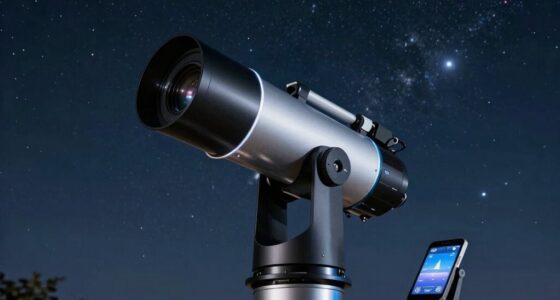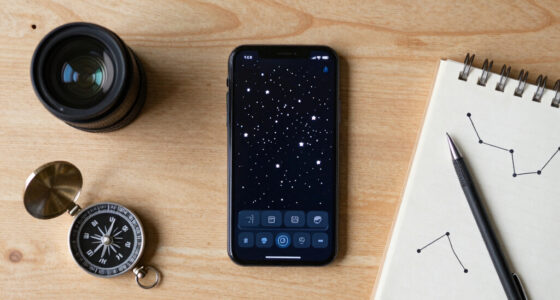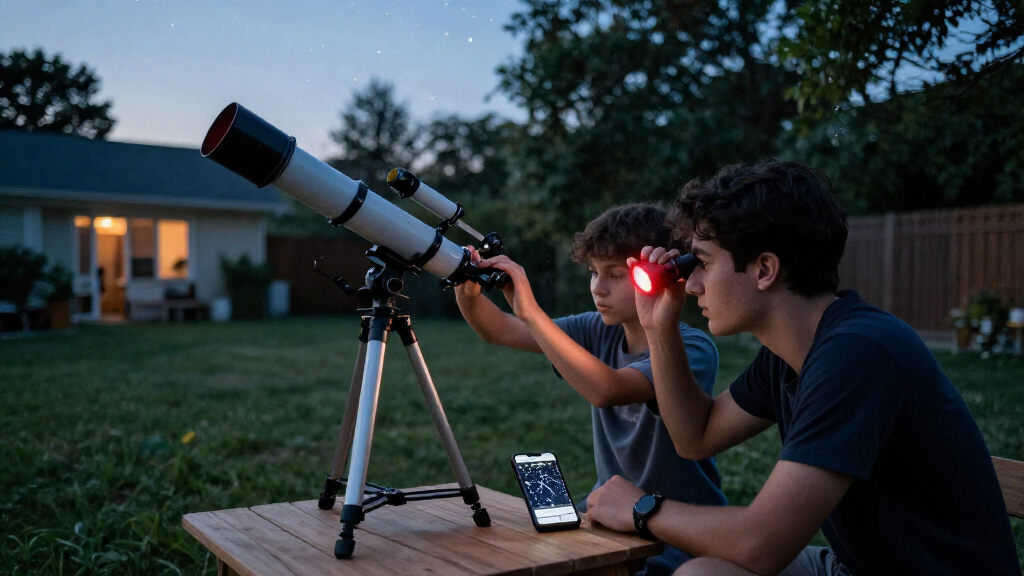

For beginners who want astrophotography with less setup, I rank the ZWO Seestar S30 Pro as the best overall pick for its integrated smart imaging approach. The Celestron StarSense Explorer DX 130AZ stands out for guided, hands-on observing, while the DWARFLAB Dwarf 3 offers a portable automated alternative. The main choice is between a smart telescope that handles imaging tasks and a conventional scope that teaches manual observing but may need extra camera and tracking gear for deep-sky photos. Aperture, mount stability, portability, and the difference between viewing and capturing all shape the decision. Read on for the full breakdown and help matching a setup to your first astrophotography goals.

Prime made for students and young adults
- Fast, free delivery for dorm and study essentials
- Prime Video and Amazon Music included
- Member-only deals
Key Takeaways
- Smart telescopes reduce setup friction: The Seestar S30 Pro, Dwarf 3, Dwarf Mini, and other integrated camera models combine optics and imaging controls, but offer less hands-on control than a conventional telescope.
- A telescope marketed for viewing is not automatically ready for deep-sky imaging: Manual mounts on several refractors and reflectors can make long exposures difficult without added tracking equipment.
- The StarSense Explorer DX 130AZ separates guided observing from automated imaging: Its phone-assisted sky guidance suits beginners who want to find targets themselves, not a system that takes over the imaging workflow.
- Aperture and focal length involve a practical tradeoff: Larger optics can gather more light, while shorter focal lengths tend to make wide-field targets and framing less demanding for new imagers.
- Portability and accessories shape real usability: The Travel Scope 80 and Gskyer 70mm are easy to carry, but compact kits should not be mistaken for stable, long-exposure deep-sky systems.
| SVBONY SV48P Telescope, 90mm Aperture F5.5 Refractor OTA |  | Best Refractor OTA for Learning Manual Imaging | Optical design: Achromatic refractor | Aperture: 90 mm | Focal length: 500 mm | VIEW LATEST PRICE | See Our Full Breakdown |
| Celestron AstroMaster 130EQ Telescope |  | Best for Learning Equatorial Tracking | Optical design: Newtonian reflector | Aperture: 130 mm (5.1 in) | Focal length: 650 mm | VIEW LATEST PRICE | See Our Full Breakdown |
| DWARFLAB Dwarf 3 Smart Telescope |  | Best Smart Telescope for Portable Imaging | Objective diameter: 35 mm | Mount: Altazimuth | Focus: Autofocus | VIEW LATEST PRICE | See Our Full Breakdown |
| FASHIONARI Auto-Focus Digital Telescope with 4K Camera |  | Best for Phone-Free Recording | Telescope type: Digital refractor | Objective diameter: 80 mm | Focal length: 300 mm | VIEW LATEST PRICE | See Our Full Breakdown |
| JVAXS Smart Digital Telescope with 4K Video, 3-Inch Flip Screen, App and Remote Control |  | Best for Shared On-Screen Viewing | Objective diameter: 78 mm | Focus: Manual | Display: 3-inch flip-out screen | VIEW LATEST PRICE | See Our Full Breakdown |
| SOLOMARK 130mm Astronomical Telescope with 650mm Focal Length |  | Best Value for Manual Phone Imaging | Objective lens diameter: 130mm | Focal length: 650mm | Eyepieces: WAK 10mm and WAK 20mm | VIEW LATEST PRICE | See Our Full Breakdown |
| Hawkko 90mm Aperture, 900mm Focal Length Refractor Telescope with AZ Mount, Phone Adapter, and Carry Bag |  | Best Compact Refractor Kit | Aperture: 90mm | Focal length: 900mm | Listed magnification range: 36x–270x | VIEW LATEST PRICE | See Our Full Breakdown |
| Celestron StarSense Explorer DX 130AZ Smartphone Guided Newtonian Telescope |  | Best for Beginners | Optical design: Newtonian reflector | Aperture: 130mm | Focal length: 650mm | VIEW LATEST PRICE | See Our Full Breakdown |
| Celestron PowerSeeker 127EQ Reflector Telescope |  | Best for Learning Equatorial Tracking | Optical design: Newtonian reflector | Aperture: 127mm | Focal length: 1000mm | VIEW LATEST PRICE | See Our Full Breakdown |
| Celestron Astro Fi 130 WiFi Reflector Telescope |  | Best App-Controlled Pick | Optical design: Newtonian reflector | Aperture: 130mm | Focal length: 650mm | VIEW LATEST PRICE | See Our Full Breakdown |
| ZWO Seestar S30 Pro Smart Telescope |  | Best Overall for Beginner Deep-Sky Imaging | Mount: Alt-azimuth; supports equatorial mode | Focal length: 160 mm | Field of view: 4.6 degrees | VIEW LATEST PRICE | See Our Full Breakdown |
| FASHIONARI 80mm Auto-Focus Smart Refractor Telescope with 4K Camera |  | Best for Hands-Off Camera Control | Telescope type: Refractor | Objective aperture: 80 mm | Focal length: 300 mm | VIEW LATEST PRICE | See Our Full Breakdown |
| Celestron Travel Scope 80mm Refractor Telescope Kit with Backpack and Smartphone Adapter |  | Best for Learning Manual Astrophotography | Telescope type: Refractor | Objective lens diameter: 80 mm | Focal length: 457 mm | VIEW LATEST PRICE | See Our Full Breakdown |
| Gskyer 70mm Aperture 400mm Refractor Telescope with Carry Bag, Phone Adapter, and Wireless Remote |  | Best Starter Kit for Phone Snapshots | Telescope type: Refractor | Objective lens: 70 mm | Focal length and ratio: 400 mm; f/5.7 | VIEW LATEST PRICE | See Our Full Breakdown |
| DWARFLAB Dwarf Mini Smart Telescope – Portable Astronomy Telescope |  | Best Ultra-Compact Smart Telescope | Weight: 1.9 lb | Dimensions: 2.39 × 3.95 × 7.23 in | Objective lens diameter: 30 mm | VIEW LATEST PRICE | See Our Full Breakdown |
| astrophotography telescopes for beginner | Focal length | Mount |
|---|---|---|
| SVBONY SV48P Telescope | 500 mm | — |
| Celestron AstroMaster 130EQ Te | 650 mm | German equatorial with slow-motion controls |
| DWARFLAB Dwarf 3 Smart Telesco | — | Altazimuth |
| FASHIONARI Auto-Focus Digital | 300 mm | — |
| JVAXS Smart Digital Telescope | — | — |
| SOLOMARK 130mm Astronomical Te | 650mm | Alt-azimuth with coarse and fine adjustments |
| Hawkko 90mm Aperture | 900mm | Altazimuth |
| Celestron StarSense Explorer D | 650mm | Manual alt-azimuth with dual-axis slow-motion controls |
| Celestron PowerSeeker 127EQ Re | 1000mm | Manual German equatorial |
| Celestron Astro Fi 130 WiFi Re | 650mm | Computerized altitude-azimuth single fork arm |
| ZWO Seestar S30 Pro Smart Tele | 160 mm | Alt-azimuth; supports equatorial mode |
| FASHIONARI 80mm Auto-Focus Sma | 300 mm | Tripod mount |
| Celestron Travel Scope 80mm Re | 457 mm | Altazimuth |
| Gskyer 70mm Aperture 400mm Ref | — | Altazimuth |
| DWARFLAB Dwarf Mini Smart Tele | 150 mm | Altazimuth and equatorial |
More Details on Our Top Picks
SVBONY SV48P Telescope, 90mm Aperture F5.5 Refractor OTA
The SVBONY SV48P is a strong fit for beginners who want to learn astrophotography with a conventional optical tube rather than a self-contained smart scope. Its 90 mm aperture gathers more light than the Dwarf 3’s 35 mm lens, while the 500 mm focal length gives a relatively broad view that suits larger celestial targets. The dual-speed focuser offers finer adjustment than a basic single-speed design, and the rotatable focuser helps frame a camera without twisting the whole telescope. The tradeoff is that this is an optical tube only: no mount, camera, or finderscope is listed, so a beginner must choose compatible gear and learn to track targets. I’d pick it over the AstroMaster 130EQ for refractor-style imaging flexibility, but not for an all-in-one starting setup.
Pros:- 90 mm aperture gathers more light than the Dwarf 3’s 35 mm objective.
- 500 mm focal length provides a relatively broad framing option for larger targets.
- Dual-speed 1:10 focuser supports fine focus adjustments.
- Rotating focuser makes camera framing easier.
Cons:- OTA-only package requires a separately sourced mount and imaging accessories.
- No finderscope is listed, which can make locating targets harder for a novice.
- Manual focusing and tracking leave more setup and learning work to the buyer.
Best for: Beginners who already have, or plan to select, a compatible mount and camera and want a short refractor tube for wide-field imaging.
Not ideal for: First-time buyers seeking a complete telescope kit, automatic tracking, or a supplied finderscope and mount.
- Optical design:Achromatic refractor
- Aperture:90 mm
- Focal length:500 mm
- Focal ratio:f/5.5
- Focuser:2-inch dual-speed, 1:10
- Coating:Fully multi-layer coated
- Optical tube length:40.8 cm
- Weight:3 kg
Our verdict“Choose the SV48P if you want a capable refractor tube and are prepared to build the rest of the imaging setup around it.”
Celestron AstroMaster 130EQ Telescope
For a beginner who wants to understand manual tracking, the AstroMaster 130EQ is the most instructional choice here. Its 130 mm reflector gathers more light than the SVBONY SV48P’s 90 mm objective, and the German equatorial mount’s slow-motion controls let the user follow an object with deliberate adjustments. That makes it a better platform for learning how the sky moves, though it is not an automatic astrophotography system. The included 20 mm and 10 mm eyepieces, red-dot finder, and software make it more complete out of the box than the SV48P, which is sold as an OTA. The main compromise is the manual mount: beginners must align and track it themselves, and the supplied eyepieces offer only modest magnifications. I’d favor it for hands-on learning, not quick, unattended imaging.
Pros:- 130 mm aperture offers greater light gathering than the SVBONY SV48P’s 90 mm.
- Equatorial mount includes slow-motion controls for deliberate tracking.
- Includes two eyepieces, a StarPointer red-dot finder, and astronomy software.
- Adjustable tripod assembles without tools.
Cons:- Manual alignment and tracking add a learning curve for new users.
- Supplied eyepieces provide only 33x and 65x magnification.
- The 17 lb assembled setup is less convenient to carry than the compact Dwarf 3.
Best for: Beginners interested in learning equatorial alignment and manual tracking while observing planets and brighter deep-sky targets.
Not ideal for: Buyers who want app-guided pointing, automatic tracking, or a simple camera-ready imaging workflow.
- Optical design:Newtonian reflector
- Aperture:130 mm (5.1 in)
- Focal length:650 mm
- Mount:German equatorial with slow-motion controls
- Included eyepieces:20 mm and 10 mm
- Magnification:33x with 20 mm; 65x with 10 mm
- Finderscope:StarPointer red dot
- Assembled weight:17 lb (7.71 kg)
Our verdict“Pick the AstroMaster 130EQ if learning manual equatorial tracking matters more than automated imaging convenience.”
DWARFLAB Dwarf 3 Smart Telescope
The Dwarf 3 removes much of the setup involved in beginner astrophotography: it uses autofocus, app control, and 4K auto-tracking rather than asking the user to manually focus and follow a target. Its small 35 mm objective is a clear limitation beside the 90 mm SVBONY SV48P or 130 mm AstroMaster, so it is not the pick for maximizing light collection. Its advantage is a different kind of access: telephoto and wide-angle lenses support both night-sky and daytime subjects, while Auto GOTO and EQ mode offer guided operating options. The required phone or computer adds a dependency, and the product details do not specify enough imaging performance information to promise results for particular faint targets. I’d choose it over the AstroMaster for portability and automation, but the AstroMaster is the more hands-on route to learning conventional telescope tracking.
Pros:- Autofocus and 4K auto-tracking reduce manual setup and target-following demands.
- Telephoto and wide-angle lenses support multiple types of imaging.
- Compact body and included carrying bag suit travel.
- Auto GOTO and EQ mode provide different operating approaches.
Cons:- 35 mm objective gathers less light than the SVBONY SV48P and AstroMaster 130EQ.
- App control requires a compatible smartphone or computer.
- Available product details do not establish performance for faint deep-sky targets.
Best for: Beginners who prioritize portable, app-guided imaging and want one device for night-sky, landscape, and wildlife subjects.
Not ideal for: Buyers who want a large-aperture telescope, a traditional eyepiece-first experience, or to operate without a phone or computer.
- Objective diameter:35 mm
- Mount:Altazimuth
- Focus:Autofocus
- Features:4K tracking, Auto GOTO, EQ mode
- Compatible devices:Smartphone, laptop, personal computer
- Dimensions:2.56 × 8.74 × 5.59 in
- Weight:2.28 kg
- Battery:One included lithium-ion battery
Our verdict“Choose the Dwarf 3 if convenience and portability matter more than the light-gathering capacity of a traditional telescope.”
FASHIONARI Auto-Focus Digital Telescope with 4K Camera
The FASHIONARI digital refractor suits beginners who want to capture and view images on the telescope itself rather than add a separate camera or phone. Its autofocus, dual displays, and built-in photo and video modes lower the barrier to basic recording compared with the manual-focus JVAXS. An 80 mm objective and 300 mm focal length make this a short-tube design, but the supplied details do not specify tracking, so I would not treat the advertised 350× maximum magnification as a guide to useful astrophotography. The rechargeable battery is rated for up to six hours, which may constrain longer sessions, and the adjustable tripod is not described as an equatorial tracking mount. Compared with the Dwarf 3, this model emphasizes direct onboard viewing and recording rather than app-based tracking. It is a straightforward digital option, but less suited to users aiming for deeper manual control.
Pros:- Autofocus simplifies focusing compared with the manual-focus JVAXS.
- Dual displays let users view and frame images on the telescope.
- Built-in 4K photo and video capture avoids requiring a separate camera.
- Expandable TF card storage supports up to 512 GB.
Cons:- Battery runtime is rated for up to six hours, limiting extended sessions.
- No tracking mount is specified, so keeping targets framed may require manual adjustment.
- The stated maximum magnification does not establish usable image detail.
Best for: Beginners who want an autofocus telescope with onboard screens and recording, without relying on a smartphone for basic capture.
Not ideal for: Astrophotographers seeking a specified tracking mount, long unattended sessions, or detailed evidence about imaging performance at high magnification.
- Telescope type:Digital refractor
- Objective diameter:80 mm
- Focal length:300 mm
- Focus:Autofocus
- Claimed magnification:Up to 350×
- Camera resolution:4K
- Displays:Adjustable eyepiece screen and external display
- Storage:Expandable TF card up to 512 GB
- Battery:4500 mAh; stated runtime up to 6 hours
Our verdict“Choose this model for self-contained, phone-free recording, but look elsewhere if tracking capability is central to your astrophotography plans.”
JVAXS Smart Digital Telescope with 4K Video, 3-Inch Flip Screen, App and Remote Control
The JVAXS smart digital telescope is designed around viewing and sharing images on its 3-inch flip-out screen, which can be easier for a group than taking turns at an eyepiece. It also records 30 MP photos and 4K video, and the included 64 GB card means a beginner has storage ready for a first session. Unlike the autofocus FASHIONARI, this model uses manual focus, so the user must adjust sharpness rather than rely on the telescope to do it. The app and wireless remote offer capture options, but neither replaces a tracking mount, which is not specified in the product data. Its 78 mm aperture is close to the FASHIONARI’s 80 mm, so the choice rests more on screen-and-accessory preferences than a meaningful aperture gap. I’d pick the JVAXS for shared viewing, not for hands-off focusing.
Pros:- Flip-out screen makes shared viewing easier than a single eyepiece.
- Records 30 MP photos and 4K video.
- Includes a 64 GB memory card and supports up to 512 GB.
- Wireless remote and app provide options for capture and control.
Cons:- Manual focus requires the user to adjust sharpness, unlike the FASHIONARI’s autofocus.
- No tracking mount is specified, limiting confidence in sustained target framing.
- The product details do not specify focal length or optical design.
Best for: Beginners who want a built-in flip screen for group viewing and convenient photo or video capture with included storage.
Not ideal for: Users who want autofocus, specified celestial tracking, or a conventional telescope setup built around manual camera control.
- Objective diameter:78 mm
- Focus:Manual
- Display:3-inch flip-out screen
- Photo resolution:30 MP
- Video resolution:4K
- Included storage:64 GB card
- Maximum supported storage:512 GB
- Wireless remote range:Up to 85 feet
- Eyepiece adjustment:±6 diopters
Our verdict“Choose the JVAXS if an onboard shared-viewing screen and included storage matter more than autofocus or confirmed tracking.”
SOLOMARK 130mm Astronomical Telescope with 650mm Focal Length
The SOLOMARK pairs a 130mm aperture with a short 650mm focal length, giving beginners a useful balance for viewing bright deep-sky targets and the Moon. Its two eyepieces provide 32.5x and 65x magnification, while fine adjustments on both axes can make centering an object less fiddly than on a basic mount. The included phone adapters and Moon filter add practical ways to try simple lunar photos and reduce glare. Compared with the Celestron StarSense Explorer DX 130AZ, though, this telescope lacks app-based sky guidance, so finding targets depends more on learning the sky and using its 5×24 finder. Its manual alt-azimuth mount also does not track the sky automatically, limiting long-exposure astrophotography. I’d choose it for a low-complexity visual-and-phone-photo start, not for serious deep-sky imaging.
Pros:- 130mm objective gathers light for viewing brighter celestial objects.
- Fine adjustments on both axes help with precise manual aiming.
- Two smartphone adapters and a 13% transmission Moon filter are included.
- Tool-free assembly is described as taking under 10 minutes.
Cons:- Manual alt-azimuth movement requires ongoing hand tracking and is not suited to long exposures.
- No phone-based sky guidance is listed, unlike the Celestron StarSense Explorer DX 130AZ.
- The supplied eyepieces offer only 32.5x and 65x magnification.
Best for: Beginners who want a 130mm reflector, manual fine controls, and included phone adapters for casual Moon photography.
Not ideal for: New observers who want app-guided target finding or anyone planning long-exposure astrophotography with automatic tracking.
- Objective lens diameter:130mm
- Focal length:650mm
- Eyepieces:WAK 10mm and WAK 20mm
- Listed magnifications:65x and 32.5x
- Mount:Alt-azimuth with coarse and fine adjustments
- Finder scope:5×24
- Included filter:Moon filter, 13% transmission
- Warranty:24 months
Our verdict“Choose the SOLOMARK for an affordable-feeling manual 130mm setup with basic phone-photo accessories, but skip it if guided locating or tracked imaging is your priority.”
Hawkko 90mm Aperture, 900mm Focal Length Refractor Telescope with AZ Mount, Phone Adapter, and Carry Bag
The Hawkko is the portability pick here: its 90mm refractor, adjustable tripod, and carry bag suit beginners who want to move between a backyard and a darker observing spot. Multi-coated optics and the 900mm focal length make it a straightforward choice for lunar and planetary viewing, while the phone adapter supports casual afocal photos through the eyepiece. The long accessory list, including a 3x Barlow, may look like a route to very high magnification, but the advertised 270x ceiling is unlikely to deliver consistently useful views; atmospheric conditions and aperture impose limits. Compared with the 130mm SOLOMARK or Celestron StarSense Explorer DX 130AZ, its smaller aperture gathers less light, and the manual alt-azimuth mount means hands-on tracking. I’d favor it for transport and simpler refractor handling, not faint deep-sky targets or guided astrophotography.
Pros:- 90mm aperture and multi-coated optics support beginner visual observing.
- Carry bag and 5kg listed weight make it more portable than the 130mm reflector options.
- Includes a smartphone adapter, finder scope, and 3x Barlow lens.
- Adjustable tripod and 360-degree rotation provide flexible manual positioning.
Cons:- Manual mount and focus require hands-on aiming and tracking.
- The advertised 270x magnification may exceed what the aperture and typical sky conditions can usefully support.
- Smaller aperture gathers less light than the 130mm SOLOMARK and Celestron StarSense Explorer DX 130AZ.
Best for: Beginners who need a portable refractor kit with a carry bag for Moon, planet, and daytime landscape viewing.
Not ideal for: Buyers focused on faint galaxies, nebulae, or imaging that needs automatic tracking and more light-gathering capacity.
- Aperture:90mm
- Focal length:900mm
- Listed magnification range:36x–270x
- Mount:Altazimuth
- Eyepieces:10mm and 25mm
- Barlow lens:3x
- Tripod height:28–46in
- Item weight:5kg
- Included accessories:Smartphone adapter, finder scope, zenith mirror, carry bag, and accessory tray
Our verdict“Pick the Hawkko if portability and a complete refractor kit matter more than deep-sky reach or convenient astrophotography tracking.”
Celestron StarSense Explorer DX 130AZ Smartphone Guided Newtonian Telescope
For a first telescope, finding an object can be harder than viewing it. The StarSense Explorer DX 130AZ addresses that hurdle with phone-based sky recognition: its app identifies the sky and guides the user toward targets, giving beginners a clearer path from setup to observing. Its 130mm Newtonian mirror also offers more light gathering than the 90mm Hawkko, while the 650mm focal length and supplied 25mm and 10mm eyepieces cover broad sky views and closer looks at bright targets. The alt-azimuth mount has slow-motion controls, but it remains manual; the phone helps locate objects rather than track them for long exposures. That makes it a stronger learning and visual-observing choice than the Celestron Astro Fi 130’s WiFi control for someone who wants guided locating without a computerized drive. For astrophotography, expect simple phone-through-eyepiece attempts, not tracked long exposures.
Pros:- StarSense app uses sky recognition to guide users toward selected celestial targets.
- 130mm Newtonian aperture is larger than the Hawkko’s 90mm aperture.
- Dual-axis slow-motion controls support more deliberate manual aiming.
- Includes 25mm and 10mm eyepieces, a red dot finder, and a smartphone dock.
Cons:- Manual alt-azimuth mount does not provide the tracking needed for long-exposure astrophotography.
- App use depends on a compatible smartphone; listed support includes Android 12 and later and iOS 18 and newer.
- The supplied information does not list a motorized drive or computerized mount.
Best for: First-time observers who want app-guided target finding, a 130mm aperture, and a manual telescope they can learn to operate.
Not ideal for: Buyers who need automatic tracking for long-exposure imaging or whose phone does not meet the app compatibility requirements.
- Optical design:Newtonian reflector
- Aperture:130mm
- Focal length:650mm
- Mount:Manual alt-azimuth with dual-axis slow-motion controls
- Eyepieces:25mm and 10mm
- Finderscope:StarPointer red dot
- Field of view:2 degrees
- Phone compatibility:Android 12 and later; iOS 18 and newer, including iPhone XR and newer
- Warranty:2-year US warranty
Our verdict“Choose the StarSense Explorer DX 130AZ if guided sky navigation and visual learning matter more than automated tracking for astrophotography.”
Celestron PowerSeeker 127EQ Reflector Telescope
The PowerSeeker 127EQ is the only option in this batch with a manual German equatorial mount, making it a useful introduction to the mount style used for following objects as Earth turns. Once aligned, its slow-motion controls can help keep a target in view with movement along one axis, unlike the Hawkko’s alt-azimuth mount, which needs adjustments on both axes. The 127mm reflector gives it a respectable aperture for bright deep-sky objects and planetary viewing, but the supplied 4mm eyepiece and 3x Barlow invite magnification beyond what is often practical. Compared with the StarSense Explorer DX 130AZ, this model offers no phone-guided sky finding, and the equatorial setup asks more of a beginner before observing begins. It can support learning manual tracking, but neither its manual mount nor the product details establish a long-exposure imaging setup.
Pros:- 127mm Newtonian aperture gathers light for viewing bright celestial targets.
- Manual German equatorial mount introduces a tracking approach different from alt-azimuth mounts.
- Includes 20mm and 4mm eyepieces plus a 3x Barlow lens.
- Includes an adjustable tripod, accessory tray, astronomy software, and a 2-year US warranty.
Cons:- Equatorial mounting and alignment can be less straightforward for a first-time user than the StarSense Explorer DX 130AZ app-guided setup.
- Manual mount does not provide motorized tracking for long-exposure imaging.
- The 4mm eyepiece and 3x Barlow combination may imply magnification that conditions and optics cannot usefully support.
Best for: Hands-on beginners who want to learn equatorial alignment and manual tracking while viewing the Moon, planets, and brighter deep-sky targets.
Not ideal for: First-time users who want quick app-guided setup, or astrophotographers seeking motorized tracking and dependable long exposures.
- Optical design:Newtonian reflector
- Aperture:127mm
- Focal length:1000mm
- Mount:Manual German equatorial
- Eyepieces:20mm and 4mm
- Barlow lens:3x
- Field of view:2.5 degrees
- Mirror coating:Aluminum and SiO₂ coated glass mirrors
- Warranty:2-year US warranty
Our verdict“Pick the PowerSeeker 127EQ if learning equatorial setup is part of the goal, but choose the StarSense Explorer DX 130AZ for easier target finding.”
Celestron Astro Fi 130 WiFi Reflector Telescope
The Astro Fi 130 is the most automation-oriented option in this group: built-in WiFi connects its computerized alt-azimuth mount to the SkyPortal app, which can help align the telescope, locate objects, and control its movement. That reduces the amount of manual aiming compared with the SOLOMARK 130mm and its basic alt-azimuth mount. Its 130mm aperture and 650mm focal length provide a similar optical scale to the Celestron StarSense Explorer DX 130AZ, but the user experience differs: Astro Fi controls the mount through an app, while StarSense’s phone guidance helps locate targets on a manual mount. For a beginner who wants object selection and mount control from a phone, Astro Fi is the more hands-off route. It still has manual focus, needs a 12V DC power source, and is not described as an equatorial tracking platform for long-exposure imaging.
Pros:- Built-in WiFi links the computerized mount to the SkyPortal smartphone and tablet app.
- App-assisted alignment and object locating reduce manual sky searching.
- 130mm aperture and coated optics suit viewing the Moon, planets, and brighter deep-sky objects.
- SkyAlign technology and app-suggested targets support beginner use.
Cons:- Requires a 12V DC, 1A power source, unlike the manual SOLOMARK and StarSense Explorer DX 130AZ.
- Manual focuser still requires hands-on adjustment.
- Alt-azimuth mount is not specified as an equatorial long-exposure tracking system.
Best for: Beginners who want smartphone-controlled object locating and mount movement, and can provide the required 12V DC power.
Not ideal for: Observers who want a fully self-contained manual setup, lack a suitable power source, or plan long-exposure astrophotography.
- Optical design:Newtonian reflector
- Aperture:130mm
- Focal length:650mm
- Mount:Computerized altitude-azimuth single fork arm
- Focuser:Manual
- Eyepieces:2 Kellner eyepieces
- Connectivity:Built-in WiFi
- Power:12V DC, 1A, tip positive
- Warranty:2-year US warranty
Our verdict“Choose the Astro Fi 130 for app-controlled observing and object locating, provided you can supply power and do not expect a long-exposure imaging mount.”
ZWO Seestar S30 Pro Smart Telescope
The ZWO Seestar S30 Pro is the clearest fit here for beginners whose main goal is capturing deep-sky objects rather than learning manual telescope setup. App-controlled GoTo and tracking handle target finding, while one-tap imaging, automatic mosaic stitching, light-pollution filters, and AI processing simplify the path from setup to saved images. Its 160mm focal length and 4.6-degree field of view favor broad targets and night landscapes over close-up planetary views. Compared with the DWARFLAB Dwarf Mini, the S30 Pro is heavier but offers a wider stated field of view and dual-camera 4K imaging. The tradeoff is a more specialized experience: it is not intended for planetary observation, and it needs to remain stationary during deep-sky imaging for stable tracking.
Pros:- GoTo targeting and automatic tracking reduce the work of locating celestial objects.
- One-tap imaging and automatic mosaic stitching make capturing wider scenes more approachable.
- Light-pollution filters and AI image processing support beginner-friendly image capture.
- At 3.64 lb, it is portable for trips to darker skies.
Cons:- It is not intended for planetary observation.
- The telescope must stay stationary during deep-sky imaging for stable tracking.
- Its automated imaging approach offers less of a traditional manual observing experience than the Celestron Travel Scope 80.
Best for: New astrophotographers who want app-guided deep-sky imaging, automated tracking, and a portable setup without manually finding targets.
Not ideal for: Beginners whose priority is detailed planetary imaging or who need to move the telescope while it is capturing a deep-sky target.
- Mount:Alt-azimuth; supports equatorial mode
- Focal length:160 mm
- Field of view:4.6 degrees
- Imaging:Dual-camera 4K
- Focus:Automatic and manual
- Weight:3.64 lb
- Power:Battery powered
- Features:App control, auto tracking, GoTo, one-tap imaging, automatic mosaic stitching, anti-dew protection
Our verdict“Choose the Seestar S30 Pro if automated deep-sky imaging matters more than planetary viewing or hands-on manual control.”
FASHIONARI 80mm Auto-Focus Smart Refractor Telescope with 4K Camera
The FASHIONARI 80mm Auto-Focus Smart Refractor pairs a traditional refractor format with an integrated 4K camera, app control, and remote operation. Its auto-focus system is the main beginner-friendly distinction: it can reduce the fiddling needed to sharpen a view compared with the manually focused Celestron Travel Scope 80 and Gskyer 70mm. The 80mm aperture and 300mm focal length provide a straightforward starting point for celestial and terrestrial subjects, while photo and video modes give beginners more than one way to capture what they see. The listed details do not specify tracking or automated GoTo, however, so I would not treat it as a substitute for the Seestar S30 Pro’s dedicated target-finding and tracking workflow. It is best approached as a camera-equipped refractor, not a fully automated deep-sky imaging system.
Pros:- 80mm aperture gives it a larger objective than the 70mm Gskyer refractor.
- Autofocus can simplify sharpening the image for beginners.
- Integrated 4K camera supports both photo and video modes.
- App and remote control offer multiple ways to operate the telescope.
Cons:- The provided product details do not specify GoTo targeting or automatic tracking.
- At 300mm focal length, it is not a long-focal-length option for tighter framing.
- The available description does not establish how its camera workflow handles deep-sky exposures.
Best for: Beginners who want an 80mm refractor with integrated 4K photo and video capture, app control, and autofocus instead of manual focusing.
Not ideal for: Buyers seeking documented GoTo tracking or a dedicated, automated deep-sky imaging workflow like the ZWO Seestar S30 Pro.
- Telescope type:Refractor
- Objective aperture:80 mm
- Focal length:300 mm
- Focal ratio:f/8.89
- Focus:Autofocus
- Mount:Tripod mount
- Camera:4K astrophotography camera
- Controls:App and remote control
Our verdict“Pick this FASHIONARI if autofocus and integrated 4K capture matter more than confirmed automated tracking.”
Celestron Travel Scope 80mm Refractor Telescope Kit with Backpack and Smartphone Adapter
The Celestron Travel Scope 80 suits beginners who want to learn how a conventional telescope works before relying on automated imaging. Its 80mm aperture, two eyepieces, and manual focus offer a simple observing setup, while the included smartphone adapter lets users try basic phone photography through the eyepiece. That is a more hands-on route than the camera-led ZWO Seestar S30 Pro, but it also means the user must locate targets, adjust focus, and manage the phone alignment themselves. The 457mm focal length is longer than the Gskyer 70mm’s 400mm, and the included backpack makes the Celestron easier to carry as a kit. Still, this is not a dedicated long-exposure imaging rig: its manual altazimuth mount is better suited to introductory Moon and bright-object captures than automated deep-sky tracking.
Pros:- 80mm aperture and two eyepieces support basic observing at different magnifications.
- Smartphone adapter provides an accessible way to try eyepiece photography.
- Backpack and tool-free setup suit travel and quick observing sessions.
- Its 457mm focal length is longer than the Gskyer 70mm’s 400mm.
Cons:- Manual focus and target finding require more user involvement than the Seestar S30 Pro.
- The altazimuth mount is not described as having automated tracking for long exposures.
- Smartphone adapter imaging is less integrated than a telescope with a built-in camera.
Best for: Beginners who want a portable, manual refractor for learning telescope basics and trying smartphone pictures of the Moon and bright targets.
Not ideal for: Newcomers who want automatic target finding, tracking, or a camera workflow designed for deep-sky imaging.
- Telescope type:Refractor
- Objective lens diameter:80 mm
- Focal length:457 mm
- Mount:Altazimuth
- Focus:Manual
- Finderscope:5×24
- Eyepieces:20 mm and 10 mm
- Included accessories:Backpack, tripod, star diagonal, smartphone adapter, and Starry Night software
Our verdict“Choose the Travel Scope 80 if you want to learn manual observing and experiment with simple phone photography rather than automate deep-sky capture.”
Gskyer 70mm Aperture 400mm Refractor Telescope with Carry Bag, Phone Adapter, and Wireless Remote
The Gskyer 70mm Refractor is a basic, accessory-rich option for beginners who want to try smartphone snapshots without buying an integrated smart telescope. Its phone adapter and wireless camera remote make triggering a phone camera easier, while the two eyepieces and 3× Barlow lens provide several visual configurations. Compared with the Celestron Travel Scope 80, it has a smaller 70mm objective, so it gathers less light, but its 400mm focal length is shorter than the Celestron’s 457mm. Neither is an automated deep-sky tracker; the Gskyer’s manual focus and altazimuth mount make it a better fit for introductory visual use and casual phone experiments than long exposures of faint targets. The stated maximum magnification should not be mistaken for a guarantee of detailed astrophotography.
Pros:- Phone adapter and wireless remote make basic smartphone capture possible.
- Two eyepieces and a 3× Barlow lens offer several viewing setups.
- Carry bag and adjustable tripod support portability and varied viewing positions.
- Fully coated optics are included.
Cons:- The 70mm objective gathers less light than the Celestron Travel Scope 80’s 80mm objective.
- Manual focus and an altazimuth mount do not provide the automated tracking workflow of the Seestar S30 Pro.
- The supplied instructions caution against viewing the Sun.
Best for: First-time users who want a portable visual telescope with a phone adapter and remote for casual images of bright celestial objects.
Not ideal for: Beginners planning deep-sky long exposures or seeking automated tracking, autofocus, or an integrated camera.
- Telescope type:Refractor
- Objective lens:70 mm
- Focal length and ratio:400 mm; f/5.7
- Mount:Altazimuth
- Focus:Manual
- Eyepieces:25 mm (16×) and 10 mm (40×)
- Barlow lens:3×
- Included imaging accessories:Smartphone adapter and wireless camera remote
Our verdict“Pick the Gskyer for a portable first telescope and casual phone snapshots, not for serious deep-sky imaging.”
DWARFLAB Dwarf Mini Smart Telescope – Portable Astronomy Telescope
At 1.9 lb, the DWARFLAB Dwarf Mini is the easiest option here to take along when space and weight matter more than light gathering. Its app-controlled auto GoTo, 360-degree pivot, equatorial mode, and exposures up to 90 seconds give beginners a more automated imaging route than the manual Celestron Travel Scope 80 or Gskyer 70mm. Built-in cloud processing and a light-pollution filter also reduce the need for extra gear or image software. Its main limitation is the 30mm objective lens: compared with the larger-aperture Seestar S30 Pro, it gathers less light, which constrains work on faint deep-sky objects. I’d choose it for compact, app-led sessions and casual imaging, not as the stronger instrument for dim targets or users who want to operate without a smartphone.
Pros:- At 1.9 lb, it is lighter than the Seestar S30 Pro and exceptionally easy to pack.
- App control and auto GoTo simplify finding targets compared with the manual Celestron and Gskyer refractors.
- Equatorial mode supports exposures up to 90 seconds.
- Built-in light-pollution filtering and cloud processing reduce extra equipment and software needs.
Cons:- Its 30mm objective gathers less light than the Seestar S30 Pro’s larger optical system, limiting faint-target work.
- Full functionality requires a smartphone.
- Battery-life details are not specified, which may complicate planning longer sessions.
Best for: Travel-minded beginners who want an app-guided, pocket-sized smart telescope for casual astrophotography and quick observing sessions.
Not ideal for: Astrophotographers prioritizing faint deep-sky targets, greater light gathering, or full operation without a smartphone.
- Weight:1.9 lb
- Dimensions:2.39 × 3.95 × 7.23 in
- Objective lens diameter:30 mm
- Focal length:150 mm
- Field of view:2.45 degrees
- Mount:Altazimuth and equatorial
- Maximum exposure:90 seconds
- Sensor:Sony IMX662, 1/2.8-inch, 2.9 µm pixels
- Features:App control, auto GoTo, light-pollution filter, built-in cloud processing
Our verdict“Choose the Dwarf Mini if portability and app automation outrank light gathering and deep-sky reach.”

How We Picked
I ranked these 15 beginner-focused options by how well their design supports a realistic first step into astrophotography, rather than by aperture or advertised camera resolution alone. I weighed imaging workflow, mount type, tracking or automation, ease of locating targets, portability, included accessories, and the gap between the product’s viewing role and its ability to capture useful images.
The smart telescopes rank well for integrated capture and guided operation, while conventional reflectors and refractors earn their place when they offer a more instructive or flexible observing experience. A manual mount is a meaningful limitation for long exposures, so optical size alone does not push a model higher. I also account for setup demands and likely extra equipment: products that simplify the whole process suit more first-time imagers, while optical tube assemblies and basic visual kits make more sense for buyers ready to build a system around them.
Factors to Consider When Choosing Astrophotography Telescopes For Beginners
Before choosing among these models, decide what you mean by astrophotography. A phone snapshot of the Moon, a processed image of a nebula, and a guided live view are different goals, and each asks for different equipment. These points can help prevent a mismatch between the telescope you buy and the images you hope to make.
Choose Your First Imaging Target
The Moon and bright planets are forgiving first subjects because they are bright and do not demand long exposures. Faint galaxies and nebulae call for a tracking mount, careful focus, repeated exposures, and image processing. A common mistake is buying a telescope with a large aperture while overlooking the mount needed to keep a dim target in the camera frame. If deep-sky images are your priority, favor an integrated tracking workflow or budget for an equatorial mount and compatible camera. If you mainly want lunar images, a simpler setup can be a sensible start.
Treat the Mount as Part of the Imaging System
For long exposures, mount behavior can matter as much as the optical tube: small tracking errors show up as streaked stars. Alt-azimuth mounts move across the sky in a way that can limit long exposures, while equatorial mounts are designed to follow the sky’s rotation when properly aligned. Go-to guidance helps locate targets, but it does not automatically mean the mount can track them accurately enough for imaging. Beginners often spend too much attention on magnification and too little on stability, alignment, and tracking. Think of the mount as a central part of the camera system, not a stand that can be upgraded later without consequences.
Know What a Smart Telescope Automates
Smart telescopes combine a camera, optics, and software, which can remove several early hurdles: target finding, focusing, capture, or image stacking. That convenience can make it easier to start collecting images, but it usually means less freedom to swap cameras or control every part of the optical train. Before buying, check how images are saved, what control is available through the app, and whether an internet connection is needed for the functions you plan to use. A smart telescope is a strong fit for a buyer who values a guided workflow; a conventional scope is a better learning platform for someone who wants to build a modular imaging rig. Do not assume automation removes the need to learn framing, sky conditions, or basic image processing.
Match Focal Length and Field of View to Your Targets
A shorter focal length shows a wider patch of sky, which can make large nebulae and star fields easier to frame. Longer focal lengths magnify smaller targets but also make tracking errors and focusing more noticeable. Beginners may find a narrow field frustrating when trying to locate a target or keep it centered, even when the telescope has ample aperture. Use a field-of-view calculator with the intended camera before choosing a setup, especially if you have a specific object in mind. Avoid treating high magnification as a shortcut to better astrophotography; the camera sensor, seeing conditions, and tracking all shape the result.
Plan for the Full Capture and Processing Workflow
The telescope is only one part of the process: power, storage, a phone or computer, cables, dew control, and image-processing software may all affect a night’s session. Compact all-in-one kits can reduce the number of separate components, but they may still need charging, app setup, or a clear view of the sky. Conventional scopes can call for a separate camera, adapters, and a stable tracking solution, which adds both setup steps and compatibility questions. Check what comes in the box and what the manufacturer supports before assuming a phone adapter makes a telescope imaging-ready. Leave time to learn stacking and processing, since raw captures rarely show the detail beginners expect.
Balance Portability Against Stability and Upgrade Options
A lighter telescope is easier to carry to a dark site, but a compact kit may have a smaller aperture, a lighter mount, or fewer paths for upgrades. Larger instruments can collect more light, yet become less convenient to store, transport, and set up without help. Think about where you will observe, how often you can leave equipment assembled, and whether you can manage the complete rig outdoors. If portability is the reason you expect to use a telescope regularly, it can be worth favoring a simpler compact system over a more capable setup that stays at home. For a long-term imaging hobby, check camera compatibility, focuser capacity, mount payload, and accessory availability before choosing.
Frequently Asked Questions
Can I take deep-sky photos with a beginner telescope that has no tracking mount?
You can capture the Moon and some bright objects with short exposures, but a non-tracking mount will not hold stars still during longer exposures. Earth’s rotation makes stars drift across the frame, which limits how much detail you can record in a single shot. Deep-sky imaging usually needs a mount that tracks the sky, along with careful alignment and suitable camera support. A telescope’s aperture or a bundled phone adapter does not replace tracking. If deep-sky photos are your main goal, choose an integrated tracking system or plan for a separate mount upgrade.
Is a smart telescope a better first choice than a conventional telescope?
It depends on whether you value a guided imaging workflow or learning to operate a modular setup. Smart models can combine target finding, capture, and processing steps, helping new users begin without assembling multiple components. Conventional scopes give more direct control over the optical tube and can suit people who want to learn alignment, camera matching, and mount operation. Neither type removes the need to understand focus, weather, and image processing. Decide whether your first priority is getting started with less setup or building skills and flexibility over time.
Should I choose more aperture or a shorter focal length for my first imaging setup?
Neither specification alone tells you which telescope will make better images. Aperture affects light gathering and visual brightness, while focal length shapes field of view and how demanding framing and tracking can be. For broad nebulae or star fields, a wider view may be more useful than extra magnification. For smaller targets, a longer focal length can help frame them more closely, but it asks more of the mount and focusing. Match the telescope to a target and camera combination rather than choosing by the largest number on the box.
What extra equipment should I budget for beyond the telescope?
That depends on whether the telescope is an all-in-one imaging system or a conventional optical tube. A conventional setup may need a camera, adapters, a tracking mount, power, and software, while even a smart model may call for a phone, charging solution, extra storage, or dew control. Check camera and mount compatibility before purchasing accessories, since fittings and payload limits can rule out combinations. A stable tripod and a reliable power plan can matter more than adding a high-magnification eyepiece for imaging. Also leave room in your plan for learning image stacking and processing.
Can a travel telescope be a sensible choice if I want to learn astrophotography?
Yes, if your expectations fit its role. A portable refractor can be useful for lunar photos, casual observing, and learning how to aim and focus, especially when carrying a larger rig would stop you from going out. A lightweight kit may be less stable and may lack the tracking needed for long deep-sky exposures. Check the mount and camera attachment rather than assuming that a carry bag and phone adapter make it a complete imaging system. If deep-sky capture becomes your focus, you may later want a tracking mount or a dedicated smart telescope.
Conclusion
For the best overall balance of beginner-friendly imaging and integrated workflow, I recommend the ZWO Seestar S30 Pro. Buyers seeking the best value should compare the simpler conventional options against their actual imaging goals, and avoid paying for aperture they cannot use without tracking. For the best premium-style guided experience, the DWARFLAB Dwarf 3 is a strong fit for those who prioritize portable automation; the Seestar is my pick for a more directly imaging-focused all-in-one route. The best for hands-on beginners is the Celestron StarSense Explorer DX 130AZ, which makes locating objects part of the learning process, though it is not an automated long-exposure imaging system. For specific needs, choose the Travel Scope 80 or Gskyer 70mm when easy transport matters most, and consider the SVBONY SV48P if you want an optical tube to build around. Match the mount and capture workflow to your intended targets, then choose the setup you are most likely to take outside.