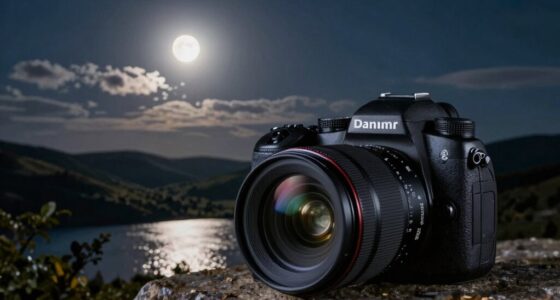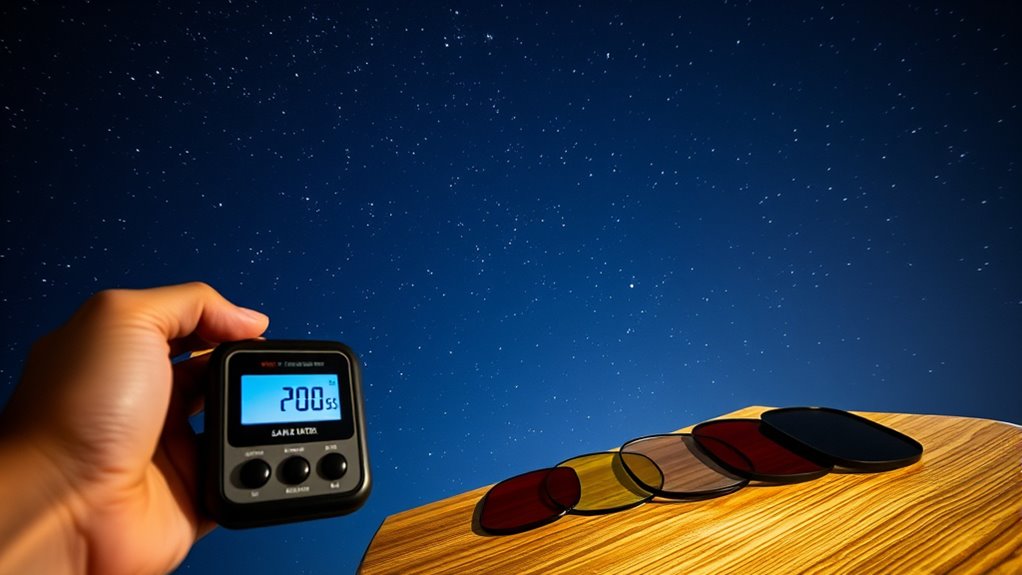
To measure your sky’s Bortle class, observe how clearly you can see the Milky Way, faint stars, and constellations, comparing them to typical descriptions of each class. Use a star chart or a Bortle scale app for guidance. This helps you assess light pollution levels and decide which filters, like narrowband or LP filters, will improve your view of faint objects. Keep exploring to discover more about optimizing your observations based on your sky’s quality.

Prime made for students and young adults
- Fast, free delivery for dorm and study essentials
- Prime Video and Amazon Music included
- Member-only deals
Key Takeaways
- Observe the Milky Way’s appearance, breadth, and detail to estimate your Bortle class visually.
- Compare sky brightness and star visibility to standard Bortle descriptions for accurate classification.
- Use a Bortle scale chart or app to match your observations with established sky brightness levels.
- Select filters based on light pollution levels: LP filters for general glow, narrowband filters for nebulae.
- Match filter spectral properties to your target objects and pollution conditions to enhance faint object visibility.
Understanding your sky’s Bortle Class is essential for gauging observing conditions and planning your astronomical activities. Your Bortle Class gives you a practical way to evaluate the darkness of your night sky, which directly impacts your sky quality and your ability to see faint celestial objects. Light pollution is the primary factor that influences your Bortle Class; the more artificial light that brightens your night environment, the higher your Bortle number, and the less ideal your sky is for deep-sky observing. Recognizing your Bortle Class allows you to tailor your plans—whether you’re aiming for a detailed nebula study or simply enjoying a casual stargazing session—by understanding how much sky glow obstructs the view.
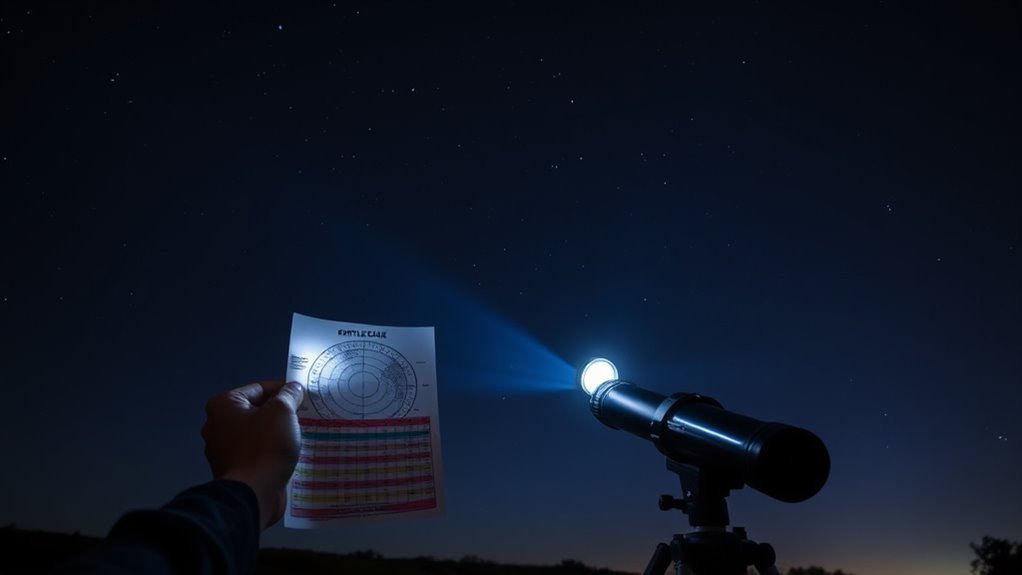
To determine your Bortle Class accurately, you need to judge your sky quality by observing the overall darkness of your environment. You can start by noting how easily you see the Milky Way, the visibility of constellations, and the clarity of faint stars. In lower Bortle Classes, the Milky Way appears broad and detailed, with little to no light pollution obscuring it. Conversely, in higher classes, the sky appears washed out, with only the brightest stars visible, and the Milky Way may be faint or entirely invisible. These observations help you classify your sky and understand the level of light pollution affecting your observing experience.
Judging your sky’s darkness by observing the Milky Way, constellations, and faint stars helps determine your Bortle Class.
Once you’ve identified your Bortle Class, you might find that light pollution hampers your ability to see faint objects. This is where filters come into play. Selecting the right filters can improve your view by reducing sky glow and enhancing contrast. For instance, narrowband filters target specific wavelengths emitted by nebulae, allowing you to see details that are otherwise washed out by light pollution. Light pollution filters, often called LP filters, are designed to block common streetlight wavelengths, considerably improving sky quality when observing from polluted areas. When choosing filters, consider your target objects and your local light pollution levels—these factors will guide you toward options that maximize your observational success.
In addition, understanding the spectral properties of various filters can help you choose the most effective ones for your needs, depending on the types of celestial objects you wish to observe and the sources of light pollution in your area. When combined with an accurate Bortle Class assessment, selecting appropriate filters can significantly enhance your viewing experience. In essence, understanding your sky’s Bortle Class, recognizing the impact of light pollution, and selecting appropriate filters work together to elevate your astronomy sessions. They help you make the most of your observing environment, whether you’re under pristine skies or battling urban glow. By accurately judging your sky quality and choosing the right equipment, you’ll enhance your ability to see and enjoy the universe’s faintest wonders, regardless of where you are.
As an affiliate, we earn on qualifying purchases.
Frequently Asked Questions
Can Bortle Class Change Over Time or Seasons?
Yes, your Bortle class can change over time due to light pollution trends and seasonal sky brightness. As nearby urban areas expand or reduce their lighting, your sky’s darkness may improve or worsen. Seasonal factors, like longer nights in winter or increased outdoor lighting, can also affect sky brightness. Keep monitoring your sky regularly to track these changes and adjust your observing plans accordingly.
How Do I Compare My Bortle Class With Nearby Locations?
To compare your Bortle class with nearby locations, you should observe the night sky under similar conditions, noting light pollution sources and natural sky conditions. Use a Bortle scale chart to match your observations with nearby areas, considering factors like urban lighting and natural darkness. You can also use apps or online maps for light pollution data, helping you see how your site stacks up against others in your area.
What Equipment Influences Bortle Class Assessments?
Imagine your telescope’s eye scanning the night sky, revealing how light pollution sources and atmospheric conditions shape your view. Your equipment, like a quality telescope and good filters, influences your Bortle class assessment by reducing glare and enhancing contrast. Better optics, a stable mount, and proper filters help you see through haze, city glow, or clouds, giving you a clearer picture of your sky’s true darkness amidst the surrounding light pollution and atmospheric factors.
Is Bortle Class Suitable for Astrophotography Planning?
Yes, Bortle class is useful for astrophotography planning because it helps you understand light pollution and urban glow levels in your area. Knowing your Bortle class guides you to choose suitable targets and equipment, and determines if you need filters to reduce light pollution. It also helps you set realistic expectations for image quality and exposure times, ensuring you get the best results possible despite surrounding light interference.
How Accurate Is a Smartphone App for Bortle Classification?
You might worry that smartphone apps aren’t precise, but they can give a surprisingly good estimate of sky brightness and light pollution. While not perfect, these apps use your phone’s sensors to gauge Bortle class with reasonable accuracy, helping you identify darker skies nearby. Keep in mind, factors like urban lights or weather can affect results, so use the app as a helpful guide, not an exact measurement.
narrowband nebula filters for telescopes
As an affiliate, we earn on qualifying purchases.
As an affiliate, we earn on qualifying purchases.
Conclusion
Now that you know how to measure your sky’s Bortle class and choose the right filters, you’re ready to access the cosmos like never before. With just a few simple steps, you can transform your night sky from a dull canvas into a breathtaking masterpiece — brighter and more detailed than you ever imagined. So go ahead, embrace the darkness, and prepare to witness the universe’s secrets unfold before your eyes. The stars are waiting!
light pollution filter for astrophotography
As an affiliate, we earn on qualifying purchases.
As an affiliate, we earn on qualifying purchases.
star chart for Bortle class assessment
As an affiliate, we earn on qualifying purchases.
As an affiliate, we earn on qualifying purchases.
Columbus Day / Indigenous Peoples' Day Picks
long weekend sales
As an affiliate, we earn on qualifying purchases.