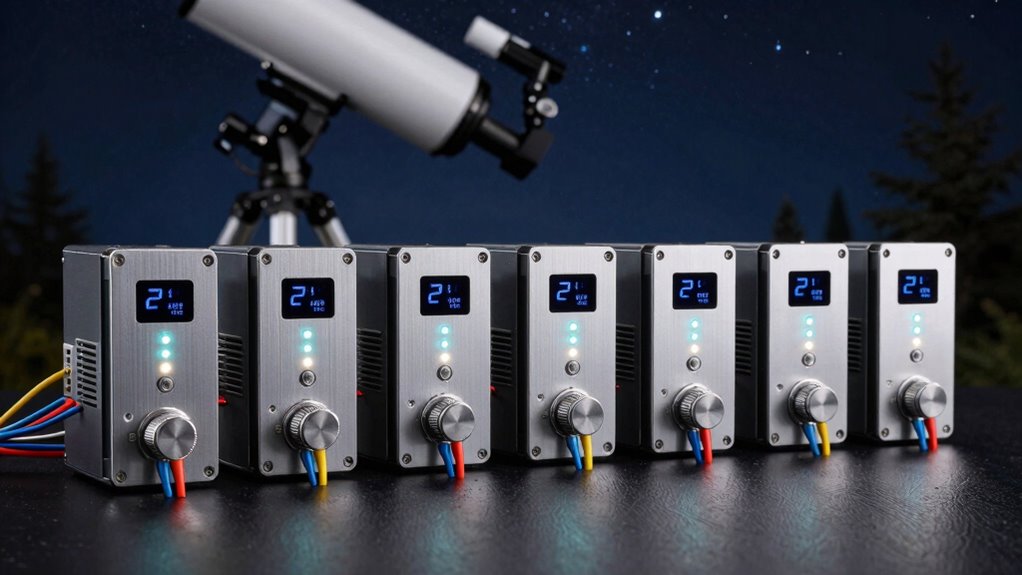

When selecting a regulated 12V power supply for astronomy equipment, reliability and stability are key. The MAKERELE 12V DC Switched-Mode Power Supply stands out as the best overall choice due to its high power capacity and consistent output. The RS-12A Astron Power Supply offers a proven track record for durability, making it ideal for serious enthusiasts. A common tradeoff in this category is balancing power and build quality against price; more affordable models often lack the long-term stability needed for sensitive equipment. Continue reading to see how these options compare and which one suits your setup best.

Prime made for students and young adults
- Fast, free delivery for dorm and study essentials
- Prime Video and Amazon Music included
- Member-only deals
Key Takeaways
- High wattage capacity varies significantly, affecting equipment compatibility and future expandability.
- Linear power supplies generally offer cleaner output but tend to be larger and less portable than switching models.
- Adjustability and display features enhance usability but can add to the cost and complexity.
- Build quality and cooling mechanisms are critical for long-term reliability in outdoor astronomy setups.
- Price often correlates with power and feature set, but the most expensive isn’t always the best value for every user.
| Adjustable Power Supply with LED Display – AC110V/220V to DC 0-12V Converter 600W 50A |  | Best Overall for Versatility and Precise Control | Input Voltage: AC 110V/220V | Output Voltage Range: 0-12V | Max Power: 600W | VIEW ON AMAZON | See Our Full Breakdown |
| Pyramid Universal Compact Bench Power Supply 12V DC, 12A, 270W, with Cooling Fan |  | Best for Reliable, Steady Power in Testing Environments | Output Voltage: 12V DC | Current: 12A (14A short-circuit protection) | Power Input: 115V AC, 270W | VIEW ON AMAZON | See Our Full Breakdown |
| RS-12A Astron Original Power Supply – 12A Peak |  | Best for Continuous, Stable Operation in Heavy-Duty Settings | Peak Current: 12A | Regulation: Solid-State Electronic | Protection: Current limiter | VIEW ON AMAZON | See Our Full Breakdown |
| 12V 30A 360W Power Supply AC 110V/220V to DC12V Regulated Switching |  | Best for Demanding Indoor Applications with High Current Needs | Input Voltage: 110V/220V | Output Voltage: 12V | Current: 30A | VIEW ON AMAZON | See Our Full Breakdown |
| MAKERELE 12V DC Switched-Mode Power Supply 600W, 50A, Regulated Converter for 12V Devices |  | Best for High Power, Demanding 12V Equipment | Input Voltage Range: 100V-120V AC | Output Voltage: 12V DC | Maximum Output Current: 50A | VIEW ON AMAZON | See Our Full Breakdown |
| Universal Compact Bench Power Supply – 12 Amp Linear Regulated 12V AC-to-DC Converter |  | Best for Laboratory-Grade Stability and Reliability | Connector Type: Screw-type Terminals | Input Voltage: 115 volts | Amperage: 12 A | VIEW ON AMAZON | See Our Full Breakdown |
| regulated 12v power supplies for astronomy equipment | Output Voltage | Input Voltage | Cooling |
|---|---|---|---|
| Adjustable Power Supply with L | — | AC 110V/220V | — |
| Pyramid Universal Compact Benc | 12V DC | — | Built-in fan |
| RS-12A Astron Original Power S | — | — | Heavy-duty heat sink |
| 12V 30A 360W Power Supply AC 1 | 12V | 110V/220V | Built-in fan |
| MAKERELE 12V DC Switched-Mode | 12V DC | — | — |
| Universal Compact Bench Power | 12 volts, 13.8 volts | 115 volts | — |
More Details on Our Top Picks
Adjustable Power Supply with LED Display – AC110V/220V to DC 0-12V Converter 600W 50A
This adjustable power supply excels in offering precise voltage and current control, thanks to its clear LED display and wide adjustment range. Compared to the Makerele 12V DC Switched-Mode Power Supply, it provides more detailed real-time monitoring, which is essential for fine-tuning sensitive equipment. However, its setup complexity and noise from the cooling fan make it less ideal for beginners or quiet environments. Its support for up to 50A makes it suitable for high-demand applications, but only within the 12V limit, which might be restrictive for some users. The combination of adjustable parameters and robust cooling system makes it the best pick for experienced astronomers needing versatile power control.
Pros:- Precise voltage and current control via LED display
- Supports a wide range of electronic applications
- Smart cooling system prevents overheating
- Adjustable output for tailored setups
Cons:- Limited to 12V output, not suitable for higher voltage needs
- Complex setup may be challenging for beginners
Best for: Advanced hobbyists or professionals who require adjustable voltages and current monitoring for diverse equipment
Not ideal for: Beginners or users seeking a simple, plug-and-play solution with minimal setup
- Input Voltage:AC 110V/220V
- Output Voltage Range:0-12V
- Max Power:600W
- Max Current:50A
- Display:LED
- Cooling System:Fan and heat sink
Our verdict“This power supply is ideal for experienced users needing adjustable, high-current power with detailed monitoring.”
Pyramid Universal Compact Bench Power Supply 12V DC, 12A, 270W, with Cooling Fan
This bench power supply offers stable 12V output with simple screw terminals, making it a dependable choice for routine testing and powering devices. Compared with the Makerele 12V DC Switched-Mode Power Supply, it provides a more straightforward, linear design, which many find easier to troubleshoot and maintain. Its lack of a digital display means less precise real-time monitoring, but for many static applications, this isn’t a dealbreaker. Its 12A current limit makes it suitable for moderate loads, yet it cannot handle high-demand setups like the Adjustable Power Supply which offers more flexibility. Its simplicity and reliability make it well-suited for users who prioritize straightforward operation over extensive configurability.
Pros:- Reliable and stable 12V output
- Simple screw-type terminals for easy connections
- Built-in cooling fan prevents overheating
- Short-circuit and overload protection for safety
Cons:- No digital display for voltage/current monitoring
- Limited to 12V applications only
Best for: Amateur astronomers or technicians needing a stable, no-frills power source for testing or fixed setups
Not ideal for: Power users requiring detailed monitoring or adjustable voltage for complex configurations
- Output Voltage:12V DC
- Current:12A (14A short-circuit protection)
- Power Input:115V AC, 270W
- Cooling:Built-in fan
- Protection:Overload and short circuit
- Terminals:Screw-type
Our verdict“This supply suits users who prefer straightforward, reliable power for testing basic 12V devices without needing adjustable features.”
RS-12A Astron Original Power Supply – 12A Peak
The RS-12A Astron power supply stands out for its solid-state regulation and built-in current limiter, providing stable voltage essential for sensitive or prolonged operations. While it doesn’t offer detailed specifications or digital readouts like the Adjustable Power Supply, its heavy-duty heat sink enables continuous use without overheating. This makes it less flexible for fine-tuning but highly dependable for steady, high-current applications. Compared to the Makerele 12V Power Supply, it emphasizes durability over features, making it suitable for environments where reliability is critical, not detailed monitoring. Its peak 12A current is enough for many amateur setups, but some may find it restrictive compared to multi-voltage or higher-capacity options.
Pros:- Stable voltage regulation for sensitive devices
- Heavy-duty heat sink for continuous operation
- Built-in current limiter prevents overcurrent issues
- Durable and reliable for long-term use
Cons:- Limited to 12A peak current without fine control
- Lacks detailed specs and digital displays
Best for: Users requiring a rugged, reliable power supply for long-term operation in fixed setups
Not ideal for: Beginners or those needing adjustable voltage or detailed performance monitoring
- Peak Current:12A
- Regulation:Solid-State Electronic
- Protection:Current limiter
- Cooling:Heavy-duty heat sink
Our verdict“This power supply is perfect for users prioritizing durability and stability over advanced features or adjustability.”
12V 30A 360W Power Supply AC 110V/220V to DC12V Regulated Switching
This switching power supply delivers a robust 30A output, making it well-suited for high-demand devices like LED arrays or audio amplifiers. It shares similarities with the Makerele 12V Power Supply but emphasizes surge and overload protection, which enhances safety during intensive use. Its regulated switching design ensures efficiency, but the lack of detailed certifications or efficiency ratings might concern users seeking high-performance reliability. The cooling fan helps manage heat, yet it’s not waterproof, limiting outdoor or humid environment use. For users needing substantial current at 12V, this model provides a cost-effective, indoor-ready solution, though it sacrifices some detailed performance insights.
Pros:- High current output of 30A for demanding applications
- Multiple safety protections including overload and short circuit
- Efficient switching design improves power use
- Built-in cooling fan prevents overheating
Cons:- Not waterproof, unsuitable for outdoor use
- Limited detailed efficiency or certification info
Best for: Indoor hobbyists or professionals powering high-current 12V devices where reliability and protection matter
Not ideal for: Outdoor or weather-sensitive setups where waterproofing and detailed efficiency data are required
- Input Voltage:110V/220V
- Output Voltage:12V
- Current:30A
- Power:360W
- Protection Features:Overload, over voltage, thermal, short circuit
- Cooling:Built-in fan
Our verdict“This power supply fits indoor applications requiring high current and robust safety features, but isn’t suited for outdoor environments.”
MAKERELE 12V DC Switched-Mode Power Supply 600W, 50A, Regulated Converter for 12V Devices
The MAKERELE 600W power supply offers the highest current capacity among these options, making it ideal for power-hungry devices like large LED arrays or CCTV systems. Its switched-mode design ensures high efficiency, similar to the Adjustable Power Supply, but with less detailed monitoring features. The adjustable voltage from 10V to 13.2V provides some flexibility, yet the potential overloading risk if a device draws more than 50A remains a concern. Its aluminum shell and cooling fan promote stable operation, but users should handle it with care to avoid overcurrent situations. This model caters to those needing maximum power in a compact form but may be overkill for smaller setups.
Pros:- High power output of 600W and 50A
- Multiple safety protections for reliable operation
- Efficient cooling with aluminum shell and fan
- Adjustable voltage from 10V to 13.2V
Cons:- Potential overloading if device exceeds 50A
- Requires careful handling to prevent damage
Best for: Power users with high-current 12V needs like large LED installations or security systems
Not ideal for: Beginners or those seeking fine voltage control and detailed real-time data
- Input Voltage Range:100V-120V AC
- Output Voltage:12V DC
- Maximum Output Current:50A
- Output Power:600W
- Dimensions:241*124*65mm
- Weight:1.3kg
Our verdict“This power supply is suitable for demanding environments where maximum current capacity and safety protections are priorities.”
Universal Compact Bench Power Supply – 12 Amp Linear Regulated 12V AC-to-DC Converter
This bench power supply stands out for its linear regulation, providing exceptionally stable 12V power ideal for sensitive astronomy equipment where voltage consistency is critical. Compared with switching supplies like the MAKERELE 600W, it offers less noise and ripple, making it better suited for precise instrumentation. However, its heavier weight and bulk—weighing 4 kg—limit portability, and the fixed output voltage of 12V or 13.8V might lack flexibility for systems requiring adjustable voltage. Its short-circuit and overload protection enhance safety during extended use, though users must supply their own power cord. This model makes the most sense for observers who prioritize steady, noise-free power over portability or adjustable features.
Pros:- Provides stable 12V DC power with minimal ripple, ideal for sensitive equipment
- Built-in cooling fan prevents overheating during prolonged use
- Short-circuit and overload protection enhance safety and durability
Cons:- Relatively heavy at 4 kg, making it less portable for field use
- Limited to fixed 12V and 13.8V outputs, lacking adjustable voltage options
Best for: Astronomy enthusiasts or technicians needing a reliable, noise-free power source for testing and operating sensitive equipment in a fixed laboratory or observatory setting.
Not ideal for: Field astronomers or portable setups where weight and size are a concern, as the unit is heavy and less convenient to move around.
- Connector Type:Screw-type Terminals
- Input Voltage:115 volts
- Amperage:12 A
- Form Factor:benchtop
- Maximum Power:270 watts
- Output Current:12 A
- Output Voltage:12 volts, 13.8 volts
- Output Wattage:165.6 watts
- Item Weight:4 kg
Our verdict“This power supply is best for users who need a dependable, noise-free source in a stationary setup rather than portable applications.”

How We Picked
To evaluate these regulated 12V power supplies, I focused on key factors that influence performance and reliability for astronomy applications. Performance metrics like power capacity, voltage stability, and current regulation were primary considerations. Usability features such as adjustability, display readability, and cooling solutions were also important. Build quality and durability, especially for outdoor use, played a role in the ranking. Finally, I balanced value against features, ensuring that each option offers a meaningful benefit relative to its price. This approach ensures the list caters to a range of needs, from beginners to seasoned astronomers.| regulated 12v power supplies for astronomy equipment | Cooling |
|---|---|
| Adjustable Power Supply with L | — |
| Pyramid Universal Compact Benc | Built-in fan |
| RS-12A Astron Original Power S | Heavy-duty heat sink |
| 12V 30A 360W Power Supply AC 1 | Built-in fan |
| MAKERELE 12V DC Switched-Mode | — |
| Universal Compact Bench Power | — |
Factors to Consider When Choosing Regulated 12v Power Supplies For Astronomy Equipment
Choosing the right regulated 12V power supply for astronomy involves several factors beyond just raw power. Understanding these can help you avoid common pitfalls and select a unit that lasts and performs reliably in demanding conditions. Consider not only the maximum wattage but also how stable and clean the power output needs to be for sensitive instruments. Features like adjustability and cooling can improve usability, but also add complexity. It’s also worth evaluating the size and portability, especially if your setup moves frequently. This guide highlights key considerations to help you make an informed decision that suits your specific astronomy needs.Power Capacity and Compatibility
Matching your power supply’s wattage and current limits to your equipment is essential. Going too low can cause instability or shutdowns, while excessively high capacity might be unnecessary and add cost. For most amateur astronomy setups, a supply rated for 12V with at least 12A is sufficient, but larger setups or multiple devices may require more. Always check your gear’s power requirements and plan for some headroom. Remember that over-specifying can lead to unnecessary expense, but underestimating can risk damage or unreliable operation.
Voltage Stability and Clean Power Output
Stable voltage output prevents fluctuations that could impact sensitive sensors and cameras. Power supplies with good voltage regulation and filtering help maintain consistent performance, especially during long observation sessions. Switching power supplies tend to be more compact but may introduce electrical noise, which can interfere with imaging equipment. Linear supplies offer cleaner power but are bulkier and less efficient. Depending on your equipment’s sensitivity, prioritize a supply with proven stability and low ripple for optimal results.
Adjustability and User Interface
Having adjustable voltage and current settings can be a significant advantage, especially for powering different devices or experimenting with configurations. An easy-to-read display simplifies monitoring, reducing the chance of overloading or underpowering your gear. However, added features tend to increase the price and complexity, which might overwhelm beginners. Consider your familiarity with electrical setups and whether the convenience features justify the extra cost for your needs.
Build Quality and Environmental Durability
Robust construction, quality components, and effective cooling are vital for outdoor use in astronomy. Poor build quality can lead to overheating, voltage drops, or even failure over time. Look for supplies with good ventilation, reliable connectors, and protective features like short-circuit protection. Investing in a well-made power supply reduces long-term maintenance and repair costs, especially if you plan to use it regularly in varying weather conditions.
Size, Portability, and Future-Proofing
Consider how portable your power supply needs to be, especially if you frequently move between observation sites. Larger, linear models provide excellent power stability but are less convenient for transport. Compact switching supplies save space and weight but might sacrifice some build quality or noise filtering. Think about your current setup and potential future upgrades—buying a slightly more capable unit now can extend its usefulness as your equipment grows or your needs change.
Frequently Asked Questions
Can I power my telescope with a switching power supply without noise interference?
Switching power supplies can generate electrical noise that might interfere with sensitive imaging or guiding equipment. To mitigate this, choose models with good filtering and low ripple specifications, or add external noise filters. In some cases, using a linear power supply is preferable for optimal image quality. Assess your gear’s sensitivity and consider the environment—if noise is a concern, prioritize supplies with proven low-noise performance or plan for additional filtering measures.
Is it necessary to get a power supply with adjustable voltage for astronomy use?
Adjustable voltage options add flexibility, allowing you to power different devices or fine-tune output for optimal operation. They can be especially helpful if you expand your setup or experiment with various accessories. However, for basic setups, a fixed 12V regulated supply might suffice, reducing complexity and cost. The decision depends on your current needs and whether future adaptability is a priority. For most amateurs, a reliable non-adjustable supply with stable voltage is adequate, but advanced users may benefit from adjustability.
How important is the cooling system in a regulated 12V power supply?
The cooling system impacts the longevity and reliability of the power supply, especially during extended use or in warm environments. Good ventilation, fans, and heat sinks prevent overheating that can degrade components or cause shutdowns. A poorly cooled unit risks failure or reduced lifespan, which can be costly over time. For outdoor or prolonged use, prioritize models with effective cooling features to maintain consistent performance and protect your investment.
Should I pay more for a linear or switching power supply?
Linear power supplies generally provide cleaner, more stable power with less electrical noise, which benefits imaging and guiding precision. However, they tend to be bulkier, less efficient, and more expensive relative to switching models. Switching power supplies are more compact, lightweight, and energy-efficient, making them better for portable setups. The choice depends on your specific needs: if you require ultra-clean power for sensitive equipment, investing in a linear supply makes sense; for general use and portability, a high-quality switching supply may be sufficient.
What safety features should I look for in a regulated 12V power supply?
Safety features such as overload protection, short-circuit prevention, and thermal shutdown are crucial to safeguard your equipment and the power supply itself. These features prevent damage during power surges, faults, or accidental wiring mistakes. Always choose units with reliable protection circuitry, especially when operating outdoors or in variable conditions. Investing in a power supply with comprehensive safety features reduces the risk of costly damage and extends the device’s lifespan.
Conclusion
For most amateur astronomers, the MAKERELE 12V DC Switched-Mode Power Supply offers the best combination of power, portability, and reliability, making it the ideal overall choice. Beginners or those on a budget might prefer the Universal Compact Bench Power Supply for its straightforward operation. Serious users seeking maximum stability should consider the Linear Power Supply options, despite their size and cost. For advanced setups with high sensitivity, investing in a high-quality linear supply ensures the clean power necessary for precise imaging. Ultimately, your choice depends on your equipment needs, budget, and experience level—this guide helps match your priorities to the right product.