
TL;DR
Listen free for 30 days with Audible
Thousands of audiobooks and originals — cancel anytime.
Start your free trialAs an affiliate, we earn on qualifying purchases.
Wildfire smoke scatters sunlight, blocking blue wavelengths and amplifying reds, turning the Sun into a fiery orb. This phenomenon is a vivid sign of climate change’s impact on our skies and air quality.
Imagine looking up and seeing the Sun glowing deep amber or blood red, as if painted by a fiery artist. That’s what wildfire smoke does to our skies, especially during intense fire seasons. It’s a striking reminder that the atmosphere is a dynamic, living layer that reacts vividly to changes on Earth.
This phenomenon isn’t just a pretty picture. It reflects complex interactions between particles, light, and climate. Today, we’ll explore how wildfire smoke turns the Sun red, what it tells us about our changing climate, and how you can safely witness these fiery sunsets and sunrises.
Wildfire smoke scatters sunlight, removing blue wavelengths and intensifying red hues of the Sun.
Smoke particles can travel thousands of miles, impacting air quality and atmospheric optics far from the fire source.
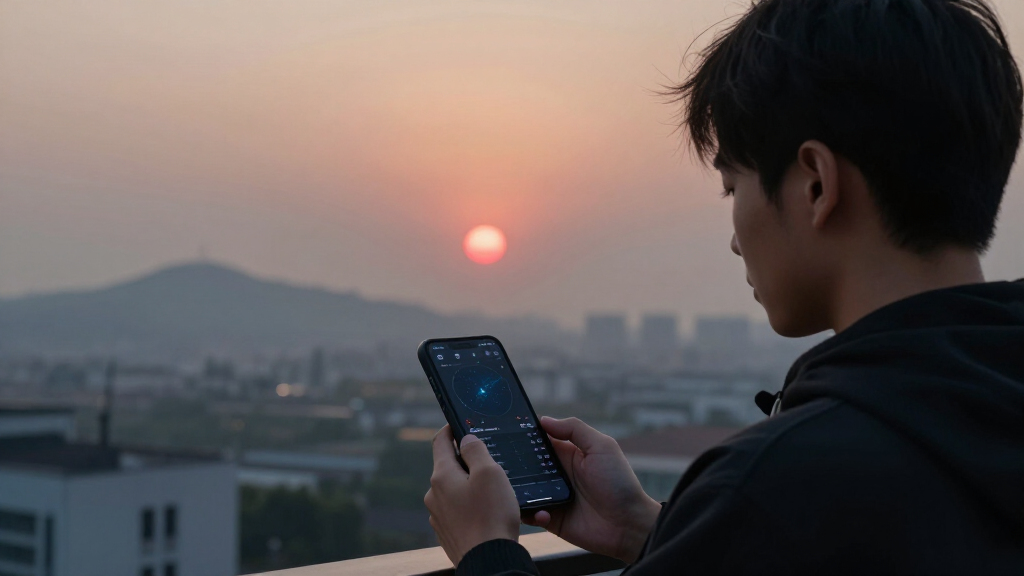
Photographing the red Sun requires proper filters and long lenses—never stare directly at it without protection.
Climate change is increasing wildfire frequency and severity, making fiery skies more common and dramatic.
Understanding aerosol effects helps us grasp broader climate impacts and prepare for more intense fire seasons.
Why Does Wildfire Smoke Make the Sun Look Red?
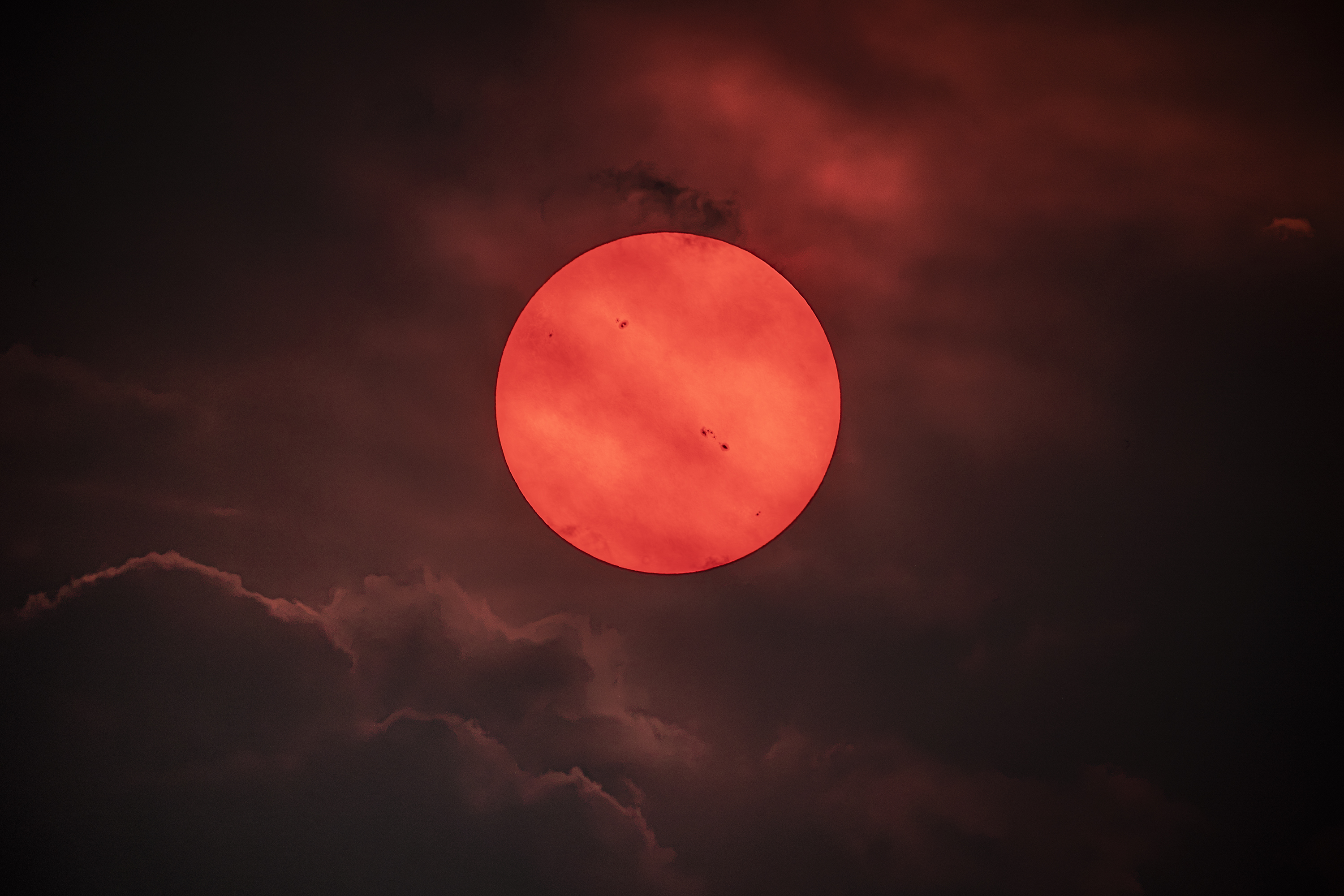
The Sun appears red during wildfires because tiny particles in the smoke scatter sunlight. When sunlight passes through thick smoke, the shorter blue and green wavelengths are scattered out of our line of sight. What remains are the longer red and orange wavelengths, giving the Sun its eerie, fiery glow.
Picture a dense cloud of soot and ash in the sky, like a filter that only lets through the warm hues. This effect is similar to sunsets, but wildfire smoke can intensify the redness. For example, during a 2026 wildfire in British Columbia, the Sun looked like a glowing ember, casting a reddish hue across the landscape.
According to NASA, the particles cause Mie scattering—larger particles than those responsible for typical atmospheric blue sky—making the reds even more intense during these events.
As an affiliate, we earn on qualifying purchases.
How Wildfire Smoke Changes the Sky and Our View of Space
Wildfire smoke doesn’t just tint the Sun; it affects the entire sky. When the particles are thick, the sky can turn hazy, with a muted, orange-gray tone. Celestial objects, like planets and stars, may appear dimmer or washed out, especially during high smoke events.
For instance, during recent wildfire seasons, observers reported seeing a dull, hazy sky with a reddish tinge, even during daytime. This effect can last for days or weeks, depending on the weather and fire intensity.
Satellite data from 2026 shows that smoke plumes can travel across continents, impacting air quality and atmospheric clarity thousands of miles from the fires. These particles influence Earth’s radiation balance by absorbing and scattering sunlight, which can warm or cool different regions over time.
long telephoto camera lens for astrophotography
As an affiliate, we earn on qualifying purchases.
As an affiliate, we earn on qualifying purchases.
Compare Wildfire Smoke’s Effect to a Sunset — What’s Different?
| Feature | Sunset/Sunrise |
|---|---|
| Cause | Natural aerosols, atmospheric conditions, daily cycle |
| Color | Warm reds, oranges, sometimes pinks |
| Particles involved | Dust, water droplets, pollution |
| Duration | Typically a few minutes to an hour |
In contrast, wildfire smoke can persist for days or weeks, continually tinting the sky and changing how the Sun looks. The intensity and color depend on fire severity, particle size, and weather patterns. Unlike sunsets, which are predictable and brief, wildfire smoke effects are often unpredictable and long-lasting.
As an affiliate, we earn on qualifying purchases.
3 Tips for Photographing a Fiery Red Sun Safely and Beautifully
- Use a camera with a long focal length or telephoto lens. It helps you zoom in on the Sun without risking eye damage.
- Never look directly at the Sun through your eyes or unfiltered optics. Always use proper solar filters or indirect viewing methods.
- Capture during the early morning or late afternoon when the Sun is lower. The smoke’s filtering effect is often more dramatic at these times.
For example, during the 2026 wildfire, a photographer used a 300mm lens and a solar filter to snap stunning images of the red Sun against a smoky sky. The result: a vivid, fiery orb that feels almost surreal.
wildfire smoke sky photography filters
As an affiliate, we earn on qualifying purchases.
As an affiliate, we earn on qualifying purchases.
What Climate Change Has to Do With More Wildfire Smoke
Climate change ramps up wildfire activity by creating hotter, drier conditions. Since 2020, wildfire seasons have grown longer and more intense, with 2026 seeing some of the worst fires in North America. This means more smoke in the atmosphere, and more chances to see that eerie, red Sun.
Research shows that rising global temperatures and drought conditions make forests more tinderbox-like. The result: more frequent fires, more aerosols, and more optical effects like the one in the NASA image.
This isn’t just about pretty pictures. The increased particles influence climate by trapping heat and altering the reflectivity of Earth’s surface and atmosphere.
Frequently Asked Questions
Is it safe to look directly at the Sun during wildfire smoke events?
No. Even if the Sun appears dim and red, it’s still extremely bright and can damage your eyes. Always use proper solar filters or indirect viewing methods.How long does the red Sun effect last during wildfire smoke events?
It varies with fire intensity, weather, and wind conditions. Sometimes it lasts only a few hours; other times, it can persist for days or weeks.Can wildfire smoke affect other planets or stars we see?
Yes. The particles scatter light across the sky, dulling or dimming celestial objects like planets and stars, especially during heavy smoke events.How does climate change influence the frequency of these smoky, red Sunscapes?
Rising global temperatures and drought conditions lead to more wildfires, which produce the smoke that turns the Sun red. This pattern is expected to continue as climate change accelerates.What can I do if I want to photograph the red Sun safely?
Use a telephoto lens and a solar filter, shoot during times when the Sun is low, and avoid looking directly at it through unfiltered optics. Protect your eyes at all costs.Conclusion
The next time you see a blood-red Sun through smoky skies, remember it’s more than just a pretty sight. It’s a vivid reminder of how climate-driven wildfires shape our atmosphere and our world. Those fiery sunsets aren’t just beautiful—they’re a warning sign.
Keep your camera ready, but always prioritize eye safety. And as wildfires grow more frequent, stay informed and appreciate the wild, fiery beauty of our changing planet.
NFL season / tailgating Picks
team gear
As an affiliate, we earn on qualifying purchases.