
TL;DR
M82, the Cigar Galaxy, is famous for its energetic supergalactic wind—gas and dust blasting out thousands of light-years. This wind results from intense starburst activity triggered by galaxy interactions, impacting galaxy growth and intergalactic space.
Ever wonder what makes a galaxy truly spectacular? M82, the so-called Cigar Galaxy, isn’t just a bright, elongated smudge in the night sky. It’s a dynamic, powerful cosmic engine, shooting out massive outflows that glow with fiery reds and oranges. This isn’t just pretty space art — it’s a window into how galaxies grow, change, and influence the universe around them.
In this story, we’ll explore what’s happening inside M82 — how its starburst activity fuels a supergalactic wind that stretches over 10,000 light-years, and why this matters for understanding galaxy evolution. You’ll see how a nearby galaxy interaction kick-started this cosmic phenomenon and why astronomers are so captivated by its fiery outbursts.
M82’s supergalactic wind is fueled by the intense energy of starbirth and supernovae, stretching over 10,000 light-years into space.
Multiple wavelengths—from optical to X-ray—help astronomers map and understand these massive outflows.
Galaxy interactions, like with M81, can trigger starbursts that generate winds capable of shaping galactic evolution.
Expelled gas and dust enrich the intergalactic medium, influencing future galaxy formation and chemical complexity.
You can spot M82 with small telescopes in Ursa Major, especially under dark skies, revealing its elongated, fiery shape.
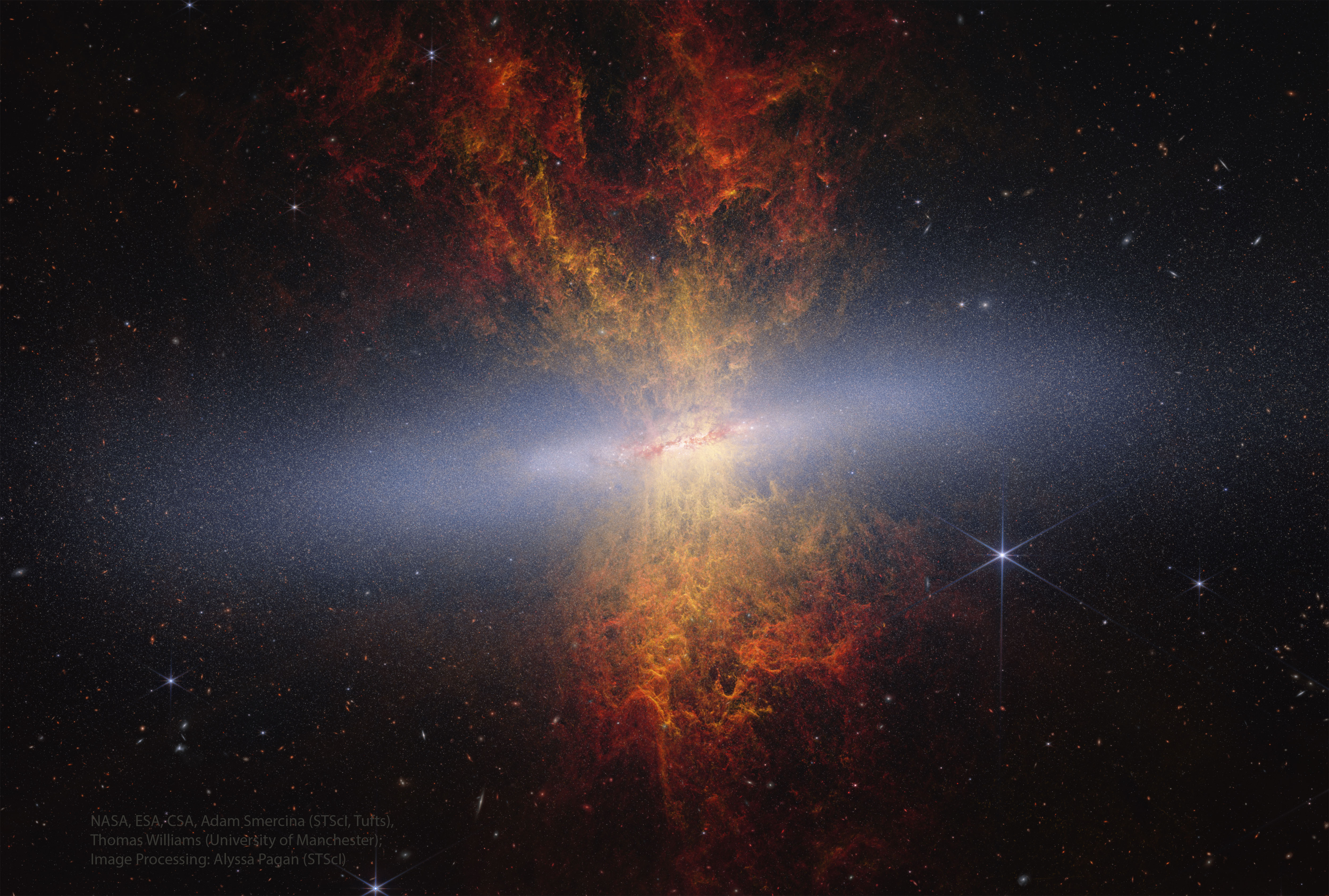
Why is M82 spewing gas and dust like a cosmic volcano?
Imagine a city with fireworks exploding every day. That’s what’s happening in M82’s core. The galaxy is undergoing a starburst — a frenzy of star formation that produces massive, short-lived stars. These stars live fast and die young, ending their lives in supernova explosions that blast gas outward at incredible speeds.
This collective energy creates a supergalactic wind — a colossal, fiery outflow that extends over 10,000 light-years into space. Think of it like a superheated, glowing cloud of dust and gas, glowing bright red and orange, driven by the combined push of stellar winds and supernovae. It’s the galaxy’s way of blowing off steam, but on a cosmic scale.
For example, recent images from the James Webb Space Telescope show these filaments glowing with infrared heat, revealing the dense, dust-laden environment fueling this outflow.
Understanding this process is crucial because such winds can regulate the galaxy’s future star formation by removing or heating the gas needed to form new stars. This acts as a natural feedback mechanism, preventing the galaxy from becoming overly massive or active. Moreover, these winds carry metals—elements heavier than helium—into intergalactic space, enriching the universe with the building blocks for planets and possibly life. This interplay between star formation, feedback, and chemical enrichment shapes the evolutionary path of galaxies like M82, highlighting the complex balance of cosmic growth and regulation.

Hawkko Telescope Kit for Kids 8-12, 80mm Aperture 500mm Portable Telescope
- Ideal for Kids and Beginners: Suitable for ages 8-12 and adults
- 80mm Aperture, 500mm Focal Length: Provides clear, detailed lunar views
- Includes Moon Learning Booklet: Learn moon facts and record observations
As an affiliate, we earn on qualifying purchases.
As an affiliate, we earn on qualifying purchases.
How do astronomers see the giant wind in action across space?
They use telescopes that can see different kinds of light—visible, infrared, X-ray—to piece together the full picture. In optical images, M82 looks like a glowing cigar, but in infrared, astronomers see the dust glowing brightly, revealing the wind’s structure. X-ray observations show hot gas heated to millions of degrees, streaming out at high velocities.
For instance, the Hubble Space Telescope captured stunning images of glowing filaments extending over 10,000 light-years. Meanwhile, Chandra X-ray Observatory images reveal a hot, diffuse halo around the galaxy’s core, confirming the wind’s violent nature.
These multiwavelength studies are essential because each wavelength band uncovers different aspects of the wind. Optical light shows us the cooler, ionized gas; infrared reveals dust and obscured regions; X-rays expose the extremely hot plasma. Together, they help scientists understand the wind’s composition, temperature, and velocity, which are crucial for modeling how such winds influence galaxy evolution. Without these diverse observations, we would have only a partial and potentially misleading picture of these powerful outflows, underscoring the importance of multiwavelength astronomy in understanding complex cosmic phenomena.

Celestron Cometron 7x50mm Astronomy Binoculars
- Easy-to-Use for Beginners: Ideal for learning astronomy
- 7x Magnification: Provides a wide field of view
- Large 50mm Objectives: Gathers more light for bright images
As an affiliate, we earn on qualifying purchases.
As an affiliate, we earn on qualifying purchases.
Compare M82’s supergalactic wind with other galaxy outflows
| Feature | M82 | Typical Galaxy Outflows |
|---|---|---|
| Extent | 10,000+ light-years | 1,000–5,000 light-years |
| Velocity | Over 1,000 km/s | 300–800 km/s |
| Driving Force | Starburst activity & supernovae | Less intense star formation |
| Visibility | Bright in infrared & X-ray | Primarily optical & UV |
Hawkko Telescope Kit for Kids 8-12, 80mm Aperture 500mm Portable Telescope
- Ideal for Kids and Beginners: Suitable for ages 8-12 and adults
- 80mm Aperture, 500mm Focal Length: Provides clear, detailed lunar views
- Includes Moon Learning Booklet: Learn moon facts and record observations
As an affiliate, we earn on qualifying purchases.
As an affiliate, we earn on qualifying purchases.
What happens to the gas and dust after it’s blown out?
Once out of the galaxy, this supergalactic wind disperses into intergalactic space, enriching it with metals and dust. Think of it like a cosmic dust storm spreading particles across the universe, influencing future galaxy formation.
This process can strip the galaxy of its gas reservoir, temporarily shutting down star formation — a kind of self-regulation. Over billions of years, these winds shape the growth and lifespan of galaxies like M82.
For example, astronomers have detected metal-rich gas in the intergalactic medium around M82, showing how these winds help seed the universe with complex elements essential for planets and life.
Understanding the fate of this expelled material is vital because it determines how galaxies evolve over cosmic timescales. If too much gas is lost, the galaxy’s ability to form new stars diminishes, potentially leading to a passive, aging galaxy. Conversely, some of this material can fall back, reigniting star formation or fueling black hole activity. These processes involve a delicate balance, and studying them reveals the complex feedback loops that govern galaxy life cycles, with winds acting as both creators and destroyers in cosmic evolution.

DWARFLAB Dwarf 3 Smart Telescope, App-Controlled Astrophotography Camera
- Ultra-Lightweight Design: Only 3lb for portability and travel
- Dual Imaging System: Day and night dual lens for versatile imaging
- 4K Auto-Tracking: Professional auto-tracking for clear shots
As an affiliate, we earn on qualifying purchases.
As an affiliate, we earn on qualifying purchases.
How can you see M82 from your backyard or a small telescope?
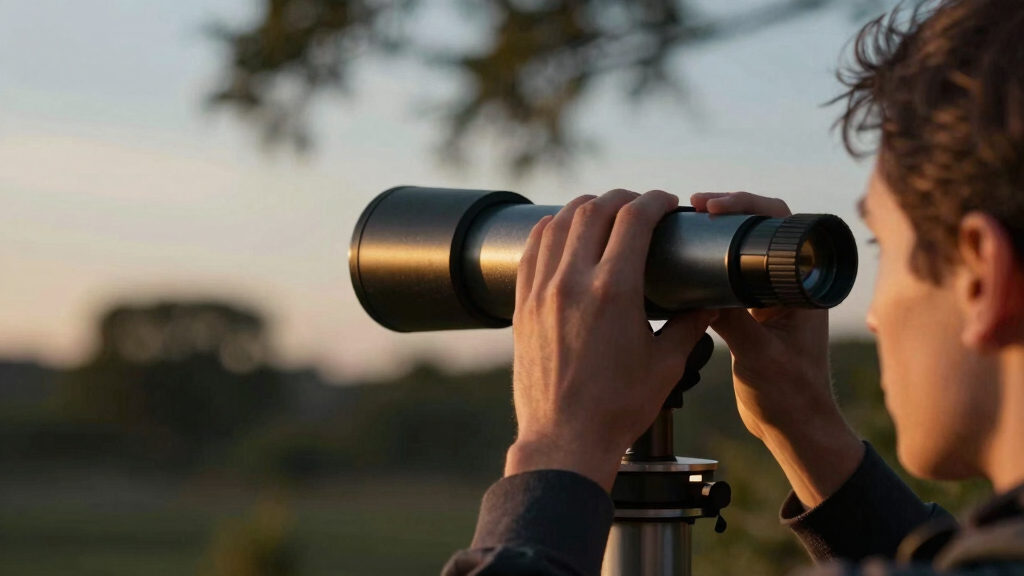
M82 is a bright target for amateur astronomers. Located in Ursa Major, it appears as a fuzzy, elongated smudge in binoculars or small telescopes. Under dark skies, its cigar shape becomes clearer, especially when you use a low-power, wide-field eyepiece.
Pro tip: Wait for a night with minimal moonlight and clear skies. Use a star chart to locate Ursa Major, then aim your scope slightly east of the Big Dipper’s bowl. Patience and steady hands will reward you with a glimpse of this fiery cosmic outflow.
Remember, the more stable your view, the better you’ll see the galaxy’s shape and faint glow of the wind’s filaments.
Frequently Asked Questions
What exactly causes the supergalactic wind in M82?
The wind is driven by the combined energy from thousands of massive stars forming and exploding as supernovae. Their stellar winds and shockwaves heat and push gas outward at speeds over 1,000 km/s, creating a colossal outflow.
Can I see M82 with binoculars or just a telescope?
Yes, M82 is visible with binoculars or small telescopes in Ursa Major. Look for a faint, elongated fuzzy patch—its cigar shape is more obvious under dark skies with steady hands.
How does galaxy interaction trigger this wind?
The gravitational tug from its neighbor, M81, compresses gas in M82’s core, igniting a starburst. This intense star formation then fuels the supergalactic wind, pushing gas out into space.
What role do these winds play in the universe?
They help distribute metals and dust into intergalactic space, enriching it and regulating future star formation. They’re a key part of how galaxies evolve over billions of years.
How do astronomers measure the speed of this wind?
Using spectroscopy, astronomers analyze the Doppler shifts in emission lines from gas in the wind. This reveals velocities exceeding 1,000 km/s, confirming the wind’s immense power.
Conclusion
M82’s supergalactic wind is a testament to the power of stellar activity shaping the universe. It’s a cosmic blowout that influences not just its own future but the fabric of space around it. Next time you look up, remember — galaxies are not silent islands, but fiery engines fueling the universe’s ongoing story.
Keep your eyes on the sky, because understanding these colossal winds helps us grasp the bigger picture of how galaxies grow, die, and give back to the cosmos.