
TL;DR

Prime made for students and young adults
- Fast, free delivery for dorm and study essentials
- Prime Video and Amazon Music included
- Member-only deals
NASA’s Solar Dynamics Observatory captured a massive coronal mass ejection, a huge burst of solar plasma that can disrupt Earth’s technology. Understanding these eruptions helps protect satellites, power grids, and astronauts from space weather chaos.
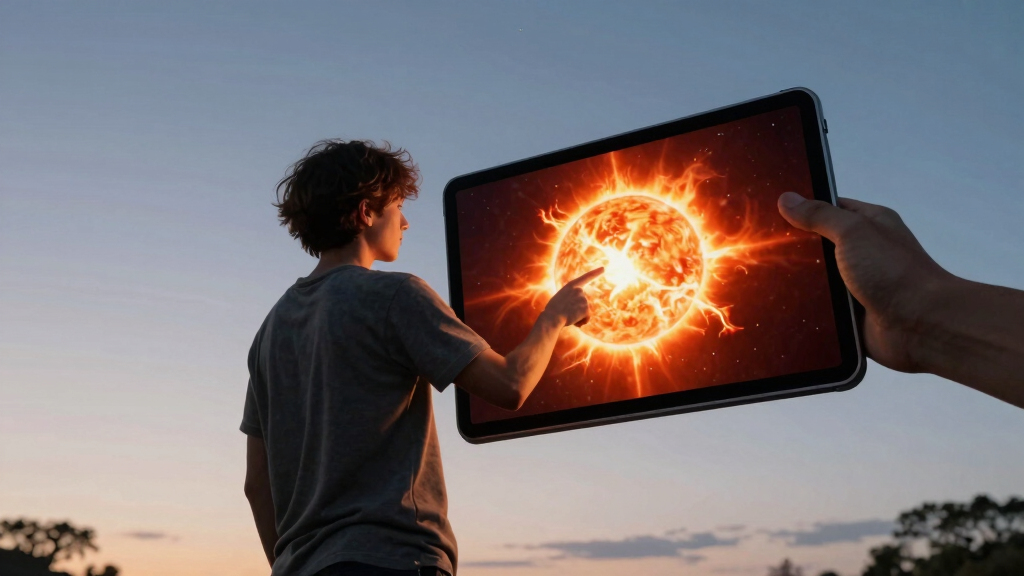
Imagine a fiery, twisting dance on the Sun’s surface. Bright loops of magnetic energy snapping and hurling billions of tons of plasma into space. That’s a coronal mass ejection, or CME—a solar storm that can ripple through our planet’s magnetic shield.
On June 24, 2026, NASA’s Solar Dynamics Observatory caught a spectacular glimpse of one such eruption. This isn’t just a pretty picture; it’s a vital clue in understanding how the Sun’s wild temperament can affect everything from satellites to power grids. Today, I’ll walk you through what a CME really is, how SDO observes it, and why this matters for you.
Key Takeaways
- A CME is a massive, high-speed burst of solar plasma that can cause geomagnetic storms on Earth.
- NASA’s SDO captures detailed images of solar eruptions, helping us understand and track these events.
- Advanced models now combine multiple data sources to better predict CME trajectories and impacts.
- Monitoring space weather is essential to protect satellites, power grids, and astronauts.
- Staying informed and prepared can minimize disruptions during solar storms.
As an affiliate, we earn on qualifying purchases.
What Exactly Is a Coronal Mass Ejection? Think of a Solar Fire Hose
A CME is a colossal burst of solar plasma—hot, ionized gas—that escapes the Sun’s corona, shooting into space at speeds often exceeding a million miles per hour. Imagine a fire hose turned up to max, blasting out trillions of kilograms of charged particles. These eruptions happen when magnetic loops in the Sun’s atmosphere become too stressed and suddenly snap, releasing their pent-up energy.
Understanding why CMEs matter goes beyond their impressive size. Their immense energy and speed mean they can carry a significant amount of magnetic flux and plasma that can interact violently with Earth’s magnetic field. This interaction can cause geomagnetic storms, which disrupt communication systems, navigation, and even power grids. The tradeoff is that while CMEs are natural solar processes, their unpredictability and potential for damage make studying them essential for safeguarding our technology-dependent society.
As an affiliate, we earn on qualifying purchases.
How Does NASA’s SDO Capture These Fiery Space Explosions? It’s Like a Solar Camera with Superpowers
The Solar Dynamics Observatory (SDO) is NASA’s high-tech solar eye, launched in 2010. It uses multiple telescopes to see the Sun in various wavelengths, revealing details as small as 1,000 miles across. During the June 24, 2026 event, SDO snapped images every 12 seconds, creating a time-lapse of the CME erupting from the Sun’s surface.
Think of it as a super-sharp, ever-watchful camera that captures the Sun’s wild mood swings. Its data helps scientists understand how magnetic fields twist, snap, and release energy. This detailed monitoring is crucial because it allows us to see the early signs of a CME, giving us a shot at predicting when it might hit Earth. The ability to observe these eruptions in real time also helps scientists refine models, which are essential for early warning systems that can save satellites, astronauts, and power grids from potentially catastrophic impacts.
As an affiliate, we earn on qualifying purchases.
Why Do CMEs Matter? They’re Like Space Weather’s Biggest Monsters
CMEs are more than just solar fireworks—they’re space weather monsters capable of causing real-world chaos. When a massive CME hits Earth’s magnetic field, it can trigger geomagnetic storms. These storms can disrupt GPS navigation, disable satellites, and even cause power blackouts on the ground.
In 1989, a CME caused a blackout in Quebec that lasted nine hours. The June 2026 event, while not directly hitting Earth, adds to our understanding of how these eruptions can travel across space and impact our technology. The implications are profound: a large CME could potentially damage critical infrastructure, leading to widespread outages and economic losses. Therefore, developing accurate prediction tools and understanding CME behavior is not just scientific curiosity but a crucial aspect of modern life’s resilience. The tradeoff is between the natural occurrence of these eruptions and our ability to mitigate their effects through advanced forecasting and preparedness.
As an affiliate, we earn on qualifying purchases.
How Scientists Track and Predict CMEs — The New Tools Making a Difference
Tracking a CME is like watching a cosmic game of cat and mouse. NASA’s SDO provides detailed images of where eruptions start, but predicting their journey to Earth needs more. That’s where other tools come in.
Modern prediction involves combining data from SDO, the Parker Solar Probe, and the Solar Orbiter. These missions give us a 3D view of the Sun’s magnetic field and plasma flows. By integrating all this data into sophisticated computer models, scientists can estimate if a CME will head toward Earth, and how strong it might be. This is crucial because early warnings can help mitigate potential damage, such as shutting down vulnerable systems or preparing astronauts for radiation exposure.
For example, after the June 24 eruption, models indicated the plasma was traveling at 1.2 million miles per hour, with a trajectory likely to pass near Earth’s orbit. The ability to predict not only if a CME will hit but also its intensity and timing represents a significant step forward in space weather forecasting, helping us make better decisions to protect our technological infrastructure and human activities in space.
3 Ways You Can Stay Ahead of Solar Storms in Your Daily Life
- Follow space weather alerts: NASA and NOAA send out warnings for major solar activity that could impact Earth.
- Secure your devices: During space storms, back up data and use surge protectors to guard electronics.
- Stay informed: Read up on solar activity forecasts if your work depends on satellite data or power stability.
For instance, if a CME is predicted to hit in the next 48 hours, you might want to postpone sensitive satellite launches or high-stakes operations.
The Big Picture: How Our Understanding of CMEs Is Improving
Every CME captured by SDO and other missions adds a piece to the puzzle. Researchers are now better at identifying the magnetic signals that lead to eruptions. They’re developing models that can predict a CME’s speed and path with increasing accuracy.
Recent advances in machine learning and data analysis allow scientists to process vast amounts of solar data quickly, identifying patterns that signal an imminent eruption. This progress is crucial because it means we’re moving toward a future where space weather forecasts are as routine and reliable as weather reports. The implications are significant: better predictions mean we can better protect our satellites, power grids, and astronauts from the potentially destructive effects of solar storms, reducing their impact on our daily lives and economic stability.
Frequently Asked Questions
What exactly causes a CME to happen?
A CME occurs when magnetic loops in the Sun’s corona become too stressed and suddenly snap, releasing trillions of kilograms of plasma into space at high speeds. This process is linked to magnetic field twists and energy buildup in active regions.
Can we predict exactly when a CME will hit Earth?
Prediction has improved with new models and real-time data, but exact timing remains challenging. Scientists can estimate the trajectory and speed, giving early warnings, but precise impact times are still difficult to nail down.
How dangerous are CMEs for everyday people?
Most CMEs don’t directly hit Earth. However, strong ones can disrupt satellites, GPS, and power systems, which can affect daily life. Staying informed and prepared helps reduce risks during significant space weather events.
What should I do if a big solar storm is forecasted?
Follow space weather alerts, back up important data, and unplug sensitive electronics if possible. Power companies and agencies also issue warnings to help you stay safe during geomagnetic storms.
Conclusion
Watching the Sun erupt in brilliant detail reminds us how dynamic and powerful our star really is. Every CME captured by SDO adds to our arsenal of knowledge, helping us shield our technology from its fiery outbursts. The more we learn, the better we get at turning solar chaos into safe, predictable space weather.
Next time you see a spectacular solar image, remember: behind that beauty lies a wild, energetic world that affects us all. Keep your eyes on the skies—and your gadgets protected.
Fall Picks
fall essentials
As an affiliate, we earn on qualifying purchases.