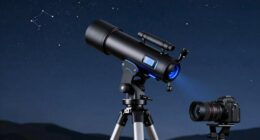
To calculate your camera’s field of view, you combine the sensor size with the focal length. First, convert the sensor dimensions to a ratio that relates to the focal length, then apply the formula: FOV = 2 × arctangent (sensor dimension / 2 × focal length). Smaller sensors crop the view, making focal length seem longer, while larger sensors provide a wider perspective at the same focal length. Keep exploring to discover how these calculations shape your photography.
Key Takeaways
- The field of view depends on both the sensor’s physical dimensions and the lens’s focal length.
- Smaller sensors produce narrower fields of view at the same focal length compared to larger sensors.
- The crop factor converts focal length to an effective focal length, affecting framing.
- Calculating the horizontal or vertical angle of view requires sensor size and focal length inputs.
- Using formulas or online calculators, you can determine the exact field of view based on sensor and lens specifications.
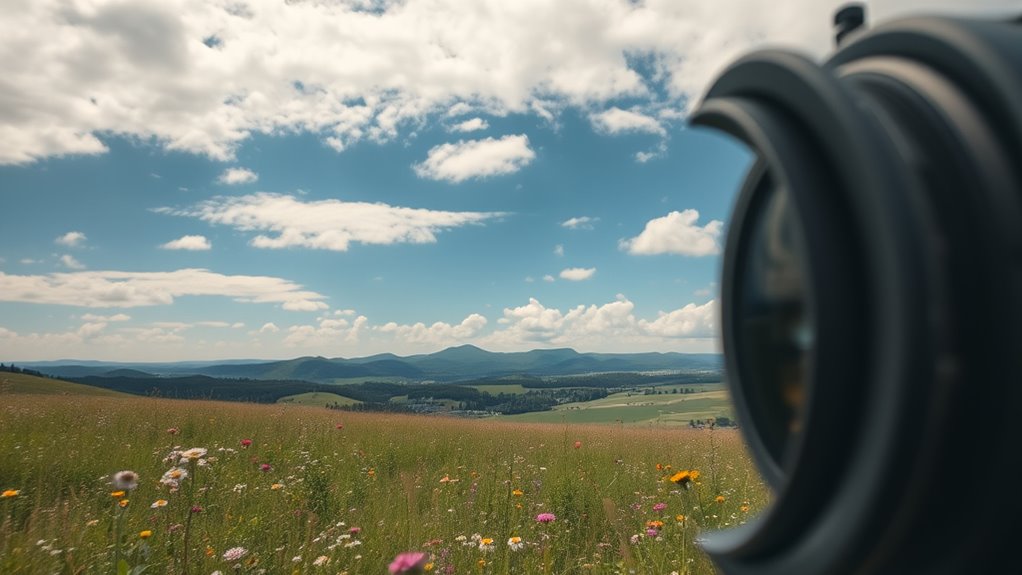
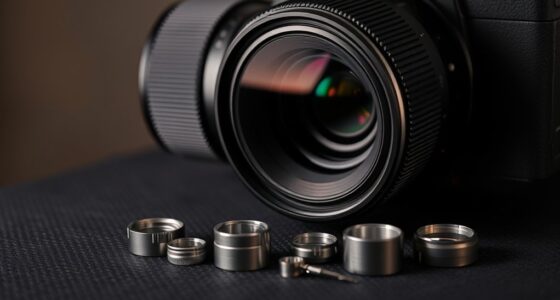
Have you ever wondered how photographers and videographers determine the area captured by their lenses? The answer lies in understanding how sensor dimensions and focal length variation work together to define your camera’s field of view. Sensor dimensions refer to the physical size of your camera’s image sensor, which can vary widely from compact sensors in smartphones to larger full-frame sensors used in professional cameras. The size of the sensor influences the field of view because larger sensors can capture more scene at the same focal length compared to smaller sensors. When you change the focal length of your lens, you’re effectively adjusting how zoomed-in or wide-angle your shot appears; this is known as focal length variation. A shorter focal length, like a 24mm lens, offers a wider field of view, making it ideal for landscapes or architecture, while a longer focal length, such as 200mm, narrows your view, bringing distant subjects closer for detailed portraits or wildlife shots.
Understanding how sensor dimensions and focal length variation interact allows you to predict and control what your camera captures. For example, if you’re using a camera with a smaller sensor—say, an APS-C sensor—your field of view will be narrower at a given focal length than with a full-frame sensor. This is because smaller sensors crop the image, effectively reducing the scene you see. Conversely, with a full-frame sensor, the same focal length provides a wider angle. This relationship is essential when choosing lenses for specific photography styles, as it affects composition and framing. When you switch lenses with different focal lengths, you’re adjusting the scope of your shot, but the sensor size also plays a role in how much of the scene you get. Additionally, sensor size impacts not only the field of view but also the depth of field and overall image quality, making it a crucial factor in your photographic choices.
Focal length variation isn’t a fixed measure; it depends on the lens design and how you manipulate it. Zoom lenses, for example, allow you to change focal lengths smoothly, giving you a dynamic range of fields of view without switching lenses. Prime lenses, with fixed focal lengths, require you to choose the appropriate lens beforehand but often deliver sharper images and better control over your framing. By understanding how sensor dimensions influence your field of view, you can make smarter choices about which lens to use for a particular shot, ensuring you capture exactly what you envision. Whether you’re shooting wide landscapes or tight portraits, knowing how sensor size and focal length variation work together helps you master your camera’s perspective and framing, leading to more intentional and compelling images.
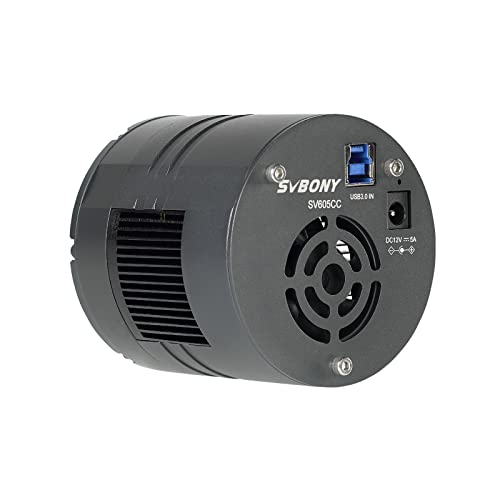
SVBONY SV605CC Cooled Astrophotography Camera, Double Layer Semiconductor Refrigeration, 9MP IMX533 USB3.0 CMOS Color Telescope Camera, for Deep Sky Astrophotography Panoramic Astronomy&Lucky Imaging
SV605CC deep sky camera is suitable for deep space photography enthusiasts; suitable for deep space photography; panoramic astronomy;...
As an affiliate, we earn on qualifying purchases.
Frequently Asked Questions
How Does Sensor Shape Affect Field of View?
Your sensor shape considerably impacts the field of view. A sensor with a wider aspect ratio, like a 16:9, provides a broader horizontal view, ideal for landscapes. Conversely, a sensor with a taller aspect ratio, such as 4:3, offers a more balanced view vertically. The sensor shape determines how much scene you capture, influencing your framing and composition based on the aspect ratio and overall sensor shape.
Can Changing Focal Length Alter Sensor Size?
No, changing focal length doesn’t alter sensor dimensions. Sensor size, including its width and height, remains fixed based on the camera’s design. When you increase focal length, you get a narrower field of view, zooming in more. Conversely, reducing focal length widens your view. So, while focal length affects how much you see, it doesn’t change the sensor’s physical dimensions.
How Do Crop Sensors Impact Field of View?
Crop sensors reduce your field of view compared to full-frame sensors because they crop the image, making your focal length effectively longer. For example, a 50mm lens on a crop sensor behaves like a 75mm lens on full-frame, narrowing your perspective. This means you need to adjust your focal length or shooting distance to achieve the desired composition, as sensor crop impacts how much of the scene you capture.
Is There a Formula to Estimate Maximum Field of View?
You can estimate your camera’s maximum field of view with a straightforward formula: multiply the sensor width by 0.5 (or height for portrait). Keep in mind, lens distortion and aperture effects can subtly influence your framing. While this formula gives a good starting point, real-world factors like lens quality may slightly tweak your actual view, so always consider testing with your specific gear.
How Do Digital Zoom and Sensor Size Interact?
Digital zoom enlarges your image by cropping and magnifying the sensor’s captured area, which impacts image quality. Your sensor size influences this because larger sensors capture more detail, making digital zoom less noticeable and preserving image clarity. Smaller sensors, however, show more pixelation when zoomed digitally. So, when you use digital zoom, a bigger sensor helps maintain sharpness, while a smaller sensor may produce a grainier image.

SVBONY SV405CC Cooled Telescope Camera, 11.7 MP USB3.0, BI IMX294 CMOS Color Sensor, Astrophotography Camera with AR Coating, Astronomy Electronic Eyepiece for Deep Sky Astrophotography&Lucky Imaging
High-Sensitivity 4/3" Sensor: Back-illuminated IMX294 with 4.63μm pixels (4144x2822) for excellent light capture. The 63ke- full well capacity...
As an affiliate, we earn on qualifying purchases.
Conclusion
Now that you’ve learned how sensor size and focal length dance together to shape your field of view, you hold the key to unblocking stunning perspectives. Think of your camera as a window to the world, where adjusting these elements paints a broader or more intimate scene. With this knowledge, you’re not just capturing moments—you’re painting vivid stories through your lens. So go ahead, explore the endless vistas waiting just beyond your camera’s eye!
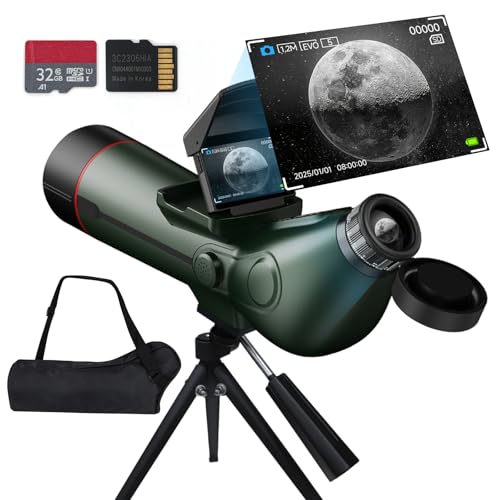
Smart Telescope, Professional Refractor Auto-focus Portable Digital Electronic Telescopes with 4K Astrophotography Camera, Internal And Externat Dual Screens Spotter for Adults and Beginners Astronomy
Exceptional Optical Performance:Equipped with a powerful 80mm aperture and 300mm focal length (f/8.89), this telescope for adults delivers...
As an affiliate, we earn on qualifying purchases.

ZWO Seestar S50 Smart Digital Telescope All-in-One Autofocus Portable for Beginners and Experienced Users-Open Box Like-New Condition Telescope
Lightweight Design: highly integrated all-in-one smart telescope. Seestar is a compact body that integrates a telescope, electrical focuser,...
As an affiliate, we earn on qualifying purchases.