

Pre-planning your composition is key to creating intentional, compelling images. Start by evaluating your scene and selecting key elements like highlights, textures, and story your shot wants to tell. Use sketches or thumbnails to experiment with layouts, applying rules like the rule of thirds and leading lines to guide focus. By visualizing your shot beforehand, you set yourself up for a balanced and eye-catching result. Keep exploring these tricks to refine your framing skills further.

Get school and study supplies delivered free — and shop member deals
- Fast, free delivery on millions of items
- Access to Prime Big Deal Days deals on October 6–7
- Prime Video, Amazon Music and more included
Key Takeaways
- Visualize the final shot with thumbnails or sketches to determine effective composition and focal points.
- Assess scene lighting and elements to plan highlights, shadows, and mood before setup.
- Use the rule of thirds and leading lines to position key subjects and guide viewer focus.
- Layer foreground, middle ground, and background to create depth and visual interest.
- Identify storytelling elements and emotional triggers to frame scenes purposefully.
photography composition sketchbook
As an affiliate, we earn on qualifying purchases.
As an affiliate, we earn on qualifying purchases.
Why Pre-Planning Your Framing Matters in Photography

Pre-planning your framing is essential because it allows you to visualize the final shot and make intentional choices that enhance your composition. When you plan ahead, you can focus on creating strong color harmony, selecting colors that complement or contrast effectively for visual impact. Additionally, considering lighting techniques early helps you set the mood and highlight key elements, ensuring your scene is well-lit and balanced. By thinking through these aspects beforehand, you avoid haphazard setups, saving time and reducing the need for major adjustments later. This proactive approach also helps you see how different framing options influence the overall feel, allowing you to craft a cohesive, compelling image from the start. Pre-planning ultimately empowers you to shoot with purpose and precision.
rule of thirds photography guide
As an affiliate, we earn on qualifying purchases.
As an affiliate, we earn on qualifying purchases.
How to Assess Your Scene and Choose Key Elements

How do you determine which parts of your scene deserve focus? Start by observing the lighting considerations—notice where natural or artificial light highlights your subjects, creating contrast or mood. Lighting can draw attention or set the tone for your shot. Additionally, understanding digital content formats can help you frame your scene more effectively. Next, evaluate perspective choices—consider your vantage point and how it emphasizes certain elements while minimizing distractions. Look for shapes, lines, and textures that guide the viewer’s eye toward your intended focal points. Identify the key elements that tell the story or evoke emotion. By carefully examining these aspects, you can decide which parts of your scene to prioritize, ensuring your composition captures the viewer’s interest and directs their attention effectively. Additionally, consider how top car protection can enhance your overall scene by providing a polished look for vehicles featured in your shots. For instance, a well-maintained vehicle can serve as an important visual focal point** that complements the overall composition.
leading lines photo framing tools
As an affiliate, we earn on qualifying purchases.
As an affiliate, we earn on qualifying purchases.
Visualize Your Composition With Thumbnails and Sketches
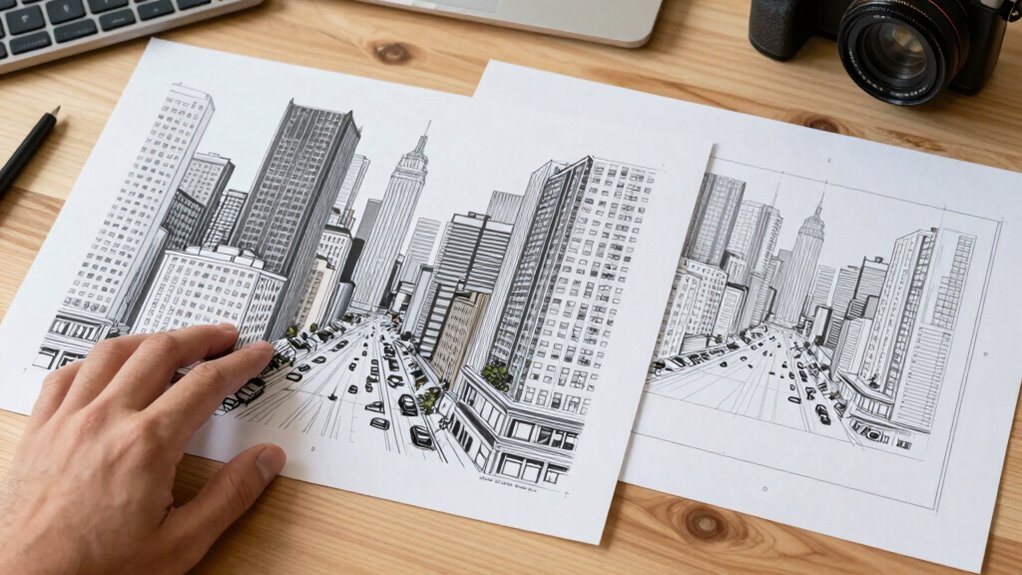
To bring your scene to life, start visualizing your composition through thumbnails and sketches. These quick, small drawings help you experiment with different arrangements, ensuring the balance of color harmony and composition before setting up your shot. Focus on how elements relate to each other, enhancing depth perception by layering objects and adjusting perspectives. Thumbnails allow you to test various framing options efficiently, making it easier to identify the most compelling composition. Sketches can refine your ideas, helping you visualize how foreground, middle ground, and background work together. By pre-planning with these tools, you gain clarity on your scene’s structure, saving time during setup and ensuring your final shot communicates the intended mood and message effectively. Additionally, consider incorporating bold colors and patterns to create focal points that draw attention to your composition.
As an affiliate, we earn on qualifying purchases.
Using Composition Rules to Frame Your Shot Effectively

Have you ever noticed how some shots immediately draw your eye and feel balanced, while others leave you feeling off-kilter? Using composition rules helps achieve that sense of balance and harmony. The rule of thirds guides you to place key elements along gridlines, creating a natural flow. Leading lines direct the viewer’s eye through the frame, guiding attention to your main subject. Balance isn’t just about symmetry; it’s about distributing visual weight evenly, so the scene feels stable. By intentionally applying these rules, you craft a shot that feels intentional and engaging. Remember, composition isn’t just about aesthetics—it’s about controlling how viewers experience your story. Mastering these techniques allows you to frame your shot effectively, making every element work in harmony.
Anticipate Viewer Focus and Tell Your Story Through Framing

Ever wonder why some shots immediately grab your attention and convey the story more powerfully? It’s often because you’ve anticipated viewer focus and framed accordingly. Use color harmony to guide the eye naturally toward the main subject, creating visual cohesion that emphasizes important details. Consider depth perception by layering elements—foreground, middle ground, background—to lead the viewer’s gaze through the scene. Framing techniques that highlight the subject’s importance help tell your story without words. By pre-planning how viewers will interpret your shot, you guarantee that focus remains where you want it. Thoughtful framing not only directs attention but also enhances emotional impact, making your story clearer and more compelling at a glance.
Frequently Asked Questions
How Do I Incorporate Storytelling Into My Framing Plan?
To incorporate storytelling into your framing plan, focus on visual storytelling by selecting elements that convey emotion, action, or context. Use compositional narrative techniques, like leading lines, framing devices, and focal points, to guide viewers’ eyes and emphasize the story you want to tell. Think about how each element in your frame contributes to the overall message, creating a cohesive narrative that engages and communicates effectively.
What Equipment Can Help With Pre-Visualizing My Composition?
Your camera accessories can transform your pre-visualization process into a masterpiece. Use a tilt-shift lens to experiment with perspective and a portable monitor for real-time composition techniques. A tripod guarantees stability, helping you visualize angles clearly. Color checkers and lens filters also aid in pre-visualizing lighting and mood. With these tools, you can confidently plan your shot, turning your vision into a stunning reality before even pressing the shutter.
How Early Should I Start Planning My Framing During a Shoot?
You should start planning your framing as early as possible, ideally during initial scouting or setup. Timing considerations are essential, so allow yourself flexibility to adjust as the scene evolves. By pre-visualizing and testing different compositions early, you gain framing flexibility, making it easier to adapt to changing conditions. This proactive approach guarantees you capture the best shot without rushing, giving you time to perfect your framing before taking the shot.
Can Framing Tricks Be Effective in Candid or Spontaneous Photography?
Yes, framing tricks can be effective in candid or spontaneous photography. You can use instant framing to quickly guide your eye toward the subject, even in unpredictable moments. Focusing on candid composition helps you capture genuine emotions without overly controlling the scene. By applying these techniques on the fly, you create compelling images that feel natural and well-structured, enhancing your ability to tell stories through spontaneous shots.
How Do Lighting Conditions Influence My Framing Pre-Planning?
Lighting conditions greatly influence your framing pre-planning by guiding your lighting analysis and mood setting. You’ll want to contemplate how natural or artificial light shapes the scene and highlights your subject. In bright conditions, plan for shadows and contrast, while softer light helps create a gentle mood. Adjust your framing to emphasize these lighting effects, ensuring your composition complements the atmosphere you want to convey.
Conclusion
By pre-planning your framing, you might just stumble upon the perfect shot when least expected—like spotting a hidden detail you hadn’t noticed before. When you assess your scene and visualize your composition beforehand, you set the stage for unexpected moments to shine through. Remember, framing isn’t just about rules; it’s about telling your story. So, stay open, trust your plan, and let those spontaneous coincidences bring your photos to life.
Halloween Picks
halloween
As an affiliate, we earn on qualifying purchases.