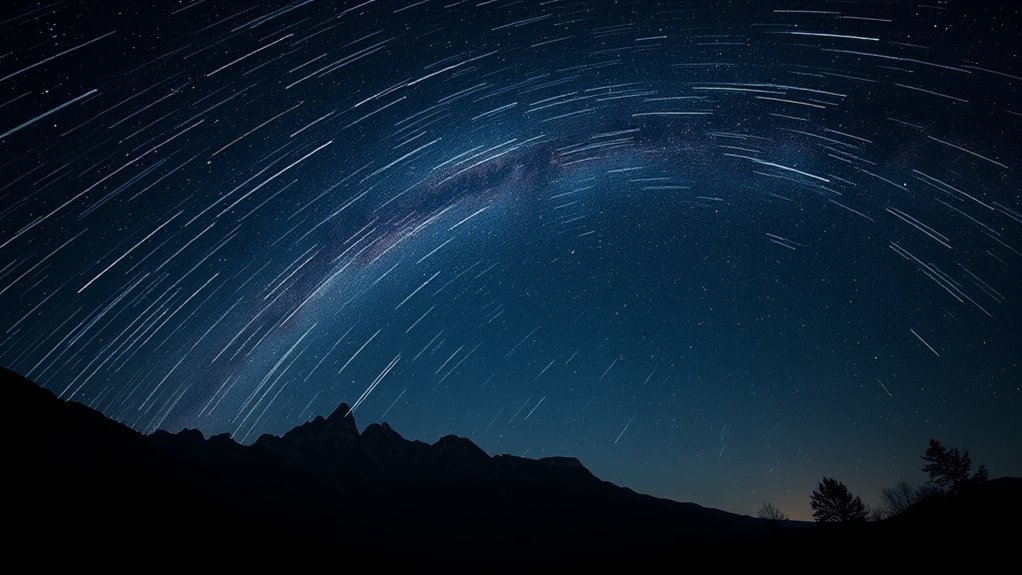
To capture a meteor shower, use a wide-angle lens (14-24mm) with a large aperture (f/2.8 or lower) for maximum light. Set your camera to manual mode, with a shutter speed of 15-30 seconds, ISO between 800-1600, and focus manually to infinity for sharp stars. Keep your camera steady on a tripod, and use a remote shutter to avoid shake. Adjust settings based on conditions, and explore more tips to perfect your captures.
Key Takeaways
- Use a wide-angle (14-24mm) lens with a wide aperture (f/2.8 or lower) for maximum sky coverage and light intake.
- Manually focus the lens to infinity and verify sharpness with test shots before capturing meteors.
- Set exposure between 15-30 seconds, ISO 800-1600, balancing meteor visibility and star trail prevention.
- Frame the scene to include a large portion of the dark sky, minimizing obstructions for higher meteor capture chances.
- Use a sturdy tripod, remote shutter or timer, and turn off image stabilization to ensure sharp, shake-free images.
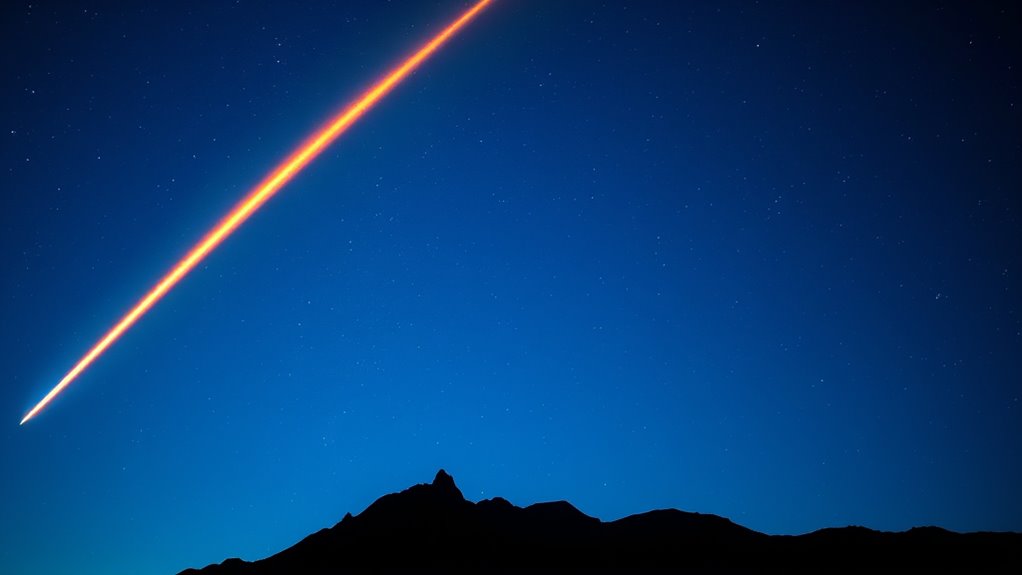
Have you ever wondered how to capture the breathtaking streaks of a meteor shower? If so, your first step is understanding your camera gear and settings. The camera lens you choose plays a vital role in framing the scene and gathering enough light. For meteor photography, a wide-angle lens is ideal because it allows you to capture a large portion of the sky, increasing your chances of catching those fleeting streaks. Typically, a lens with a focal length between 14mm and 24mm works best. Make sure your lens has a wide aperture, such as f/2.8 or lower, to maximize light intake during long exposures.
Capture meteor streaks with a wide-angle lens (14-24mm) and a wide aperture (f/2.8 or lower).
Next, you’ll need to set the correct exposure time to record the meteors effectively. Since meteors are brief and unpredictable, longer exposure times are essential. Generally, an exposure of 15 to 30 seconds strikes a good balance—it’s long enough to capture the streaks without causing star trails that distort your image. However, you might need to adjust based on your camera’s sensitivity and the specific conditions. Use manual mode to control exposure time precisely, and avoid using a shutter speed that’s too short, as it could miss the meteors altogether. Conversely, too long an exposure might cause star trails or overexposure if the sky is bright from moonlight or light pollution.
To further optimize your shot, turn off image stabilization if you’re using a tripod—this prevents unnecessary movement during long exposures. Set your ISO to a moderate level, around 800 to 1600, balancing sensitivity with noise levels. Higher ISO settings can pick up more meteors but might introduce graininess, so test a few shots beforehand to find the best compromise. Focus is another essential factor; manually focus your lens to infinity, and do a test shot to ensure stars are sharp and points of light are crisp. Additionally, using waterproof or weather-resistant equipment can be beneficial if you’re shooting in outdoor conditions where dew or rain might occur.
Finally, consider other elements like a remote shutter release or timer to avoid camera shake when pressing the button. Keep an eye on the sky and be patient, as meteors are unpredictable. With the right camera lens, proper exposure time, and settings, you’ll increase your chances of capturing stunning streaks against the night sky. Practice, experiment, and you’ll soon have a collection of awe-inspiring meteor shots that showcase the beauty of these celestial events.

Nikon NIKKOR Z 14-24mm f/2.8 S | Professional Large Aperture Wide-Angle Zoom Lens for Z Series mirrorless Cameras | Nikon USA Model
- Focal Length Range: 14-24mm ultra-wide zoom
- Aperture: Constant f/2.8 aperture
- Optical Quality: Outstanding optics and resolution
As an affiliate, we earn on qualifying purchases.
As an affiliate, we earn on qualifying purchases.
Frequently Asked Questions
What Are the Best Lenses for Capturing Meteor Showers?
You should choose a wide-angle lens with a focal length between 14mm and 24mm for capturing meteor showers. These lenses offer a broad field of view, allowing you to include more sky and increase your chances of catching meteors. Opt for a lens with a fast aperture, like f/2.8 or wider, to gather more light during night photography. Proper lens selection and focal length help create stunning, expansive shots of meteor showers.
How Do Weather Conditions Affect Meteor-Shower Photography?
Weather conditions greatly impact your meteor-shower photos. For example, 60% of clear nights show more meteors than cloudy ones. Cloud cover blocks your view, while atmospheric turbulence causes star trails and blurring. To get sharp shots, check weather forecasts for clear skies and low turbulence. Planning around these factors ensures you capture the most spectacular meteor displays, making your photos truly unforgettable.
What Safety Precautions Should I Take When Photographing at Night?
When photographing at night, you should prioritize safety by ensuring tripod stability to prevent accidents and keep your camera secure. Wear eye protection, such as sunglasses or tinted glasses, to shield your eyes from bright flashes or unexpected light sources. Stay aware of your surroundings, avoid slippery surfaces, and bring a flashlight. These precautions help you stay safe and focused, making your meteor-shower photography experience enjoyable and accident-free.
How Can I Prevent Camera Shake During Long Exposures?
To prevent camera shake during long exposures, guarantee your tripod stability is solid by tightening all legs and using a sturdy surface. Use a remote shutter release or the camera’s timer function to avoid touching the camera when taking the shot. This minimizes vibrations and keeps your images sharp. Also, consider using mirror lock-up if your camera has that feature, further reducing any movement during exposure.
What Post-Processing Techniques Enhance Meteor-Shower Images?
To enhance your meteor-shower images, try astrophotography editing to brighten streaks and improve contrast. Use noise reduction techniques to remove grain from long exposures, making your meteors stand out sharply against the sky. Adjust color balance for a more natural or dramatic look, and consider sharpening details to highlight meteor trails. These post-processing steps will make your captures more striking and visually appealing, bringing your night sky scenes to life.

Remote Shutter Release Cable, Wired Remote Switch Cord Replacement RS-60E3 for Canon Rebel T7 T7i T6 T6i T6S T5 T5i T4i T3 T3i T2 60D 70D 77D 80D G16 G15 G12 G11 G10 G1X G1X Mark II G1X Mark III
- Compatible Cameras: Supports Canon models including Rebel and G series
- Full Button Functionality: Replicates all shutter release button functions
- Enhanced Image Stability: Control autofocus and shutter release for steady shots
As an affiliate, we earn on qualifying purchases.
As an affiliate, we earn on qualifying purchases.
Conclusion
Now that you’ve mastered the perfect camera settings and composition, get ready to capture meteor showers like a celestial legend. Imagine your photos lighting up the night sky with streaks so breathtaking, they’ll make the universe stop and stare. With your newfound skills, you could make even the darkest night explode with cosmic wonder. So grab your camera, stay patient, and prepare to turn the night sky into your personal fireworks show—an epic spectacle the world will never forget!

K&F CONCEPT Light Stand for Photography, 9.1ft/2.8M Extendable Tripod
- Sturdy and Stable Construction: Made of high-quality metal for durability
- Extendable Height: Adjusts from 112cm to 280cm with special buckle
- High Load Capacity: Supports up to 8kg weight
As an affiliate, we earn on qualifying purchases.
As an affiliate, we earn on qualifying purchases.
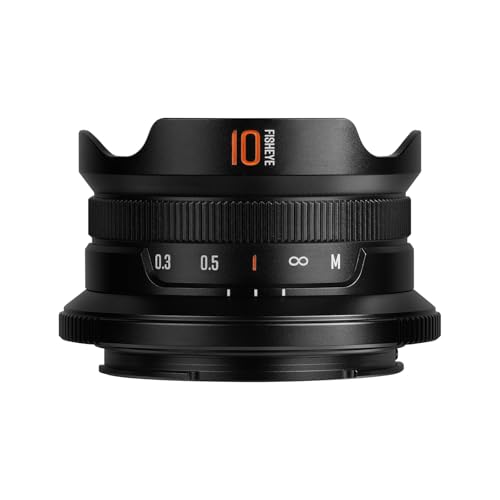
Brightin Star 10mm F5.6 II Fisheye Manual Focus Prime Lens for Sony E Mount APS-C Mirrorless Cameras, Fit for ZV-E10, A7IV, A6400, A7II, A7SIII, A7III, A7C, A6600, A7RIV, A7RIII, NEX(Black)
- Ultra-Wide Field of View: 173° fisheye perspective for creative shots
- Distinct Fish-Eye Distortion: Adds artistic flair and playful effects
- Lightweight and Portable: Only 132g, easy to carry anywhere
As an affiliate, we earn on qualifying purchases.
As an affiliate, we earn on qualifying purchases.