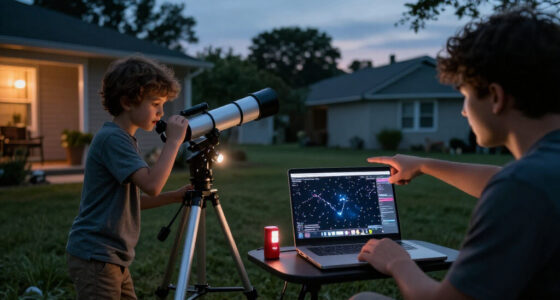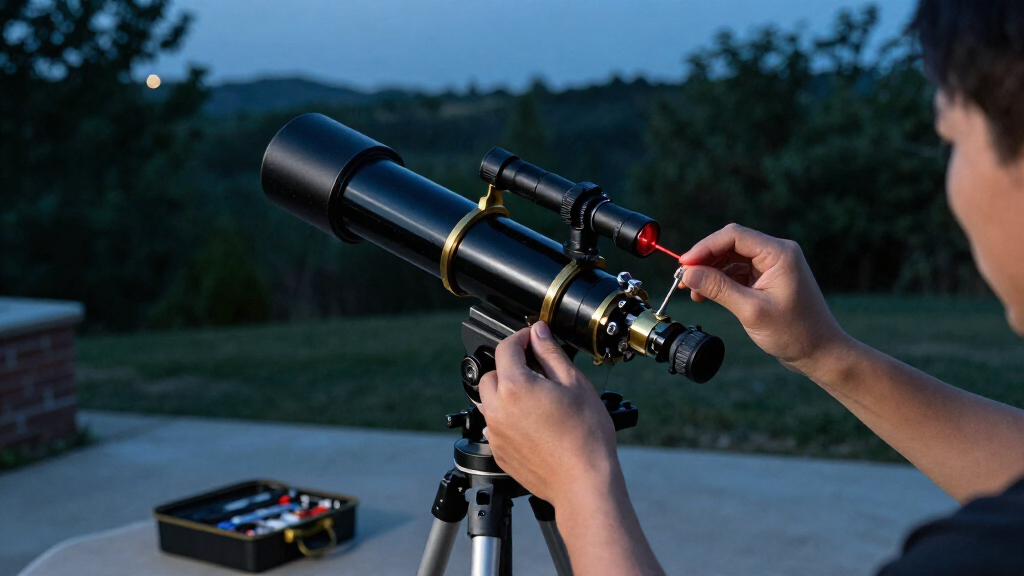
The best telescope collimation tools for most Newtonian owners are a Cheshire eyepiece for dependable visual alignment, with the Farpoint 1.25-Inch Cheshire standing out as the strongest precision-focused pick. For faster checks, the Astromania Cheshire and laser bundle pairs two alignment methods, while the SVBONY 1.25/2-Inch laser collimator suits users who need compatibility across focuser sizes. The main tradeoff is between a simple, battery-free Cheshire and a quicker laser that depends on its own calibration and a secure fit. Telescope design, adapter fit, and how much adjustment you want to do also shape the right choice. Read on for the full comparison, buying advice, and picks for different needs.

Prime made for students and young adults
- Fast, free delivery for dorm and study essentials
- Prime Video and Amazon Music included
- Member-only deals
Key Takeaways
- Cheshire tools lead this roundup for straightforward visual alignment: the Farpoint FP260 is the precision-oriented pick, while shorter and simpler designs may better suit compact setups or occasional checks.
- Laser convenience depends on reliable calibration and fit. A laser can speed up routine checks, but a loose adapter or misaligned beam can send an otherwise careful adjustment off course.
- The Astromania Cheshire-and-laser bundle offers the broadest method choice in one set, making it more flexible than buying a single tool, though it may be more than a beginner needs.
- Two-inch compatibility is not consistent across laser models. Check whether a tool has a true 2-inch barrel or relies on an adapter before assuming it fits your focuser.
- Most listed products target Newtonian reflectors. SCT compatibility appears in some Cheshire product names, but buyers should confirm the tool’s alignment method suits their telescope rather than relying on a broad label.
| Celticbird 1.25-Inch Collimation Eyepiece with Crosshair for Newtonian Telescopes |  | Best for Cross-Type Compatibility | Mount diameter: 1.25 inches (31.75 mm) | Compatible telescopes: Newtonian reflectors, Dobsonian reflectors, Schmidt-Cassegrain telescopes | Focuser compatibility: 1.25-inch focusers or diagonals | VIEW LATEST PRICE | See Our Full Breakdown |
| Cheshire Eyepiece Collimation Tool for Newtonian Reflector Telescopes |  | Best Compact Newtonian Pick | Material: Aluminum alloy | Approximate size: 1.25 inches | Dimensions: 1.85 × 1.65 × 1.85 inches | VIEW LATEST PRICE | See Our Full Breakdown |
| Astromania 1.25-Inch Short Cheshire Collimating Eyepiece |  | Best for Fast Telescopes | Focuser size: 1.25 inches | Barrel design: Short version | Material: Aluminum | VIEW LATEST PRICE | See Our Full Breakdown |
| SVBONY Laser Collimator for Reflector Telescopes, 1.25-Inch and 2-Inch |  | Best for Two Focuser Sizes | Model: FUSF9123A | Compatible telescope type: Reflector telescope | Mount sizes: 1.25 inches and 2 inches | VIEW LATEST PRICE | See Our Full Breakdown |
| Luqeeg 1.25-Inch Telescope Collimation Eyepiece for Reflector Alignment |  | Best Minimalist Manual Tool | Type: Telescope collimation eyepiece | Gauge diameter: 1.25 inches | Material: Aluminum alloy | VIEW LATEST PRICE | See Our Full Breakdown |
| Astromania 1.25-Inch Laser Collimator for Newtonian Telescopes |  | Best Compact Laser for 1.25-Inch Focusers | Compatible telescopes: Reflector telescopes with 1.25-inch focusers | Mount size: 1.25 inches | Laser: Red, 635–655 nm | VIEW LATEST PRICE | See Our Full Breakdown |
| Farpoint 1.25-Inch Cheshire Collimator (FP260) |  | Best Cheshire Kit for Center-Marking | Model: FP260 | Tool type: Cheshire collimator | Diameter: 1.25 in (31.75 mm) | VIEW LATEST PRICE | See Our Full Breakdown |
| Astromania Laser Collimator for Newtonian Telescopes, 1.25/2-Inch |  | Best Laser for Mixed Focuser Sizes | Compatible telescopes: Newtonian reflector telescopes | Focuser sizes: 1.25 inches and 2 inches | Laser: Red, 635–655 nm | VIEW LATEST PRICE | See Our Full Breakdown |
| Astromania Cheshire Eyepiece and Laser Collimator Bundle for Newtonian Telescopes |  | Best Dual-Method Bundle | Included tools: Metal Cheshire eyepiece and laser collimator | Focuser compatibility: 1.25-inch and 2-inch | Adapter: Removable 2-inch adapter | VIEW LATEST PRICE | See Our Full Breakdown |
| SVBONY SV197 1.25-Inch Cheshire Collimating Eyepiece |  | Best Cheshire for Crosshair Visibility | Tool type: Cheshire collimating eyepiece | Mount size: 1.25 inches | Compatible telescopes: Newtonian reflector and SCT reflector telescopes | VIEW LATEST PRICE | See Our Full Breakdown |
| Alstar Laser Collimator for Newtonian Telescopes, 1.25-Inch with 2-Inch Adapter |  | Best for Mixed-Size Focusers | Telescope compatibility: Newtonian and reflector telescopes | Focuser fit: 1.25 inches; removable 2-inch adapter included | Laser: Red, 635–655 nm, 3.8 mW | VIEW LATEST PRICE | See Our Full Breakdown |
| Alstar Cheshire Collimating Eyepiece for Newtonian and SCT Telescopes |  | Best for Secondary-Mirror Centering | Compatible telescopes: Newtonian and Schmidt-Cassegrain | Focuser fit: 1.25 inches | Tube length: 14.7 cm (6 inches) | VIEW LATEST PRICE | See Our Full Breakdown |
| Alstar Laser Collimator for 1.25-Inch Newtonian Telescopes |  | Best Simple Laser Pick | Designed for: Reflector telescopes | Focuser compatibility: 1.25 inches | Laser: Red, 635–655 nm, less than 5 mW | VIEW LATEST PRICE | See Our Full Breakdown |
| Celestron Cheshire Collimation Eyepiece for Reflector and SCT Telescopes |  | Best for Straightforward Manual Alignment | Model: 94182 | Tool type: Cheshire collimation eyepiece | Compatible devices: Telescopes with 1.25-inch focusers or diagonals | VIEW LATEST PRICE | See Our Full Breakdown |
| Tydeux Cheshire Collimation Eyepiece for Reflector and SCT Telescopes, 1.25-Inch |  | Best for Broad Telescope Compatibility | Compatible telescopes: Newtonian reflector, Dobsonian reflector, Schmidt-Cassegrain | Focuser size: 1.25 inches | Body material: Aluminum | VIEW LATEST PRICE | See Our Full Breakdown |
More Details on Our Top Picks
Celticbird 1.25-Inch Collimation Eyepiece with Crosshair for Newtonian Telescopes
The Celticbird suits owners who want a visual alignment tool that is not limited to Newtonian and Dobsonian reflectors: its stated compatibility also includes Schmidt-Cassegrain telescopes. The 45-degree plate and crosshair give you references for checking mirror alignment, while the standard 1.25-inch fit works with compatible focusers or diagonals. Compared with the Newtonian-specific Cheshire Eyepiece Collimation Tool, this is the broader choice on paper. It remains a manual tool, though, so you must interpret the view and adjust the telescope’s optical elements yourself; it does not offer the laser-based workflow of the SVBONY laser collimator. Choose it for visual reference and wider stated scope compatibility, not for quick, guided alignment.
Pros:- 45-degree plate and crosshair provide visual alignment references
- Fits standard 1.25-inch focusers or diagonals
- Stated compatibility includes Newtonian, Dobsonian, and Schmidt-Cassegrain telescopes
Cons:- Manual alignment requires the user to interpret the view and adjust optical elements
- Designed primarily for reflector collimation rather than general observing
Best for: Owners of 1.25-inch Newtonian, Dobsonian, or Schmidt-Cassegrain telescopes who want a crosshair-based visual alignment aid.
Not ideal for: Observers who want laser-guided alignment or a tool that minimizes manual interpretation and adjustment.
- Mount diameter:1.25 inches (31.75 mm)
- Compatible telescopes:Newtonian reflectors, Dobsonian reflectors, Schmidt-Cassegrain telescopes
- Focuser compatibility:1.25-inch focusers or diagonals
- Viewing plate angle:45 degrees
- Focus type:Manual
- Item dimensions:5 × 5 × 2 inches
Our verdict“Choose the Celticbird if you want a manual crosshair tool with broader stated telescope compatibility than Newtonian-only options.”
Cheshire Eyepiece Collimation Tool for Newtonian Reflector Telescopes
This Cheshire is a straightforward option for Newtonian owners who want a compact, manual alignment aid with a metal body. Its 45-degree viewing angle supports inspection from the side, and the pull-out ring is described as an aid during collimation. At about 1.25 inches, it fits the common focuser format, while its listed dimensions make it less of a bulky accessory than the SVBONY laser collimator. The tradeoff is narrower scope fit: unlike the Celticbird, this model is specified for Newtonian reflectors only, and it lacks the advertised crosshair detail of the Astromania short Cheshire. Pick it when compactness and a simple Newtonian-focused tool matter more than broader compatibility or a laser workflow.
Pros:- Aluminum alloy body
- 45-degree viewing angle supports visual inspection
- Compact size for a 1.25-inch focuser
- Pull-out ring is included as a collimation aid
Cons:- Compatibility is specified only for Newtonian reflector telescopes
- Manual viewing and adjustment take more interpretation than a laser-based approach
Best for: Newtonian reflector owners seeking a compact, metal-bodied Cheshire for manual alignment in a 1.25-inch focuser.
Not ideal for: Owners of Schmidt-Cassegrain or Dobsonian telescopes who need explicitly stated compatibility beyond Newtonian reflectors, or buyers seeking laser alignment.
- Material:Aluminum alloy
- Approximate size:1.25 inches
- Dimensions:1.85 × 1.65 × 1.85 inches
- Weight:3.36 ounces
- Color:Black
- Compatibility:Newtonian reflector telescopes
- Package contents:1 collimator
Our verdict“Choose this compact Cheshire for a simple manual Newtonian setup, but look to the Celticbird for broader stated telescope compatibility.”
Astromania 1.25-Inch Short Cheshire Collimating Eyepiece
The Astromania earns its place for buyers whose telescope geometry makes a shorter tool useful. Its short barrel is intended to provide clearance in fast Newtonian and Dobsonian setups, while the fine crosshair and 45-degree plate give you visual references for mirror alignment. Compared with the basic Cheshire Eyepiece Collimation Tool, it offers a clearly stated short-barrel design and crosshair; compared with the laser-based SVBONY, it keeps alignment entirely visual and needs no battery. Its stated compatibility also includes Schmidt-Cassegrain telescopes. The compromise is familiar for this tool type: alignment remains manual, and the eyepiece is for collimation rather than observing. Choose it when barrel clearance and visible references matter more than speed or laser convenience.
Pros:- Short barrel is designed to improve clearance in fast Newtonian and Dobsonian telescopes
- Fine crosshair and 45-degree plate provide visual alignment references
- Fits standard 1.25-inch focusers
- Aluminum construction
Cons:- Requires manual viewing and optical adjustments
- Designed for collimation rather than general-purpose observing
Best for: Owners of fast Newtonian or Dobsonian telescopes who need a short-barrel visual collimator with a crosshair.
Not ideal for: Buyers who prefer laser-guided alignment, or anyone looking for an eyepiece for general observing.
- Focuser size:1.25 inches
- Barrel design:Short version
- Material:Aluminum
- Alignment reference:Fine crosshair
- Viewing plate:45-degree plate
- Compatible telescope types:Newtonian, Dobsonian, and Schmidt-Cassegrain
- Focus type:Manual
Our verdict“Choose the Astromania short Cheshire when clearance in a fast telescope is the priority and you prefer manual visual alignment over a laser.”
SVBONY Laser Collimator for Reflector Telescopes, 1.25-Inch and 2-Inch
The SVBONY stands apart from the Cheshire options by using a battery-powered red laser and supporting both 1.25-inch and 2-inch mounts with a removable adapter. That flexibility makes it the strongest fit here for reflector owners who use different focuser sizes or want a laser-based alternative to looking through a crosshair tool such as the Astromania short Cheshire. Seven brightness levels let you adjust the beam for different lighting conditions, and the metal body adds a durable-feeling construction choice. The tradeoffs are practical: it needs batteries and is specified for reflector telescopes, while manual Cheshire tools do not depend on power. It also weighs 224 g, so it is less compact than the small manual options. Choose it for mount-size flexibility and laser alignment, not for universal scope compatibility.
Pros:- Supports 1.25-inch and 2-inch mounts with a removable adapter
- Red laser has seven brightness levels
- Metal body
- Alignment instructions are included
Cons:- Requires batteries
- Compatibility is specified for reflector telescopes
- Heavier than the compact manual Cheshire options at 224 g
Best for: Reflector owners who need one laser collimator for both 1.25-inch and 2-inch mounts and value adjustable beam brightness.
Not ideal for: Observers with non-reflector telescopes or buyers who want a battery-free, lightweight manual tool.
- Model:FUSF9123A
- Compatible telescope type:Reflector telescope
- Mount sizes:1.25 inches and 2 inches
- Laser:Red, 7 brightness levels
- Body material:Metal
- Lens:Triple cemented
- Power source:Battery-powered
- Weight:224 g
- Dimensions:8.19 × 3.51 × 2.34 inches
Our verdict“Choose the SVBONY if you want laser alignment and need compatibility with both 1.25-inch and 2-inch reflector mounts.”
Luqeeg 1.25-Inch Telescope Collimation Eyepiece for Reflector Alignment
The Luqeeg is a pared-back choice for reflector owners who want an aluminum-alloy tool focused on optical-axis alignment. Its stated method is direct: insert the 1.25-inch eyepiece and adjust until the black dot is centered between the alignment lines. The CNC-finished body and compact length give it a different emphasis from the Astromania short Cheshire, which specifically lists a fine crosshair and 45-degree plate. The Luqeeg’s provided details do not specify those viewing references, nor do they name telescope types beyond reflectors, so buyers should not assume the same compatibility breadth as the Celticbird. It also requires manual adjustment and interpretation. This is a focused, simple option for a reflector setup, but less suitable when detailed alignment references or broader scope compatibility are deciding factors.
Pros:- Aluminum alloy body with CNC finish
- 1.25-inch format suits compatible focusers
- Designed for optical-axis alignment in reflector telescopes
Cons:- Compatibility details do not specify telescope types beyond reflectors
- Requires manual adjustment until the black dot is centered
- Provided specifications do not list a crosshair or angled viewing plate
Best for: Reflector telescope owners who want a compact, aluminum-alloy manual tool and are comfortable centering the black dot with alignment lines.
Not ideal for: Buyers who need confirmed compatibility with specific non-reflector telescope types or want a clearly specified crosshair and angled viewing plate.
- Type:Telescope collimation eyepiece
- Gauge diameter:1.25 inches
- Material:Aluminum alloy
- Color:Black
- Length:64 mm (2.52 inches)
- Diameter:35 mm (1.38 inches)
- Weight:92 g
- Compatibility:Reflector telescopes
Our verdict“Choose the Luqeeg for a compact, straightforward manual reflector tool, but prefer the Astromania if you want a specified crosshair and 45-degree plate.”
Astromania 1.25-Inch Laser Collimator for Newtonian Telescopes
The Astromania 1.25-Inch Laser Collimator suits Newtonian owners who want a portable beam-based tool without carrying an adapter. Its seven brightness levels let users adjust the red beam for different lighting, while the metal body is a sturdier choice than a lightweight plastic tool. Compared with the 1.25/2-inch Astromania laser, this model is simpler to fit in a standard focuser but cannot serve a 2-inch setup. It also differs from the Farpoint FP260 Cheshire: the laser offers a quick beam check, while the Cheshire needs ambient light and visual alignment. The tradeoff is that the adjustment openings arrive sealed; users must remove the rear screw cap before making adjustments. Its Class 3R output also calls for careful handling.
Pros:- Seven brightness levels adapt the red beam to different viewing conditions.
- Metal body with an anodized aluminum finish.
- CR2032 battery and German and English instructions are included.
- Compact format is convenient for transport.
Cons:- Fits only standard 1.25-inch focusers.
- Adjustment openings need to be opened by removing the rear screw cap.
- Requires a battery and careful handling of its Class 3R laser.
Best for: Newtonian owners with a standard 1.25-inch focuser who want a compact, battery-powered laser and do not need 2-inch compatibility.
Not ideal for: Telescope owners using 2-inch focusers or buyers who prefer a no-battery Cheshire alignment method.
- Compatible telescopes:Reflector telescopes with 1.25-inch focusers
- Mount size:1.25 inches
- Laser:Red, 635–655 nm
- Output power:3.8 mW; Class 3R
- Brightness levels:7
- Power:CR2032 lithium battery, included
- Body:Metal with anodized aluminum finish
- Adjustment openings:3, arranged at 120° angles
Our verdict“Choose this compact laser if your Newtonian has a 1.25-inch focuser and you value adjustable beam brightness over broad focuser compatibility.”
Farpoint 1.25-Inch Cheshire Collimator (FP260)
The Farpoint FP260 is the practical pick for buyers who want a Cheshire-based alignment routine and the materials to mark a mirror center. Its spotting template and center spots make it more of a setup kit than the SVBONY SV197 Cheshire, whose listed features focus on crosshairs, a sighting hole, and a bright mirror. With no batteries or laser, the Farpoint avoids battery upkeep and beam handling, but it relies on ambient light and careful visual interpretation rather than a laser’s reflected-beam check. Its precision-machined 1.25-inch fit is aimed at standard focusers, not 2-inch setups. Buyers should also be comfortable doing the center-marking work; if they only need a tool for routine checks, the included template and spots may be unnecessary.
Pros:- Precision-machined fit for 1.25-inch focusers.
- Requires no batteries or external power.
- Includes a mirror-spotting template and center spots.
- Instructions are included.
Cons:- Designed for 1.25-inch focusers only.
- Uses ambient light, so it is less convenient in dim conditions than a laser tool.
- Mirror center-marking accessories may go unused by buyers who only need routine collimation checks.
Best for: Newtonian owners with a 1.25-inch focuser who are preparing or re-centering a mirror mark and want a passive Cheshire tool.
Not ideal for: Owners of 2-inch-only focusers, or anyone seeking a laser-based alignment check or a tool that avoids mirror center-marking.
- Model:FP260
- Tool type:Cheshire collimator
- Diameter:1.25 in (31.75 mm)
- Focuser compatibility:1.25-inch focusers
- Power source:None required
- Included accessories:Mirror-spotting template, center spots, and instructions
Our verdict“Pick the Farpoint if center-marking support and battery-free Cheshire alignment matter more to you than 2-inch compatibility or laser convenience.”
Astromania Laser Collimator for Newtonian Telescopes, 1.25/2-Inch
This Astromania 1.25/2-Inch Laser Collimator is the more flexible choice for Newtonian owners whose equipment includes both standard and 2-inch focusers. Its removable adapter adds a useful fit option over the 1.25-inch Astromania laser, while retaining seven brightness settings and a side window for viewing the reflected beam. That makes it a stronger match for a mixed telescope setup, though the adapter adds another part to keep track of. The metal body and included CR2032 battery support portable use, but this is still a laser tool: the Farpoint FP260 avoids batteries and laser handling through its Cheshire design. The adjustment openings also need attention before use, since they are sealed initially. Its stated telescope compatibility is limited to Newtonian reflectors.
Pros:- Removable adapter supports both 1.25-inch and 2-inch focusers.
- Seven brightness settings and a side viewing window aid beam checks.
- Anodized aluminum construction in a compact format.
- CR2032 battery and German and English instructions are included.
Cons:- Specified for Newtonian reflector telescopes rather than a broad range of designs.
- Adjustment openings are sealed and need to be opened before use.
- The removable adapter is an extra component to manage.
Best for: Newtonian owners who use both 1.25-inch and 2-inch focusers and want one adjustable laser tool for their equipment.
Not ideal for: Owners of refractors or other telescope types, and buyers who prefer a passive Cheshire tool without a battery or laser.
- Compatible telescopes:Newtonian reflector telescopes
- Focuser sizes:1.25 inches and 2 inches
- Laser:Red, 635–655 nm
- Output power:3.8 mW
- Brightness settings:7
- Body material:Anodized aluminum
- Power:CR2032 lithium battery, included
- Adjustment openings:3, arranged at 120°
Our verdict“Choose this model over the 1.25-inch Astromania laser if you need one Newtonian collimator to fit both focuser sizes.”
Astromania Cheshire Eyepiece and Laser Collimator Bundle for Newtonian Telescopes
For buyers who want both a visual tool and a beam tool, this Astromania Cheshire and laser bundle brings the two methods together. The Cheshire provides a battery-free way to inspect alignment, while the seven-level laser gives a different beam-based check; that versatility is its main distinction from the single-tool Farpoint FP260 or either standalone Astromania laser. A removable 2-inch adapter supports 1.25-inch and 2-inch focusers, which makes the set useful across more than one Newtonian setup. The tradeoff is that the laser’s CR2032 battery is not included, and owning two tools means a larger kit to manage. The listed telescope compatibility includes Newtonian, Dobsonian, and Schmidt-Cassegrain reflectors, but the description does not detail how each tool applies to every listed design.
Pros:- Includes both a metal Cheshire eyepiece and a laser collimator.
- Removable adapter supports 1.25-inch and 2-inch focusers.
- Laser has seven brightness levels.
- German and English instructions are included.
Cons:- CR2032 battery is not included.
- Two tools make the kit less compact than a single collimator.
- The description does not clarify how both tools apply to every listed telescope type.
Best for: Owners of multiple 1.25-inch or 2-inch reflector setups who want both Cheshire and laser approaches available in one kit.
Not ideal for: Buyers seeking a minimal single-tool kit, or anyone who wants a ready-to-use laser without sourcing a CR2032 battery.
- Included tools:Metal Cheshire eyepiece and laser collimator
- Focuser compatibility:1.25-inch and 2-inch
- Adapter:Removable 2-inch adapter
- Laser:635–655 nm; 3.8 mW
- Laser brightness:7 levels
- Battery:CR2032 lithium cell, not included
- Listed telescope types:Newtonian reflectors, Dobsonian reflectors, and Schmidt-Cassegrain telescopes
- Instructions:German and English
Our verdict“Choose this bundle if you want both Cheshire and laser methods and can accept the added kit size and separate battery purchase.”
SVBONY SV197 1.25-Inch Cheshire Collimating Eyepiece
The SVBONY SV197 Cheshire puts visibility at the center of its design, combining fine crosshairs, a sighting hole, and a bright mirror to help users see alignment references without batteries. Compared with the Farpoint FP260, it offers more clearly specified viewing features, while the Farpoint includes a mirror-spotting template and center spots for setup work. The SV197 is listed for Newtonian and SCT reflector telescopes, giving it broader stated scope than the 1.25-inch Astromania laser, which is described for reflector telescopes with a standard 1.25-inch focuser. Its main limitation is that it is intended for daytime use, so it is less suited to collimation sessions after dark. The 1.25-inch mount also rules out direct use in a 2-inch focuser without a suitable adapter.
Pros:- Fine crosshairs, sighting hole, and bright mirror support visual alignment.
- Aluminum body.
- Requires no batteries.
- Listed for Newtonian and SCT reflector telescopes.
Cons:- Intended for daytime use, limiting after-dark collimation.
- 1.25-inch mount size does not directly fit a 2-inch focuser.
- Does not provide the beam-based check available from Astromania’s laser collimators.
Best for: Newtonian or SCT reflector owners with a 1.25-inch focuser who want a battery-free Cheshire with visible crosshairs and a mirror.
Not ideal for: Buyers who need to collimate after dark, use a 2-inch focuser without an adapter, or prefer the reflected-beam feedback of a laser.
- Tool type:Cheshire collimating eyepiece
- Mount size:1.25 inches
- Compatible telescopes:Newtonian reflector and SCT reflector telescopes
- Material:Aluminum
- Alignment features:Fine crosshairs, sighting hole, and mirror
- Dimensions:6.4 x 2.08 x 1.9 inches
- Weight:0.24 kg
- Warranty:1 year
Our verdict“Pick the SV197 if clear visual references and battery-free daytime collimation matter more than nighttime use or laser feedback.”
Alstar Laser Collimator for Newtonian Telescopes, 1.25-Inch with 2-Inch Adapter
I’d rank this laser pick highest for Newtonian owners who switch between 1.25-inch and 2-inch focusers: its removable adapter lets one tool serve both sizes, unlike the Alstar 1.25-Inch Laser Collimator, which is limited to a 1.25-inch fit. Seven brightness settings give some control over visibility, and the side viewing window lets you monitor the beam while adjusting alignment. The metal body and three adjustment ports add practical support for setup, but they do not remove the possibility that the collimator itself may need calibration. Unlike a Cheshire tool such as the Celestron Cheshire Collimation Eyepiece, this model relies on a powered laser and a battery. I’d choose it for adaptability, not for a completely maintenance-free setup.
Pros:- Removable 2-inch adapter supports two focuser sizes.
- Seven brightness levels allow adjustment of laser visibility.
- Side window helps monitor alignment while working.
- Metal construction and three adjustment ports support setup.
Cons:- Requires a CR2032 battery, which adds a power dependency.
- May need user calibration before dependable alignment.
Best for: Newtonian telescope owners who use both 1.25-inch and 2-inch focusers and want laser-assisted alignment.
Not ideal for: Buyers who prefer a battery-free visual tool or want to avoid checking and adjusting the collimator’s calibration.
- Telescope compatibility:Newtonian and reflector telescopes
- Focuser fit:1.25 inches; removable 2-inch adapter included
- Laser:Red, 635–655 nm, 3.8 mW
- Brightness:7 adjustable levels
- Adjustment ports:3, spaced 120 degrees apart
- Optics:Triple cemented lens
- Power:CR2032 battery included
- Body and included item:Metal; step-by-step instructions
Our verdict“Choose this Alstar if you need one laser collimator for both 1.25-inch and 2-inch focusers and are comfortable checking its calibration.”
Alstar Cheshire Collimating Eyepiece for Newtonian and SCT Telescopes
The 14.7 cm sight tube gives this Alstar a different job from the shorter, laser-based Alstar 1.25-Inch Newtonian Collimator: it helps visually center the secondary mirror as well as check alignment through the Cheshire plate and crosshairs. Because it needs no battery, it suits observers who want a straightforward optical tool and can work in daylight against an evenly lit surface. Its 45-degree plate and steel crosshairs make the view easier to interpret, though the result depends on careful visual positioning rather than a laser beam. It also fits only 1.25-inch focusers, while the Alstar laser with 2-inch adapter serves a wider range of focuser sizes. This is the more useful pick for hands-on visual setup, but not for buyers who want a quick laser reference.
Pros:- Long tube doubles as a sight tube for secondary-mirror centering.
- Steel crosshairs and a 45-degree plate support visual alignment.
- Battery-free operation suits daytime checks on an evenly lit surface.
- CNC-machined aluminum body has a black anodized finish.
Cons:- Fits standard 1.25-inch focusers only.
- Visual alignment takes careful viewing and does not provide a laser reference.
Best for: Newtonian owners who want a battery-free sight tube for centering the secondary mirror and checking alignment visually.
Not ideal for: Owners of 2-inch-only focusers or buyers who prefer laser-assisted collimation over judging crosshairs and reflections by eye.
- Compatible telescopes:Newtonian and Schmidt-Cassegrain
- Focuser fit:1.25 inches
- Tube length:14.7 cm (6 inches)
- Objective lens diameter:17 mm
- Weight:1.6 ounces
- Material and finish:CNC-machined aluminum, black anodized
- Alignment features:45-degree plate and steel-wire crosshairs
- Focus type:Manual
Our verdict“Choose this Alstar Cheshire if secondary-mirror positioning and battery-free visual checks matter more to you than laser speed or wider focuser compatibility.”
Alstar Laser Collimator for 1.25-Inch Newtonian Telescopes
This Alstar is the simpler laser choice for owners whose reflector already uses a 1.25-inch focuser. It shares the seven-level brightness adjustment found on the Alstar laser with 2-inch adapter, but skips that model’s adapter, making this a more focused fit rather than a flexible option for mixed focuser sizes. The 45-degree viewing window supports checking the beam while collimating, and the tool can be operated by one person. Unlike the Alstar Cheshire eyepiece, it offers a laser reference instead of a sight tube and crosshairs, so it does not fill the same role for visually centering the secondary. Its main compromises are practical: the CR2032 cell is not included, and the adjustable laser may need calibration after purchase.
Pros:- Designed to fit standard 1.25-inch focusers.
- Seven brightness levels let users tune laser visibility.
- 45-degree window helps check the laser alignment.
- Can be used by one person.
Cons:- CR2032 battery is not included.
- May require calibration after purchase.
- Does not include the 2-inch adapter supplied with the other Alstar laser.
Best for: Reflector owners with 1.25-inch focusers who want a one-person laser tool and do not need a 2-inch adapter.
Not ideal for: Observers who need 2-inch focuser compatibility, want a battery included, or prefer a battery-free Cheshire alignment method.
- Designed for:Reflector telescopes
- Focuser compatibility:1.25 inches
- Laser:Red, 635–655 nm, less than 5 mW
- Brightness:7 adjustable levels
- Viewing window:45-degree angle
- Housing:Metal
- Battery:CR2032 lithium cell, not included
- Dimensions and weight:5 × 1.3 × 1.3 inches; 3.98 ounces
- Focus type:Manual
Our verdict“Choose this model for straightforward laser collimation on a 1.25-inch reflector, but pick its adapter-equipped sibling if you use 2-inch focusers too.”
Celestron Cheshire Collimation Eyepiece for Reflector and SCT Telescopes
The Celestron Cheshire is a direct, manual alternative to both Alstar laser collimators: its small viewing opening and crosshairs support alignment without a battery or laser calibration. That makes it appealing to Newtonian owners who would rather inspect the optical alignment themselves than rely on an illuminated beam. It can also assist with Schmidt-Cassegrain telescopes, although its compatibility is specified around 1.25-inch focusers or diagonals. Compared with the long-tube Alstar Cheshire, the supplied information does not identify it as a sight tube for secondary-mirror centering, so I would favor the Alstar for that task. The Celestron’s stated 25 mm objective and 4.8-ounce weight define the tool, but its manual method still depends on a careful view and a steady setup.
Pros:- Crosshairs and a small viewing opening support manual alignment.
- Designed for precise Newtonian collimation.
- Can assist with Schmidt-Cassegrain telescopes.
- Fits 1.25-inch focusers or diagonals.
Cons:- Requires visual, manual alignment rather than laser guidance.
- Compatibility is limited to 1.25-inch focusers or diagonals.
- The supplied details do not describe a long sight-tube design like the Alstar Cheshire.
Best for: Newtonian owners seeking a manual Cheshire tool for 1.25-inch focusers or diagonals, with possible SCT alignment use.
Not ideal for: Buyers who want laser-guided alignment, a sight tube for secondary positioning, or compatibility beyond 1.25-inch fittings.
- Model:94182
- Tool type:Cheshire collimation eyepiece
- Compatible devices:Telescopes with 1.25-inch focusers or diagonals
- Telescope use:Reflector and Schmidt-Cassegrain alignment
- Objective lens diameter:25 mm
- Alignment features:Small viewing opening and crosshairs
- Weight:4.8 ounces
- Warranty:One-year limited warranty
Our verdict“Choose the Celestron for a simple manual Cheshire view in a 1.25-inch setup, but favor the Alstar long-tube Cheshire if secondary centering is a priority.”
Tydeux Cheshire Collimation Eyepiece for Reflector and SCT Telescopes, 1.25-Inch
The Tydeux earns its place through its stated fit across Newtonian, Dobsonian, and Schmidt-Cassegrain telescopes, giving it a broader named telescope range than the Newtonian-focused Alstar laser. Its 45-degree plate and fine crosshair provide a battery-free visual approach, while the aluminum body and 1.25-inch fit suit a standard focuser setup. A stated two-year manufacturer warranty is another point of distinction from the Celestron Cheshire, which lists a one-year limited warranty. The tradeoff is that this remains a manual tool: it will not offer the beam-based reference of either Alstar laser, and its 1.25-inch design rules out direct use in a 2-inch-only focuser. I’d choose it for visual versatility across telescope types, not for users who want laser speed.
Pros:- Named compatibility includes Newtonian, Dobsonian, and Schmidt-Cassegrain telescopes.
- 45-degree plate and fine crosshair support visual centering.
- Aluminum body fits standard 1.25-inch focusers.
- Lists a two-year manufacturer warranty.
Cons:- Designed for 1.25-inch focusers only.
- Manual viewing takes more direct visual judgment than a laser tool.
- Does not provide laser-assisted alignment like either Alstar laser collimator.
Best for: Owners of 1.25-inch Newtonian, Dobsonian, or Schmidt-Cassegrain telescopes who want one manual Cheshire tool for their setup.
Not ideal for: Owners of 2-inch-only focusers or observers who prefer laser-assisted collimation over visual alignment.
- Compatible telescopes:Newtonian reflector, Dobsonian reflector, Schmidt-Cassegrain
- Focuser size:1.25 inches
- Body material:Aluminum
- Viewing plate:45 degrees
- Objective lens diameter:32 mm
- Dimensions:6 × 1.3 × 1.3 inches
- Focus type:Manual
- Lens coating:Fully coated
- Warranty:Two-year manufacturer warranty
Our verdict“Choose the Tydeux if you want a manual Cheshire for several telescope types on a 1.25-inch focuser, and skip it if you need laser guidance or 2-inch fit.”
How We Picked
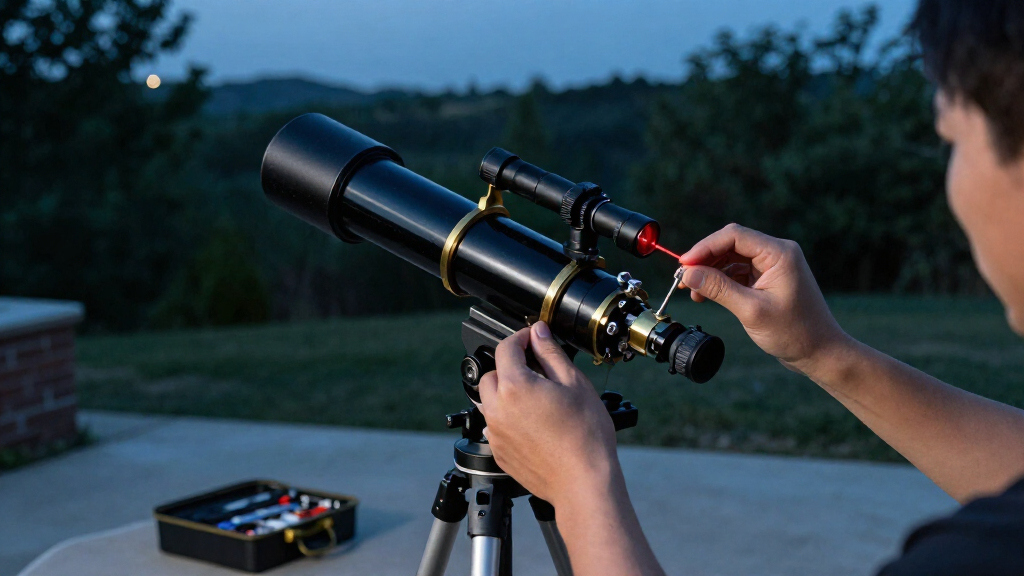
I ranked these telescope collimation tools by how well their design supports repeatable alignment, how clearly a buyer can match them to a focuser, and how much useful flexibility they offer. Cheshire eyepieces, lasers, and combination sets serve different routines, so I compared them by method rather than treating every tool as interchangeable. I gave weight to stated barrel sizes, included adapters, and the practical distinction between visual reference marks and a projected laser beam.
The order favors tools with a clear role and a useful balance of precision, fit, and usability. A bundle can rank well for versatility without being the right choice for someone who wants one simple tool; a laser with broad barrel compatibility can be convenient but still calls for attention to calibration. Product names alone do not prove universal telescope compatibility, so I also considered how readily each option’s stated use can be matched to a Newtonian or SCT. The lineup does not provide enough evidence to claim every model has a particular build advantage, so buyers should verify fit and included components before choosing.
Factors to Consider When Choosing Telescope Collimation Tools
Picking a collimation tool is less about choosing the most elaborate design and more about matching the method to your telescope and routine. I would start with the optical layout and focuser, then decide whether you value a direct visual reference, speed, or having two methods available.
Match the tool to the telescope design
Many tools in this roundup are described for Newtonian reflectors, where alignment involves the secondary and primary mirrors. An SCT has a different optical layout, so a tool labeled for both reflector and SCT use deserves closer scrutiny rather than an automatic fit. Check the telescope maker’s collimation procedure and confirm which adjustment the tool is meant to support. A product title can use broad terminology without covering every step of a telescope’s alignment. If you own more than one design, prioritize a clear compatibility statement over a promise of universal use.
Choose a Cheshire or laser for the job you do most
A Cheshire gives you a visual reference without batteries, making it a sensible choice for a deliberate setup routine. A laser can make checks quicker and can be convenient when access to the back of the telescope is awkward, but its beam must be trustworthy. Some users choose a Cheshire as their primary tool and a laser as a quick cross-check; that adds versatility but also means learning two methods. Avoid assuming a laser is automatically more precise because its alignment appears bright and easy to see. Pick the method whose checks you can interpret and repeat.
Verify barrel size and adapter fit before ordering
A tool that fits securely in the focuser is part of the measurement, not just a convenience. Compare the telescope’s 1.25-inch or 2-inch focuser with the tool’s stated barrel size and any supplied adapter. An adapter can expand compatibility, but every extra interface creates another fit point to check for play or tilt. Do not assume that a 1.25-inch model with an adapter performs exactly like a dedicated 2-inch tool. If you switch between focusers, confirm which pieces are included and how the tool is secured.
Treat laser calibration as a maintenance task
A laser collimator can only help when its beam stays aligned with the tool’s body. A small internal offset may lead you to adjust the telescope to match a faulty reference, so check the laser’s own alignment periodically. Secure the tool consistently when checking it, since rotation or a loose fit can change the apparent beam position. This maintenance is easy to overlook when buying a laser for speed. If you prefer a tool that avoids batteries and beam checks, a Cheshire may fit your habits better.
Decide whether a bundle earns its place
A Cheshire-and-laser set offers two ways to check alignment, which can help users compare readings or build a more adaptable kit. That extra range is useful only if you plan to learn both methods and keep both tools properly fitted. For a first collimation tool, a single Cheshire may be easier to understand and maintain. More experienced users may value the second method for quick checks and cross-checks, especially across different observing situations. Choose a bundle for a specific use case, not simply because it includes more pieces.
Pay for fit and repeatability, not feature count alone
Before paying more for a premium-positioned tool, ask what buyer problem the extra cost is meant to solve: closer fit, a clearer reference, or broader compatibility. The product names in this roundup reveal differences in method and barrel options, but they do not establish that every tool shares the same build quality or precision. A basic tool that seats consistently may serve you better than a feature-rich one that does not fit your focuser well. Consider how often you collimate and whether you need a tool that travels between telescopes. Spending more makes sense when it improves a specific part of your routine, not when it only adds complexity.
Frequently Asked Questions
Should I buy a Cheshire or a laser collimator first?
For a first tool, I would usually favor a Cheshire if you want a direct visual reference and do not mind a hands-on alignment routine. A laser may be faster for frequent checks, but it adds a separate calibration step and can mislead you if it does not sit securely or its beam is out of alignment. A combination set is useful if you expect to learn both methods, though it is not necessary for every owner. Let your telescope’s instructions and your preferred routine decide the method. Check focuser fit before choosing either type.
Can I use one of these tools with both a 1.25-inch and a 2-inch focuser?
Only if the particular model includes or specifies the needed barrel sizes or adapter. This lineup includes lasers described as 1.25/2-inch and another listed with a 2-inch adapter, but those descriptions are not interchangeable. A converter can fit a smaller tool in a larger focuser, yet a loose or uneven connection can affect repeatability. Confirm the actual included parts and the telescope’s focuser dimensions before purchase. If you move the tool between telescopes, test that it seats consistently in each one.
Is a laser collimator accurate enough to replace a Cheshire?
A laser can be a useful alignment aid, but it should not be treated as automatically accurate just because the beam is easy to see. Its own calibration and the fit in the focuser affect the result, so a misplaced beam can create a false reference. A Cheshire provides a different visual check and does not rely on a powered beam. Some owners prefer to use both methods as cross-checks, while others find one method is enough for their routine. Follow the telescope maker’s procedure and learn what each tool is checking.
Do tools labeled for SCT telescopes work the same way on Newtonians?
No; sharing an SCT label does not mean a tool performs the same alignment task on every telescope design. Newtonians and SCTs use different optical arrangements, and their collimation procedures can differ. Check the product’s stated purpose and compare it with the instructions for your exact telescope model. In this roundup, most products are explicitly aimed at Newtonian reflectors, while some Cheshire listings also mention SCT use. When the fit or procedure is unclear, confirm compatibility with the manufacturer before buying.
Is a Cheshire-and-laser bundle a good first purchase?
It can be a good first purchase if you want to learn two approaches and expect to use the laser for quick checks and the Cheshire for visual confirmation. The tradeoff is added complexity: you need to understand both readings, check the laser’s calibration, and store more components. A single Cheshire is a simpler starting point for someone who wants one battery-free tool. A bundle makes more sense when versatility is part of the plan rather than an unused extra. Compare its barrel fit with your focuser before deciding.
Conclusion
For most Newtonian owners, I would start with the Farpoint 1.25-Inch Cheshire as the precision-focused overall pick. The Astromania Cheshire-and-laser bundle is my best value for buyers who will use both methods, while the Astromania 1.25-Inch Short Cheshire is a straightforward beginner choice for a 1.25-inch setup. If you need broader focuser compatibility, compare the SVBONY 1.25/2-Inch laser with the Alstar laser that lists a 2-inch adapter; verify the included fit parts before choosing. For buyers seeking a premium-oriented Cheshire option, the Farpoint is the clearest match in this lineup. Match the tool to your telescope design and routine, and skip a laser if you do not want to maintain and verify its calibration.