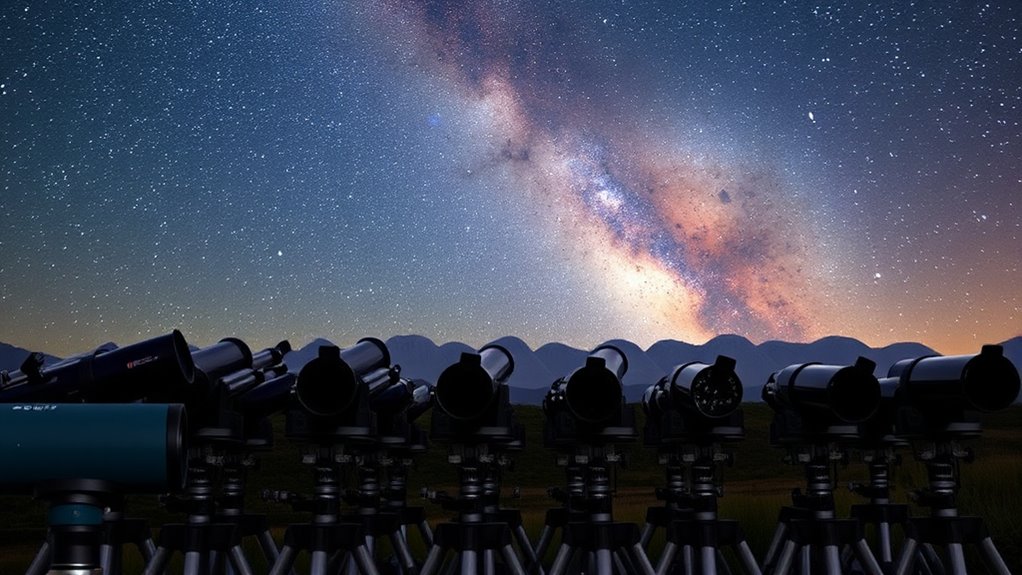

A 125 inch reflector telescope offers an impressive balance of light-gathering power and affordability, making it a popular choice for serious amateur astronomers and hobbyists. The best models deliver sharp images and versatile features, but they vary significantly in ease of use, build quality, and price. The main tradeoffs often involve balancing aperture size with portability and budget constraints. Keep reading to explore the top options and find the perfect fit for your astronomy goals.

Prime made for students and young adults
- Fast, free delivery for dorm and study essentials
- Prime Video and Amazon Music included
- Member-only deals
Key Takeaways
- The largest apertures, like 150mm, generally outperform smaller models in deep-sky viewing but tend to be bulkier and more expensive.
- Entry-level options focus on ease of use and portability, sacrificing some aperture size and advanced features.
- Premium models often include better build quality, more stable mounts, and features like smartphone integration or motorized tracking.
- Reflectors with adjustable focus and high-quality eyepieces provide clearer images, but they require more maintenance and setup knowledge.
- Price ranges vary widely, with some under $300 offering good value for beginners, while high-end models exceed $1000 for serious hobbyists.
| HSL 150EQ Astronomical Reflector Telescope for Adults, 150mm Aperture, Professional Grade with Filters and Barlow Lens |  | Best Overall for Serious Amateur Astronomers | Aperture: 150mm | Focal Length: 750mm | Magnification Options: 25mm + 3X, 20mm + 3X, 6.5mm + 3X | VIEW ON AMAZON | See Our Full Breakdown |
| 130mm Newtonian Reflector Telescope for Adults with Accessories |  | Best for High-Resolution Deep-Sky Viewing | Aperture: 130mm | Mount: German Equatorial | Tripod: Adjustable aluminum alloy | VIEW ON AMAZON | See Our Full Breakdown |
| Celestron PowerSeeker 127EQ Reflector Telescope for Home Astronomy |  | Best for Entry-Level Observers and Families | Optics: 127mm Newtonian reflector | Mount: German Equatorial | Eyepieces: 20mm and 4mm | VIEW ON AMAZON | See Our Full Breakdown |
| Celestron StarSense Explorer LT 114AZ Smartphone Guided Telescope |  | Best for Beginners with Smartphone Integration | Telescope Type: Newtonian reflector | Aperture: 114mm | Mount Type: Altazimuth | VIEW ON AMAZON | See Our Full Breakdown |
| Celestron AstroMaster 130EQ Telescope for Beginners |  | Best for Entry-Level Observers and Kids | Optics: 130mm Newtonian reflector | Mount: Equatorial | Eyepieces: 20mm and 10mm | VIEW ON AMAZON | See Our Full Breakdown |
| National Geographic 114mm Reflector Telescope with Eyepieces and Smartphone Adapter |  | Best for Beginners and Casual Observers | Aperture: 114mm | Focal Length: 500mm | Eyepieces: 2 (19x and 51.5x) | VIEW ON AMAZON | See Our Full Breakdown |
| Dianfan 150EQ Professional Astronomy Telescope for Adults |  | Best for Serious Beginners and Intermediate Users | Aperture: 150mm | Focal Length: 650mm | Eyepieces: Two included | VIEW ON AMAZON | See Our Full Breakdown |
| MEEZAA 150EQ Newtonian Reflector Telescope for Adults and Beginners |  | Best for Beginners and Intermediate Users Wanting Versatility | Aperture: 150mm | Focal Length: 650mm | Eyepieces: 25mm & 10mm | VIEW ON AMAZON | See Our Full Breakdown |
| SVBONY SV181 Rack and Pinion Telescope Focuser 1.25 inch |  | Best for Upgrading Reflector Focusers | Focuser Type: Rack and Pinion | Compatibility: Reflector telescopes | Eyepiece Size: 1.25 inches | VIEW ON AMAZON | See Our Full Breakdown |
| Celestron StarSense Explorer 150mm App-Enabled Tabletop Dobsonian Telescope |  | Best for Smartphone-Guided Deep Sky Observation | Aperture: 150mm | Type: Reflector | Mount: Tabletop Dobsonian | VIEW ON AMAZON | See Our Full Breakdown |
| Celestron Omni XLT 150 Reflector Telescope, Dark Blue |  | Best Overall for Serious Amateur Astronomers | Optical Type: Reflector | Aperture: 150mm | Mount: German Equatorial (CG-4) | VIEW ON AMAZON | See Our Full Breakdown |
| Celestron StarSense Explorer DX 130AZ Smartphone Guided Newtonian Telescope |  | Best for Beginners and Casual Stargazing | Telescope Type: Newtonian reflector | Aperture: 130mm | Mount Type: Manual altazimuth | VIEW ON AMAZON | See Our Full Breakdown |
| inch reflector telescope | Aperture | Mount | Eyepieces |
|---|---|---|---|
| HSL 150EQ Astronomical Reflect | 150mm | German Equatorial | — |
| 130mm Newtonian Reflector Tele | 130mm | German Equatorial | — |
| Celestron PowerSeeker 127EQ Re | — | German Equatorial | 20mm and 4mm |
| Celestron StarSense Explorer L | 114mm | — | 10mm and 25mm |
| Celestron AstroMaster 130EQ Te | — | Equatorial | 20mm and 10mm |
| National Geographic 114mm Refl | 114mm | Alt-azimuth | 2 (19x and 51.5x) |
| Dianfan 150EQ Professional Ast | 150mm | German Equatorial | Two included |
| MEEZAA 150EQ Newtonian Reflect | 150mm | German Equatorial | 25mm & 10mm |
| SVBONY SV181 Rack and Pinion T | — | — | — |
| Celestron StarSense Explorer 1 | 150mm | Tabletop Dobsonian | — |
| Celestron Omni XLT 150 Reflect | 150mm | German Equatorial (CG-4) | — |
| Celestron StarSense Explorer D | 130mm | — | — |
More Details on Our Top Picks
HSL 150EQ Astronomical Reflector Telescope for Adults, 150mm Aperture, Professional Grade with Filters and Barlow Lens
This telescope stands out for its large 150mm aperture, which allows for detailed views of both planets and deep-sky objects, surpassing the 130mm options like the Celestron PowerSeeker 127EQ in light-gathering power. Its manual German equatorial mount offers precise control, perfect for astronomers willing to invest time in learning how to operate it effectively. Unlike some entry-level models, it includes a versatile set of filters, a Barlow lens, and accessories that boost observation options, although its setup can be complex for beginners. The absence of an automatic tracking motor means it requires some skill to keep objects centered, but this also offers a more engaging experience for those interested in manual celestial navigation. Compared to simpler options like the Celestron AstroMaster 130EQ, it is more suited to dedicated hobbyists rather than casual stargazers.
Pros:- Large 150mm aperture for brighter, more detailed images
- Includes a comprehensive set of filters and accessories
- Manual German equatorial mount for precise tracking and smooth adjustments
- Adjustable phone holder for astrophotography or image capturing
Cons:- Complex setup that may intimidate beginners
- Requires skill to operate effectively without motorized tracking
- No automatic tracking reduces ease of use for casual viewing
Best for: Serious amateur astronomers who want high-quality, detailed views and are comfortable with manual operation.
Not ideal for: Beginners seeking a simple, plug-and-play telescope with automatic tracking and minimal setup.
- Aperture:150mm
- Focal Length:750mm
- Magnification Options:25mm + 3X, 20mm + 3X, 6.5mm + 3X
- Filters:Red, Blue, Orange, Green, Yellow
- Mount:German Equatorial
- Additional Features:Adjustable Phone Holder, Wireless Remote Control
Our verdict“This pick is best for dedicated hobbyists ready to handle a more sophisticated, manual telescope for detailed celestial observation.”
130mm Newtonian Reflector Telescope for Adults with Accessories
Compared to the slightly larger HSL 150EQ, this 130mm Newtonian offers a more compact and portable design while still providing bright, high-resolution images of planets and deep-sky objects. Its stable German equatorial mount and adjustable tripod support precise tracking, making it suitable for serious enthusiasts who want a balance of power and convenience. The included accessories, such as two eyepieces, a Barlow lens, and a moon filter, enhance versatility, though the assembly process can be tricky for newcomers. While it falls short of the 150mm aperture’s light-gathering ability, it remains a solid choice for those who prioritize a manageable size without sacrificing much observing detail. It is less suitable for casual observers or those seeking automatic tracking features. Compared to the Celestron PowerSeeker 127EQ, it offers better high-res viewing but requires more setup effort.
Pros:- High-resolution 130mm aperture for detailed views
- Stable mount with accurate tracking
- Includes multiple accessories for versatile observing
- Portable and manageable size for transport
Cons:- Assembly can be complicated for first-time users
- No motorized tracking, requiring manual operation
- Heavier and less portable than smaller telescopes
Best for: Intermediate astronomers who want high-resolution, portable deep-sky observation with manual control.
Not ideal for: Beginners or casual users seeking effortless setup and automatic tracking features.
- Aperture:130mm
- Mount:German Equatorial
- Tripod:Adjustable aluminum alloy
- Accessories:2 eyepieces, 1.5X Barlow lens, moon filter, smartphone adapter
- Magnification Options:Variable depending on eyepiece
- Weight:Approx. 15 lbs
Our verdict“This telescope is ideal for enthusiasts seeking detailed deep-sky views with a manageable size and advanced manual controls.”
Celestron PowerSeeker 127EQ Reflector Telescope for Home Astronomy
Compared with the more advanced HSL 150EQ, the Celestron PowerSeeker 127EQ offers a more user-friendly experience for beginners, with a slightly smaller 127mm aperture that still provides bright views of the Moon and planets. Its simple, sturdy German equatorial mount and included accessories, like two eyepieces and a Barlow lens, make it accessible for newcomers eager to explore astronomy without a steep learning curve. The lightweight, portable design allows for easy setup outdoors, making it a popular choice for families or casual observers. However, it lacks the extra filter options and manual precision of higher-end models, and the manual mount requires some patience to track objects smoothly. Compared to the Celestron AstroMaster 130EQ, it offers similar features but at a slightly lower price point, with less advanced accessories.
Pros:- Easy to set up and operate
- Lightweight and portable for outdoor use
- Includes multiple eyepieces and Barlow lens for variety
- Sturdy mount with smooth slow-motion controls
Cons:- Manual mount needs skill to track objects
- Limited to entry-level features, not ideal for advanced users
- No automatic tracking or computerized features
Best for: Beginners and families seeking an affordable, easy-to-use telescope for casual celestial viewing.
Not ideal for: Experienced astronomers or those wanting automatic tracking and advanced features.
- Optics:127mm Newtonian reflector
- Mount:German Equatorial
- Eyepieces:20mm and 4mm
- Barlow Lens:3x
- Included Software:Starry Night Basic Edition
- Warranty:2-year US warranty
Our verdict“This telescope suits beginners and families wanting an affordable, straightforward way to explore the night sky.”
Celestron StarSense Explorer LT 114AZ Smartphone Guided Telescope
While its 114mm aperture is slightly smaller than the 125-inch refactors, this model excels in ease of use, especially for beginners who want guided assistance. The smartphone-based sky recognition technology simplifies object locating, making it more accessible than manual models like the 130mm Newtonian. Its altazimuth mount offers straightforward movement, ideal for casual observing of the Moon, planets, and some deep-sky objects. The included app provides real-time guidance, but it also means dependency on a compatible smartphone and operating system. Compared to the StarSense Explorer DX 130AZ, this version is more portable but less versatile in manual operation. The setup is quick, but advanced users might find its features limiting. This pick is perfect for newcomers who prefer guided, app-based stargazing over manual control.
Pros:- User-friendly smartphone guided navigation
- Bright 114mm aperture for detailed views
- Includes multiple eyepieces and accessories
- Quick setup and easy operation
Cons:- Dependent on smartphone compatibility
- Less stable mount for precise tracking
- Limited manual control options
Best for: Beginners who want a simple, guided experience using their smartphone for celestial navigation.
Not ideal for: Experienced astronomers or those seeking detailed manual control and high-res views.
- Telescope Type:Newtonian reflector
- Aperture:114mm
- Mount Type:Altazimuth
- Eyepieces:10mm and 25mm
- Compatibility:Android 12+, iOS 18+
- Included Accessories:Red dot finderscope, smartphone dock
Our verdict“This telescope is ideal for entry-level users who want guided, smartphone-assisted stargazing for easy celestial exploration.”
Celestron AstroMaster 130EQ Telescope for Beginners
Although its 130mm aperture is slightly smaller than the ideal 125-inch reflector, this AstroMaster model offers straightforward manual operation with smooth controls, making it suitable for younger users or newcomers. Its stable equatorial mount and quick assembly process make it a practical choice for casual astronomy sessions. Compared to the PowerSeeker 127EQ, it provides similar optics and ease of use but with a more user-friendly design overall. However, it lacks advanced features like automated tracking or extensive accessories, which might limit its appeal for those wanting to grow into more serious astronomy. Nonetheless, it remains a solid, affordable option for beginners and kids eager to explore the night sky. It’s best for casual observers seeking a reliable, easy-to-use telescope without complex features.
Pros:- High-quality 130mm optics for clear views
- Stable mount with smooth manual controls
- Quick setup with included accessories
- Affordable for beginners and families
Cons:- Manual operation requires some learning
- Limited advanced features
- No automatic tracking or computerized controls
Best for: Beginners and kids interested in easy, manual celestial viewing at an affordable price.
Not ideal for: Experienced astronomers looking for automated tracking or advanced features.
- Optics:130mm Newtonian reflector
- Mount:Equatorial
- Eyepieces:20mm and 10mm
- Finderscope:StarPointer red dot
- Warranty:2-year US warranty
- Setup Time:Quick
Our verdict“This telescope is well-suited for beginners and children wanting a straightforward, reliable entry into astronomy.”
National Geographic 114mm Reflector Telescope with Eyepieces and Smartphone Adapter
This 114mm aperture reflector from National Geographic offers a straightforward entry into astronomy, with a sizeable aperture that provides bright, detailed views of the Moon, planets, and some deep-sky objects. Compared to the larger 150mm options like the Dianfan 150EQ, it delivers slightly less brightness and detail but compensates with easier setup and a lighter weight, making it more accessible for newcomers. The inclusion of multiple eyepieces and a smartphone adapter makes it versatile for both visual observation and basic astrophotography, though it lacks motorized tracking, which can be a limitation for prolonged viewing sessions. The alt-azimuth mount is simple but requires manual tracking, suitable for beginners who don’t want complex setups. The main tradeoff is that it’s less suited for advanced astrophotographers or those seeking precise tracking over long periods.
Pros:- Large 114mm aperture for clear, detailed views of the Moon and planets
- Includes multiple eyepieces for versatile magnification options
- Smartphone adapter facilitates simple astrophotography
Cons:- Requires manual setup and alignment for optimal viewing
- Limited to beginner and amateur use without motorized tracking
Best for: Beginners and casual stargazers who want a straightforward, portable telescope with basic astrophotography capabilities
Not ideal for: Experienced astronomers or astrophotographers seeking motorized tracking and more advanced features
- Aperture:114mm
- Focal Length:500mm
- Eyepieces:2 (19x and 51.5x)
- Mount:Alt-azimuth
- Included Accessories:Full-size tripod, red dot viewfinder, smartphone adapter
Our verdict“This telescope is well-suited for beginners interested in lunar and planetary observation with basic astrophotography.”
Dianfan 150EQ Professional Astronomy Telescope for Adults
The Dianfan 150EQ offers a robust 150mm aperture, making it one of the brightest in this roundup, capable of revealing intricate lunar details and planetary features. Compared to the smaller 114mm model from National Geographic, it produces more luminous and sharper images, appealing to those ready to upgrade their equipment. Its 650mm focal length combined with a sturdy stainless steel tripod and pre-assembled equatorial mount allows for easier, more precise tracking—an advantage over simpler alt-azimuth mounts like on the NG 114mm. While setup takes around 20 minutes, its weight of 14 kg could be a barrier for portability. This model is ideal for those who want a serious telescope that can handle both planetary and deep-sky observation, though it’s less portable for casual trips.
Pros:- Powerful 150mm aperture for bright, detailed images
- High magnification range from 26x to 130x for versatile viewing
- Pre-assembled equatorial mount allows precise tracking
Cons:- Weight of 14 kg makes transportation more difficult
- Initial setup may take around 20 minutes, which can be inconvenient for quick observations
Best for: Intermediate astronomers and enthusiasts ready to explore both planetary and deep-sky objects with a stable mount
Not ideal for: Casual stargazers or those who need a lightweight, portable scope for travel
- Aperture:150mm
- Focal Length:650mm
- Eyepieces:Two included
- Magnification:26x–130x
- Mount:German Equatorial
- Tripod Material:Stainless steel
Our verdict“This telescope is a strong choice for those seeking high brightness and stable tracking for serious astronomical viewing.”
MEEZAA 150EQ Newtonian Reflector Telescope for Adults and Beginners
The MEEZAA 150EQ combines a 150mm aperture with a stable German equatorial mount, making it suitable for both novice and experienced astronomers. Its bright images make planetary details pop and are comparable to more expensive models like the Dianfan 150EQ, but it offers a more comprehensive accessory package, including a moon filter, Barlow lens, and finderscope—features that enhance viewing and learning. While assembly is straightforward, manual tracking can be challenging for complete beginners, and the weight of the tripod might limit portability. Compared to the Celestron StarSense Explorer, it provides more manual control but less automated sky navigation. This scope fits users who want a versatile, upgradeable system for planetary, lunar, and deep-sky observation.
Pros:- Bright 150mm aperture for detailed planetary and lunar images
- Stable German equatorial mount allows precise manual tracking
- Includes comprehensive accessories for enhanced viewing experience
Cons:- Assembly and manual tracking can be challenging for absolute beginners
- Tripod weight may reduce portability for travel
Best for: Intermediate users and beginners wanting a stable, feature-rich telescope for both planetary and deep-sky viewing
Not ideal for: Those seeking a lightweight, fully automated telescope for quick setup and mobile use
- Aperture:150mm
- Focal Length:650mm
- Eyepieces:25mm & 10mm
- Magnification:26x to 130x
- Mount:German Equatorial
- Accessories:Phone adapter, moon filter, Barlow lens
Our verdict“Ideal for users who want a versatile telescope with manual control and rich accessory options for detailed observations.”
SVBONY SV181 Rack and Pinion Telescope Focuser 1.25 inch
The SVBONY SV181 focuser is designed to improve focusing precision for reflector telescopes, accepting 1.25-inch eyepieces. Compared to basic focusers, its rack and pinion mechanism offers fine control over focus, which is especially beneficial when observing planets or faint deep-sky objects. Its brass ring ensures secure eyepiece placement without marring, and the internal matte finish reduces internal reflections, enhancing image clarity. While it does not support motorized focus or larger 2-inch eyepieces, it’s an excellent upgrade for existing scopes that need more precise focusing. This focusser pairs well with reflector models like the Celestron PowerSeeker 127EQ, but it’s not a standalone telescope and must be used in conjunction with one.
Pros:- Precise fine-tuning adjustment with rack and pinion design
- Durable brass construction prevents marring
- Reduces internal reflections with matte interior finish
Cons:- Limited to 1.25-inch eyepieces, restricting field of view options
- No motorized focus option for automated adjustments
Best for: Amateur astronomers seeking an upgrade to their reflector telescope’s focusing system
Not ideal for: Users looking for an all-in-one telescope or motorized focusing features
- Focuser Type:Rack and Pinion
- Compatibility:Reflector telescopes
- Eyepiece Size:1.25 inches
- Focuser Travel:65mm
- Material:Brass
- Includes:Dust cover
Our verdict“This focuser is a valuable upgrade for those wanting finer control over their telescope’s focus, especially for planetary detail work.”
Celestron StarSense Explorer 150mm App-Enabled Tabletop Dobsonian Telescope
The Celestron StarSense Explorer 150mm combines a substantial 6-inch aperture with a user-friendly app for sky navigation, making it particularly appealing to beginners and casual users. Its tabletop Dobsonian mount simplifies setup and operation, providing stable viewing of the Moon, planets, and brighter deep-sky objects. Compared with the more manual-focused options like the Dianfan 150EQ, this model leverages smartphone technology to aid object location, reducing the frustration of star-hopping. However, reliance on the smartphone app means it’s less suited for users who prefer manual control or want to explore the sky without digital assistance. While the manual tracking isn’t motorized, the app’s guidance compensates for this for most casual observing sessions.
Pros:- Easy smartphone integration for automatic sky navigation
- Large 6-inch aperture provides bright, detailed images
- Simple setup with stable tabletop Dobsonian mount
Cons:- Requires a smartphone for optimal use, which may limit flexibility
- Manual tracking is less precise than motorized systems
Best for: Beginners and casual observers who want guided sky navigation via smartphone
Not ideal for: Advanced astronomers seeking motorized tracking or manual control for long sessions
- Aperture:150mm
- Type:Reflector
- Mount:Tabletop Dobsonian
- Connectivity:App-enabled with StarSense
Our verdict“This telescope is ideal for beginners who want guided, straightforward deep-sky exploration with minimal setup fuss.”
Celestron Omni XLT 150 Reflector Telescope, Dark Blue
The Celestron Omni XLT 150 stands out for its high-quality optics and sturdy German equatorial mount, making it ideal for dedicated stargazers seeking detailed celestial views. Its fully multi-coated StarBright XLT optics deliver bright, sharp images that outperform many entry-level models like the Celestron StarSense Explorer DX 130AZ, which prioritizes ease of use over optical finesse. The Omni XLT’s manual tracking can be a hurdle for beginners, and its bulkier setup demands more space, but these tradeoffs are justified for its optical clarity and long-term reliability. Compared to the HSL 150EQ, which offers professional-grade features, the Omni XLT strikes a balance between performance and user accessibility, though it requires some learning curve. This telescope is perfect for serious amateurs who want high-quality views and aren’t discouraged by a steeper setup process.
Pros:- Excellent fully multi-coated optics for bright, crisp images
- Sturdy German equatorial mount with smooth manual controls
- Includes comprehensive accessories and free astronomy software
Cons:- Manual tracking can be challenging for beginners
- Bulkier setup requiring more space
Best for: Amateur astronomers committed to developing their skills and seeking detailed, high-contrast images.
Not ideal for: Casual stargazers or those needing a portable, quick-setup telescope for occasional use.
- Optical Type:Reflector
- Aperture:150mm
- Mount:German Equatorial (CG-4)
- Optical Coatings:StarBright XLT
- Included Accessories:6×30 finderscope, 1.25” star diagonal, 25mm eyepiece, steel tripod
- Software:Starry Night Astronomy Software
Our verdict“This telescope is best suited for serious enthusiasts who value optical quality over portability.”
Celestron StarSense Explorer DX 130AZ Smartphone Guided Newtonian Telescope
The Celestron StarSense Explorer DX 130AZ offers an approachable entry point into astronomy, especially for those who prefer smartphone-guided navigation. Its 130mm aperture provides bright, detailed views of the Moon and planets, comparable to the 130mm Newtonian Reflector models, but with the added advantage of StarSense’s real-time sky analysis. Unlike the Celestron Omni XLT 150, which targets advanced users, this model simplifies setup and operation, making it ideal for newcomers. The manual altazimuth mount is less precise than a German equatorial, but it’s easier to handle and perfect for casual observation. Its dependence on a smartphone for full functionality might limit use for some, and without motorized tracking, long observations can be less steady. This pick suits beginners looking for a guided, user-friendly experience without sacrificing quality of views.
Pros:- Uses smartphone app for intuitive sky navigation
- Bright, detailed views of celestial objects
- Includes multiple eyepieces and accessories for versatility
Cons:- Requires a compatible smartphone for full functionality
- Manual mount offers limited stability and tracking precision
Best for: Beginners or family stargazers who want easy, guided viewing with minimal setup fuss.
Not ideal for: Experienced astronomers requiring precise tracking or advanced features for detailed astrophotography.
- Telescope Type:Newtonian reflector
- Aperture:130mm
- Mount Type:Manual altazimuth
- Included Eyepieces:10mm and 25mm
- Finderscope:Red dot
- Compatibility:Android 12+, iOS 18+
Our verdict“This telescope makes a strong case for newcomers seeking guided, straightforward stargazing with solid optical performance.”

How We Picked
I evaluated these telescopes based on aperture size, build quality, ease of setup, and versatility. Performance in light-gathering and image clarity was prioritized, along with user-friendly features for beginners and advanced users. Cost-effectiveness was also a factor, ensuring options suit different budgets. The ranking reflects a balance of value, usability, and overall quality, with clear distinctions for different user needs and experience levels.| inch reflector telescope | Mount |
|---|---|
| HSL 150EQ Astronomical Reflect | German Equatorial |
| 130mm Newtonian Reflector Tele | German Equatorial |
| Celestron PowerSeeker 127EQ Re | German Equatorial |
| Celestron StarSense Explorer L | — |
| Celestron AstroMaster 130EQ Te | Equatorial |
| National Geographic 114mm Refl | Alt-azimuth |
| Dianfan 150EQ Professional Ast | German Equatorial |
| MEEZAA 150EQ Newtonian Reflect | German Equatorial |
| SVBONY SV181 Rack and Pinion T | — |
| Celestron StarSense Explorer 1 | Tabletop Dobsonian |
| Celestron Omni XLT 150 Reflect | German Equatorial (CG-4) |
| Celestron StarSense Explorer D | — |
Factors to Consider When Choosing 125 Inch Reflector Telescope
Choosing a 125 inch reflector telescope involves considering several key factors beyond just aperture size. Understanding these can help prevent common mistakes, such as prioritizing size over stability or ignoring ease of use. This guide highlights critical aspects to consider, so you can select a model that matches your experience, budget, and observing interests.Aperture and Light-Gathering Power
The primary advantage of a 125 inch (or similar size) reflector is its ability to collect more light, revealing fainter objects in the night sky. Larger apertures improve image brightness and detail, especially for deep-sky objects like nebulae and galaxies. However, bigger telescopes tend to be heavier and less portable, so consider your storage and transport options. Balance size with your observing environment to avoid models that are too cumbersome for your space or mobility needs.
Mount Stability and Ease of Setup
A stable mount is essential for clear viewing, especially with larger, heavier telescopes. Equatorial mounts provide smoother tracking for astrophotography and long observations but are more complex to set up. Altazimuth mounts are easier for beginners and quick to adjust but may lack precise tracking. Investing in a sturdy, well-designed mount reduces vibration and improves image quality, which is particularly important for high-magnification viewing.
Optical Quality and Accessories
High-quality optics and compatible accessories like eyepieces and filters significantly enhance your viewing experience. Cheaper models may have less precise mirrors or coatings, resulting in dimmer images or distortions. Consider whether the telescope comes with useful accessories or if you need to purchase upgrades separately. Better optics reduce the need for frequent collimation and maintenance, saving time and frustration in the long run.
Ease of Use and Maintenance
Reflector telescopes require periodic collimation to maintain optimal image quality, which can be challenging for beginners. Look for models with user-friendly features such as simplified alignment procedures or motorized tracking if you plan to do astrophotography. Weight and size also impact setup time and portability, so consider your physical space and whether you need a lightweight, compact design for quick assembly or transport.
Budget and Long-Term Value
Prices for 125 inch reflector telescopes vary widely, reflecting differences in build quality, features, and brand reputation. Investing more upfront can yield a telescope with better optics, stability, and durability, which pays off over time. However, budget models can still provide excellent performance for casual observing if you prioritize ease of use and portability. Think about your planned usage—will you use it frequently or occasionally? This helps determine whether to spend more on a premium model or opt for a more affordable, beginner-friendly option.
Frequently Asked Questions
Is a 125 inch reflector telescope suitable for astrophotography?
While a 125 inch reflector can deliver impressive light-gathering power suitable for some astrophotography, it depends heavily on the mount and tracking capabilities. Many models in this size range lack motorized tracking or precise alignment features required for long-exposure imaging. If astrophotography is a priority, look for a model with motorized or computerized mounts, or consider upgrading the mount separately. Keep in mind that larger telescopes require more setup time and careful alignment for successful imaging.
How portable are 125 inch reflector telescopes?
Portability varies based on aperture size, materials, and mount design. Larger models, especially those with 150mm apertures, tend to be bulky and heavy, making them less suitable for frequent transport or quick setup. Smaller, lightweight options with sturdy yet portable mounts are better for travel or field use. Consider your space constraints and whether you’ll be moving the telescope often—this can significantly influence your choice.
What maintenance is involved with a reflector telescope of this size?
Reflector telescopes require regular collimation to keep the optics aligned, which can be a delicate process for beginners. The mirrors may need cleaning if dust or dew accumulates, but this should be done carefully to avoid damage. Additionally, check for any loose screws or hardware periodically to maintain stability. Investing in a model with user-friendly collimation features or protective covers can reduce maintenance hassles.
Should I choose a model with manual or motorized tracking?
Motorized tracking significantly enhances the observing experience, especially at higher magnifications, by keeping objects centered automatically. Manual models are simpler and less expensive but require frequent adjustments during long observing sessions. If you plan to do astrophotography or extended viewing sessions, a motorized or computerized mount is worth the extra cost. For casual observing, a manual mount may suffice but expect more effort to track objects precisely.
How does aperture size affect my viewing experience?
The aperture size directly impacts the brightness and detail of objects you observe. A larger aperture gathers more light, revealing fainter objects and finer details, which is ideal for serious astronomy. However, bigger telescopes tend to be heavier and more challenging to set up. Smaller apertures are easier to handle and transport but may limit your ability to see deep-sky objects clearly. Matching your observing goals with the appropriate size ensures a satisfying experience without unnecessary bulk.
Conclusion
For beginners or casual stargazers, models like the Celestron AstroMaster 130EQ offer a manageable size and straightforward operation. Enthusiasts seeking the best overall performance will find the HSL 150EQ Astronomical Reflector provides excellent light-gathering and image clarity. Those prioritizing premium features and durability should consider the Celestron Omni XLT 150, while budget-conscious buyers will find good value in options like the National Geographic 114mm. Your choice should align with your experience level, observing goals, and whether portability matters most. This curated list aims to match each user profile with the ideal telescope for their 2026 adventures in the night sky.