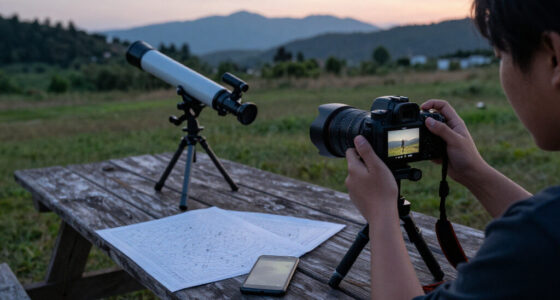
For astrophotographers, reliable power sources are essential to keep cameras, mounts, and lighting running through long night sessions. LiFePO4 power stations stand out for their safety, longevity, and stable output, making them a popular choice in this niche. The EF ECOFLOW Delta 3 offers impressive capacity and fast recharge, making it a strong overall pick. Meanwhile, the ABOK Ark3600 provides massive power for extended sessions, but at a higher price. On the other hand, compact options like the Jackery Explorer 300 suit those with minimal gear and space constraints. The main challenge lies in balancing capacity, portability, and cost, so continue reading for the full breakdown to find your best match.

Prime made for students and young adults
- Fast, free delivery for dorm and study essentials
- Prime Video and Amazon Music included
- Member-only deals
Complete the kit


Key Takeaways
- Higher capacity LiFePO4 stations deliver longer run times but often come with increased size and weight.
- Fast recharge features are vital for quick turnarounds between astrophotography sessions or daytime recharges.
- Safety and battery longevity are key advantages of LiFePO4 chemistry, making these stations more durable over years of use.
- Portability varies widely; compact units are better for fieldwork, while larger stations suit stationary setups.
- Price differences reflect capacity, features, and build quality; investing more generally yields more reliable, versatile power sources.
| EF ECOFLOW Delta 3 Portable Power Station, 1024Wh, 1800W |  | Best Overall for Versatile, Long-Lasting Power | Capacity: 1024Wh | Power Output: 1800W | Recharge Time: 56 minutes | VIEW ON AMAZON | See Our Full Breakdown |
| ABOK Ark3600 Portable Power Station 3600W, 3840Wh LiFePO4 Battery |  | Best for Long-Term Power with High Capacity and Expandability | Wattage: 3600W | Battery Capacity: 3840Wh (expandable to 11520Wh) | Battery Type: LiFePO4 | VIEW ON AMAZON | See Our Full Breakdown |
| DJI Power 1000 V2 Portable Power Station, 1024Wh LFP Battery |  | Best for Quiet, Reliable Backup with Fast Charging | Capacity: 1024Wh | Battery Type: LFP | USB Ports: Dual 140W USB-C | VIEW ON AMAZON | See Our Full Breakdown |
| LIBRIDS Portable Power Station 640Wh, 1200W Surge, Solar Generator with 4 AC Outlets |  | Best for Compact, Reliable Power in Small Packages | Capacity: 640Wh | Surge Power: 1200W | Rated Power: 600W | VIEW ON AMAZON | See Our Full Breakdown |
| UDPOWER S2400 Portable Power Station with Solar Panel Option, 2083Wh LiFePO4, 2400W (Surge 3000W), UPS, 6 AC Outlets, Emergency & Home Backup |  | Best for High Capacity and Reliable Multi-Device Power | Capacity: 2083Wh | Battery Type: LiFePO4 | Rated Output: 2400W | VIEW ON AMAZON | See Our Full Breakdown |
| Jackery Explorer 1000 v2 Portable Power Station, 1070Wh, 1500W |  | Best Overall for Portable Astrophotography Backup | Wattage: 1500 watts | Capacity: 1070Wh | Weight: 23.8 pounds | VIEW ON AMAZON | See Our Full Breakdown |
| Dyness Portable Power Station, 2048Wh, 2400W Output, LiFePO4 Battery |  | Best for Long Outdoor Night Sessions and Emergency Power | Battery Capacity: 2048Wh | Output Wattage: 2400W | Dimensions: 15″L x 9.8″W x 12.6″H | VIEW ON AMAZON | See Our Full Breakdown |
| 2400W Portable Power Station 1843.2Wh Solar Generator for Home Battery |  | Best Compact Power for Outdoor and Backup Use | Battery Capacity: 1843.2Wh | Wattage: 2400W | Weight: 55 pounds | VIEW ON AMAZON | See Our Full Breakdown |
| Jackery Explorer 300 Portable Power Station, 292Wh |  | Best for Lightweight, Short Duration Sessions | Capacity: 292Wh | Weight: 7.5 pounds | Outlets: 2 AC, 1 USB-C PD, 2 USB-A, 1 Car port | VIEW ON AMAZON | See Our Full Breakdown |
| lifepo4 power stations for astrophotography | Battery Type | Capacity |
|---|---|---|
| EF ECOFLOW Delta 3 Portable Po | LiFePO4 (LFP) | 1024Wh |
| ABOK Ark3600 Portable Power St | LiFePO4 | — |
| DJI Power 1000 V2 Portable Pow | LFP | 1024Wh |
| LIBRIDS Portable Power Station | LiFePO4 | 640Wh |
| UDPOWER S2400 Portable Power S | LiFePO4 | 2083Wh |
| Jackery Explorer 1000 v2 Porta | LFP | 1070Wh |
| Dyness Portable Power Station | LiFePO4 | — |
| 2400W Portable Power Station 1 | — | — |
| Jackery Explorer 300 Portable | LiFePO4 | 292Wh |
More Details on Our Top Picks
EF ECOFLOW Delta 3 Portable Power Station, 1024Wh, 1800W
The EcoFlow Delta 3 stands out for its rapid 56-minute recharge and expandable capacity up to 5kWh, making it highly adaptable for astrophotography sessions that require reliable, extended power. Compared to the DJI Power 1000 V2, it offers greater flexibility with its expandable batteries, though at a higher initial cost and larger size. Its durable LiFePO4 cells promise a 10-year lifespan, reducing long-term replacement concerns. However, its bulk and weight can hinder portability, especially if I need to hike to remote sites. The 13 outlets enable powering multiple devices simultaneously, an advantage over smaller units like the LIBRIDS 640Wh. Overall, this model suits those prioritizing versatility and longevity but who can manage its size.
Pros:- Fast full charge in just 56 minutes
- Expandable up to 5kWh for long shoots
- Durable LiFePO4 battery with a 10-year lifespan
- Can power 13 appliances simultaneously
Cons:- High initial cost may be prohibitive for some
- Large size and weight reduce portability
Best for: Photographers who need a robust, expandable power source for extended outdoor shoots and can handle its size and cost.
Not ideal for: Hikers or those seeking ultra-lightweight gear because of its bulk and weight.
- Capacity:1024Wh
- Power Output:1800W
- Recharge Time:56 minutes
- Expansion Capacity:up to 5kWh
- Battery Type:LiFePO4 (LFP)
- Battery Cycles:4000 cycles to 80%
Our verdict“This power station is ideal for those needing a reliable, long-lasting solution with extensive expandability, despite its size.”
ABOK Ark3600 Portable Power Station 3600W, 3840Wh LiFePO4 Battery
The ABOK Ark3600 excels in providing high-capacity, long-term power, with a 3840Wh battery expandable to 11520Wh, making it suitable for multi-night astrophotography or heavy equipment. Its 3600W rated output handles multiple devices, while the 4000+ cycle lifespan ensures durability. Compared to the UDPOWER S2400, it offers nearly double the capacity, but at a substantial weight of 92 pounds, making it less portable for remote use. The wide array of output ports supports diverse gear, yet its weight and size mean it’s better suited for stationary setups or vehicles. For those who prioritize capacity and longevity over portability, this unit makes a compelling choice.
Pros:- High capacity with expandable 3840Wh to 11520Wh
- Long lifespan with over 4000 cycles
- Powerful 3600W rated, 4500W peak output
- Supports multiple charging methods including AC, PV, and car
Cons:- Heavy at 92 pounds limits portability
- High initial investment
Best for: Professionals or serious enthusiasts needing substantial, expandable power for extended outdoor shoots or backup during long outages.
Not ideal for: Hikers or travelers requiring a lightweight, easily portable unit, due to its heavy weight.
- Wattage:3600W
- Battery Capacity:3840Wh (expandable to 11520Wh)
- Battery Type:LiFePO4
- Lifespan:Over 4000 cycles
- Charging Methods:AC, PV, car
- Weight:92 pounds
Our verdict“Best suited for users needing maximum capacity and expandability, accepting the tradeoff of portability and cost.”
DJI Power 1000 V2 Portable Power Station, 1024Wh LFP Battery
The DJI Power 1000 V2 offers a quiet 1024Wh LFP battery with fast charging—80% in just 37 minutes—making it ideal for nighttime astrophotography or noise-sensitive environments. Its seamless UPS switch in 10ms ensures uninterrupted power, a key advantage over units like the EF ECOFLOW Delta 3 which, while larger, lacks the quiet operation and ultra-fast recharge. However, it doesn’t include MPPT or solar charging modules, which could limit off-grid flexibility unless separately purchased. Its 5-year warranty adds confidence in durability. This model suits users who prioritize quiet operation, quick recharge, and reliable UPS backup over larger capacity.
Pros:- High-capacity 1024Wh LFP battery
- Fast charging to 80% in 37 minutes
- Quiet operation at 26 dB
- Seamless UPS backup with 10ms switch
Cons:- No included solar or car charging modules
- Price may be higher relative to capacity
Best for: Photographers requiring reliable, quiet power for night sessions and quick recharging during brief downtime.
Not ideal for: Users needing extended run times or large capacity for multi-night shoots, due to its moderate size and capacity.
- Capacity:1024Wh
- Battery Type:LFP
- USB Ports:Dual 140W USB-C
- Charging Time:80% in 37 minutes
- Noise Level:26 dB
- Warranty:5 years
Our verdict“A solid choice for night-time astrophotography where quiet operation and reliability matter most, despite moderate capacity.”
LIBRIDS Portable Power Station 640Wh, 1200W Surge, Solar Generator with 4 AC Outlets
The LIBRIDS 640Wh offers a compact solution for portable power needs, with a 1200W surge capacity and fast 1.5-hour recharge, making it suitable for quick setups or backup in outdoor environments. Its pure sine wave inverter ensures safety for sensitive gear like cameras and electronics, which is essential for astrophotographers using delicate devices. Compared to larger units such as the ABOK Ark3600, it sacrifices capacity for portability, but still supports multiple outlets. Its lighter weight and small size make it appealing for those who need a lightweight, reliable backup rather than all-day power. This makes it a good choice for short sessions or supplementary power in mobile setups.
Pros:- Fast recharge in just 1.5 hours
- Multiple outlets including 4 AC ports
- Pure sine wave inverter for sensitive electronics
- Compact and lightweight design
Cons:- Limited capacity for extended use
- Indoor use only, not suitable for wet outdoor conditions
Best for: Casual astrophotographers or travelers needing a lightweight, easy-to-carry backup power source.
Not ideal for: Long-duration shoots or high-powered equipment, due to its limited capacity.
- Capacity:640Wh
- Surge Power:1200W
- Rated Power:600W
- Charging Time:1.5 hours
- Battery Type:LiFePO4
- Battery Cycles:4000+
Our verdict“Ideal for quick, portable backup power needs where weight and size are critical, but not for extended astrophotography sessions.”
UDPOWER S2400 Portable Power Station with Solar Panel Option, 2083Wh LiFePO4, 2400W (Surge 3000W), UPS, 6 AC Outlets, Emergency & Home Backup
The UDPOWER S2400 offers a substantial 2083Wh capacity with 2400W rated and 3000W peak output, making it a versatile choice for powering multiple devices during long astrophotography sessions or emergency situations. Its automatic backup switching ensures seamless power transition, a feature not always found in units like the EF ECOFLOW Delta 3. The support for solar recharging up to 440W adds flexibility for off-grid use, although its size and weight of 41 pounds mean it’s less suited for frequent porting. Its rapid recharging time of 1.3 hours makes it practical for day-to-day use, especially in home or vehicle setups. This model is best for those who need large capacity with fast, reliable backup power.”
Pros:- High-capacity 2083Wh battery for multiple devices
- Fast recharge in 1.3 hours
- Automatic backup switching ensures seamless power
- Supports solar recharging up to 440W
Cons:- Relatively heavy at 41 lbs, less portable
- Higher price point reflects capacity and features
Best for: Serious hobbyists or emergency planners who require dependable, high-capacity power with fast recharge and multi-device support.
Not ideal for: Lightweight travelers or those seeking ultra-portable solutions because of its weight and size.
- Capacity:2083Wh
- Battery Type:LiFePO4
- Rated Output:2400W
- Peak Output:3000W
- Charge Cycles:Over 4000
- Recharging Support:Up to 440W solar
Our verdict“A strong choice for users needing substantial, reliable power with quick recharging, accepting its weight and cost.”
Jackery Explorer 1000 v2 Portable Power Station, 1070Wh, 1500W
The Jackery Explorer 1000 v2 stands out for its lightweight design and reliable performance, making it ideal for astrophotographers who need a portable power source on the go. While it doesn’t include a solar panel, its fast charging ability—recharging from 0% to 100% in just one hour—means less downtime between shoots. Compared to the DJI Power 1000, it offers a more user-friendly interface and broader port selection, though its runtime at full load is limited to 42 minutes. This makes it perfect for powering essential equipment during short night sessions or emergencies. Its durable LFP battery promises over 10 years of use, ensuring longevity for frequent trips. The tradeoff is that it may require additional solar panels for extended off-grid use, as it isn’t solar-ready out of the box.
Pros:- Lightweight and portable with foldable handle
- Fast charging from 0% to 100% in one hour
- Durable LFP battery with over 10-year lifespan
- Multiple versatile ports for various devices
Cons:- Solar panel not included and only compatible with Jackery panels
- Limited runtime of 42 minutes at full load
Best for: Photographers who prioritize portability and quick recharges during field sessions
Not ideal for: Users needing long, continuous power without access to frequent recharging options
- Wattage:1500 watts
- Capacity:1070Wh
- Weight:23.8 pounds
- Charging Time:1 hour
- Ports:7
- Battery Type:LFP
Our verdict“This model suits astrophotographers who need a reliable, portable backup for short night shoots and emergencies.”
Dyness Portable Power Station, 2048Wh, 2400W Output, LiFePO4 Battery
The Dyness 2048Wh excels in providing extended power for astrophotography, especially when longer sessions or backup power are needed. Its large capacity and 2400W inverter give it an advantage over smaller units like the Jackery Explorer 1000, permitting longer runtimes and the ability to power multiple high-demand devices simultaneously. The fast recharge time—taking only about 1.8 hours to reach 80%—keeps downtime minimal during multi-night trips. The app control adds convenience for remote monitoring, which is handy during remote astrophotography setups. However, its size and weight (over 15 inches long and nearly 20 pounds) make it less portable than smaller options, and the higher price reflects its advanced features. This makes it ideal for users who need dependable, long-lasting power but are less concerned about portability.
Pros:- High-capacity 2048Wh LiFePO4 battery for extended use
- Fast recharge times with dual AC and solar input
- Smart app control for easy remote management
- Powerful 2400W inverter supports multiple devices
Cons:- Heavy and less portable due to size
- Higher cost compared to smaller or lower-capacity units
Best for: Serious astrophotographers requiring long, reliable power for extended nights or backup during outages
Not ideal for: Travelers seeking a lightweight, ultra-portable solution for brief sessions
- Battery Capacity:2048Wh
- Output Wattage:2400W
- Dimensions:15″L x 9.8″W x 12.6″H
- Charge Cycles:4000+
- Charging Time:1.8 hours to 80%
- Battery Type:LiFePO4
Our verdict“This pick makes the most sense for those who prioritize long-lasting, dependable power over portability for astrophotography sessions or emergency backup.”
2400W Portable Power Station 1843.2Wh Solar Generator for Home Battery
The 2400W 1843.2Wh Solar Generator strikes a balance between capacity and portability, making it suitable for astrophotographers who venture into remote locations. Its 55-pound weight is heavier than smaller units like the Jackery Explorer 300, but its larger battery capacity supports longer sessions and more equipment. The multiple outlets, including USB-C, AC, and DC, cover most power needs, and solar compatibility allows eco-friendly recharging. Compared to the Dyness, it offers similar power but in a more portable package, though at a higher weight. The limited 200W solar input means slower recharging from panels, which could be a concern during extended trips. This device is ideal for those who need a portable, self-sufficient backup with solar support but can manage the weight.
Pros:- High capacity with 1843.2Wh battery for longer use
- Multiple output options including wireless charging
- Supports solar charging for eco-conscious use
- Portable design with handles
Cons:- Heavy at 55 pounds, difficult to carry long distances
- Limited solar input at 200W, slower recharge times
Best for: Outdoor astrophotographers seeking a durable, portable power station with solar recharging capability
Not ideal for: Lightweight backpackers or those with minimal equipment needs
- Battery Capacity:1843.2Wh
- Wattage:2400W
- Weight:55 pounds
- Solar Input:200W
- Outlets:Multiple including wireless charging
- Safety Features:Overcharge, temperature, low-battery protection
Our verdict“This model is well-suited for outdoor astrophotographers who need a reliable, portable power source with solar options in a manageable size.”
Jackery Explorer 300 Portable Power Station, 292Wh
The Jackery Explorer 300 offers a compact, highly portable solution ideal for quick astrophotography sessions or backup power during brief trips. Weighing only 7.5 pounds, it easily fits into a backpack, but its 292Wh capacity limits usage duration compared to larger units like the Dyness or EF EcoFlow Delta. Its multiple outlets, including USB-C and AC, support powering essential camera gear and small devices. Its LiFePO4 chemistry ensures over 4,000 charge cycles, promising longevity despite its small size. However, with a maximum output of 300W, it can’t support high-demand equipment simultaneously for extended periods. Its price isn’t specified, but it’s generally more affordable than larger counterparts, making it suitable for casual or occasional astrophotographers.
Pros:- Extremely lightweight and portable
- Over 4,000 charge cycles with LiFePO4 chemistry
- Multiple versatile outlets including USB-C PD
- Fast solar charging capability
Cons:- Limited capacity restricts session length
- Maximum output of 300W may limit device compatibility
Best for: Travelers needing a super-light, quick-charging backup for short astrophotography sessions
Not ideal for: Photographers who require longer runtimes or powering multiple high-wattage devices
- Capacity:292Wh
- Weight:7.5 pounds
- Outlets:2 AC, 1 USB-C PD, 2 USB-A, 1 Car port
- Charge Cycles:over 4,000
- Charge Time:4 hours
- Battery Type:LiFePO4
Our verdict“This unit fits astrophotographers who prioritize weight and convenience for short, quick shoots and emergencies.”

How We Picked
The products were evaluated based on capacity, power output, recharge speed, portability, build quality, and price. Priority was given to models with LiFePO4 chemistry for safety and longevity, essential in remote and long-duration astrophotography sessions. We also considered usability features like multiple outlets, solar compatibility, and user interface. The ranking balances these factors to recommend options for different needs, from portable setups to high-capacity stations suitable for extended nights. Tradeoffs were acknowledged—more capacity often meant increased size and cost, while smaller units sacrificed runtime. This approach ensures the list caters to a variety of astrophotography scenarios and budgets.| lifepo4 power stations for astrophotography | Battery Type |
|---|---|
| EF ECOFLOW Delta 3 Portable Po | LiFePO4 (LFP) |
| ABOK Ark3600 Portable Power St | LiFePO4 |
| DJI Power 1000 V2 Portable Pow | LFP |
| LIBRIDS Portable Power Station | LiFePO4 |
| UDPOWER S2400 Portable Power S | LiFePO4 |
| Jackery Explorer 1000 v2 Porta | LFP |
| Dyness Portable Power Station | LiFePO4 |
| 2400W Portable Power Station 1 | — |
| Jackery Explorer 300 Portable | LiFePO4 |
Factors to Consider When Choosing Lifepo4 Power Stations For Astrophotography
Selecting the right LiFePO4 power station for astrophotography involves more than just capacity. Several factors influence how well a station will perform in your specific setup, whether you shoot in the field or from a fixed location. Understanding these considerations helps avoid common pitfalls like underestimating power needs or choosing a unit incompatible with your solar panels. Here are the key factors to keep in mind:Capacity and Runtime
Capacity determines how long your gear can run without recharging. For astrophotography, longer sessions often mean higher capacity—aim for at least 1000Wh if you plan to run multiple devices overnight. However, larger capacity units tend to be bulkier and heavier, which can complicate field use. Balancing capacity with portability is crucial—consider your typical session length and mobility needs to find the sweet spot.
Power Output and Outlets
The power output, especially surge capacity, affects whether your station can handle high-draw devices like dew heaters or cooling fans. Multiple AC outlets and USB ports increase versatility, allowing you to power several devices simultaneously. When choosing, verify that the station’s continuous wattage exceeds your total gear draw, and check for compatibility with your existing power adapters.
Recharge Options and Speed
Fast recharge capabilities, especially via solar panels, reduce downtime between sessions. Solar compatibility is particularly valuable for remote astrophotography where grid power isn’t available. Be aware that some stations support faster charging, but may also require specific solar panel inputs or additional accessories. Consider how quickly you need to recharge and whether your solar setup can support it.
Size, Weight, and Portability
Astrophotography often involves hauling gear into remote areas, so the station’s size and weight matter. Compact units are easier to carry but usually have lower capacity. Larger units offer longer runtime but can be cumbersome. Think about your method of transport and how often you’ll need to move the station—this will influence your choice.
Durability and Build Quality
Rugged construction and reliable batteries extend the lifespan of your power station, especially if used in outdoor conditions. LiFePO4 chemistry itself enhances safety and cycle life, but the overall build quality determines how well it withstands shocks, weather, and frequent use. Investing in a well-built unit reduces the need for replacements or repairs over time.
Frequently Asked Questions
How much capacity do I need for a full night of astrophotography?
For a typical astrophotography session lasting 8-12 hours, a power station with at least 1000Wh is recommended, especially if powering multiple devices like cameras, mounts, and dew heaters. If you have fewer devices or use energy-efficient gear, smaller units around 600-800Wh might suffice. Always add some buffer for unexpected power draws or longer sessions to avoid running out of power mid-shoot.
Can I use solar panels to recharge the LiFePO4 stations overnight?
Many LiFePO4 power stations support solar recharging, which is ideal for remote shooting locations. The key is matching the solar panel’s wattage and voltage to the station’s input specifications. While recharge times depend on panel size and sunlight conditions, solar provides a quiet, eco-friendly way to top up your station during the day, extending your shooting window.
Is LiFePO4 safer than other lithium batteries for outdoor use?
Yes, LiFePO4 chemistry is considered safer than traditional lithium-ion batteries because it resists thermal runaway and overheating. This makes it suitable for outdoor environments where safety is critical. Additionally, LiFePO4 batteries have longer cycle lives, meaning you’ll replace them less often, saving money and reducing waste over years of astrophotography use.
How heavy are these power stations, and can I carry them into remote locations?
The weight varies widely—from small units around 3-5 kg to larger, 20+ kg stations. Smaller units like the Jackery Explorer 300 are lightweight, making them suitable for backpacking or short hikes. Larger, high-capacity stations are heavier but often come with wheels or handles to aid transport. Consider your method of travel and how often you’ll need to move the station when choosing.
Are there any common mistakes to avoid when choosing a power station for astrophotography?
A frequent mistake is underestimating power needs, leading to insufficient runtime or frequent recharges during long sessions. Choosing a station based solely on capacity without considering outlet types, surge capacity, or solar compatibility can limit usability. Also, neglecting weight and size can result in equipment that’s too cumbersome for fieldwork. Carefully evaluate your gear’s total power draw and setup environment to avoid these pitfalls.