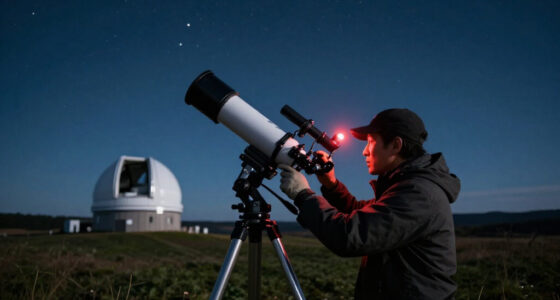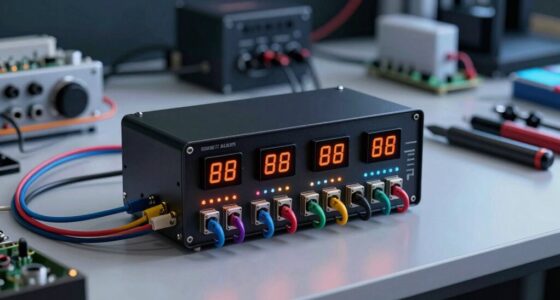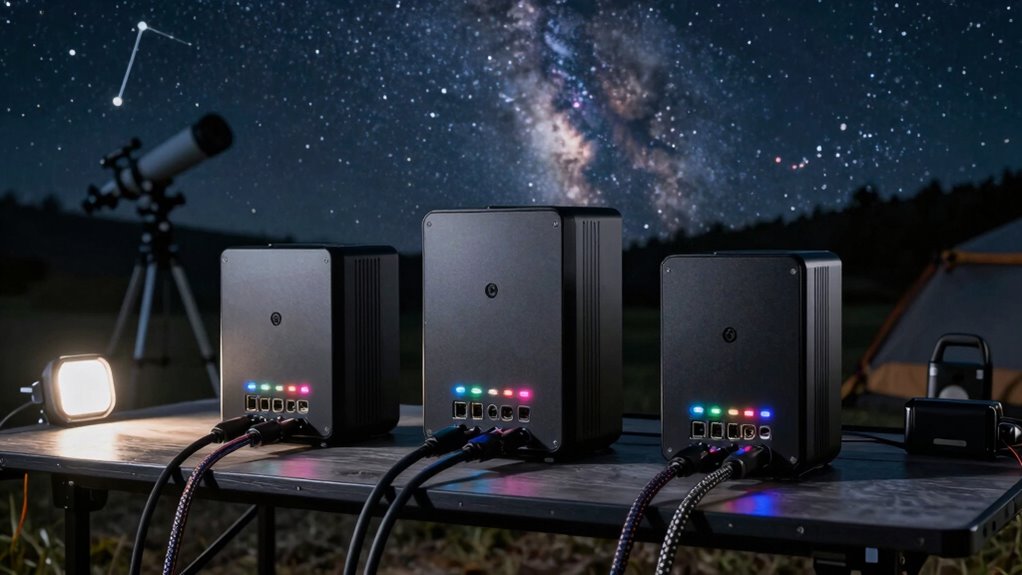

Choosing between these two SVBONY astrophotography power hubs comes down to whether you need straightforward device connections or active dew management. The SVBONY SV241 is my pick for a compact, adaptable hub, with six DC outputs and a mix of USB ports. The SV241 Pro suits a more automated rig, pairing five DC outputs with PWM channels and NINA integration for power control and dew-point management.

Prime made for students and young adults
- Fast, free delivery for dorm and study essentials
- Prime Video and Amazon Music included
- Member-only deals
The main tradeoff is flexibility versus specialization. The SV241 offers an extra DC output and a lighter, clearly dimensioned enclosure, but some outputs need a data connection before they activate. The Pro adds humidity-aware heater control and protection features, yet has fewer DC outputs, cannot hot-swap devices, and lacks INDI support. I compare them by how well each fits a real imaging setup, not by treating a longer feature list as an automatic win.
Key Takeaways
- The SV241 provides six DC outputs, one more than the SV241 Pro, making it the better fit when a rig has many separately powered devices.
- The SV241 Pro is the only model here with two PWM channels and intelligent dew-point control for compatible heating bands.
- Both hubs accept 12V DC input; the SV241 specifies a 12V/10A maximum input, so its supply must stay within that limit.
- NINA users can use the Pro’s software integration for direct power control and status monitoring; neither product description lists INDI support for the Pro.
- Neither hub should be treated as a full power solution without checking device draw, connector fit, cable needs, and whether the required control connection is available.
| SVBONY SV241 Astronomy Power Adapter and USB Hub |  | Best Overall for Flexible, Compact Power Distribution | Input voltage: 12V DC | Maximum input: 12V/10A | DC outputs: 6, each supporting up to 10A | VIEW ON AMAZON | See Our Full Breakdown |
| SVBONY SV241 Pro Telescope Power Management Box |  | Best for NINA Users and Automated Dew Control | Model: SV241 Pro | DC outputs: 5 | USB ports: 4, including Type-C | VIEW ON AMAZON | See Our Full Breakdown |
| power distribution hubs for astrophotography setup | DC outputs | USB ports | Input voltage | Maximum input |
|---|---|---|---|---|
| SVBONY SV241 Astronomy Power A | 6, each supporting up to 10A | 2 USB 3.1, 1 USB 2.0, 1 Type-C | 12V DC | 12V/10A |
| SVBONY SV241 Pro Telescope Pow | 5 | 4, including Type-C | — | — |
More Details on Our Top Picks
SVBONY SV241 Astronomy Power Adapter and USB Hub
The SVBONY SV241 is the stronger general-purpose choice for rigs that need several power connections without adding a larger management box. Its six DC outputs give it one more outlet than the SV241 Pro, a practical difference if a mount, camera, focuser, filter system, and other accessories each need their own feed. The aluminum enclosure measures 96 × 61 × 25mm and weighs 125g, so it is easier to accommodate on a compact imaging setup than a bulky distribution panel.
USB connectivity is another reason this model works well as an all-rounder. It has two USB 3.1 ports, one USB 2.0 port, and one Type-C port, with shared USB power specified at 5V/2.5A. That gives a buyer several connection types in one box, but the shared power figure matters: I would not assume every connected USB device can draw its maximum current at the same time. The hub is best viewed as a tidy connection point, not a substitute for checking each accessory’s power requirements.
Compared with the Pro, the SV241 is less capable at automated dew prevention. It has no listed PWM heater channels or dew-point control, and it will not provide the Pro’s described NINA power-management features. Its distinctive caveat is that some outputs require a data connection to a computer or astronomy hub before they activate. That is manageable for a computer-controlled rig, but less convenient for someone expecting every output to work as soon as 12V is connected. The input must also remain within 12V/10A; buyers should match the supply and overall load to that limit.
Mounting holes for M4 and UNC 1/4-20 fasteners provide useful placement options, and the included cables cover several common connection needs. Against the SV241 Pro, I rank this model first for broader day-to-day flexibility and its additional DC outlet, not for automation. Choose it when the priority is compact distribution across a mixed setup. Skip it if built-in heater control and software-managed dew protection matter more than extra DC capacity.
Pros:- Six DC outputs provide one more connection than the SV241 Pro.
- Compact 125g aluminum enclosure with M4 and UNC 1/4-20 mounting holes.
- Includes USB 3.1, USB 2.0, and Type-C ports for a mix of imaging accessories.
- ESD protection and 5V/12V status indicators help with connection awareness.
Cons:- Some outputs require a computer or astronomy-hub data connection to activate.
- Input is limited to 12V/10A; buyers must check the power supply and connected load.
- No listed PWM channels or automatic dew-point control.
Best for: Astrophotographers who want a compact hub with six DC outlets, several USB connection types, and flexible mounting options.
Not ideal for: Buyers seeking automatic dew-point heater control, PWM channels, or a hub whose outputs all activate without a data connection.
- Input voltage:12V DC
- Maximum input:12V/10A
- DC outputs:6, each supporting up to 10A
- USB ports:2 USB 3.1, 1 USB 2.0, 1 Type-C
- Shared USB power:5V/2.5A
- Weight and dimensions:125g; 96 × 61 × 25mm
- Enclosure and mounting:Aluminum; M4 and UNC 1/4-20 mounting holes
- Included accessories:USB Type-B to Type-A cable, DC 2.1-to-2.1 male cable, DC 5.5 × 2.5 cigarette lighter adapter cable
Our verdict“I recommend the SV241 for compact rigs that need more DC outlets and varied USB connections without requiring automated heater management.”
SVBONY SV241 Pro Telescope Power Management Box
The SVBONY SV241 Pro is the more specialized option in this pair. Its five DC outputs are fewer than the standard SV241’s six, but it adds two PWM channels and intelligent dew-point control. For a setup that uses compatible heating bands, that changes the hub’s job from routing power alone to helping manage moisture risk around optics. The Pro also lists NINA compatibility for direct power control and status monitoring, which gives software-driven imagers a more integrated path than the standard model’s basic distribution focus.
Its aluminum enclosure brings together five DC outputs, four USB ports including Type-C, and the PWM channels. That all-in-one approach can reduce the number of separate boxes and control connections around a telescope. Protection against overvoltage, undervoltage, and reverse polarity adds safeguards for a field setup where power connections may be handled in low light. Its stated operating range of -10°C to 50°C and humidity range of 5% to 85% RH also make the intended outdoor use clearer than a hub with no listed environmental range.
The tradeoff is that this is not the best pick just because it has more control features. The Pro has one fewer DC output than the SV241, and its USB output is listed as 5V/2.5A, so buyers should not infer higher USB capacity from the port count. It does not support hot-swapping: devices must be unplugged only when power is off. PWM1 is automatically controlled and cannot be manually modified, which limits direct user adjustment. It also lacks INDI support, so NINA integration is a meaningful advantage only for buyers using the supported software path.
Compared with the standard SV241, the Pro makes the most sense when automated dew management is central to the imaging plan and the rig has fewer than six DC-powered devices. If the goal is simply to distribute power and USB connections, the SV241’s extra DC outlet and smaller, specified dimensions make it a more straightforward fit. I would choose the Pro for control and heater management, while accepting its workflow limits and checking every connected device before powering the system.
Pros:- Intelligent dew-point control can manage compatible heating bands.
- Combines five DC outputs, four USB ports, and two PWM channels in one aluminum housing.
- NINA integration supports direct power control and status monitoring.
- Lists overvoltage, undervoltage, and reverse-polarity protection.
Cons:- Five DC outputs, one fewer than the standard SV241.
- Hot-swapping is not supported; power must be off before unplugging devices.
- PWM1 is automatically controlled and cannot be adjusted manually; INDI is not supported.
Best for: NINA-based astrophotographers who use compatible dew heaters and want power distribution, PWM control, and status monitoring in one box.
Not ideal for: Users who need six or more DC outputs, rely on INDI, need to change connections while powered, or want manual control of PWM1.
- Model:SV241 Pro
- DC outputs:5
- USB ports:4, including Type-C
- PWM channels:2
- USB output:5V/2.5A
- Software compatibility:NINA; INDI is not supported
- Environmental range:-10°C to 50°C operating temperature; 5% to 85% RH
- Firmware and material:Firmware V1.2; aluminum
Our verdict“I recommend the SV241 Pro when NINA control and automatic dew management are worth giving up one DC outlet and accepting stricter connection handling.”

How We Picked
I compared these two hubs around the jobs astrophotography power distribution needs to handle: supplying a mount, camera, and accessories; keeping cables manageable; and controlling equipment during long imaging sessions. I gave weight to the number and type of outputs, the stated input limits, physical fit, software compatibility, and protection features. A hub with extra ports is useful only when those ports suit the actual devices and the total electrical load stays within the supported input.
I also separated simple distribution from active environmental control. The SV241 is judged as a compact hub for routing power and USB connections, while the SV241 Pro earns its place through PWM channels, dew-point automation, and NINA integration. Those capabilities make it more specialized, not universally better: buyers who do not use compatible heaters or NINA may get more practical value from the standard SV241’s extra DC output and straightforward layout. I have not assumed unlisted details such as per-port current limits, cable lengths, or compatibility with software that the supplied information does not name.
Factors to Consider When Choosing Power Distribution Hubs For Astrophotography Setups
I would choose an astrophotography power hub by matching its outputs and control functions to the actual equipment list, rather than counting ports in isolation. These two models share a compact astronomy-focused design, but serve different wiring and automation priorities.Count devices, then check the power budget
List every device that needs a DC connection: mount, camera, focuser, filter wheel, rotator, and any other powered accessory. The SV241 has six DC outputs, while the Pro has five, so the standard model has an advantage when a rig has several independent feeds. Port count alone does not confirm that a hub can safely power every combination. Check each device’s voltage and current needs, then compare the combined demand with the hub and supply limits. For the SV241, the stated maximum input is 12V/10A, and the input must not exceed that rating.
Decide whether dew control belongs in the hub
A plain distribution hub routes power; it does not automatically solve dew formation. The SV241 Pro adds intelligent dew-point control and two PWM channels, which can suit a setup with compatible heating bands and a need for automated adjustment. That is a real functional difference from the standard SV241, which has no listed PWM or dew-management capability. Check how the Pro’s automatic PWM1 behavior fits your preferred control method: that channel cannot be manually modified. If heater automation is not part of the plan, the extra control features may not outweigh the SV241’s extra DC outlet.
Match software support to your imaging workflow
The SV241 Pro lists NINA compatibility for direct power control and status monitoring. This can help users who already manage an imaging session in NINA keep hub functions within that workflow. The supplied product information says the Pro lacks INDI support, so do not assume it will suit an INDI-centered setup. The standard SV241 instead requires a data connection to a computer or astronomy hub for some outputs to activate. Before buying, confirm which connections need to be present at startup and whether the intended control computer will be available in the field.
Plan for cables, mounting, and night-time handling
Compact gear still needs a suitable mounting location and tidy cable routing. The SV241’s listed 96 × 61 × 25mm size, 125g weight, and M4 and UNC 1/4-20 mounting holes make placement details easy to assess. The Pro is also described as compact, but the supplied specifications do not give its dimensions or weight, so verify those details if space is tight. The Pro also prohibits hot-swapping: turn off power before unplugging a device. On either hub, check connector sizes, cable reach, strain relief, and whether supplied leads match the field power arrangement.
Treat protection features as support, not a substitute for checks
The standard SV241 lists ESD protection and 5V/12V status indicators. The Pro lists overvoltage, undervoltage, and reverse-polarity protection, which may provide useful safeguards against common wiring or supply problems. These features do not remove the need to confirm voltage, polarity, connector fit, and load before a session. I would also account for the cold and damp conditions expected at the observing site: the Pro specifies an operating temperature and humidity range, while those ranges are not supplied for the standard SV241. Do not infer an unlisted rating for either product.
Frequently Asked Questions
Which of these hubs has more DC outputs?
The standard SVBONY SV241 has six DC outputs, compared with five on the SV241 Pro. That extra outlet may matter when several devices each need separate power, though the total load and the requirements of each device still need to fit the hub’s supported input and power supply.
Which model is better for dew heaters?
The SV241 Pro is the choice for buyers seeking built-in dew-related control. It includes two PWM channels and intelligent dew-point control for compatible heating bands. The standard SV241 is a power and USB hub without listed PWM channels or automatic dew management, so it is better suited to distribution rather than heater automation.
Can I use the SV241 Pro with INDI?
The supplied specifications state that the SV241 Pro currently lacks INDI support. It lists NINA compatibility for direct power control and status monitoring instead. If your setup depends on INDI, confirm compatibility with the manufacturer before choosing the Pro; do not assume NINA support means INDI support.
Can I unplug equipment from the SV241 Pro while it is powered?
No. The Pro does not support hot-swapping, and the stated guidance is to unplug devices only when power is off. Plan connection changes before the imaging session or shut down the hub first. The standard SV241’s supplied description does not give the same hot-swap restriction, so avoid assuming either behavior beyond the information provided.
Do the hubs replace a 12V power supply or battery?
These products distribute power to connected equipment; buyers still need an appropriate 12V source. The SV241 specifies a maximum input of 12V/10A, so the supply must stay within that limit and have capacity for the combined load. Check the Pro’s input requirements and each accessory’s voltage and current needs with its documentation before building the complete power chain.
Conclusion
Choose the SVBONY SV241 if your main need is compact, flexible distribution, especially when six DC outlets and a variety of USB ports suit your device list. It is the more straightforward pick for a mixed rig that does not need built-in dew automation, provided you account for its 12V/10A input limit and the data connection some outputs require.
Choose the SV241 Pro if you use NINA, want PWM-based heater management, and value automated dew-point control over one additional DC outlet. It is a better match for a more managed imaging system, but only if its no-hot-swap rule, automatic PWM1 behavior, and lack of INDI support work for your routine. For buyers undecided between them, I would start with the equipment list: choose the SV241 for outlet capacity and broad distribution, or the Pro when dew control and software integration are requirements rather than extras.