TL;DR
A SpaceX rocket launched in Florida created a striking sky pattern dubbed the ‘space jellyfish.’ Experts confirm the phenomenon results from atmospheric interactions during the launch. The event highlights how rocket emissions can produce visible optical effects, but further study is needed to understand long-term impacts.
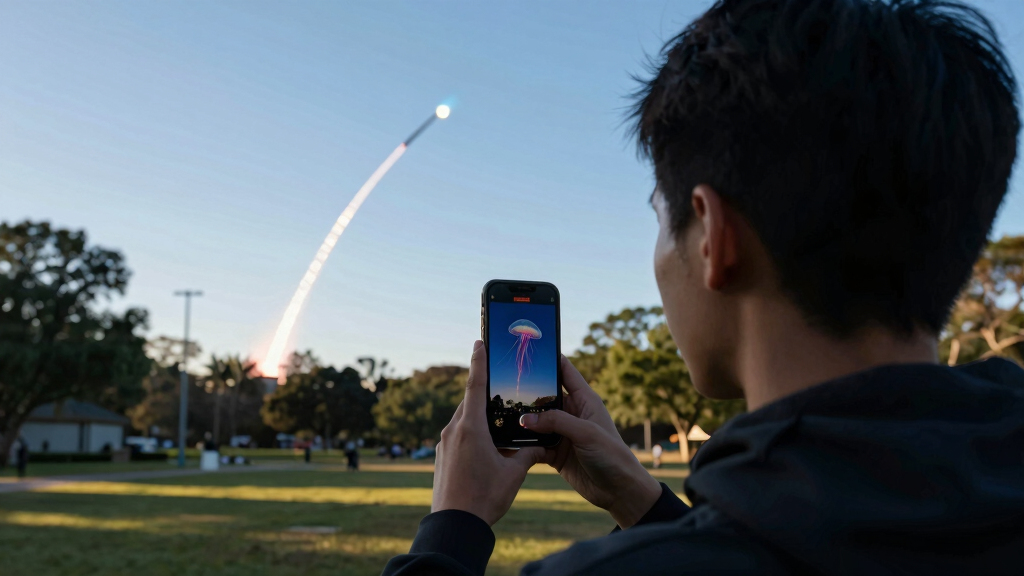
A recent SpaceX launch in Florida produced a striking sky pattern resembling a ‘space jellyfish,’ confirmed by scientists to be caused by atmospheric interactions with rocket exhaust. While the visual effect has drawn public attention, experts emphasize it is a natural optical phenomenon linked to the launch’s emissions and atmospheric conditions.
The phenomenon appeared shortly after SpaceX’s rocket lifted off from Kennedy Space Center, with witnesses reporting a luminous, jellyfish-like shape in the sky. Scientists from the University of Florida and aerospace experts confirmed that the effect results from the interaction between the rocket’s exhaust gases and atmospheric moisture, creating a visible, bioluminescent-like display.
According to Dr. Laura Simmons, an atmospheric scientist, ‘The optical effect occurs when the water vapor and particles in the exhaust interact with sunlight and atmospheric moisture, producing a glowing, jellyfish-shaped pattern.’ This type of phenomenon is similar to known optical effects such as noctilucent clouds but is specific to rocket emissions under certain atmospheric conditions.
SpaceX has not issued a specific statement about the visual effect but confirmed the launch occurred as scheduled. The event has sparked curiosity among viewers and scientists, prompting further investigation into the atmospheric impacts of rocket launches.
Why the ‘Space Jellyfish’ Phenomenon Matters for Space and Atmosphere Studies
This visual event underscores how rocket emissions can produce observable atmospheric effects, which may have implications for understanding the environmental impact of frequent launches. It also provides a natural laboratory for studying atmospheric interactions with man-made emissions, potentially informing future spaceflight environmental policies.
Moreover, the phenomenon has captured public interest, highlighting the importance of transparency and research into the visible effects of space activities. Understanding these effects can help mitigate concerns about atmospheric pollution and visual pollution caused by rocket launches.

Estes 2222 Porta-Pad II Launch Pad and Electron Beam Launch Controller, Flying-Rocket-Model Launch Pad and Controller, Rocket Model Kit Accessories for Ages 10+
- Launch Pad and Controller: Includes Porta-Pad II and Electron Beam controller
- Compatible Engines: Supports mini, A, C, and D engines
- Versatile Rocket Launching: Suitable for beginner to advanced rockets
As an affiliate, we earn on qualifying purchases.
As an affiliate, we earn on qualifying purchases.
Background on Rocket-Induced Atmospheric Optical Effects
Optical phenomena caused by rocket launches are not new, but the ‘space jellyfish’ effect is a recent and visually striking example. Similar effects have been documented during previous launches, often linked to water vapor and particle interactions in the upper atmosphere. These effects are typically temporary and depend on atmospheric conditions such as humidity, sunlight, and the composition of rocket exhaust gases.
SpaceX’s recent launch is part of a broader increase in commercial spaceflight activity, raising questions about the cumulative environmental and atmospheric impacts. Scientists have been studying how rocket emissions influence atmospheric chemistry and visual phenomena, with some effects observable from the ground or in satellite imagery.
Prior studies have noted that rocket exhaust can contribute to atmospheric water vapor and particles, which can lead to various optical effects, including halos, glows, and cloud-like formations. The ‘space jellyfish’ adds to this catalog, providing a new case for scientific observation.
“The optical effect occurs when the water vapor and particles in the exhaust interact with sunlight and atmospheric moisture, producing a glowing, jellyfish-shaped pattern.”
— Dr. Laura Simmons
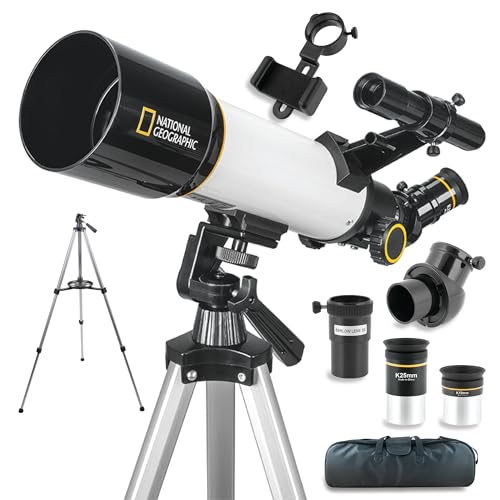
National Geographic Sky View 70mm Refractor Telescope with Panhandle Mount for Adults and Kids
- Versatile Viewing: Observe moon, planets, nebulae, star clusters
- Multiple Magnification Options: Includes two eyepieces and 3x Barlow lens
- Smartphone Astrophotography: Adapter for capturing moon and sky photos
As an affiliate, we earn on qualifying purchases.
As an affiliate, we earn on qualifying purchases.
Unclear Long-Term Environmental Impact of Rocket-Induced Phenomena
While scientists confirm the ‘space jellyfish’ effect results from atmospheric interactions with rocket exhaust, it remains unclear how frequent such phenomena are and whether they have any long-term environmental or atmospheric consequences. Further research is needed to assess the cumulative impact of increased launch activity on atmospheric chemistry and visual effects.

General Tools MMD4E Moisture Meter for Wood, Walls & Water Leak Detection
- Humidity Sensor: Detects moisture levels to prevent mold
- Water Leak Detection: Identifies moisture in wood and drywall
- Moisture Reader: Backlit LCD with large digits for easy reading
As an affiliate, we earn on qualifying purchases.
As an affiliate, we earn on qualifying purchases.
Future Research and Monitoring of Atmospheric Effects of Launches
Scientists plan to analyze satellite data and atmospheric measurements from recent launches to better understand the frequency and conditions that produce effects like the ‘space jellyfish.’ SpaceX and other agencies may also study how to minimize visual and environmental impacts of future launches, especially as commercial spaceflight expands.
Public interest in these phenomena is likely to grow, prompting more observations and possibly new guidelines for launch operations to mitigate atmospheric effects.
space launch visual phenomenon camera
As an affiliate, we earn on qualifying purchases.
As an affiliate, we earn on qualifying purchases.
Key Questions
What causes the ‘space jellyfish’ effect in the sky?
The effect is caused by interactions between rocket exhaust gases—mainly water vapor and particles—and atmospheric moisture, sunlight, and atmospheric conditions, creating a luminous, jellyfish-like pattern in the sky.
Is this effect dangerous or harmful?
No, the phenomenon is purely optical and does not pose any known danger or health risk. It is a temporary visual effect resulting from atmospheric interactions.
Will this happen with all rocket launches?
Not necessarily. The occurrence depends on specific atmospheric conditions such as humidity, sunlight, and the composition of the rocket’s emissions. It is more likely to be visible under certain weather conditions.
Are scientists concerned about environmental impacts from these effects?
While the visual effects are well-understood as atmospheric phenomena, scientists are studying whether increased launch activity could have cumulative environmental impacts, including atmospheric chemistry changes.
Source: google-trends