
TL;DR

Prime made for students and young adults
- Fast, free delivery for dorm and study essentials
- Prime Video and Amazon Music included
- Member-only deals
Archaeologists have discovered a 4,400-year-old tomb at Saqqara belonging to an Egyptian judge, with remarkably preserved wall colors. The find offers new insights into ancient Egyptian society and burial practices.
Archaeologists have announced the discovery of a 4,400-year-old tomb at Saqqara belonging to an Egyptian judge, with well-preserved wall paintings that retain their original colors. The find is considered one of the most significant recent discoveries in Egyptian archaeology, offering new insights into early judicial figures and burial customs during Egypt’s Old Kingdom period.
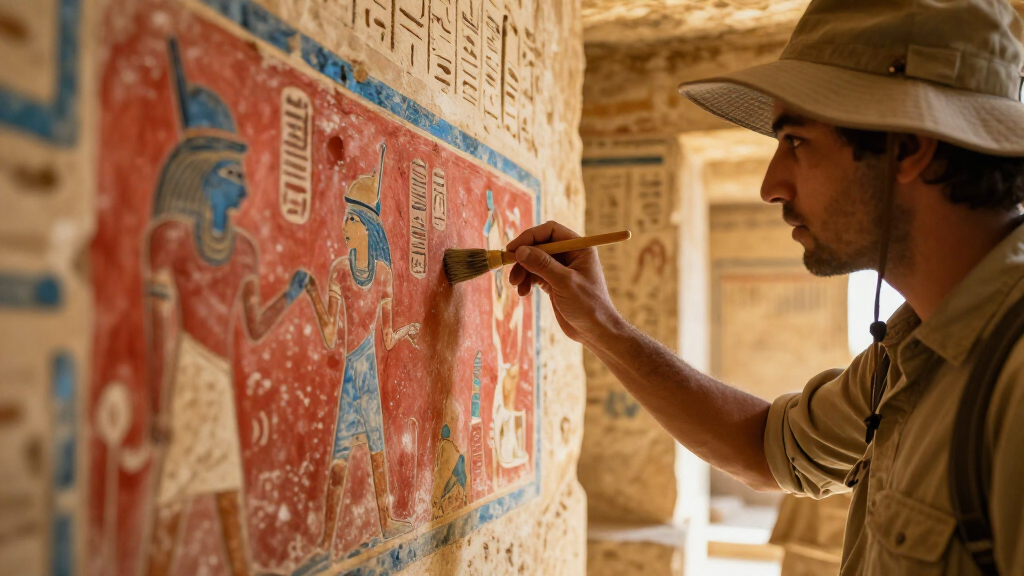
The tomb was uncovered during ongoing excavations at Saqqara, a site renowned for its extensive ancient Egyptian necropolises. It dates back to approximately 2200 BCE, aligning with Egypt’s Sixth Dynasty. The tomb’s walls feature vivid paintings depicting the judge in ceremonial attire, along with scenes of daily life and religious rituals. Experts confirm that the pigments used are remarkably intact, providing rare visual evidence of ancient Egyptian artistic techniques.
Initial analysis indicates the tomb belonged to a high-ranking judicial official, possibly involved in legal or administrative matters of the state. The structure includes a burial chamber and an antechamber, with inscriptions identifying the tomb owner. The discovery was announced by Egypt’s Ministry of Tourism and Antiquities, which emphasized the significance of the preserved wall art and the tomb’s architectural features.
Implications for Understanding Ancient Egyptian Judicial Roles
This discovery is important because it provides tangible evidence of the social status and roles of judges in ancient Egypt. The well-preserved wall paintings offer visual context for the attire, symbols, and rituals associated with judicial figures of the period. It also enriches understanding of burial practices for elite officials during the Old Kingdom, highlighting the importance placed on legal authority and religious rites.
Furthermore, the preservation of color on the walls suggests advanced techniques in tomb construction and decoration, which can inform broader studies of ancient Egyptian art and craftsmanship. The find underscores Saqqara’s ongoing importance as a site for uncovering Egypt’s early history and societal structure.
Popular right now

Dyson V8 Cyclone Cordless Vacuum

Vitamix Propel Series 750 Professional-Grade Blender, 4 Programs, Black

Bose QuietComfort True Wireless Earbuds with Active Noise Cancellation, Black
As an affiliate, we earn on qualifying purchases.
Saqqara’s Role in Egypt’s Ancient Burial Landscape
Saqqara has been a focal point for archaeological discoveries since the 19th century, known for the Step Pyramid of Djoser and numerous tombs of officials and nobles from various periods. Recent excavations have revealed a wealth of artifacts and structures that shed light on Egypt’s political, religious, and social evolution. The discovery of this tomb fits into a broader pattern of uncovering elite burial sites from the Old Kingdom, emphasizing Saqqara’s significance as a hub of royal and aristocratic activity.
Previous findings at Saqqara include well-preserved sarcophagi, inscriptions, and art. The site continues to attract international attention, with experts optimistic that ongoing excavations will yield further insights into Egypt’s early civilization. The current discovery aligns with a surge in archaeological interest, driven by new technologies and increased funding.
Unconfirmed Details and Ongoing Analyses
While the initial findings confirm the tomb’s age and the presence of preserved wall paintings, detailed analysis of the inscriptions, artifacts, and the precise social status of the tomb owner is still underway. The full extent of the tomb’s contents and its historical context remains to be clarified through further excavation and scientific testing. Additionally, the exact role of the judge within the broader administrative system of the time is still being studied.
Next Steps in Excavation and Research
Archaeologists plan to continue excavating the tomb to uncover additional artifacts and inscriptions that can shed light on the judge’s identity and duties. Scientific dating, pigment analysis, and conservation efforts are also scheduled to better understand the construction techniques and artistic methods used. Researchers aim to publish detailed findings in upcoming academic journals, while the site will remain open for further exploration.
Key Questions
How old is the tomb of the Egyptian judge?
The tomb is approximately 4,400 years old, dating back to around 2200 BCE during Egypt’s Sixth Dynasty.
What makes this tomb so significant?
The tomb’s well-preserved wall paintings with original colors provide rare insights into ancient Egyptian art, burial practices, and societal hierarchy, especially relating to judicial officials.
What do the wall paintings depict?
The paintings show the judge in ceremonial attire, scenes of daily life, religious rituals, and possibly legal proceedings, offering a visual record of the period.
Are there any artifacts found with the tomb?
Initial reports focus on the wall paintings and inscriptions; further excavations are expected to reveal additional artifacts and relics.
When will more details be available?
Further analysis and publication of findings are expected in the coming months as excavations and scientific tests continue.
Source: hn