For the best chance to photograph Orionid meteors in 2025, plan to be outdoors between October 21-22, during the peak, in a dark, open area away from city lights, ideally during a new moon or thin crescent moon phase. Use a sturdy tripod, a wide-angle lens, and set your camera to a longer exposure with a high ISO. Keep experimenting with settings, and you’ll discover how to capture stunning meteors—more tips await if you continue exploring.
Key Takeaways
- The Orionid Meteor Shower peaks around October 21-22, 2025, with best viewing conditions in dark, open areas away from city lights.
- Use a sturdy tripod, wide-angle lens (f/2.8 or wider), and set ISO 800-1600 for optimal meteor capture.
- Focus manually to infinity, fine-tune on a bright star, and shoot long exposures (15-30 seconds) to maximize meteor visibility.
- Aim for nights with a new moon or thin crescent moon to reduce light pollution and enhance meteor brightness.
- Be patient and prepared with extra batteries and memory, as meteor activity is unpredictable and requires continuous shooting.

Are you ready to catch one of the year’s most dazzling celestial displays? The Orionid Meteor Shower 2025 promises an unforgettable spectacle, and with the right planning, you can capture its fleeting brilliance. Celestial events like this offer a rare chance to witness shooting stars streak across the night sky, and understanding how to photograph meteors can turn a simple watch into a stunning visual memory.
First, familiarize yourself with the best times for viewing. The Orionids peak around October 21-22, but sporadic meteors can appear from mid-October through late October. To maximize your chances, plan to be in a dark, open location away from city lights. Light pollution dulls the sky’s natural darkness and diminishes the visibility of fast-moving meteors. Check the moon phase as well; a new moon or a thin crescent provides *ideal* darkness, ensuring meteors stand out against the night sky.
When it comes to photography tips, preparation is key. Use a sturdy tripod to keep your camera steady during long exposures, which are essential for capturing meteors. Set your camera to manual mode, and opt for a wide-angle lens with a large aperture (f/2.8 or wider). This allows more light to reach your sensor, increasing your chances of capturing streaks. Set your ISO to around 800-1600, balancing sensitivity with noise levels, and start with a shutter speed of 15-30 seconds. Experiment with these settings based on your environment; longer exposures can sometimes capture more meteors, but they also risk star trails if the exposure is too long.
Focus is *crucial*. Autofocus often struggles in low light, so manually focus your lens to infinity before the event begins. Use live view mode if your camera has it, and zoom in on a distant bright star or planet to fine-tune focus. During the meteor shower, take continuous shots or use interval shooting modes if available. Patience is *essential*, as meteors are unpredictable—sometimes you’ll get bursts of several in quick succession, other times just a few. The use of a high-quality camera sensor with good low-light performance can significantly improve your results.

K&F Concept 64 inch/163cm Lightweight Aluminum Travel Camera Tripod
- Lightweight and Portable: Adjustable height from 20.4'' to 64.1''; folds to 15.5''; weighs 2.53 lbs.
- 360 Degree Ball Head: Rotates freely; supports up to 8kg; ideal for panoramic shots.
- Efficient and Flexible: Quick flip leg locks; one-handed operation; easy setup.
As an affiliate, we earn on qualifying purchases.
As an affiliate, we earn on qualifying purchases.
Frequently Asked Questions
What Is the Best Camera Gear for Capturing Meteors?
You should use a DSLR or mirrorless camera with a wide-angle lens, ideally between 14mm and 24mm, to capture the night sky effectively. Set your camera to manual mode, use a low f-stop like f/2.8 for more light, and adjust ISO around 1600-3200. Use long exposure times, around 15-30 seconds, to maximize meteor visibility without star trails. A sturdy tripod will keep your shot steady.
Can I Photograph Orionids With a Smartphone?
You can photograph Orionids with a smartphone, but keep in mind the limitations. Your phone’s sensor may struggle with low light, and image stabilization can sometimes cause blurring during long exposures. To improve your chances, use a tripod or stabilize your phone on a steady surface, set a longer exposure if possible, and avoid digital zoom. While not ideal, with patience, you can still capture some stunning meteor shots.
Are There Any Safety Tips for Night Sky Photography?
Imagine you’re capturing a stunning meteor streak, but suddenly, you’re blinded by bright light pollution or strain your eyes. To stay safe, avoid looking directly at bright lights, and wear eye protection if needed. Keep your camera steady on a tripod, and watch out for uneven terrain to prevent falls. Prioritize your safety by staying aware of your surroundings and minimizing exposure to harsh lights during night sky photography.
How Do Weather Conditions Affect Meteor Shower Visibility?
Weather conditions greatly influence meteor shower visibility. Clear skies with high sky clarity let you see more meteors, while clouds and haze block your view. Light pollution from city lights dims the night sky, making faint meteors harder to spot. To get the best experience, choose nights with minimal clouds and dark skies away from artificial lights. This way, you’ll maximize your chances of catching those stunning meteors streaking across the sky.
Is It Possible to See Orionids During the Day?
You might wonder if you can catch Orionids during the day, but daytime meteor sightings are rare due to sunlight interference. Coincidentally, the bright sun washes out faint meteors, making them nearly impossible to see with the naked eye. While occasional daytime meteors occur, they’re usually very faint and go unnoticed. To truly observe Orionids, you’ll need to wait until night when the sky darkens, revealing the meteors’ brilliant streaks.

Canon RF16mm F2.8 STM Lens, Ultra Wide-Angle, Fixed Focal Length Prime Lens, Compatible with EOS R Series Mirrorless Cameras, Black
- Lens Type: Ultra Wide-Angle Prime Lens
- Focal Length: 16mm Fixed Focal Length
- Maximum Aperture: f/2.8 Bright Aperture
As an affiliate, we earn on qualifying purchases.
As an affiliate, we earn on qualifying purchases.
Conclusion
As you prepare to witness the Orionid Meteor Shower in 2025, remember that patience is a virtue. Find a dark spot, bring your camera, and stay patient for the best shows to appear. The stars remind us that good things come to those who wait. So, enjoy the night sky’s beauty, embrace the quiet moments, and let the meteors inspire your wonder. After all, every cloud has a silver lining—sometimes, it’s made of shooting stars.

Remote Shutter Release Cable, Wired Remote Switch Cord Replacement RS-60E3 for Canon Rebel T7 T7i T6 T6i T6S T5 T5i T4i T3 T3i T2 60D 70D 77D 80D G16 G15 G12 G11 G10 G1X G1X Mark II G1X Mark III
- Compatible Cameras: Supports Canon models including Rebel and G series
- Full Button Functionality: Replicates all shutter release button functions
- Enhanced Image Stability: Control autofocus and shutter release for steady shots
As an affiliate, we earn on qualifying purchases.
As an affiliate, we earn on qualifying purchases.
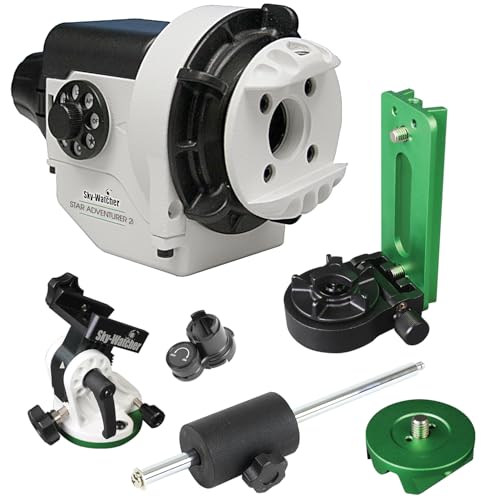
Sky-Watcher Star Adventurer 2i Pro Pack (S20512)
- Portable Nightscape Tracker: Motorized platform for astrophotography
- Wide-Field Astrophotography: Modular design for tripods and telescopes
- Wi-Fi Connectivity: Control via smartphone with SAM Console app
As an affiliate, we earn on qualifying purchases.
As an affiliate, we earn on qualifying purchases.