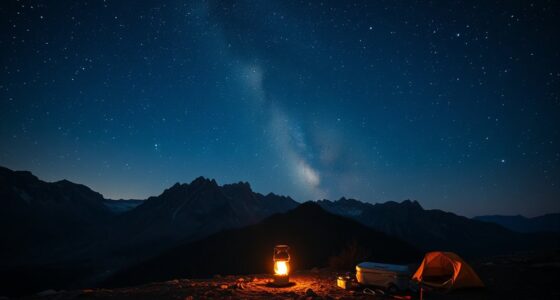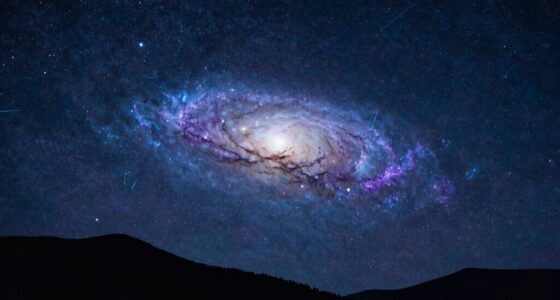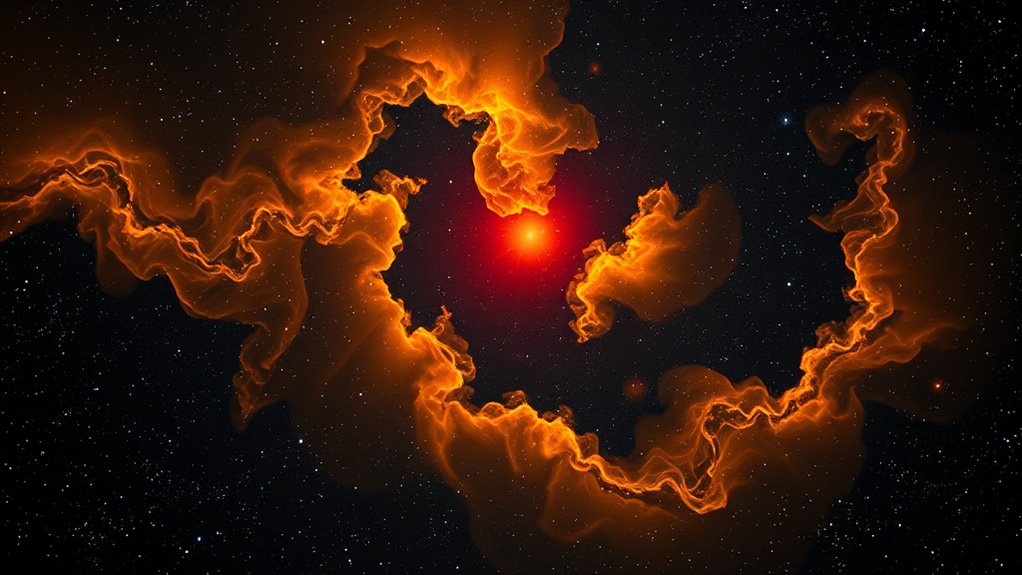

In the Scorpius and Antares region, you’ll find stunning golden nebulae and vibrant star fields filled with glowing gas and dust. Bright stars like Antares shape and illuminate their surroundings, igniting new star formation through intense radiation. These nebulae are rich in hydrogen and other elements, creating striking reds and blues. If you keep exploring, you’ll discover how these cosmic wonders showcase the universe’s ongoing star lifecycle and stunning stellar activity.

Prime made for students and young adults
- Fast, free delivery for dorm and study essentials
- Prime Video and Amazon Music included
- Member-only deals
Key Takeaways
- The Scorpius and Antares region features vibrant star fields and glowing nebulae rich in hydrogen and dust.
- Antares, a deep red supergiant, illuminates surrounding gas, creating striking emission nebulae.
- The area is known for active stellar formation, with massive clouds collapsing to birth new stars.
- Golden hues in nebulae result from ionized hydrogen and scattered light, enhancing their stunning appearance.
- The region exemplifies dynamic cosmic processes, showcasing star birth, evolution, and nebulae shaping.
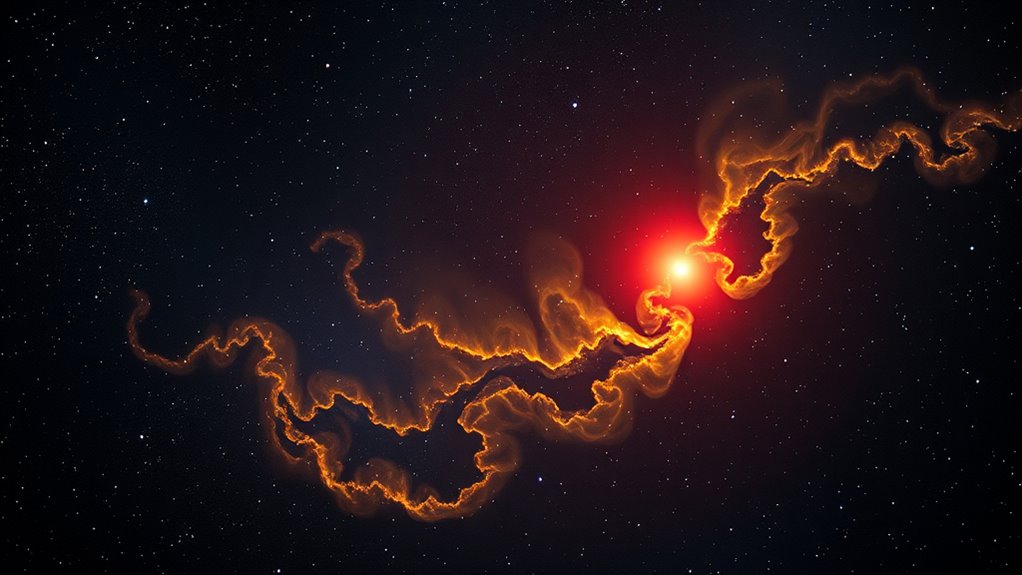
Have you ever looked up at the night sky and wondered about the stunning regions near the constellation Scorpius? If so, you’re gazing into a zone rich with cosmic wonders, where vibrant star fields and glowing nebulae create breathtaking displays. This area is famous for its stellar formation activity and diverse nebulae composition, making it a prime spot for astronomers and stargazers alike.
In this region, stellar formation is particularly active. Massive clouds of gas and dust collide and collapse under gravity, giving birth to new stars. These nurseries, often hidden within bright nebulae, are where the universe’s most luminous and massive stars originate. As these stars form, they influence their surroundings by emitting powerful stellar winds and radiation. This process shapes the nebulae, carving out cavities and igniting new cycles of star creation. Watching this cycle unfold offers a glimpse into the dynamic nature of our galaxy, where star birth and death are continuous, interconnected phenomena.
The nebulae composition here is equally fascinating. Many of the nebulae in the Scorpius and Antares region are primarily made of hydrogen, the most abundant element in the universe. These hydrogen clouds are the raw material for star formation. Alongside hydrogen, you’ll find traces of helium, dust particles, and heavier elements forged in the cores of aging stars. These elements give nebulae their stunning colors—reds from hydrogen emissions, blues from scattered light, and sometimes even intricate filaments of dark dust blocking parts of the glow. The complex nebulae makeup creates a layered, textured landscape that’s as beautiful as it is scientifically significant.
Particularly striking is the interaction between the nebulae and the energetic stars within. Bright stars like Antares, a supergiant with a deep red hue, influence their surroundings profoundly. Their intense radiation ionizes nearby gas, causing it to glow brightly, creating the characteristic emissions seen in many nebulae. This interplay between stellar radiation and nebulae makeup not only illuminates the region but also drives ongoing star formation.
As you explore the area near Scorpius and Antares, you witness a cosmic tapestry woven with active stellar nurseries and glowing clouds. It’s a vibrant testament to how stars are born from nebulae and how these glowing regions continue to evolve. The more you learn about the stellar formation processes and nebulae makeup here, the more you realize this part of the sky is a dynamic, ever-changing universe in miniature—an awe-inspiring window into the lifecycle of stars. Understanding nebulae composition enriches our appreciation of these celestial phenomena and their role in stellar evolution.
As an affiliate, we earn on qualifying purchases.
Frequently Asked Questions
What Are the Best Months to Observe This Region?
The best viewing months for this region are from late spring to early fall, roughly May through September. During these ideal observation periods, you’ll find the skies clearer and darker, making it easier to see the stunning golden nebulae and star fields. To get the best experience, plan your stargazing on clear, moonless nights when the region is high in the sky for maximum visibility.
Are There Any Known Exoplanets in the Area?
You’ll find some exoplanets detected in the Scorpius and Antares region through advanced exoplanet detection methods like transit and radial velocity techniques. These discoveries help scientists understand planetary system formation in this vibrant stellar area. While not all exoplanets are confirmed, ongoing observations continue to reveal new worlds. Keep an eye on astronomical updates, as this region remains a fascinating target for exoplanet research and understanding how planetary systems develop.
How Does the Nebula’s Chemistry Affect Star Formation?
The nebula’s chemistry plays a vital role in star formation processes by providing the essential elements like hydrogen, helium, and dust. When these materials condense under gravity, they form new stars. Rich chemical compositions speed up star creation, while certain molecules can hinder the process. Understanding nebula chemistry helps you grasp how stars emerge and evolve within these cosmic nurseries, shaping the galaxy’s stellar population.
Can Amateur Astronomers Access Detailed Images of These Nebulae?
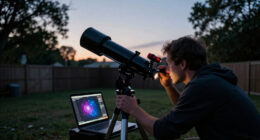
You can absolutely access detailed images of these nebulae. With the right telescope specifications, like a sturdy mount and a high-quality camera, you can capture breathtaking views. Astrophotography techniques such as stacking and long exposures help reveal intricate details. While professional images are stunning, amateur astronomers can still produce impressive, detailed photos that showcase the nebula’s shimmering beauty, turning your backyard into a window to the cosmos.
What Historical Myths Are Associated With Antares and Scorpius?
You’ll find that Antares and Scorpius are rich in mythical symbolism and cultural significance. In Greek mythology, Scorpius represents the giant scorpion that kills Orion, symbolizing danger and protection. Antares, known as the “Heart of the Scorpion,” embodies fiery passion and strength. These stars inspired stories across various cultures, emphasizing their importance as celestial symbols of power, protection, and mythic battles, shaping many ancient legends.
astronomy binoculars for star gazing
As an affiliate, we earn on qualifying purchases.
As an affiliate, we earn on qualifying purchases.
Conclusion
As you gaze into the glowing grandeur of the Scorpius and Antares region, you witness a wondrous world woven with wisps of warm, winding nebulae. The dazzling dance of distant dippers and divine dust drapes the dark sky in a dreamy, dazzling display. Remember, in this domain of radiant riches, your curiosity creates a captivating connection, turning the cosmic canvas into a captivating, celestial symphony. Step back, and let the stellar spectacle stay deep in your dreams.
As an affiliate, we earn on qualifying purchases.
night sky astrophotography camera
As an affiliate, we earn on qualifying purchases.
As an affiliate, we earn on qualifying purchases.
Evergreen bestsellers Picks
bestsellers
As an affiliate, we earn on qualifying purchases.