From the Southern Hemisphere, you can experience spectacular views of the Carina Nebula and Eta Carinae, two of the universe’s most dynamic stellar phenomena. The Carina Nebula is a massive nursery where new stars form amid vibrant gas and dust clouds, while Eta Carinae is a luminous star system known for its unpredictable behavior and explosive eruptions. These sights connect you directly to the universe’s raw power and ongoing cosmic evolution—discover more about these incredible features and their stories.
Key Takeaways
- The Carina Nebula is a luminous stellar nursery rich in gas, dust, and active star formation visible from the Southern Hemisphere.
- Eta Carinae is a massive, variable star system known for its dramatic Great Eruption and luminous Homunculus nebula.
- Southern Hemisphere skies offer optimal viewing conditions to observe these cosmic phenomena’s vibrant structures and energetic processes.
- The Carina Nebula and Eta Carinae provide valuable insights into stellar evolution, explosive events, and the lifecycle of massive stars.
- These features highlight the Southern Hemisphere’s unique role in exploring some of the universe’s most dynamic and spectacular stellar regions.
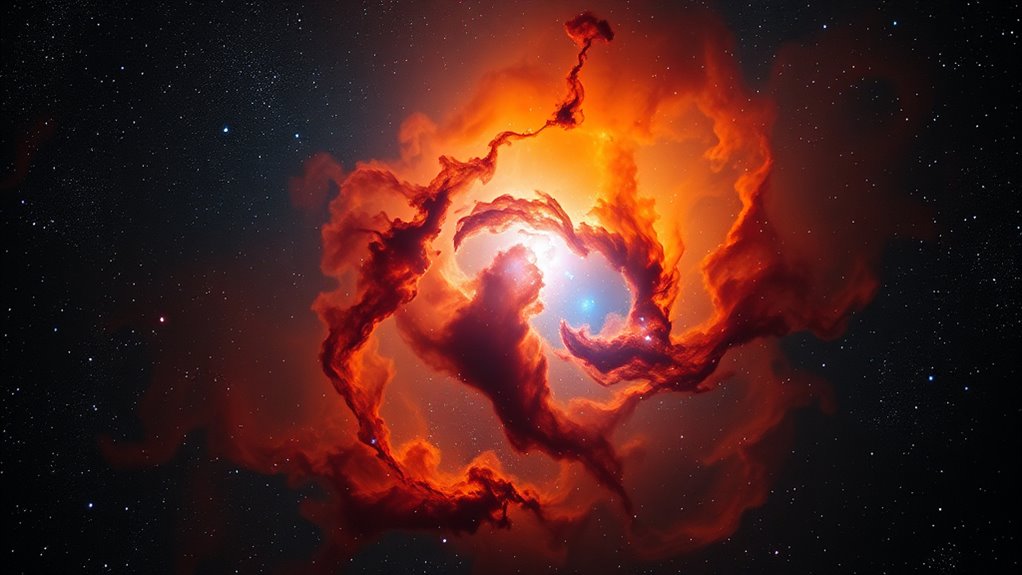
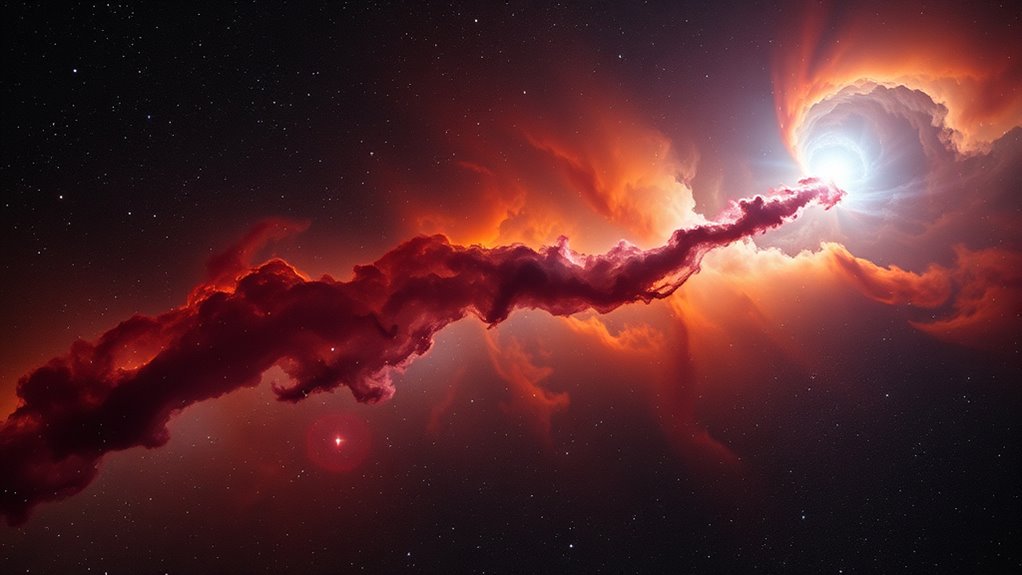
Have you ever wondered what makes the Southern Hemisphere’s natural and cultural landscapes so unique? One of the most breathtaking aspects is its cosmic phenomena, particularly the stunning stellar formations found within the Carina Nebula and Eta Carinae. These celestial features aren’t just beautiful—they tell stories about the universe’s most dynamic processes. When you gaze into the night sky in this part of the world, you’re witnessing a stellar nursery bursting with activity, where new stars are born amidst clouds of gas and dust. The Carina Nebula, a colossal cloud of ionized gases and dust, is one of the brightest and most active stellar formations visible from Earth. Its vibrant colors and intricate structures are a testament to the power of cosmic phenomena shaping the cosmos over millions of years.
Discover the vibrant stellar nurseries and cosmic phenomena shaping the universe in the Southern Hemisphere’s night sky.
Eta Carinae, nestled within this nebula, is one of the most fascinating and luminous stellar objects known. It’s a massive star system, famous for its unpredictable behavior and immense brightness. During its Great Eruption in the 19th century, Eta Carinae briefly became one of the brightest stars in the sky, ejecting a huge amount of material into space and creating a spectacular nebula called the Homunculus. This star’s violent activity makes it a key subject for astronomers studying stellar evolution and cosmic phenomena. As you observe the Carina Nebula, you’re looking at a cosmic theater where stars are actively forming, dying, and reshaping their environment through powerful winds and explosive events.
The Southern Hemisphere offers an unparalleled vantage point for exploring these celestial wonders. Its clear, dark skies provide ideal conditions for viewing stellar formations like the Carina Nebula and the dramatic phenomena associated with Eta Carinae. These cosmic phenomena allow you to connect with the universe’s most energetic processes, revealing the raw power behind star birth and death. As you learn more about these stellar nurseries, you gain insight into the lifecycle of stars and the dynamic forces at play in our galaxy. They serve as natural laboratories where scientists can study the birth and death of stars in real time, offering clues to understanding cosmic evolution.
In essence, the Southern Hemisphere’s stellar formations and cosmic phenomena are not just sights to behold—they are stories written in light and matter, inviting you to explore the universe’s most profound mysteries. The Carina Nebula and Eta Carinae exemplify how the universe continues to surprise and inspire those of us fortunate enough to witness its grandeur from below. Whether you’re an astronomy enthusiast or simply a curious observer, these celestial features highlight the Southern Hemisphere’s reputation as a gateway to some of the most spectacular cosmic phenomena in our universe.

Celticbird Telescope for Adults High Powered, 80mm Aperture 600mm AZ Mount Refractor Telescope for Kids Beginners – Portable Telescopes for Adults Astronomy with Backpack, Phone Adapter, Moon Filter
- Optical Aperture: 80mm aperture for bright images
- Focal Length: 600mm focal length for clear viewing
- Portability: Includes backpack and travel accessories
As an affiliate, we earn on qualifying purchases.
As an affiliate, we earn on qualifying purchases.
Frequently Asked Questions
What Is the Distance From Earth to the Carina Nebula?
You’re about 7,500 light-years away from the Carina Nebula. As you observe this vast region, you see interstellar dust that obscures and shapes it, playing a vital role in star formation. This dust helps create new stars and planetary systems, revealing the dynamic process of stellar birth. The nebula’s distance highlights how vast our galaxy is, and how much active star formation occurs within these cosmic nurseries.
How Old Is the Eta Carinae Star System?
You might be surprised to learn that Eta Carinae’s star system is about 3 million years old, making it a relatively young stellar system. During its stellar evolution, Eta Carinae has become a supernova precursor, showcasing the dramatic end stages of massive stars. Its age helps astronomers understand how such massive stars develop rapidly and evolve quickly, often leading to spectacular supernova explosions that shape the universe.
Can Amateurs Observe the Carina Nebula With Small Telescopes?
Surprisingly, you can glimpse the Carina Nebula with a small telescope, but don’t expect a full masterpiece without the right conditions. With an aperture of at least 4 inches, you’ll start to see its hazy glow. Clear, dark skies are essential—urban light pollution will wash out this cosmic gem. So, if you’re patient and choose your viewing conditions wisely, amateur stargazing of this celestial marvel is entirely possible.
What Future Events Are Predicted for Eta Carinae?
You should stay alert for future supernova predictions and stellar eruption forecasts for Eta Carinae. Scientists estimate that Eta Carinae may undergo a massive eruption or even explode as a supernova sometime in the next few thousand years. While it’s impossible to predict exact dates, astronomers closely monitor this star, and any significant activity could signal an imminent stellar event, offering a rare opportunity to observe cosmic phenomena firsthand.
Are There Any Planets Orbiting Stars Within the Carina Nebula?
Think of the Carina Nebula as a cosmic nursery, but right now, no confirmed exoplanets orbit stars within it. Scientists are actively searching through exoplanet detection methods, hoping to find planets forming alongside new stars. The dense gas and dust cloud makes it challenging, but it’s an exciting area where star formation processes could eventually reveal planets, turning this stellar nursery into a new world.

Celestron SkyMaster 15×70 Astronomy Binoculars for Stargazing and Deep-Sky
- Magnification Power: 15x magnification for distant viewing
- Objective Lenses: 70mm large objective lenses
- Tripod Compatibility: Includes tripod adapter for stability
As an affiliate, we earn on qualifying purchases.
As an affiliate, we earn on qualifying purchases.
Conclusion
So, next time you gaze up at the night sky from the Southern Hemisphere, remember these breathtaking sights like the Carina Nebula and Eta Carinae. Doesn’t it make you wonder what other cosmic wonders are waiting to be discovered just above your head? With so much beauty and mystery, isn’t it incredible to think that some of the universe’s most spectacular sights are right in your backyard? Keep exploring—there’s always more to see out there.

The Night Sky (Small) Southern Hemisphere Star Finder
As an affiliate, we earn on qualifying purchases.
As an affiliate, we earn on qualifying purchases.

The Essential Astronomy Log Book : Document Your Telescope Viewings And Star Charts: Your Ultimate Companion for Documenting Celestial Wonders, … Telescope Observations (100 Pages Hardcover)
As an affiliate, we earn on qualifying purchases.
As an affiliate, we earn on qualifying purchases.