
TL;DR
Cells are small primarily due to physical constraints like surface area-to-volume ratio and diffusion limits. These factors prevent cells from growing too large, ensuring efficient nutrient exchange and molecular interactions. Some exceptions exist, but physics largely determines cell size.
Cells are small because physical laws, specifically surface area-to-volume ratio and diffusion constraints, impose fundamental limits on their size. These constraints ensure cells can efficiently exchange nutrients, expel waste, and facilitate molecular interactions, which are vital for survival.
Research highlights that the internal volume of a cell increases faster than its surface area as it grows, making larger cells less efficient at nutrient intake and waste removal. This is particularly critical because the cell membrane is responsible for nutrient transport and waste excretion.
Diffusion, the process by which molecules move from high to low concentration, also limits cell size. Inside larger cells, molecules take longer to reach their targets, slowing down vital biochemical reactions. For example, proteins in bacteria can diffuse across the cell in milliseconds, but larger distances dramatically increase transport time.
These physical constraints explain why most cells remain small, with exceptions like the giant bacterium Thiomargarita magnifica, which overcomes these limits by filling most of its volume with vacuoles, reducing diffusion distances. Cell shape adaptations, such as the biconcave shape of red blood cells, also optimize surface area for diffusion while maintaining a small size.
Physical Laws Determine Cell Size Limits
Understanding why cells are small reveals how physics shapes biological structures and functions. It explains the diversity of cell sizes and shapes across species and helps clarify the evolutionary pressures that influence cellular design. This knowledge is fundamental for fields like microbiology, medicine, and bioengineering, where manipulating cell size can have practical applications.
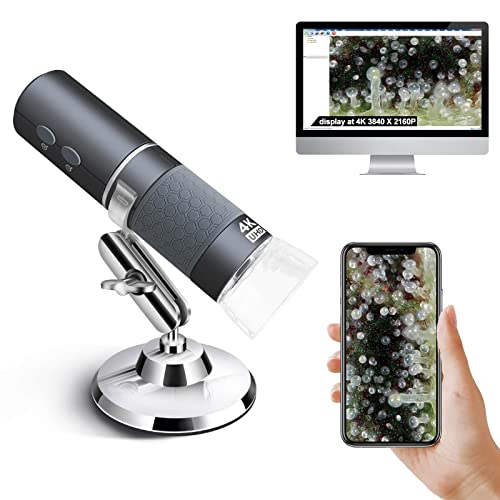
Ninyoon 4K WiFi Microscope for iPhone Android PC, 50-1000X USB Digital Microscope Wireless Super HD Endoscope Camera Compatible with All Cellphones iPad Android Tablet Windows Mac Chrome Linux
【First 4K WiFi Microscope】As an expert in digital microscopes for decades, we are pleased to announce that the…
As an affiliate, we earn on qualifying purchases.
As an affiliate, we earn on qualifying purchases.
Physics and Evolution Shape Cell Size Constraints
Historically, cell size differences have been attributed to functional needs, such as sperm being small for energy efficiency or oocytes being large to store nutrients. Recent scientific insights emphasize that physical laws—particularly surface area-to-volume ratio and diffusion—set universal limits. Exceptions like Thiomargarita magnifica demonstrate how organisms evolve structures to bypass these constraints, pushing the boundaries of cell size.
“Cells are limited in size by fundamental physical laws, especially the surface area-to-volume ratio and diffusion constraints, which ensure efficient metabolic processes.”
— an anonymous researcher from Hacker News
“Some bacteria, like Thiomargarita magnifica, defy typical size limits by filling most of their volume with vacuoles, reducing diffusion distances.”
— an anonymous researcher from Hacker News

Carolina Protozoa Pigmentation Set, Living – Vividly Colored Cultures | Observe Rose, Green & Blue Pigmented Protozoa | Ideal for Microscopy & Cell Structure Studies
95+ YEARS OF EXPERIENCE – Carolina Biological has over 95 years of experience in providing high-quality science education…
As an affiliate, we earn on qualifying purchases.
As an affiliate, we earn on qualifying purchases.
Remaining Questions About Cell Size Exceptions
While physics explains most limitations on cell size, the mechanisms enabling certain large cells, such as Thiomargarita magnifica, to bypass these constraints are not fully understood. Ongoing research aims to clarify how these organisms structurally adapt to maintain efficient molecular interactions at large sizes.

PalliPartners Compound Microscope for Adults & Students – 100X-2000X High-Power Biological Microscope for Students, School Lab & Home Education, with Slides Set & Phone Adapter (White)
High-Power Compound Microscope for Adults & Students: This professional compound light microscope delivers magnification ranging from 100X to…
As an affiliate, we earn on qualifying purchases.
As an affiliate, we earn on qualifying purchases.
Future Research on Cell Size and Structural Adaptations
Scientists will continue investigating how some cells overcome physical constraints, potentially revealing new biological mechanisms. Advances may lead to bioengineering applications, such as designing larger synthetic cells or understanding disease-related cell growth abnormalities.

MicroBrite Plus, 60x-120x LED Lighted Pocket Microscope
Lab Tested Accuracy – Engineered and tested to provide truly accurate magnification, 120x optical zoom and reliable performance…
As an affiliate, we earn on qualifying purchases.
As an affiliate, we earn on qualifying purchases.
Key Questions
Why are most human cells so small?
Most human cells are small because physical constraints like surface area-to-volume ratio and diffusion limit their size, ensuring efficient nutrient exchange and molecular interactions essential for survival.
Can cells grow larger than typical sizes?
Yes, some cells, such as certain bacteria, can grow larger by evolving structural adaptations like vacuoles that reduce diffusion distances, but these are exceptions rather than the rule.
How does cell shape relate to size constraints?
Cell shape, such as the biconcave form of red blood cells, can increase surface area relative to volume, optimizing diffusion and nutrient exchange within size limits.
What physical laws limit cell size?
The primary laws are the surface area-to-volume ratio and diffusion physics, which restrict how large a cell can grow while maintaining efficient metabolic processes.
Why do some large cells still function effectively?
Large cells often develop specialized structures, like vacuoles or compartmentalization into organelles, to overcome physical limitations and facilitate necessary molecular interactions.
Source: Hacker News