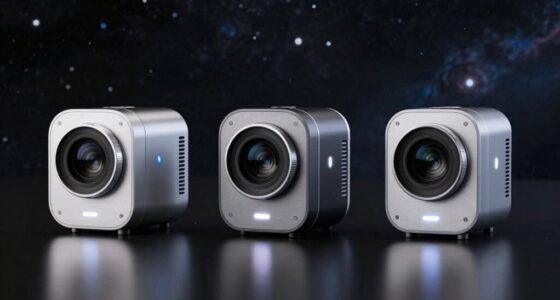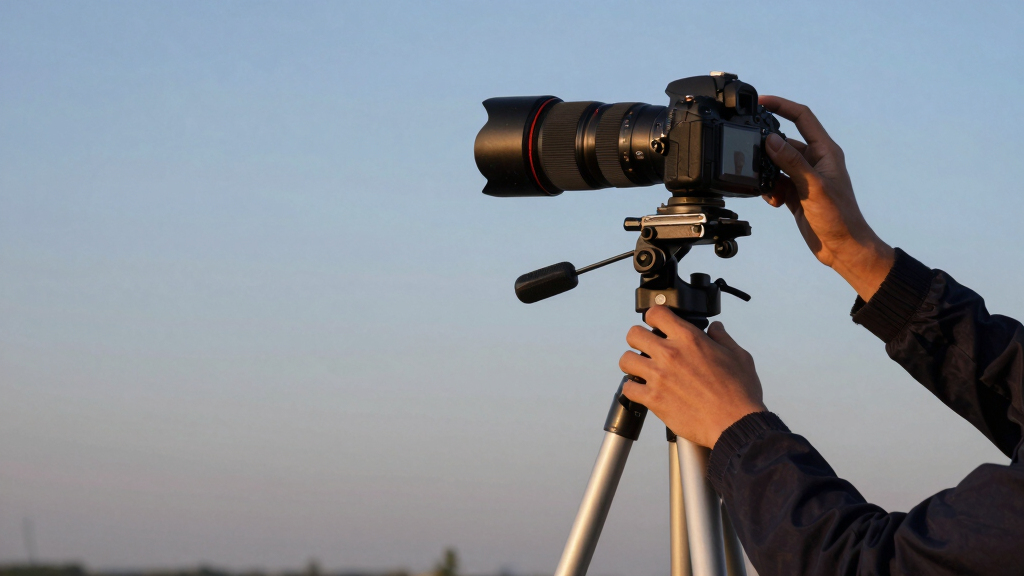

Astrophotography camera accessories are essential tools for capturing detailed images of celestial objects. The right accessories—such as adapters, filters, and guiding cameras—can significantly improve your results, but choosing the best options depends on your setup and goals. The Astromania T2 T Ring offers excellent versatility for DSLR users, while the Sky-Watcher Star Adventurer 2i Pro provides a portable tracking solution for long exposures. Tradeoffs often involve balancing affordability with advanced features or ease of use. Continue reading for a detailed breakdown of the top accessories and how they compare.
Key Takeaways
- Adapters like the Astromania T2 T Ring are fundamental for connecting cameras to telescopes and are available in various sizes for different camera types.
- Filters such as the Walking Way Night Filter can reduce light pollution, but may also slightly dim your image, requiring longer exposures.
- Guide cameras like the SVBONY SV905C improve tracking accuracy, which is critical for deep-sky astrophotography, though they can be complex for beginners.
- Motorized mounts like the Sky-Watcher Star Adventurer 2i Pro enable longer exposures without star trailing, but they come at a higher cost and require setup time.
- Smartphone adapters such as the Celestron Universal Adapter democratize astrophotography, making it accessible but often limiting image quality compared to dedicated cameras.


More Details on Our Top Picks
Astromania T2 T Ring and M42 T-Mount Telescope Camera Adapter, T-Ring for Nikon SLR/DSLR Camera with F-Bayonet & T Adapter 1.25 inches Astrophotography Telescope Accessory
This T-ring stands out for compatibility with a wide range of Nikon DSLR and SLR cameras, including models like the D700 and D600. Its all-metal aluminum construction offers durability, and the included 1.25-inch T-adapter ensures seamless connection to standard telescope focusers, making it an excellent choice for moon, planet, or nebula imaging. Compared with the SVBONY guide camera, this adapter provides the essential physical interface needed for astrophotography but lacks electrical contacts for auto-focus or electronic control, requiring manual focus adjustments. The straightforward threading system offers quick setup, yet the absence of electrical contacts may be a drawback for those wanting automated focusing. Overall, this adapter is ideal for dedicated astrophotographers who prefer manual control and need reliable, durable hardware.
Pros:- Compatible with a broad range of Nikon cameras including D90, D800, and D700
- All-metal aluminum construction ensures durability and stability
- Easy threading with included hex wrench for precise adjustments
Cons:- Lacks electrical contacts, so autofocus and aperture control are manual
- Requires manual focus adjustments, which may be less convenient for some users
Best for: Photographers with Nikon DSLR/SLR cameras seeking a durable, manual-focus adapter for astrophotography.
Not ideal for: Users looking for an adapter with electronic contacts for autofocus or remote control compatibility.
- Compatible Cameras:Nikon D90, D80, D70, D600, D700, D300s, D40x, D40, D800, D300
- Material:Aluminum
- Thread Size:M42x0.75
- Focus Type:Manual
- Mount Diameter:F-Bayonet
- Adapter Length:Standard
Bottom line: This adapter is best suited for Nikon DSLR owners who prioritize build quality and manual control over electronic automation.
Walking Way 49mm Natural Night Filter for Light Pollution Reduction
This light pollution filter enhances astrophotography clarity by significantly reducing urban light interference, making it ideal for city sky imaging. Its HD neodymium glass with 28-layer anti-reflective coatings ensures high-definition color preservation, unlike cheaper filters that often distort hues or introduce glare. Compared to the Astromania extension tubes, which focus on spacing, this filter directly improves image quality by filtering out unwanted light pollution. The filter is designed for 77mm lenses, which covers many popular astrophotography setups, but is limited to that size, requiring careful verification of lens diameter before purchase. For city-based astrophotographers, this filter offers an effective balance of performance and cost, though it’s not suitable for wide-angle lenses smaller than 77mm.
Pros:- Reduces urban light pollution for clearer night sky images
- High-definition neodymium glass preserves true colors
- Durable multi-layer coatings resist glare, fingerprints, and scratches
Cons:- Only compatible with 77mm lenses, limiting versatility
- Requires careful lens size verification before buying
Best for: Amateur astrophotographers shooting from light-polluted urban environments with 77mm lenses.
Not ideal for: Photographers with smaller lenses or those seeking a multi-purpose filter for terrestrial and celestial use.
- Size:49mm
- Lens Compatibility:77mm
- Material:Neodymium Glass
- Coatings:28-Layer Anti-Reflective & Anti-Fingerprint
- Features:Water-Repellent, Scratch-Resistant, Oil-Proof
Bottom line: This filter delivers excellent light pollution suppression for city astrophotography at a reasonable price, best for 77mm lenses.
SVBONY SV905C Guide Camera, 1.23MP CMOS Sensor, 1.25″ USB2.0 Astrophotography Camera with AR-Coated, for Autonomous Navigation and Astrophotography
This guide camera excels in tight tracking of faint guide stars thanks to its high peak QE of 80% and low read noise, offering precise autoguiding for deep-sky astrophotography. Its 1.23MP CMOS sensor provides sharp planetary or lunar images, making it a strong alternative to the SVBONY SV305C Pro, which offers higher resolution but less sensitivity. Unlike the Nikon adapter, this model includes a USB 2.0 interface and ST4 guide port, essential for integration with software like PHD2 or NINA. However, its relatively low resolution may limit detailed planetary imaging, and it doesn’t support auto-focus or electronic control, requiring manual focus. This camera is ideal for astrophotographers aiming for accurate guiding rather than high-resolution imaging of deep-sky objects.
Pros:- High peak QE of 80% for sensitive star tracking
- Low read noise enhances detection of faint guide stars
- Includes ST4 port for easy integration with guiding software
Cons:- Limited resolution at 1.23MP, not ideal for high-detail planetary imaging
- No electronic focus or aperture control, requiring manual adjustments
Best for: Amateur astrophotographers focusing on guiding and planetary imaging with a USB-compatible guide camera.
Not ideal for: Users needing high-resolution imaging or electronic focus control for planetary or deep-sky astrophotography.
- Sensor:1.23MP CMOS
- Sensor Size:1/3 inch
- Pixel Size:3.75 microns
- Interface:USB 2.0
- Guide Port:ST4
- Focal Length Compatibility:Various guide lenses
Bottom line: This guide camera is excellent for precise autoguiding but less suited for detailed planetary photography, especially for advanced users.
Astromania Extension Tube, T2 Extension Tube Kit with M42x0.75 on Both Sides – Length 5mm 8mm 10mm 15mm 20mm 40mm
This T2 extension tube kit offers varying lengths from 5mm to 40mm, allowing precise control of focus and image scale for astrophotography setups. Its all-metal anodized aluminum construction ensures durability, and the M42x0.75 threads on both sides provide wide compatibility with T-ring adapters and reducers. Compared with the Astromania T-ring adapter, this kit adds versatility by enabling exact spacing adjustments for reducers, field flatteners, or focus calibration, although it doesn’t include a camera or telescope mount itself. The multiple lengths give flexibility but may complicate setup for those unfamiliar with spacing requirements. This kit is best for experienced astrophotographers who need to fine-tune their imaging system for optimal results.
Pros:- Range of lengths from 5mm to 40mm for precise focusing
- All-metal construction guarantees durability
- M42x0.75 threads on both sides for broad compatibility
Cons:- No included camera or mount, requiring additional accessories
- Setup complexity may be challenging for beginners
Best for: Experienced astrophotographers needing adjustable spacing for reducers and field flatteners.
Not ideal for: Beginners or users looking for a simple, all-in-one astrophotography solution.
- Lengths:5mm, 8mm, 10mm, 15mm, 20mm, 40mm
- Thread Size:M42x0.75
- Material:Aluminum
- Compatibility:T-Ring, reducers, field flatteners
- Mount Type:T2
Bottom line: Ideal for advanced users needing customizable spacing adjustments for high-quality astrophotography.
NEEWER 1.25″ Electronic Telescope Eyepiece with WiFi Hotspot, App Control, USB C 2MP 1080P Guiding Camera for Astrophotography Skywatching Birdwatching
This WiFi-enabled guiding camera combines real-time viewing with mobile app control, making it convenient for skywatchers and astrophotographers who want immediate feedback and remote operation. Its 2MP sensor supports HD videos and photos, comparable to the SVBONY SV905C but with the added benefit of app-based adjustments including exposure, ISO, and zoom. Unlike the Nikon adapter, this device is a complete electronic eyepiece, eliminating the need for separate cameras, and is compatible with smartphones for live viewing and recording. However, the camera’s 3.2-star rating suggests some users experience connectivity or app stability issues, and it requires a TF card for storage. It suits those who prioritize real-time control and social sharing over ultra-high resolution or professional-grade imaging.
Pros:- Integrated WiFi hotspot for seamless smartphone connection
- App control offers adjustable exposure, ISO, and zoom
- Supports HD video and still images with 2MP sensor
Cons:- Requires a TF card for storage, adds extra cost
- Connectivity and app stability issues reported by some users
Best for: Amateur astronomers and birdwatchers seeking live view and easy app control via smartphones.
Not ideal for: Advanced astrophotographers requiring high-resolution imaging or professional-grade equipment.
- Sensor:2MP
- Video Resolution:1920×1080@60fps
- Battery:1900mAh
- Connectivity:WiFi Hotspot
- App Compatibility:NEEWER Mic App
- Power:USB C
Bottom line: This electronic eyepiece excels in real-time viewing and remote control, ideal for casual skywatchers and astrophotographers who want mobile convenience.
Astromania T2 T Ring Adapter with 42mm Diameter Thread Compatible with Canon EOS DSLR/SLR Camera, Metal T-Mount Telescope Camera Adapter for Terrestrial&Celestial Imaging Astrophotography Accessories
This T ring adapter excels at connecting Canon EOS DSLR and SLR cameras to telescopes, making it an essential choice for dedicated astrophotographers. Its metal construction and machined knurling provide a secure, tool-free attachment even in cold conditions, outperforming plastic alternatives. Unlike the Celestron Smartphone Adapter, which is more portable but less robust, this adapter offers a reliable, all-metal build that withstands long-term use. The absence of electrical contacts means manual focus and exposure adjustments are necessary, which might slow down workflows for some users. Compared to other adapters, it’s best suited for those who prioritize durability and precise mechanical fit over integrated electronics. The tradeoff is that it doesn’t support electronic control or autofocus, limiting some modern digital workflows.
Pros:- All-metal, durable construction for long-term reliability
- Machined knurling allows for secure, tool-free attachment even in cold weather
- Compatible with a wide range of Canon EOS DSLR models
Cons:- Lacks electrical contacts, requiring manual focus and aperture control
- No built-in electronic communication for autofocus or exposure automation
Best for: Canon DSLR astrophotographers who need a durable, reliable metal T-ring for long exposure celestial imaging
Not ideal for: Casual users or those seeking electronic autofocus and remote control features, as this adapter requires manual adjustments
- Compatibility:Canon EOS DSLR/SLR (EF Mount)
- Thread Size:42mm diameter
- Material:Anodized aluminum
- Connection Type:T-mount
- Focus Adjustment:Manual
- Weight:Lightweight, specific weight not provided
Bottom line: This adapter suits serious Canon DSLR astrophotographers who value sturdiness and mechanical reliability over electronic features.
Celestron Universal Smartphone Adapter for Telescopes, Binoculars & Spotting Scopes
This adapter stands out for its broad compatibility with various eyepieces and smartphones, making it an ideal choice for those starting in astrophotography or capturing quick moonshots with minimal setup. Its adjustable clamp and range of 29-45mm eyepiece compatibility provide more flexibility than the SVBONY T2 adapters, which are limited to specific camera mounts. However, the trial-and-error process to achieve perfect alignment can be frustrating, especially for beginners. While the Celestron model offers convenience and portability, it doesn’t match the precision of dedicated camera adapters like the SVBONY T2 T Ring for long-exposure imaging. This pick makes the most sense for casual enthusiasts who want quick, reliable mobile shots without the need for dedicated astrophotography gear.
Pros:- Compatible with a wide range of smartphones and eyepieces
- Adjustable clamp ensures a snug fit for different device sizes
- Compact, travel-friendly design with a 2-year warranty
Cons:- May require trial-and-error to achieve perfect focus and alignment
- Limited to eyepieces within 29-45mm, restricting some setups
Best for: Amateur astronomers and casual skywatchers who want an easy way to photograph celestial objects with their smartphone and telescope
Not ideal for: Serious astrophotographers seeking high-precision, long-exposure imaging, as this adapter lacks stability for detailed astrophotography
- Eyepiece Compatibility:29-45mm
- Device Compatibility:Smartphones with/without cases
- Material:Metal and polymer
- Warranty:2 years
Bottom line: This adapter is best suited for casual astrophotographers who prioritize ease of use and portability over precision imaging.
SVBONY SV305C Pro Telescope Camera with 2MP Sensor and USB 3.0 for Astrophotography
The SVBONY SV305C Pro offers a significant upgrade for planetary and lunar imaging, thanks to its 2MP IMX662 sensor and high frame rate of 107 FPS. Its USB 3.0 interface ensures rapid data transfer, enabling real-time viewing and capture of fast-moving celestial details that lower-speed cameras struggle with. Compared to the SVBONY SV205, which is more beginner-friendly, the SV305C provides sharper, more detailed images thanks to its higher resolution and HDR support. The main limitation is that it’s designed for connection to a computer, making it less suitable for quick, on-the-go captures. Its lack of water resistance and the need for a dedicated PC setup mean it’s best for serious astrophotographers focused on planetary and lunar imaging rather than casual or mobile use.
Pros:- High 2MP resolution captures fine planetary details
- Ultra-low readout noise (0.7e-) produces clear images
- High-speed USB 3.0 transmission supports real-time viewing
Cons:- Requires a computer—no standalone operation
- Not water-resistant, limiting outdoor use in adverse weather
Best for: Intermediate to advanced astrophotographers aiming for high-detail planetary and lunar images with a dedicated PC setup
Not ideal for: Beginners or mobile users who prefer standalone cameras, as it requires a computer connection and stable setup
- Sensor Type:2MP IMX662 CMOS
- Resolution:1920×1080
- Frame Rate:107 FPS
- Interface:USB 3.0
- HDR Support:Yes
- Guiding Interface:ST4
Bottom line: This camera is ideal for dedicated planetary imaging on a stable setup, sacrificing portability for detailed results.
SVBONY T2 T Ring and T Adapter for Canon EOS EF Lenses
This T ring and adapter combo is a straightforward solution for connecting Canon EF lenses directly to telescopes, enabling prime focus astrophotography. Its metal construction assures durability, and the standard 1.25-inch mount makes it compatible with most telescopes. Unlike the T2 T Ring, which offers more precise knurling and locking mechanisms, this model is slightly more basic but still reliable for manual focus setups. The main tradeoff is the need for manual focusing—no electronic control—so it’s less suited for those seeking autofocus or automated exposure adjustments. Compared to the more specialized T2 adapters, it offers broader compatibility at the expense of some fine control, making it best suited for those willing to manually focus for detailed planetary shots or deep-sky imaging with longer exposure times.
Pros:- Solid metal build ensures longevity
- Simple, universal 1.25-inch mount fits most telescopes
- Easy-to-thread connection for Canon EF lenses
Cons:- Requires manual focusing, which can be challenging for fast targets
- No electronic communication for autofocus or aperture control
Best for: Canon EOS users who want a robust, manual prime focus adapter for astrophotography
Not ideal for: Photographers seeking electronic focus control or quick setup, as this adapter relies on manual focusing
- Compatibility:Canon EOS EF mount
- Mount Size:1.25 inches
- Material:Metal alloy
- Focusing Type:Manual
Bottom line: This adapter suits Canon EOS users who prefer a durable, manual connection for prime focus astrophotography on a wide variety of telescopes.
SVBONY SV205 Astrophotography Camera with 7.05MP IMX415 Sensor
Designed for newcomers to astrophotography, the SVBONY SV205 offers a 7.05MP sensor capable of capturing wide-field images at 2K resolution, making it ideal for deep-sky objects, star fields, and lunar landscapes. Its plug-and-play USB 3.0 interface simplifies setup, and the dark light compensation feature helps produce clearer images in low-light conditions. Compared with dedicated planetary cameras like the SVBONY SV305C, this model excels at broad sky captures but lacks the fine detail resolution needed for planetary surface features. It’s a practical choice for users just starting out, wanting a straightforward device that works across multiple systems without fuss, but it’s less suited for high-magnification planetary work or detailed lunar imaging. Its no-frills design and moderate resolution make it a flexible, budget-friendly entry point.
Pros:- High-resolution 7.05MP sensor captures detailed wide-field images
- Plug-and-play USB3.0 makes setup straightforward
- Supports low-light conditions with dark light compensation
Cons:- Lower resolution limits detailed planetary surface imaging
- No built-in stabilization or advanced features for high-magnification work
Best for: Beginners interested in wide-field astrophotography and lunar imaging with simple setup requirements
Not ideal for: Experienced planetary photographers needing high-resolution detail or high frame rate imaging
- Sensor Type:7.05MP CMOS
- Resolution:1920×1080 / 4K 3264×2160
- Frame Rate:30FPS / 15FPS
- Interface:USB 3.0
- Compatibility:Windows, Linux, Mac
- Additional Features:Dark light compensation
Bottom line: This camera offers an accessible entry into astrophotography for wide-field and lunar imaging, prioritizing ease of use over high magnification detail.
Celestron – NexImage 20 Solar System Camera – 20MP AR2020 Back-Illuminated CMOS Sensor – High-Resolution Imager for Lunar, Planetary & Solar Astrophotography, USB-C, ROI, Autoguiding
This camera stands out for its ultra-high-resolution 20 MP CMOS sensor, which delivers incredibly crisp lunar and planetary images, surpassing many standard planetary cameras like the SVBONY SV905C. Its ability to crop to Region of Interest (ROI) for faster frame rates makes it well-suited for capturing small, detailed objects such as planets, while its built-in autoguiding support simplifies long-exposure deep-sky tracking. Compared with more specialized astrophotography cameras, this model offers a straightforward, plug-and-play experience with excellent color fidelity, though it might lack some advanced cooling features found in dedicated astro cameras. The USB-C interface ensures quick data transfer, minimizing lag during imaging sessions. This pick makes the most sense for amateur astronomers seeking high-res planetary images combined with the flexibility of autoguiding and a user-friendly setup.
Pros:- Exceptional 20 MP resolution captures fine planetary details
- ROI feature boosts frame rate and reduces file size effectively
- Built-in autoguiding support simplifies long-exposure tracking
- Modern USB-C for faster, reliable data transfer
Cons:- Limited for deep-sky imaging due to lack of sensor cooling
- Primarily optimized for Solar System objects, less versatile for nebulae or galaxies
Best for: Amateur astronomers who want high-resolution planetary images without complex equipment setup.
Not ideal for: Deep-sky astrophotographers requiring long exposure with advanced cooling, since this camera lacks cooled sensor features.
- Sensor Resolution:20 Megapixels
- Sensor Type:Back-Illuminated CMOS
- Frame Rate:Variable with ROI
- Connectivity:USB-C
- Target Use:Lunar, planetary, solar
- Autoguiding Support:Yes
Bottom line: This camera is ideal for planetary observers seeking high detail and ease of use, but less suited for extended deep-sky astrophotography.
Sky-Watcher Star Adventurer 2i Pro Pack – Motorized DSLR Night Sky Tracker Equatorial Mount for Portable Nightscapes, Time-Lapse and Panoramas – Wi-Fi App Camera Control – Long Exposure
This mount excels in transforming any tripod into a portable, precise tracking platform, ideal for capturing expansive Milky Way panoramas and long exposures. Its compact design and lightweight build (only 2.4 pounds) rival the portability of the NEEWER WiFi-guided camera, but with the added benefit of motorized tracking and an upgraded Wi-Fi connection for smartphone control, making it more user-friendly for on-the-go astrophotographers. Unlike the more specialized astrophotography cameras like the SVBONY SV905C, the Star Adventurer relies on DSLR or mirrorless cameras, providing flexibility for wide-field images and time-lapse sequences. Its modular design allows for integration with various accessories, and the sturdy all-metal gears support payloads up to 11 pounds, suitable for small telescopes or heavier cameras. This makes it perfect for travelers and nightscape enthusiasts seeking a versatile, easy-to-transport tracking mount.
Pros:- Highly portable and lightweight, easy for travel
- Motorized tracking with Wi-Fi app control simplifies long exposures
- Supports wide-field astrophotography, panoramas, and time-lapse
- Robust all-metal gears with 11-pound payload capacity
Cons:- Limited payload for larger telescopes or heavy astrophotography gear
- Requires smartphone app for full control, which may add a learning curve
Best for: Travelers and landscape photographers wanting reliable star tracking with minimal setup.
Not ideal for: Deep-sky astrophotographers aiming for long exposures of nebulae or galaxies, since this mount doesn’t support long-duration tracking of faint objects or heavy telescopes.
- Mount Type:Motorized Equatorial
- Weight:7 pounds
- Payload Capacity:11 pounds
- Connectivity:Wi-Fi App Control
- Use Case:Wide-field astrophotography, panoramas, time-lapse
- Portability:High
Bottom line: This mount offers excellent portability and tracking for wide-field astrophotography, though it’s less suited for demanding deep-sky imaging with large telescopes.
How We Picked
The products in this roundup were selected based on their compatibility with a variety of astrophotography setups, performance reputation, build quality, and user reviews. We prioritized accessories that offered tangible improvements in image quality, ease of use, and versatility. Each item was evaluated for its value relative to its features, as well as how well it suited different user levels—from beginners to advanced astrophotographers. The ranking reflects a balance between affordability, functionality, and long-term usability, ensuring that both casual hobbyists and serious enthusiasts find suitable options.Factors to Consider When Choosing Astrophotography Camera Accessories
Choosing the right astrophotography camera accessories involves understanding several key factors that influence your imaging results and overall experience. It’s important to consider your current equipment, your target objects, and your budget. Making informed decisions can prevent costly mistakes and help you get the most out of your investment. Here are the main factors to keep in mind:Compatibility with Your Camera and Telescope
Before purchasing accessories, verify that they fit your specific camera model and telescope. Adapters like T-rings come in different sizes, and incompatible gear can lead to frustration or damage. Ensuring compatibility also includes checking thread sizes and connection types. Compatibility issues can limit your choices or force you into additional purchases, so double-check specifications before committing.
Image Quality vs. Cost
Higher-end accessories such as precision guide cameras or motorized mounts typically deliver sharper images and more reliable tracking but come at a premium price. Conversely, budget options may suffice for casual use or beginners but might lack durability or advanced features. Balancing your budget with your desired image quality is key—consider whether investing more upfront will save you time and frustration later.
Ease of Use and Setup Time
Some accessories, especially motorized mounts and guide cameras, require significant setup and calibration. If you’re just starting out, choosing simpler, plug-and-play options can make your experience more enjoyable. Advanced users may prefer more customizable equipment that demands a learning curve but offers greater control. Think about your patience and willingness to learn new systems when selecting accessories.
Long-Term Reliability and Support
Investing in reputable brands with solid customer support can save headaches down the line. Accessories prone to breakdowns, or with limited warranty coverage, may end up costing more over time. Reading user reviews can reveal common issues and help you avoid products with questionable durability or poor after-sales service. Reliability is especially important for expensive mounts or guide cameras that are central to your setup.
Tradeoffs Between Portability and Performance
Portable setups like the Sky-Watcher Star Adventurer are ideal for astrophotographers on the go but may lack some of the precision or payload capacity of larger, more permanent systems. Conversely, high-performance mounts and guides often require more space, power, and setup time. Assess your typical shooting environment and goals to find a balance that suits your lifestyle and expectations.
Frequently Asked Questions
Do I need a guide camera for astrophotography?
Guide cameras are highly recommended if you’re aiming for long exposure imaging of deep-sky objects. They help correct tracking errors that can cause star trails or blurry images, especially during exposures longer than a few minutes. For casual or planetary astrophotography, guide cameras are less critical, but they can still improve overall image quality by maintaining precise tracking. Investing in a guide camera can be a game-changer for serious astrophotographers focused on deep-sky detail.
Can I use my smartphone for astrophotography?
Using a smartphone with a universal adapter like the Celestron model makes astrophotography more accessible, especially for beginners. While smartphones excel at quick captures and easy sharing, they typically lack the sensor size and manual controls needed for high-quality, long-exposure astrophotography. For more detailed images of planets, the moon, or wide-field shots, dedicated cameras or cooled CCDs generally produce better results. However, smartphones are a great entry point and convenient for quick sky sketches or casual observations.
Are filters necessary for astrophotography?
Filters like light pollution filters can significantly improve your images by reducing unwanted ambient light, especially in urban areas. They help increase contrast and reveal faint details in deep-sky objects. However, filters may also dim your target, requiring longer exposures or higher ISO settings. For narrowband imaging of nebulae, specialized filters are essential, but for general deep-sky shots, a good light pollution filter often strikes the right balance between convenience and performance.
How important is a motorized mount for astrophotography?
A motorized mount is vital for capturing long-exposure images without star trails. It compensates for Earth’s rotation, allowing for sharper, more detailed images of deep-sky objects. While manual mounts can work for short exposures or wide-field views, they are less suitable for detailed astrophotography that demands precise tracking. Investing in a reliable, motorized mount can dramatically expand your imaging capabilities, though it adds complexity and cost to your setup.
When should I upgrade from basic accessories?
Upgrading becomes necessary when your current accessories limit your image quality or ease of use. For instance, if your guide camera struggles with accuracy or your mount cannot handle longer exposures, those are signs to invest in higher-quality options. As you gain experience, you might seek more precise adapters or filters to capture finer details. Prioritize upgrades based on your specific goals—such as deep-sky imaging or planetary photography—and your budget constraints.
Conclusion
For newcomers, a simple, easy-to-use guide camera and a smartphone adapter offer an accessible entry point. Advanced astrophotographers aiming for deep-sky images will benefit most from investing in high-quality guide cameras and motorized mounts, like the Sky-Watcher Star Adventurer 2i Pro. Budget-conscious hobbyists should consider versatile adapters and filters, which improve results without a hefty price tag. Overall, the best choice depends on your experience level, target objects, and how much time you’re willing to dedicate to setup and calibration. Carefully matching accessories to your goals ensures you get the most from your night sky observations.