
TL;DR
Listen free for 30 days with Audible
Thousands of audiobooks and originals — cancel anytime.
Start your free trialAs an affiliate, we earn on qualifying purchases.
Apollo 11’s moon landing provided unique opportunities to observe solar wind and solar phenomena. Recent images and data highlight how this historic mission continues to influence solar science today, especially through modern imaging and research technologies.
Imagine standing on the lunar surface, the Sun blazing overhead, casting long, sharp shadows on the rocky landscape. That’s exactly what Apollo 11 astronauts experienced in 1969, capturing images that still inspire awe. But beyond the historic moonwalk, Apollo 11 also played a surprising role in solar science—catching particles streaming from the Sun itself.
This article will explore how lunar missions like Apollo 11 helped us understand solar wind and solar phenomena, and how modern technology continues that legacy. If you’ve ever wondered what it’s like to combine a historic moon landing with the cutting edge of solar research, you’re about to find out.
Apollo 11’s solar wind experiment set a foundation for understanding how particles streaming from the Sun shape our space environment.
Recent images of the Moon and Sun from APOD highlight how historical missions continue to inform modern solar science.
Modern solar research combines high-tech sensors and real-time observations, building on Apollo’s legacy of sample collection.
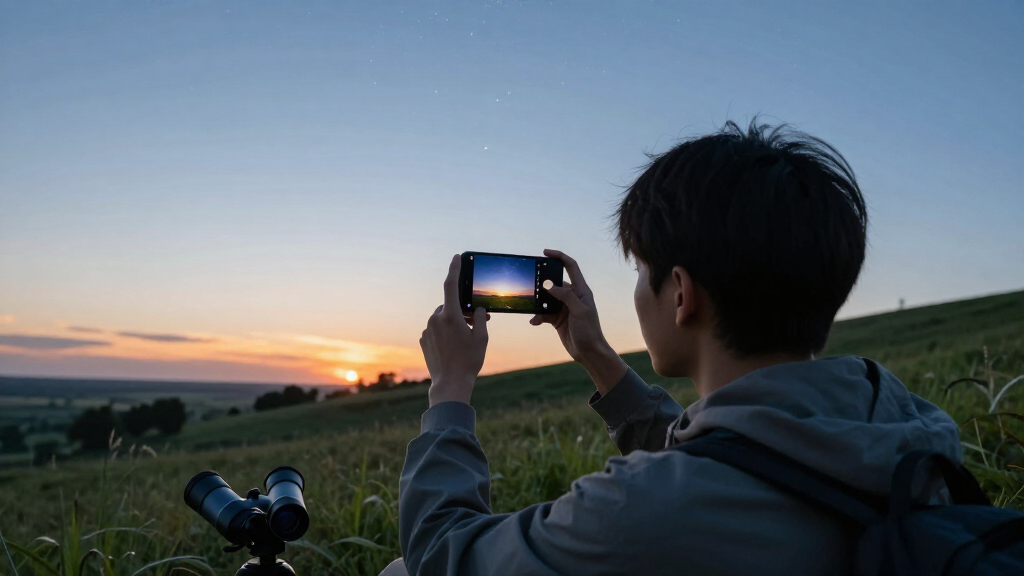
You can observe the Sun safely tonight with simple gear and notice how the Sun’s position affects lunar shadows and solar activity.
Understanding the Sun’s influence helps us protect satellites, power grids, and even plan future lunar and solar missions.

How Apollo 11 Helped Us Catch Solar Wind Samples That Changed Solar Science
When Apollo 11 landed on the Moon, astronauts Neil Armstrong and Buzz Aldrin didn’t just plant flags or take pictures. They also collected tiny particles streaming outward from the Sun—solar wind. A thin sheet of foil, known as the Solar Wind Composition Experiment, was unfurled on the lunar surface and caught particles traveling at hundreds of kilometers per second.
This sample, weighing just a few grams, became a direct link to understanding the Sun’s activity. It proved that particles from the solar wind could be captured and analyzed, revealing composition, speed, and even clues about the Sun’s magnetic field. These tiny grains became a cornerstone for solar physics, showing how lunar surfaces could serve as natural solar wind collectors.
Much like catching fireflies in a jar, the astronauts’ foil caught the solar wind particles streaming past the Moon. That simple act provided data that helped scientists map solar activity, solar cycle variations, and the Sun’s influence on the entire solar system. Understanding these particles helps us predict space weather events—like solar flares—that can disrupt satellites or even power grids on Earth. The tradeoff, however, was that the collection was limited to a short window of time and a specific location, meaning scientists had to interpret these samples carefully to understand broader solar phenomena.
As an affiliate, we earn on qualifying purchases.
Why Recent APOD Images Make Apollo 11’s Solar Connection Shine Bright Again
The recent Astronomy Picture of the Day (APOD) from September 12, 2026, revisits Apollo 11’s lunar surface, highlighting how these historic images link to today’s solar research. The picture shows the lunar surface bathed in sunlight, with shadows that stretch for yards—each shadow a reminder of the Sun’s powerful presence.
Modern telescopes and lunar orbiters now complement these images, capturing solar activity like solar flares and coronal mass ejections in real-time. These phenomena, which can impact Earth’s satellites and power grids, are traced back to the Sun’s dynamic behavior, something Apollo 11 glimpsed indirectly through particle collection. For example, during the Apollo mission, astronauts couldn’t see solar flares directly, but they observed the effects of solar activity on spacecraft instruments and lunar surface conditions, illustrating how solar phenomena influence space environments.
By combining high-resolution lunar surface images with solar observations from Earth and space, scientists can analyze how solar wind interacts with the lunar environment. This synergy traces its roots back to Apollo 11, turning a historic moonwalk into a window for understanding solar storms and space weather today. These images and data help scientists develop better models of how solar activity affects space weather, which is crucial for protecting modern technology and planning future lunar or Martian missions.
As an affiliate, we earn on qualifying purchases.
3 Ways Apollo 11’s Solar Observations Are Still Shaping Space Science
- Sampling Solar Particles: Apollo 11 set a precedent for collecting solar wind particles, which continue to inform models of how the Sun’s magnetic field influences space weather and planetary environments. These samples serve as direct evidence of the Sun’s influence, much like a fingerprint that helps scientists understand the Sun’s behavior over time.
- Understanding Solar Cycles: The data from lunar samples helped establish baseline measurements, allowing scientists to track solar activity over decades and predict space weather impacts. For example, by comparing lunar samples collected during different periods, researchers can see how the Sun’s output varies with its 11-year cycle, which influences everything from satellite operations to climate patterns on Earth.
- Designing Better Solar Sensors: Lessons from Apollo’s experiments influence how we build modern solar detectors on spacecraft, making our ability to monitor solar flares and ejections more precise. Current sensors are designed with the understanding gained from Apollo’s simple foil experiments, but now they can detect a wider range of particles and energies, enabling faster and more accurate predictions of solar storms that could impact Earth or space missions.
Think of Apollo 11 as the first step in a chain of solar studies—each new mission building on the last, with lunar samples anchoring our understanding of how the Sun’s mighty wind shapes our world. The tradeoff was that early experiments only provided snapshots, but today’s technology allows us to observe the Sun continuously, deepening our understanding of its influence.
lunar solar wind sample collection kit
As an affiliate, we earn on qualifying purchases.
As an affiliate, we earn on qualifying purchases.
Comparing Apollo 11’s Solar Science Impact to Today’s Missions
| Feature | Apollo 11 | Modern Missions |
|---|---|---|
| Sample Type | Solar wind particles on foil | Real-time solar imaging, particle detectors, solar telescopes |
| Primary Focus | Collecting lunar samples with solar particles | Monitoring solar activity, predicting space weather |
| Data Impact | Foundational to solar physics, understanding solar wind origins | Forecasting solar storms, protecting satellites, deepening solar models |
While Apollo 11’s approach was hands-on and sample-based, today’s missions leverage advanced sensors, satellites, and telescopes. Both methods aim to unravel the Sun’s secrets—one through physical samples, the other through continuous observation. This evolution reflects a tradeoff: Apollo’s method provided tangible samples, offering concrete data to analyze, but was limited in scope and timing. Modern methods, however, enable ongoing monitoring, allowing for real-time response to solar events, which is crucial for protecting our increasingly technology-dependent society.
As an affiliate, we earn on qualifying purchases.
What You Can Do to Better Understand the Sun and Moon Tonight
- Use a Solar Viewer: If the Sun’s visible, use certified solar glasses or a solar filter on your camera to safely observe solar features like sunspots or prominences.
- Watch for Moon Shadows: Tonight, if the Moon is visible, notice how shadows stretch long and dark—this is the Sun shining at a low angle. It’s a reminder of how solar position changes with lunar phases and how the Sun’s angle affects lunar surface illumination, which is important for understanding temperature variations and shadowed regions that could harbor resources for future explorers.
- Check Space Weather Reports: Visit websites like NOAA’s space weather forecast to see if solar activity might impact your evening or upcoming days. Recognizing solar flares or geomagnetic storms can help you understand the Sun’s influence on Earth’s environment and technological systems.
Connecting with the night sky doesn’t require fancy gear—just awareness of how the Sun’s position influences what you see, whether on Earth or the lunar surface. Use this moment to appreciate the Sun’s ongoing influence on our world, just as Apollo 11 astronauts did centuries ago. Observing lunar shadows and solar activity helps us understand the interplay between celestial bodies and solar phenomena, deepening our appreciation for the complex dynamics that shape our universe.
Frequently Asked Questions
How did Apollo 11 astronauts collect solar wind particles?
They unfurled a thin foil sheet on the lunar surface, which trapped particles streaming outward from the Sun. This simple yet effective method allowed scientists to analyze solar wind composition long after the mission.
Modern missions now provide real-time imaging of solar flares, detailed measurements of solar particles, and models that predict space weather more accurately—building on Apollo’s foundational samples and observations.
Can I see solar activity from my backyard tonight?
Yes, if the Sun is visible and you use proper eye protection, you can observe sunspots and prominences. Check space weather forecasts to see if solar flares are active, which can cause spectacular solar phenomena.
Why is Apollo 11 still important for solar science today?
Because it was the first mission to collect solar wind particles directly from the Moon, establishing a baseline for understanding the Sun’s influence on space weather and planetary environments. Its legacy guides current solar research and future missions.
Conclusion
Every time you gaze at the Moon or the Sun, you’re looking at a piece of a bigger puzzle—one Apollo 11 helped shape. That historic mission wasn’t just about planting a flag; it opened a window into solar phenomena that continue to ripple through space and our daily lives.
Next time you see a long lunar shadow or catch a glimpse of the Sun’s bright surface, remember: it’s all connected. The moonwalkers caught particles streaming from the Sun, and today, we still learn from that tiny sample, pushing science forward. Keep looking up—there’s a story written in every shadow and ray.
NFL season / tailgating Picks
team gear
As an affiliate, we earn on qualifying purchases.