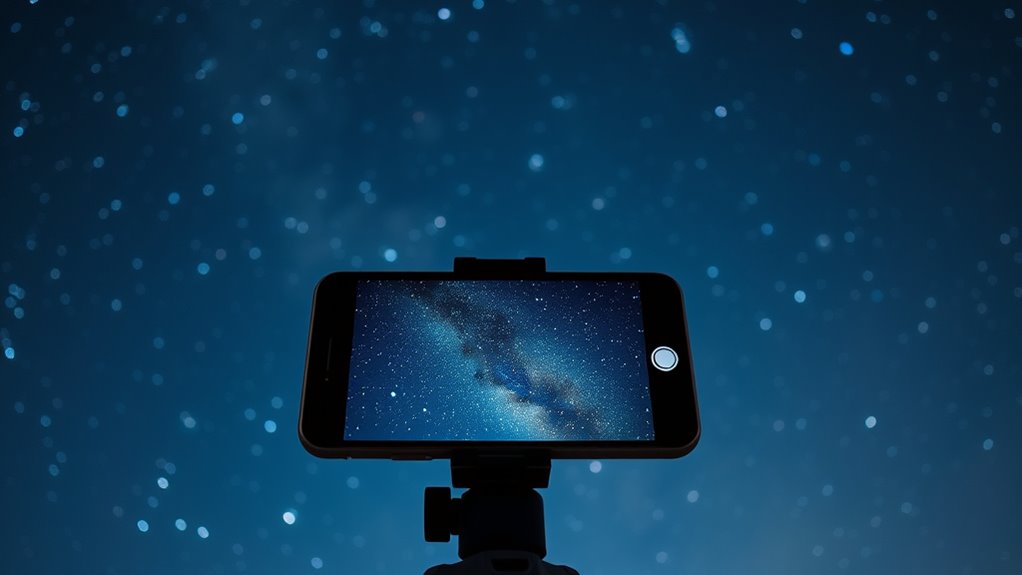
Smartphone astrophotography can capture impressive night sky images, thanks to advancements in camera tech, wide apertures, and stabilization features. However, limitations like small sensors, limited optical zoom, and sometimes shaky images from lack of advanced stabilization can affect results. Using a tripod, choosing the widest aperture, and employing specialized apps help improve your shots. To get the best out of your device and overcome these restrictions, explore proven techniques and tips for stellar astrophotos.
Key Takeaways
- Smartphone astrophotography is limited by small sensors, which restrict light capture and image detail.
- Effective long-exposure imaging relies heavily on physical stabilization like tripods due to smartphone stabilization limits.
- Wide apertures (f/1.8 or lower) improve light intake, but hardware constraints still cap overall image quality.
- Advanced apps and techniques can enhance results but cannot fully compensate for hardware limitations.
- Using stable mounts and proper settings can optimize astrophotography despite inherent device constraints.

In recent years, smartphone astrophotography has become an accessible way for enthusiasts to capture stunning images of the night sky. With advancements in camera technology and dedicated apps, you can now photograph stars, planets, and even the Milky Way without investing in professional equipment. However, understanding the capabilities and limitations of your smartphone is essential to making the most of your nighttime photography sessions.
One of the key factors that influence the quality of your astrophotos is image stabilization. Unlike traditional cameras, smartphones rely heavily on built-in stabilization systems—either optical or electronic—to reduce blur caused by hand movements during long exposures. When shooting in low light conditions, especially with longer exposure times needed for capturing faint celestial objects, effective image stabilization becomes critical. If your phone lacks advanced stabilization, your images might appear shaky or blurry, especially if you’re shooting without a tripod. To mitigate this, you should consider using a sturdy tripod or resting your phone on a stable surface. Many smartphones also offer software-based stabilization features, but these are often less effective than physical stabilization for astrophotography.
Aperture sizes also play a significant role in capturing clear, bright images of the night sky. If your smartphone has a wide aperture, such as f/1.8 or lower, it allows more light to reach the sensor, which is essential for astrophotography. A larger aperture helps you gather sufficient light in shorter exposure times, reducing noise and improving detail in your images. Conversely, phones with smaller apertures, like f/2.2 or higher, require longer exposures to achieve similar results, which increases the risk of star trails or motion blur if your stabilization isn’t perfect. Some newer phones feature multiple lenses with different aperture sizes, giving you more flexibility in low-light conditions. When shooting stars or the Milky Way, selecting the widest aperture available on your device can make a noticeable difference in image clarity and brightness.
While smartphone cameras have made it easier than ever to explore astrophotography, they still face inherent limitations. Small sensors and limited optical zoom capabilities restrict the amount of light captured and detail recorded. Long-exposure shots are often limited by the phone’s processing power and the need for stable mounting. Despite these constraints, understanding how image stabilization and aperture sizes affect your shots allows you to optimize your technique. Using a tripod, choosing the right app settings, and selecting the best lens can help you overcome some limitations and produce impressive night sky images with your smartphone. Additionally, awareness of sensor size and how it impacts light collection can further help you improve your astrophotography results.
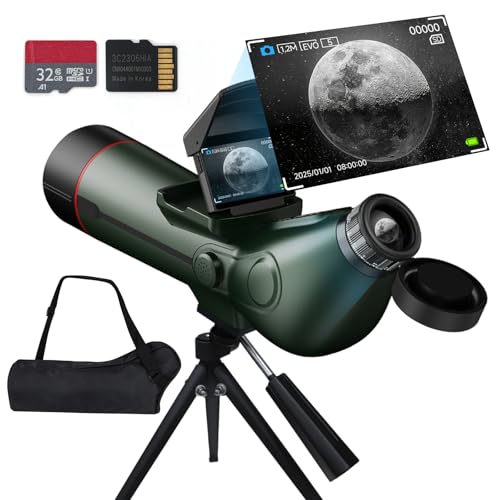
Smart Telescope, Professional Refractor Auto-focus Portable Digital Electronic Telescopes with 4K Astrophotography Camera, Internal And Externat Dual Screens Spotter for Adults and Beginners Astronomy
Exceptional Optical Performance:Equipped with a powerful 80mm aperture and 300mm focal length (f/8.89), this telescope for adults delivers...
As an affiliate, we earn on qualifying purchases.
Frequently Asked Questions
Can Smartphone Astrophotography Replace Professional Telescopic Imaging?
Smartphone astrophotography can’t fully replace professional telescopic imaging because of sensor limitations and image processing constraints. While your phone is great for casual stargazing, it lacks the advanced sensors needed for detailed, high-quality astrophotography. Professional telescopic imaging uses specialized equipment and sophisticated processing techniques that smartphones can’t replicate, especially for capturing faint objects or deep-sky images. So, for serious astrophotography, a professional setup remains essential.
What Are the Best Smartphone Models for Astrophotography?
You should consider smartphones like the latest iPhone or Samsung Galaxy models, as their sensor advancements enhance low-light performance. These phones also offer app integrations designed for astrophotography, making capturing celestial images easier. Their improved sensors and specialized apps help you take clearer, more detailed photos of the night sky. Keep in mind, newer models with these features will give you the best results for astrophotography.
How Do Weather Conditions Affect Smartphone Astrophotography Results?
Ever wondered why your stunning night shots sometimes look dull? Weather plays a tricky role—light pollution obscures your view, while atmospheric turbulence causes shimmering, blurry images. Clear, dark skies free from city lights give your smartphone the best chance to capture stars sharply. So, check the weather forecast, avoid overly humid nights, and find a spot away from light pollution for your astrophotography to truly shine.
Is Specialized Equipment Necessary for High-Quality Astrophotography With Smartphones?
You don’t necessarily need specialized equipment for high-quality smartphone astrophotography, but lens accessories can considerably improve your results. Using these accessories helps gather more light and reduces distortion. Additionally, leveraging image processing apps allows you to enhance your photos post-capture. While a steady mount is helpful, combining lens accessories with effective image processing can often produce impressive astrophotos without complex gear.
Can Smartphones Capture Detailed Images of Distant Galaxies and Nebulae?
Smartphones can capture some details of distant galaxies and nebulae, but their sensor limitations make it tough to see fine structures. With advanced image processing, you might get a clearer picture, but it’s still not on par with dedicated astrophotography gear. Most smartphones struggle with low light and atmospheric interference, so while you can photograph these objects, capturing highly detailed images remains a challenge without specialized equipment.

ZWO Seestar S50 Smart Digital Telescope All-in-One Autofocus Portable for Beginners and Experienced Users-Open Box Like-New Condition Telescope
Lightweight Design: highly integrated all-in-one smart telescope. Seestar is a compact body that integrates a telescope, electrical focuser,...
As an affiliate, we earn on qualifying purchases.
Conclusion
While smartphone astrophotography showcases stunning starlit scenes, it’s crucial to understand its limits. You can capture mesmerizing cosmic images with clever camera tricks and steady setups, but detailed deep-sky shots remain out of reach. Remember, mastering the magic of astrophotography takes patience, practice, and proper planning. So, don’t be discouraged by limitations—leverage your lens, learn the lights, and enjoy the celestial chase, creating your own starry stories with passion and persistence.

ZWO Seestar S30 All-in-One Smart Digital Telescope/Camera Compact and Portable Travel Companion for Astronomy Enthusiasts & Casual Stargazers
Ultra‑Portable & Automatic Star-Finding, Tracking, Shooting: Weighing no more than a bottle of soda, yet it’s a professional...
As an affiliate, we earn on qualifying purchases.
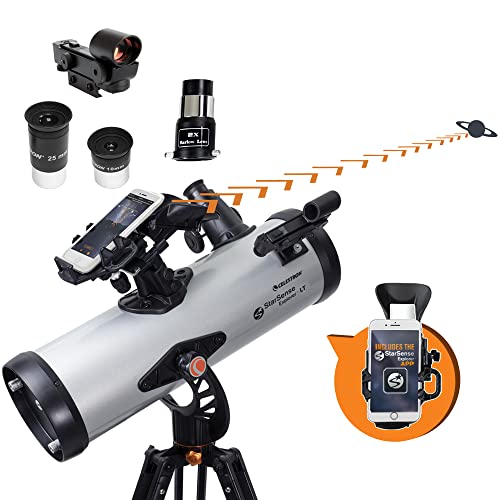
Celestron StarSense Explorer LT 114AZ App-Enabled Telescope – 114mm Newtonian Reflector with Smartphone Dock & StarSense App – iPhone & Android Compatible – Easy-to-Use for Beginners
SMARTPHONE-POWERED SKY TOUR: No experience needed! Just dock your phone, launch the StarSense Explorer app, and follow the...
As an affiliate, we earn on qualifying purchases.