TL;DR
Three galaxies in Pavo are caught in a gravitational dance, offering insights into galaxy interactions and evolution. Advances in telescopes allow us to study these distant cosmic neighbors in unprecedented detail.
Distant galaxy groups like the Pavo trio are snapshots of cosmic evolution, showing galaxies in the midst of gravitational interactions.
Advanced telescopes reveal detailed structures like star-forming regions, dust lanes, and tidal streams—features impossible to see with beginner gear.
Galaxy mergers are slow processes, often spanning hundreds of millions of years, but they dramatically reshape the universe’s architecture.
You can observe some signs of these distant interactions with a wide-field telescope and dark skies—patience and proper planning are key.
Studying galaxy groups enhances our understanding of dark matter’s role and the universe’s overall growth over cosmic time.
What Makes These Galaxies in Pavo Special to Astronomers?
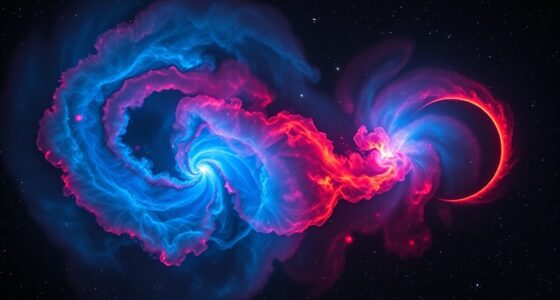
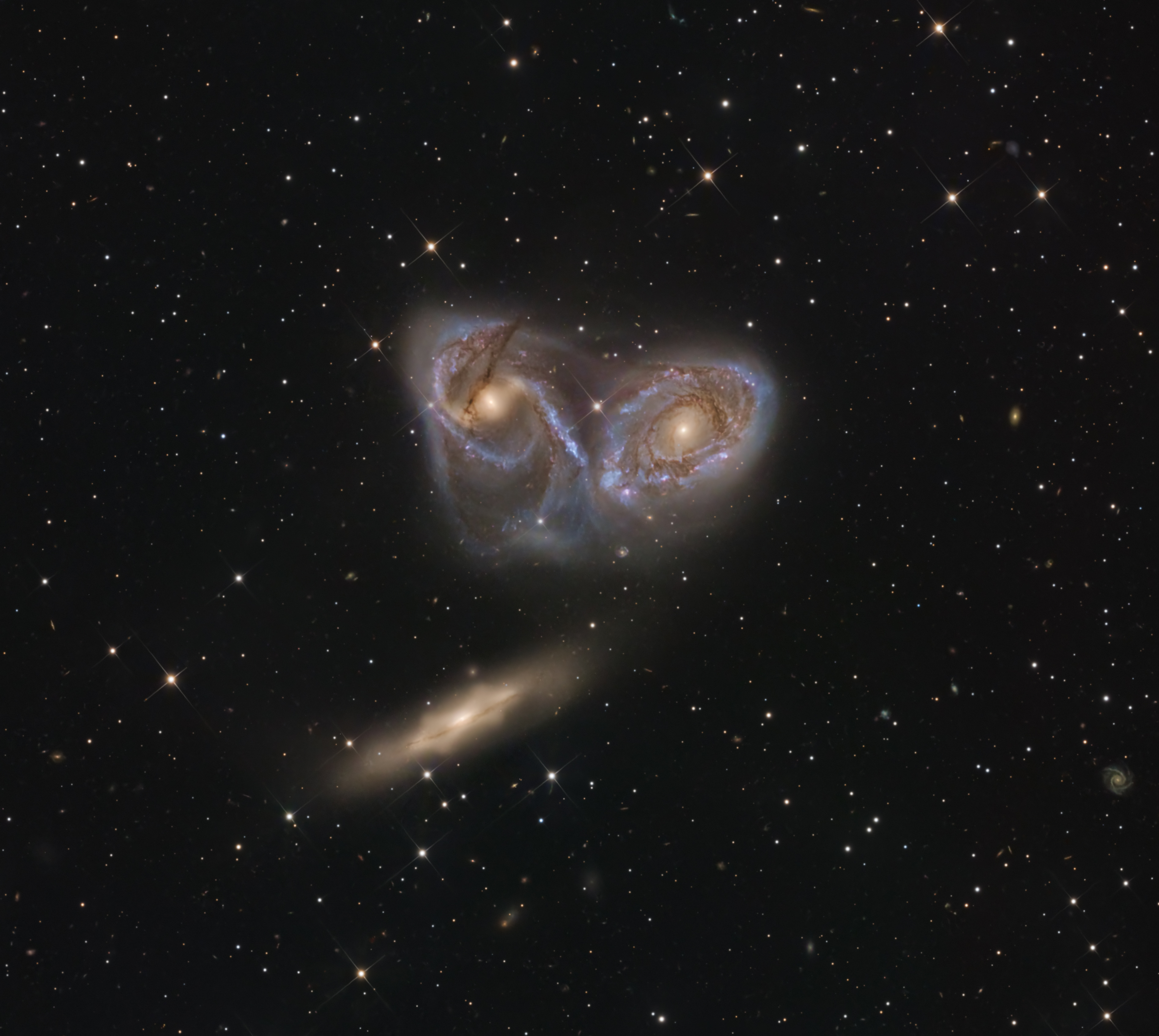
These three galaxies, over 190 million light-years away, are more than just pretty sights. They serve as a natural laboratory for understanding how galaxies interact and evolve. Their distorted shapes, bright star clusters, and dust lanes are not random; they are the signatures of gravitational forces at play. Why does this matter? Because studying these features allows astronomers to reconstruct the galaxies’ interaction history and predict their future. For example, the blue regions in NGC6769 indicate recent bursts of star formation triggered by gravitational disturbances—similar to how a gentle push can spark a ripple effect. These observations help scientists understand the conditions that lead to galaxy mergers, which are fundamental to the evolution of structure in the universe. Such insights have broader implications: they tell us about the role of dark matter in guiding these interactions, and how the universe’s large-scale structure is shaped over cosmic time. Essentially, these galaxies are cosmic messengers, revealing the processes that have crafted the universe we observe today.

Astronomy Observation Log Book: Night Sky Observation Journal for Stargazers, Telescope Users and Amateur Astronomers
As an affiliate, we earn on qualifying purchases.
As an affiliate, we earn on qualifying purchases.
How Do These Galaxies Interact Without Colliding Immediately?
Think of these galaxies as dancers performing a slow, intricate ballet. Their mutual gravitational pull causes them to sway, stretch, and sometimes pull streams of stars and gas into elongated tails—features known as tidal streams. These streams are like the trails left by a dancer’s flowing gown, revealing the unseen forces at work. Why is this important? Because it shows that galaxy interactions are not instant crashes; they unfold over hundreds of millions of years, during which the galaxies influence each other’s evolution. For instance, the warped disk of NGC6770 demonstrates how gravitational forces can distort a galaxy’s structure long before actual collision. These interactions often trigger new waves of star formation, as gas clouds are compressed by tidal forces, much like how squeezing a sponge causes water to shoot out. For amateur astronomers, recognizing these signs—irregular shapes, bright star clusters, and dust lanes—offers clues to ongoing gravitational interactions. Long-term, these processes can lead to eventual mergers, transforming the galaxies into a single, more massive entity. Recognizing and understanding this gradual process helps us appreciate the dynamic and ever-changing nature of our universe, where cosmic dances shape the destiny of galaxies over eons.
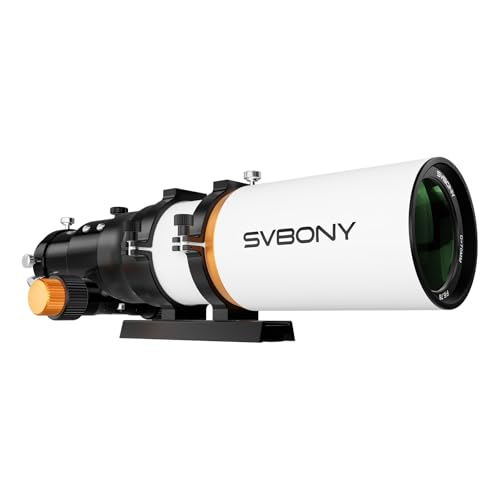
SVBONY SV503 Refractor Telescope, with Field Flattener, 70mm ED Refractor
- Flat-Field Correction: Built-in field flattener eliminates distortion
- High-Quality Optics: F/6.78, 70mm aperture for bright images
- Chromatic Aberration Reduction: Design minimizes color distortions for true colors
As an affiliate, we earn on qualifying purchases.
As an affiliate, we earn on qualifying purchases.
What Do These Galaxies Teach Us About the Universe’s Future?
Studying galaxies like those in Pavo provides a window into the future of cosmic evolution. These interactions are not isolated events; they are part of a grander narrative of structure formation in the universe. Over millions to billions of years, such galaxy groups are destined to merge into a single, larger galaxy—often a massive elliptical galaxy. This process is akin to individual icebergs slowly drifting together and melting into one larger mass. For example, computer simulations show that the Milky Way and Andromeda are on a collision course, expected to merge in about 4.5 billion years. Similarly, the galaxies in Pavo are on a similar trajectory, offering a real-time glimpse into a process that shaped many of the galaxies we see nearby. Recent observations from advanced telescopes, like the James Webb Space Telescope, reveal that these mergers often trigger intense starbursts—periods of rapid star formation fueled by the inflow of gas and dust. These starbursts can drastically alter a galaxy’s appearance and stellar population. Understanding these processes helps scientists piece together the history of cosmic structure and predict future configurations. Each galaxy merger adds a chapter to the universe’s story, illustrating how the cosmic web evolves and grows more complex over time. These distant galaxies serve as natural laboratories, helping us understand the mechanisms behind galaxy formation and the influence of dark matter in orchestrating these grand cosmic events.

ZWO Seestar S30 Pro Smart Telescope, App-Controlled Astrophotography
- Easy Setup for Beginners: Connect app and start exploring
- Automatic GOTO Tracking: Find and follow celestial objects
- 4K Dual-Camera Imaging: Capture sharp deep-sky and landscape photos
As an affiliate, we earn on qualifying purchases.
As an affiliate, we earn on qualifying purchases.
3 Simple Tips to Observe or Capture These Galaxies from Home
- Choose the right equipment: Use a wide-field telescope (80–100mm refractor or similar) with a fast focal ratio (f/4–f/6). This setup allows you to capture the broad, faint features of the galaxy group, much like a wide-angle lens captures a landscape. The tradeoff is that while this equipment provides a larger field of view, it may lack some of the detail seen in larger telescopes, so patience and stacking multiple images can help reveal the faint structures.
- Pick a dark sky: Find a location far from city lights, where light pollution is minimal. The darker the sky, the better your chances of detecting subtle features like dust lanes and faint star clusters—features that are crucial for understanding the ongoing interactions. Think of it as trying to see a firefly against a dark night; the darker the surroundings, the brighter the tiny light appears.
- Use long exposures: Capture multiple images, each lasting 2–5 minutes, and then stack them using astrophotography software. This process amplifies faint signals, much like increasing the volume on a quiet radio station, revealing details that are otherwise invisible. Longer exposures gather more light, making the subtle features of the galaxy group stand out.
- Plan your timing: Check when Pavo is highest in the sky, typically late evening to midnight, to minimize atmospheric distortion. When the galaxy group is near the zenith, the light passes through less atmosphere, resulting in sharper images.
- Enhance your images: Use image processing tools to adjust contrast, reduce noise, and highlight structures like dust lanes and star-forming regions. Skilled processing transforms raw images into detailed cosmic portraits, revealing the intricate dance of these distant galaxies.
For visual observation, a good pair of binoculars (10×50 or higher) can help you spot the brighter galaxy cores, giving a sense of their scale. However, to see the detailed features, a telescope with proper imaging capabilities and dark skies are essential. Think of it as moving from a quick glance to a detailed study—each step revealing more about these distant cosmic dancers.

Celestron Cometron 7x50mm Astronomy Binoculars
- Easy-to-Use for Beginners: Ideal for learning astronomy
- 7x Magnification: Provides a wide field of view
- Large 50mm Objectives: Gathers more light for bright images
As an affiliate, we earn on qualifying purchases.
As an affiliate, we earn on qualifying purchases.
Comparison: Distant Galaxy Groups vs. Our Local Neighborhood
| Feature | Pavo Galaxies (NASA APOD) | Local Group (Milky Way & neighbors) |
|---|---|---|
| Distance from Earth | ~190 million light-years | ~2 million light-years |
| Number of galaxies | At least 3 visible in this scene | Over 50 known galaxies |
| Interaction level | Active gravitational dance, soon to merge | Stable, gravitationally bound, but some interactions (e.g., Andromeda) |
| Visibility with amateur gear | Bright cores visible in good conditions, faint features need deep imaging | Bright core of Milky Way, some satellites visible with binoculars |