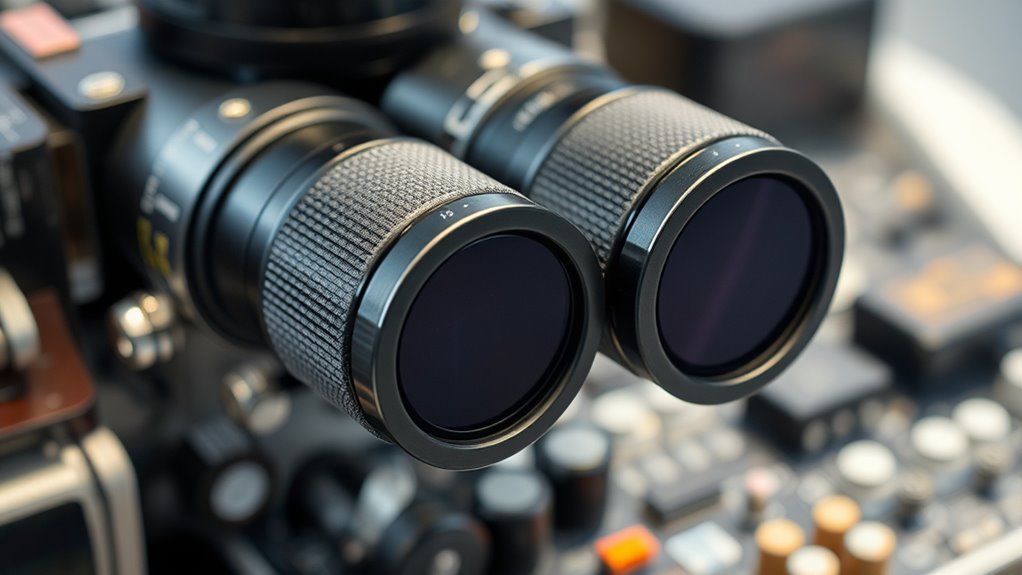
Choosing the right carbon fiber duo band filter in 2026 means balancing lightweight performance with durability and application-specific features. The 89mm (3.5″) OD Straight Carbon Fiber Tube stands out for its impressive weight savings and structural strength, making it ideal for high-performance engineering projects. On the other hand, the Polymaker Fiberon PA12-CF10 filament offers exceptional reinforcement for 3D printing, providing high rigidity and heat resistance. Both options come with distinct tradeoffs: the tube excels in structural lightweight applications but requires cutting and handling care, while the filament offers versatility but demands proper storage and post-processing for best results.

Prime made for students and young adults
- Fast, free delivery for dorm and study essentials
- Prime Video and Amazon Music included
- Member-only deals
Key Takeaways
- The carbon fiber tube is best suited for structural and exhaust applications where lightweight and strength are critical.
- The reinforced filament is ideal for producing durable, heat-resistant parts through 3D printing.
- The tube offers significant weight reduction but is less flexible for complex shapes.
- The filament provides high rigidity but needs careful moisture management and specialized nozzles.
- Choosing between them depends on whether your focus is on structural components or custom fabricated parts.
| 89mm (3.5″) OD Straight Carbon Fiber Tube, 3.5 Inch Outer diameter, Length 300mm (11.8″), 1.5mm Thickness, 3K Twill Real Carbon Fiber Pipe |  | Best for Lightweight Structural Applications | Outer Diameter: 89mm (3.5″) | Length: 300mm (11.8″) | Thickness: 1.5mm | VIEW ON AMAZON | See Our Full Breakdown |
| Polymaker Fiberon PA12-CF10 Carbon Fiber Nylon Filament 1.75mm Black 0.5kg |  | Best for 3D Printing Reinforced Parts | Material: PA12 with 10% carbon fiber | Diameter: 1.75mm | Weight: 0.5kg | VIEW ON AMAZON | See Our Full Breakdown |
| carbon fiber duo band filter | Material | Weight | Outer Diameter | Length |
|---|---|---|---|---|
| 89mm | 3K Twill Carbon Fiber | Approx. 400g | 89mm (3.5") | 300mm (11.8") |
| Polymaker Fiberon PA12-CF10 Ca | PA12 with 10% carbon fiber | 0.5kg | — | — |
More Details on Our Top Picks
89mm (3.5″) OD Straight Carbon Fiber Tube, 3.5 Inch Outer diameter, Length 300mm (11.8″), 1.5mm Thickness, 3K Twill Real Carbon Fiber Pipe
This carbon fiber tube is a standout for those needing substantial weight savings and high strength. Its 3K Twill weave from Japan Toray offers a glossy, professional finish that resists corrosion, heat, and fatigue. Compared to metal, it is roughly 2.5 times lighter, making it perfect for automotive, robotics, or aerospace projects. The smooth inner wall ensures airflow efficiency, which matters in exhaust or fluid transfer applications. However, it requires cutting with an abrasive saw and careful handling to avoid splinters or damage. This tube is less flexible for shaping into complex forms, but its stiffness and durability are unmatched for static structures.
Pros:- Significantly lighter than aluminum, reducing overall weight
- Excellent strength-to-weight ratio for structural uses
- Corrosion, water, and heat resistant
- Smooth internal surface promotes airflow
Cons:- Requires precise cutting and handling
- Limited flexibility for shaping
- Higher cost relative to standard metal tubes
Best for: Engineers and hobbyists focusing on lightweight, high-strength structural components.
Not ideal for: Projects requiring complex bending or flexible tubing, or where cost is a primary concern.
- Outer Diameter:89mm (3.5″)
- Length:300mm (11.8″)
- Thickness:1.5mm
- Material:3K Twill Carbon Fiber
- Finish:Glossy
- Weight:Approx. 400g
Our verdict“A top choice for applications demanding lightweight strength and durability, with tradeoffs in flexibility and handling.”
Polymaker Fiberon PA12-CF10 Carbon Fiber Nylon Filament 1.75mm Black 0.5kg
This filament offers a practical way to produce durable, high-performance parts with a 3D printer. Containing 10% carbon fiber reinforcement, it boosts rigidity, dimensional stability, and heat resistance—ideal for brackets, functional prototypes, and tools. Compared with standard nylon filaments, it absorbs less moisture and maintains shape better over time. However, because of its abrasiveness, it demands a hardened steel or wear-resistant nozzle, and proper moisture control is necessary to prevent dimensional inconsistencies. Post-processing, like annealing, can improve heat resistance, but final dimensions may vary if the filament becomes moist during storage.
Pros:- High strength and rigidity from carbon fiber reinforcement
- Better dimensional stability than standard nylon
- Resistant to heat after annealing
- Less moisture absorption than some nylon variants
Cons:- Requires hardened nozzle to prevent wear
- Sensitive to moisture—must be stored dry
- Final part dimensions can shift with moisture absorption
Best for: 3D printing enthusiasts and engineers seeking tough, heat-resistant parts with complex geometries.
Not ideal for: Beginners who lack experience with abrasive filaments or those without appropriate printer upgrades.
- Material:PA12 with 10% carbon fiber
- Diameter:1.75mm
- Weight:0.5kg
- Color:Black
- Recommended Hotend Temp:280–300°C
- Build Plate Temp:40–50°C
- Moisture Handling:Dry at 100°C for 10 hours
Our verdict“Excellent for producing tough, heat-resistant parts, provided you manage storage and upgrading your printer nozzle.”

How We Picked
Our selection process focused on the core needs of durability, weight savings, and application versatility for duo band filters. We prioritized products made from real carbon fiber, with strong reviews for performance, and considered their suitability for different use cases—whether structural, exhaust, or additive manufacturing. We examined technical specs, reputation, and practical tradeoffs like handling, compatibility, and cost. This approach ensures each recommendation delivers real value for specific buyer needs in 2026.
Factors to Consider When Choosing Carbon Fiber Duo Band Filter
When choosing a carbon fiber duo band filter, your decision hinges on understanding the core differences between structural tubing and reinforced filament. Both serve different roles: one is ideal for static, lightweight structures that demand minimal weight, while the other excels in creating complex, durable parts through additive manufacturing. Your selection should be guided by the specific demands of your project—whether you need high-strength, lightweight tubing or a versatile filament capable of producing tough, heat-resistant components.
Structural vs. Additive Manufacturing Needs
If your project involves building lightweight frameworks, exhaust pipes, or robotic arms, the carbon fiber tube offers unmatched strength and weight savings. Its rigidity and resistance to environmental factors make it perfect for static applications where shaping flexibility isn’t a priority. Conversely, if you need to produce custom parts with intricate geometries, brackets, or prototypes, the reinforced filament provides the ability to print complex shapes with high strength, though it requires careful handling and post-processing.
Material Properties and Handling
The carbon fiber tube is ready to be cut and assembled, but you should handle it with care to avoid splinters and damage. It’s best suited for applications where the shape is fixed after installation. In contrast, the filament demands a well-upgraded 3D printer, with a hardened nozzle and dry storage to ensure dimensional stability and consistent quality. It’s more versatile in terms of design modifications but requires more maintenance and post-processing for maximum performance.
Cost and Practical Considerations
The tube is generally more expensive but offers immediate structural benefits with minimal additional effort. The filament tends to be more affordable and flexible but involves upfront investment in suitable equipment and careful handling. Consider your project scope—if you need rapid prototyping or custom parts, the filament is a cost-effective choice; for large, static structures, the tube offers superior performance in weight savings and strength.
Frequently Asked Questions
Can I cut the carbon fiber tube easily?
Yes, the carbon fiber tube can be cut with an abrasive chop saw or similar tool. It’s important to wear safety gear and handle it carefully to avoid splintering. Precise cutting is necessary for proper fitment, and post-cut finishing may be required to smooth the edges.
Is the reinforced filament suitable for high-temperature applications?
Post-annealing can significantly improve the heat resistance of the filament, making it suitable for many high-temperature environments. However, it’s essential to follow proper annealing procedures and test the final parts to confirm stability in your specific application.
What storage considerations does the filament have?
The filament is sensitive to moisture, which can cause dimensional shifts and poor surface finish. It must be stored in a dry environment, preferably in a sealed bag with desiccant, and dried at 100°C if moisture absorption occurs.
How do I ensure the filament’s dimensional accuracy?
Maintaining a dry storage environment and using a hardened nozzle will help preserve the filament’s dimensions. Post-processing such as annealing can also improve accuracy and heat resistance, making it more suitable for functional parts.
Which product is better for aerospace applications?
The carbon fiber tube is generally better suited for aerospace or automotive applications where weight savings and structural integrity are paramount. The filament, while durable, is more often used for prototypes or custom components rather than primary load-bearing structures.
Conclusion
If you are focused on creating lightweight, static structural components or exhaust parts, the carbon fiber tube provides unmatched performance with significant weight reduction. For those interested in producing complex, reinforced parts via 3D printing, the fiber-reinforced filament offers excellent durability and heat resistance, provided you are equipped to handle its abrasiveness and moisture sensitivity. Your choice should reflect whether your priority is structural simplicity and strength or versatility and custom fabrication.