For most observatory rooms, I would start with the Gasbye DryPrime 115-Pint: its high stated capacity suits damp, frequently used spaces better than a small tank unit. The MOUNTO 150-Pint LGR stands out for severe moisture problems and built-in pumping, while the Frigidaire 50-Pint with Wi-Fi offers a more modest capacity with remote controls. Choosing among observatory dehumidifiers for telescope rooms means balancing moisture removal and drainage against noise, power use, room conditions, and the space available around sensitive equipment. Bigger capacity is not automatically better, and household coverage claims do not account for every observatory’s temperature or air leakage. Read on for the full comparison and a guide to matching a unit to your room.

Prime made for students and young adults
- Fast, free delivery for dorm and study essentials
- Prime Video and Amazon Music included
- Member-only deals
Complete the kit



Key Takeaways
- Capacity and room conditions matter more than coverage claims alone: the Gasbye 115-Pint and AEOCKY and KNKA 80-pint models target large areas, but actual moisture loads, temperature, and air leakage affect results.
- The MOUNTO is the specialist choice, not the default: its 150-pint LGR design and built-in pump suit persistent or heavy dampness, while its commercial scale may be excessive for a small, lightly used observatory.
- Drainage can determine whether a unit is practical: the MOUNTO’s pump reduces reliance on manual tank emptying; buyers of other models should confirm their preferred continuous-drain setup before purchasing.
- Compact convenience comes with a capacity tradeoff: BEDRED’s 95-ounce tank fits smaller spaces, but it is a different class of solution from the high-capacity units for ongoing moisture control.
- Connected controls are not a substitute for humidity measurement: Frigidaire’s Wi-Fi adds remote access, but telescope owners should still monitor conditions near the optics and verify the unit can hold their target humidity.
| MOUNTO 150-Pint LGR Commercial Dehumidifier with Built-In Pump |  | Best for Large Observatories and Permanent Drainage | Model: DH80 | Moisture removal: 80 pints/day at AHAM conditions; 150 pints/day at saturation | Listed floor area: 2,500 sq. ft. | VIEW ON AMAZON | See Our Full Breakdown |
| BEDRED CT11 Compact Dehumidifier for Home, 95oz Tank, 1000 Sq. Ft. Coverage | 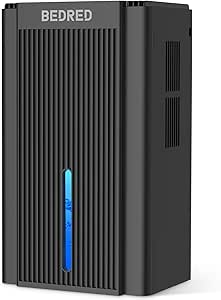 | Best for Small, Quiet Telescope Rooms | Model: CT11 | Type: Thermoelectric dehumidifier | Listed coverage: 1,000 sq. ft. | VIEW ON AMAZON | See Our Full Breakdown |
| AEOCKY RHEA-001 80-Pint Dehumidifier for Homes up to 5,500 Sq. Ft. |  | Best Energy-Efficient Compressor Option | Model and type: RHEA-001; compressor dehumidifier | Moisture removal: Up to 80 pints/day at 95°F and 95% RH; 56 pints/day at 86°F and 80% RH | Listed coverage: Up to 5,500 sq. ft. | VIEW ON AMAZON | See Our Full Breakdown |
| Gasbye DryPrime 2026 Energy Star Dehumidifier, 115-Pint |  | Best for High Moisture Loads Without a Built-In Pump | Moisture removal: Up to 115 pints/day at 86°F and 80% RH | Listed floor area: 4,500 sq. ft. | Tank capacity: 1.72 gallons | VIEW ON AMAZON | See Our Full Breakdown |
| KNKA ENERGY STAR Dehumidifier for Spaces up to 5,500 Sq. Ft., 80 Pints per Day |  | Best for Everyday Humidity Monitoring | Listed coverage: Up to 5,500 sq. ft. | Moisture removal: Up to 80 pints/day at 95°F and 95% RH; 56 pints/day at 86°F and 80% RH | Energy certification: ENERGY STAR certified | VIEW ON AMAZON | See Our Full Breakdown |
| Frigidaire 50-Pint Dehumidifier with Wi-Fi |  | Best for Connected, Mid-Size Observatory Rooms | Model: FHDD5034Y1 | Dehumidification capacity: Up to 50 pints per day | Coverage area: Up to 4,500 sq ft | VIEW ON AMAZON | See Our Full Breakdown |
| observatory dehumidifiers for telescope room | Moisture removal | Power | Model | Listed coverage |
|---|---|---|---|---|
| MOUNTO 150-Pint LGR Commercial | 80 pints/day at AHAM conditions; 150 pints/day at saturation | 550 watts; 120 volts | DH80 | — |
| BEDRED CT11 Compact Dehumidifi | — | 85 watts; 220 volts | CT11 | 1,000 sq. ft. |
| AEOCKY RHEA-001 80-Pint Dehumi | Up to 80 pints/day at 95°F and 95% RH; 56 pints/day at 86°F and 80% RH | — | — | Up to 5,500 sq. ft. |
| Gasbye DryPrime 2026 Energy St | Up to 115 pints/day at 86°F and 80% RH | 500 watts; 115 volts | — | — |
| KNKA ENERGY STAR Dehumidifier | Up to 80 pints/day at 95°F and 95% RH; 56 pints/day at 86°F and 80% RH | — | — | Up to 5,500 sq. ft. |
| Frigidaire 50-Pint Dehumidifie | — | 470 watts | FHDD5034Y1 | — |
More Details on Our Top Picks
MOUNTO 150-Pint LGR Commercial Dehumidifier with Built-In Pump
For a large observatory with persistent moisture and a practical route to a drain, the MOUNTO DH80 is the heavy-duty choice in this group. Its 15-foot built-in pump lift can move condensate to a drain above the unit, while memory restart helps it resume after a power interruption—useful for unattended spaces. Its 80-pint AHAM rating is a more grounded comparison than the 150-pint saturation figure, and the commercial design is better suited to sustained moisture loads than the small BEDRED CT11. The tradeoff is scale: at 65 pounds and with one operating speed, it is less convenient to reposition or tune for a small telescope room. I’d favor it where dependable drainage and high capacity matter more than portability or fine-grained controls.
Pros:- 80-pint daily capacity at AHAM conditions suits substantial moisture loads
- Built-in pump lifts condensate up to 15 feet for flexible drainage
- Memory restart supports unattended operation after power interruptions
- Stackable body and 25-foot power cord and drain hose aid installation
Cons:- At 65 pounds, it is difficult to move between rooms
- One speed offers less control over airflow and operating noise
- The 0.5-liter tank is not a practical substitute for continuous drainage
Best for: Owners of large, persistently damp observatories who can route condensate to a drain and want restart memory for unattended operation
Not ideal for: Small observatories or portable setups where a 65-pound unit, single speed, and commercial-scale capacity are unnecessary
- Model:DH80
- Moisture removal:80 pints/day at AHAM conditions; 150 pints/day at saturation
- Listed floor area:2,500 sq. ft.
- Built-in pump lift:15 feet
- Airflow:350 CFM
- Power:550 watts; 120 volts
- Dimensions and weight:21.7 × 12.6 × 18.1 inches; 65 pounds
- Cord and drain hose:25 feet
Our verdict“Choose the MOUNTO for a large, damp observatory with a planned drain route; skip it if portability and adjustable operation matter more.”
BEDRED CT11 Compact Dehumidifier for Home, 95oz Tank, 1000 Sq. Ft. Coverage
The BEDRED CT11 is the compact, low-disruption pick for a small telescope room where space and quiet operation matter more than rapid moisture removal. Its thermoelectric system and sleep mode make it a gentler fit near a home observatory than the compressor-based AEOCKY RHEA-001, which offers far greater stated capacity for damp, large spaces. That difference cuts both ways: the CT11 is easier to place, but thermoelectric cooling is generally less capable when humidity is high or the room is large. The 95-ounce tank and automatic shutoff reduce overflow risk, though they do not provide continuous drainage. I’d treat the listed 1,000-square-foot coverage as a broad claim rather than a promise of telescope-room performance, and check the 220-volt requirement against the observatory’s power supply before buying.
Pros:- Compact 5.9-pound body fits tight spaces near a small observatory
- Sleep mode is suited to rooms where operating noise is a concern
- 95-ounce tank with automatic shutoff helps prevent overflow
- Thermoelectric design avoids the larger footprint of commercial compressor units
Cons:- Thermoelectric cooling is less suited to severe or sustained humidity than compressor models
- 220-volt requirement may not match the observatory’s available outlet
- Tank-based collection requires emptying rather than continuous drainage
Best for: Owners of small, lightly damp telescope rooms who prioritize quiet operation, a compact footprint, and have compatible 220-volt power
Not ideal for: Large or persistently humid observatories, and buyers with standard 110-volt outlets who need stronger compressor-based moisture removal
- Model:CT11
- Type:Thermoelectric dehumidifier
- Listed coverage:1,000 sq. ft.
- Tank capacity:95 fl oz
- Power:85 watts; 220 volts
- Dimensions:6.7 × 8.7 × 14.6 inches
- Weight:5.9 pounds
- Features:Auto-shutoff, sleep mode, 7-color ambient light
Our verdict“Pick the CT11 for a small, mildly damp telescope room with compatible power, not for a large observatory facing persistent condensation.”
AEOCKY RHEA-001 80-Pint Dehumidifier for Homes up to 5,500 Sq. Ft.
The AEOCKY RHEA-001 offers a useful middle ground for an observatory that needs compressor-based moisture removal without the MOUNTO’s restoration-grade weight and pump-focused design. It is rated for up to 80 pints per day in very hot, humid conditions, with a lower stated 56-pint rate at 86°F and 80% RH; that distinction matters when estimating performance in a cooler telescope room. ENERGY STAR Most Efficient 2025 certification and power-off memory suit regular operation, while low-temperature defrost sensors address a condition that can limit some compressor units. The manufacturer reports a 44 dB minimum fan noise, but that figure does not establish how quiet it will be at other settings. Unlike the Gasbye DryPrime, the supplied data does not specify drainage options or tank capacity, so I’d verify condensate handling before planning unattended use.
Pros:- Compressor system offers substantially more capacity than the BEDRED CT11’s thermoelectric design
- ENERGY STAR Most Efficient 2025 certification supports efficiency-focused operation
- Low-temperature defrost sensors are useful in cooler observatory conditions
- Power-off memory helps resume settings after interruptions
Cons:- 80-pint figure applies to very hot, humid conditions; stated capacity falls at milder conditions
- Provided product data does not specify tank capacity or drainage options
- Reported 44 dB minimum does not describe noise across all operating modes
Best for: Observatory owners seeking an efficient compressor dehumidifier for a large space, especially where cooler operating conditions make defrost capability relevant
Not ideal for: Buyers who need a confirmed built-in pump, specified continuous-drain setup, or fully documented tank and drainage details
- Model and type:RHEA-001; compressor dehumidifier
- Moisture removal:Up to 80 pints/day at 95°F and 95% RH; 56 pints/day at 86°F and 80% RH
- Listed coverage:Up to 5,500 sq. ft.
- Certification:ENERGY STAR Most Efficient 2025
- Minimum noise level:44 dB, as reported by the manufacturer
- Dimensions:14.45 × 8.66 × 24.09 inches
- Weight:31 pounds
- Temperature operation:Low-temperature operation with defrost sensors
Our verdict“Choose the RHEA-001 for efficient, high-capacity compressor operation when its drainage setup suits your observatory and conditions are not assumed to match the maximum rating.”
Gasbye DryPrime 2026 Energy Star Dehumidifier, 115-Pint
For a large observatory that needs more stated extraction than the 80-pint AEOCKY RHEA-001, the Gasbye DryPrime is the capacity-focused alternative. Its rating reaches 115 pints per day at 86°F and 80% RH, and four modes let buyers choose between routine humidity management and more aggressive operation. Drainage is flexible: use the tank, the included five-foot hose, or a standard 3/4-inch garden hose. Unlike the MOUNTO, however, it has no listed built-in pump, so gravity drainage depends on the unit’s placement and drain location. At 43 pounds it is easier to move than that commercial unit, but still a substantial appliance for a compact telescope room. The 1.72-gallon tank also means manual emptying if hose drainage is not set up.
Pros:- 115-pint daily rating at specified warm, humid conditions exceeds the listed capacities of the AEOCKY and KNKA
- Tank, included hose, and garden-hose drainage provide several setup choices
- Automatic shutoff and restart support humidity-target operation
- Washable filter and ENERGY STAR 2026 certification support routine maintenance and efficiency
Cons:- No built-in pump is listed, limiting drainage where a gravity route is unavailable
- 43-pound body is bulky for small rooms and frequent repositioning
- Tank needs manual emptying when hose drainage is not used
Best for: Owners of large, warm, humid observatories who want high stated capacity, selectable modes, and a nearby gravity-drain connection
Not ideal for: Small rooms or installations where condensate must be pumped upward to a drain rather than routed by gravity
- Moisture removal:Up to 115 pints/day at 86°F and 80% RH
- Listed floor area:4,500 sq. ft.
- Tank capacity:1.72 gallons
- Drainage options:Tank, included 5-foot hose, or standard 3/4-inch garden hose
- Power:500 watts; 115 volts
- Noise level:Around 45 dB
- Dimensions and weight:11 × 15 × 24 inches; 43 pounds
- Modes and certification:Normal, Turbo, Comfort, Continuous; ENERGY STAR 2026
Our verdict“Choose the DryPrime for a large, humid observatory with a gravity-drain route; choose the MOUNTO instead when condensate must be lifted to a higher drain.”
KNKA ENERGY STAR Dehumidifier for Spaces up to 5,500 Sq. Ft., 80 Pints per Day
The KNKA 80-pint dehumidifier is the most display-focused option here: its real-time humidity readout, adjustable 30%–80% RH setting, and three modes give observatory owners visible feedback while dialing in a target for equipment storage. Its stated capacity matches the AEOCKY RHEA-001 at the same reported conditions—80 pints at 95°F and 95% RH, or 56 pints at 86°F and 80% RH—so the choice rests more on operating features than headline capacity. KNKA lists a 6.56-foot continuous-drain hose, but unlike the MOUNTO it does not list a pump for lifting water to a higher drain. The 40–45 dB noise range and casters suit everyday placement, though the optional larger external tank costs extra, and the unit must stand upright for 24 hours before first use.
Pros:- Real-time humidity display and 30%–80% RH settings help monitor room conditions
- Included hose supports continuous drainage without repeated tank emptying
- ENERGY STAR certification, washable filter, and 40–45 dB stated noise range suit regular use
- Casters and cord storage make repositioning and storage easier
Cons:- No built-in pump is listed, so drainage depends on a suitable gravity route
- Optional 2.64-gallon external tank is sold separately
- Must remain upright for 24 hours before first use
Best for: Telescope-room owners who want visible humidity feedback, adjustable settings, and continuous gravity drainage for routine operation
Not ideal for: Buyers who need a built-in condensate pump, a specified larger included reservoir, or immediate setup after delivery
- Listed coverage:Up to 5,500 sq. ft.
- Moisture removal:Up to 80 pints/day at 95°F and 95% RH; 56 pints/day at 86°F and 80% RH
- Energy certification:ENERGY STAR certified
- Internal tank:1.45 gallons
- Drain hose:6.56 feet (2 m)
- Humidity setting range:30%–80% RH
- Noise level:40–45 dB
- Operating modes:Auto, Dry, Setting
- Other features:Real-time humidity display, washable filter, 360° casters, child lock
Our verdict“Choose the KNKA for a large telescope room where humidity visibility and simple gravity drainage matter more than pumped drainage or a larger included tank.”
Frigidaire 50-Pint Dehumidifier with Wi-Fi
For a telescope room where remote humidity control is more useful than commercial-scale extraction, this Frigidaire offers a practical middle ground. Its 50-pint daily capacity and custom humidity settings suit a dedicated observatory that needs steady moisture reduction, while Wi-Fi and programmable controls make adjustments easier without walking back to the room. Compared with the MOUNTO 150-Pint LGR, it has far less capacity and no built-in pump listed, so it is a weaker choice for persistently damp, large spaces or unattended bulk drainage. Its washable filter can help manage dust around equipment, but it is not a substitute for protecting optics from airborne particles. The 2.7-gallon tank may need frequent attention during humid spells; continuous draining can reduce that chore if a suitable drain is available. At 44.5 pounds, it is portable, but not light to reposition.
Pros:- Removes up to 50 pints of moisture per day for routine humidity control in a dedicated telescope room.
- Wi-Fi and programmable humidity controls allow adjustments without going to the unit.
- Continuous-drain support can cut down on manual tank emptying when a drain is available.
- Washable filter is reusable and can capture dust from the room air.
Cons:- Its capacity is well below the MOUNTO 150-Pint LGR, limiting its fit for very damp or large observatories.
- The 2.7-gallon tank can require frequent emptying if continuous draining is not set up.
- At 44.5 pounds, moving it between rooms or repositioning it is a substantial task.
Best for: Telescope owners with a medium-sized observatory, Wi-Fi access, and a nearby drain who want adjustable humidity management without a commercial-capacity unit.
Not ideal for: Owners of large or persistently damp observatories needing high-volume extraction, or anyone without a drain who wants to avoid regularly emptying a 2.7-gallon tank.
- Model:FHDD5034Y1
- Dehumidification capacity:Up to 50 pints per day
- Coverage area:Up to 4,500 sq ft
- Tank capacity:2.7 gallons
- Airflow:235 CFM
- Power:470 watts
- Dimensions:12.19 × 24.25 × 24.25 inches
- Weight:44.5 pounds
- Features:Wi-Fi, custom humidity control, continuous draining, programmable controls, washable filter
Our verdict“Choose this Frigidaire for a medium-sized observatory where app-based humidity adjustments and continuous draining matter more than commercial-level capacity.”

How We Picked
I ranked these six around the needs of a telescope room: sustained moisture removal, workable drainage, practical controls, and a sensible fit for the room’s size and dampness. I treated stated pint capacity and coverage as useful comparison points, not guarantees; performance can shift with temperature, humidity, and installation. I also weighed whether a design appears suited to long operating periods and how much maintenance its tank or drainage arrangement could demand.
The Gasbye DryPrime 115-Pint leads as a strong capacity-focused option for a demanding room, while the MOUNTO 150-Pint LGR ranks highly for heavy moisture and pumped drainage rather than everyday small-room use. The AEOCKY and KNKA 80-pint models offer large-room capacity without the MOUNTO’s commercial positioning; Frigidaire earns a place for Wi-Fi convenience at a lower stated capacity. BEDRED ranks as a compact choice for limited spaces, not as a peer to the large-capacity models. The supplied product details do not establish noise levels, humidity precision, operating-temperature limits, or independent performance results, so I do not claim those as proven advantages.
| observatory dehumidifiers for telescope room | Model |
|---|---|
| MOUNTO 150-Pint LGR Commercial | DH80 |
| BEDRED CT11 Compact Dehumidifi | CT11 |
| AEOCKY RHEA-001 80-Pint Dehumi | — |
| Gasbye DryPrime 2026 Energy St | — |
| KNKA ENERGY STAR Dehumidifier | — |
| Frigidaire 50-Pint Dehumidifie | FHDD5034Y1 |
Factors to Consider When Choosing Observatory Dehumidifiers For Telescope Rooms
Product capacity is only part of the decision in an observatory. I would start with the room’s moisture pattern and how the dehumidifier will operate around optics, mounts, power, and observing routines; then check drainage and monitoring before settling on a size.
Match Capacity to Moisture Load, Not Just Floor Area
A coverage figure describes a broad target, not a promise that a unit will control humidity in every building. An observatory with a leaky roof, uninsulated walls, or frequent door openings can face a heavier moisture load than a sealed room of the same size. Very damp conditions may justify a higher-capacity machine, while a small, intermittently used room may not benefit from a commercial-sized unit. Avoid buying solely by square footage or the largest pint figure. If possible, track indoor humidity through different weather and observing seasons before choosing. That record helps distinguish occasional dampness from a persistent load that warrants greater capacity.
Plan Drainage Before Choosing a Location
A water tank that fills during an observing session can interrupt use and leave the room unattended at the wrong time. Continuous drainage avoids routine emptying, but it requires a suitable drain and a hose route that will not create a trip hazard or block equipment access. A built-in pump, such as the one listed on the MOUNTO, can help when gravity drainage is unavailable, though the pump’s discharge route still needs planning. Check whether the unit supports the drain arrangement you can actually install rather than assuming every model can pump water upward. Keep hoses clear of electronics and moving telescope parts. For any tank-based setup, think through how often you can check and empty it.
Set Humidity Targets With Optics and Room Conditions in Mind
Dehumidification should reduce unwanted moisture without turning the room into an uncontrolled dry environment. A separate hygrometer placed near stored optics can show whether conditions stay stable where the equipment sits, rather than only beside the machine. Avoid directing warm or dry discharge air straight at a telescope, camera, or lens case. A sudden shift between a cool observatory and warmer outdoor air can also bring condensation onto equipment, so room humidity control cannot replace careful acclimation. Use measurements over time instead of relying only on a built-in display or app. Follow the storage guidance for your specific optics and accessories when setting a target.
Check Operating Conditions, Sound, and Placement
Dehumidifier output can vary with temperature, and a model’s headline capacity may not reflect performance in a cold or unheated observatory. Look for manufacturer information on working-temperature range and defrost behavior before committing to a unit for year-round use. Noise and vibration matter if the machine will run during imaging or visual observing; published sound information is more useful than assuming a compact appliance will be quiet. Leave the air intake and outlet unobstructed, and avoid placing the machine where vibration can reach a pier or mount. Measure the available floor space, including room for a drain hose and routine filter access. If the room is very cold, confirm suitability before comparing pint ratings.
Compare Running Costs and Maintenance, Not Only Purchase Features
A high-capacity unit may remove moisture faster, but its energy use and operating schedule affect the long-term burden. Check the energy information and operating guidance for the exact model, then consider whether it will run continuously or only when humidity rises. Cleanable filters and easy tank access reduce the chance that maintenance becomes a neglected chore. Wi-Fi can help with remote checks, but it does not guarantee accurate readings or automatic protection against a full tank. Do not assume an Energy Star label alone predicts the best fit for your climate or duty cycle. Choose the feature set that supports your routine, rather than paying for controls you will not use.
Frequently Asked Questions
Should I choose the 150-pint MOUNTO or an 80- to 115-pint unit for my observatory?
I would reserve the MOUNTO for a room with a persistent or heavy moisture problem, especially when its built-in pump solves a real drainage challenge. For a more typical enclosed observatory, the Gasbye 115-Pint or an 80-pint model may be a less specialized starting point, depending on room conditions. The listed capacities are not a direct guarantee of performance in your temperature range. Compare manufacturer operating limits and track humidity before sizing up. If the room is small and only occasionally damp, the MOUNTO’s commercial-scale capacity may be more than you need.
Can I rely on Wi-Fi or a built-in humidity reading to protect telescope optics?
Remote access can make it easier to check a unit, but it does not replace a separate hygrometer placed near the equipment. Readings can differ across the room, especially when airflow is blocked or the dehumidifier sits far from stored optics. Compare the appliance reading with an independent monitor over several days before trusting it for routine decisions. An app also cannot prevent condensation when equipment moves between rooms with different temperatures. Use remote controls as a convenience, not as the only safeguard for optics.
Is a compact dehumidifier like the BEDRED enough for a small telescope room?
It may suit a genuinely small, lightly damp space where limited footprint matters more than rapid moisture removal. Its 95-ounce tank also means you should think about emptying frequency rather than assuming it can run unattended for long stretches. A telescope room with persistent dampness, frequent door opening, or a large temperature swing may call for a higher-capacity model. Measure humidity through wet weather and during the seasons when the room is used most. If readings remain high or the tank needs constant attention, move up to a larger unit.
Do I need a built-in pump, or is gravity drainage enough?
Gravity drainage is usually simpler when the observatory has a nearby drain positioned below the dehumidifier outlet. A built-in pump is useful when water must travel upward or to a more distant drain, which is why the MOUNTO’s pump is a distinctive fit for some installations. Pumps add a component and do not remove the need to plan a safe hose route. If you will rely on a tank instead, check its capacity and decide how often someone can empty it. Choose based on the room’s plumbing layout, not on the assumption that a pump is always better.
Should I run a dehumidifier while observing or only when the room is empty?
That depends on the machine’s sound, airflow, placement, and the room’s moisture pattern. If noise or vibration could affect observing or imaging, schedule operation outside critical sessions when humidity conditions allow. Do not aim the outlet at the telescope, and leave enough clearance for air to circulate. A separate humidity monitor can show whether the room stays within your chosen range between observing sessions. If moisture rises quickly while the room is in use, the priority becomes finding a quiet, well-placed operating setup rather than simply switching the unit off.
Conclusion
For the broadest capacity-focused recommendation, I would choose the Gasbye DryPrime 115-Pint as best overall among these options. The BEDRED CT11 is the best value-style fit for a small room with modest moisture and limited floor space, while the MOUNTO 150-Pint LGR is my premium specialist pick for heavy dampness or installations that benefit from pumped drainage. Beginners with a small, lightly used observatory can start by considering BEDRED, then check whether its capacity and tank routine match their measured conditions. For a large-room alternative, compare the AEOCKY RHEA-001 and KNKA 80-pint models; for remote control, the Frigidaire 50-Pint with Wi-Fi has a distinct convenience advantage. I would make the final choice only after checking operating-temperature limits, drainage options, and humidity readings where the telescope is stored.
Halloween Picks
halloween
As an affiliate, we earn on qualifying purchases.