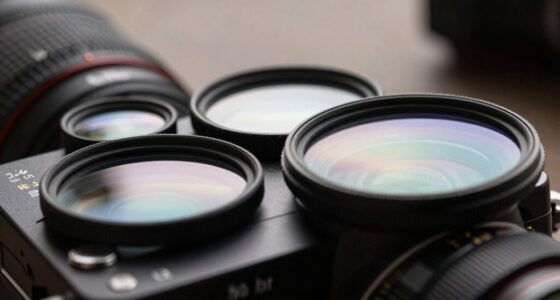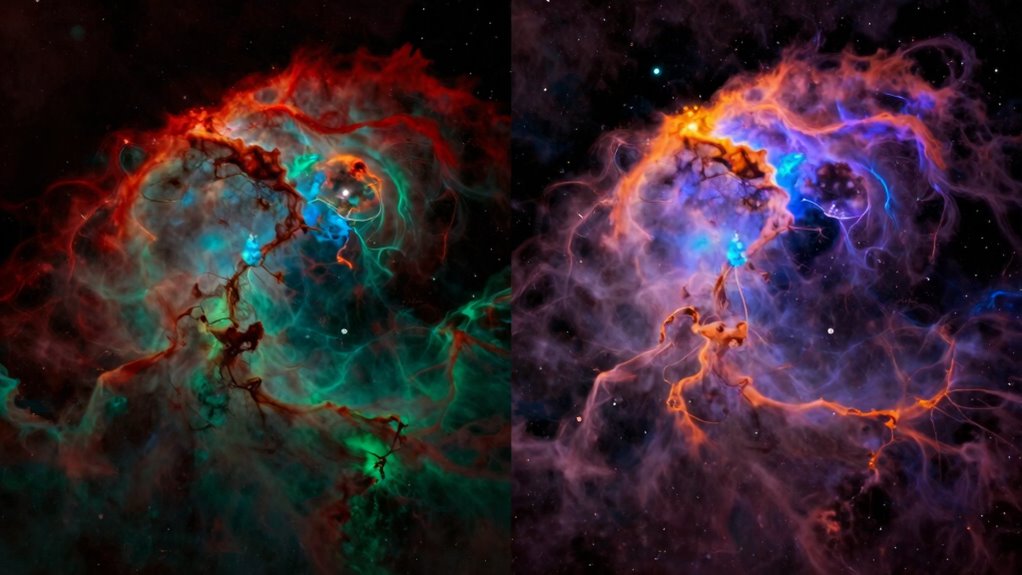

If you want natural, vibrant images of galaxies, planets, or the Milky Way, LRGB filters are your best choice, as they produce true-to-life colors and sharp details. On the other hand, if you’re aiming to capture intricate nebulae or work in light-polluted skies, SHO narrowband filters highlight specific emission lines, revealing complex structures with high contrast. To pick the right approach, consider your target and image style—exploring more details can help you make the best decision.

Get school and study supplies delivered free — and shop member deals
- Fast, free delivery on millions of items
- Access to Prime Big Deal Days deals on October 6–7
- Prime Video, Amazon Music and more included
Key Takeaways
- Use LRGB for natural, true-to-life images of galaxies, planets, and Milky Way structures requiring accurate color representation.
- Choose SHO for high-contrast nebulae, emission lines, and capturing intricate spectral details, especially in light-polluted skies.
- LRGB offers sharper images with higher color accuracy, ideal for broad-spectrum targets; SHO emphasizes nebular structures and spectral features.
- Consider equipment compatibility and budget: LRGB filters are more common and affordable, while SHO filters are specialized and often costlier.
- Match your artistic goals: natural colors favor LRGB, whereas spectral detail and contrast enhancement are best achieved with SHO.
LRGB astrophotography filter set
As an affiliate, we earn on qualifying purchases.
As an affiliate, we earn on qualifying purchases.
What Are LRGB and SHO Astrophotography Techniques?
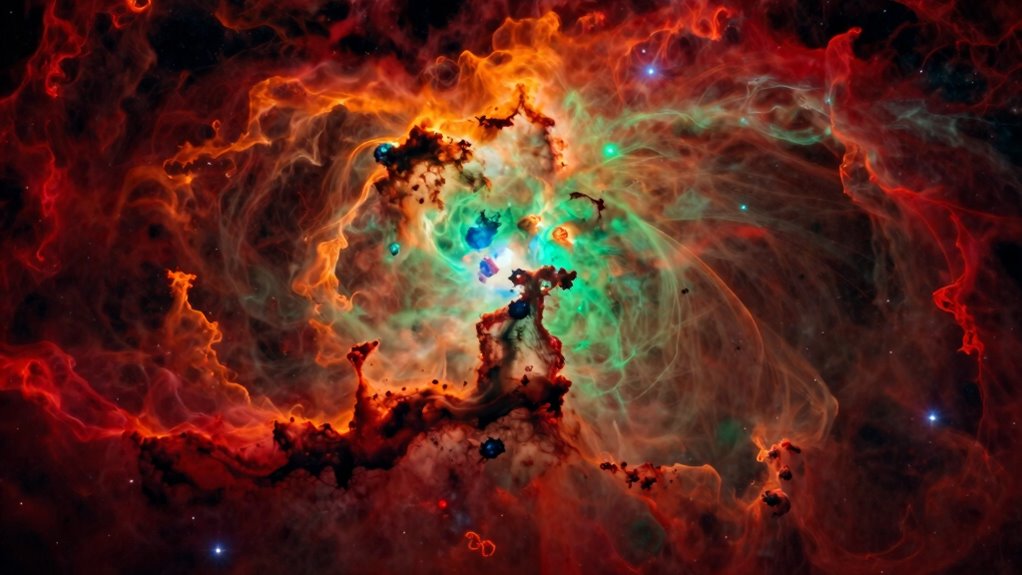
Have you ever wondered how astrophotographers capture stunning, full-color images of the night sky? They use techniques like LRGB and SHO to achieve vibrant, accurate results. LRGB combines luminance (brightness) with red, green, and blue channels, allowing precise color calibration and detail enhancement. SHO, on the other hand, uses narrowband filters—Sulfur II, Hydrogen-alpha, and Oxygen III—to isolate specific wavelengths, which helps in reducing the effects of light pollution and capturing deep-sky objects with rich color. While LRGB is ideal for natural-looking images, SHO excels in revealing structures hidden by light pollution. Both techniques require careful planning and equipment, but they serve different visual goals. Understanding these methods helps you choose the right approach for your astrophotography targets. Exploring these digital concepts can significantly enhance your creative process and outcomes in astrophotography.
narrowband SHO filters for astrophotography
As an affiliate, we earn on qualifying purchases.
As an affiliate, we earn on qualifying purchases.
When Should You Use LRGB Filters for Natural Deep-Sky Images?
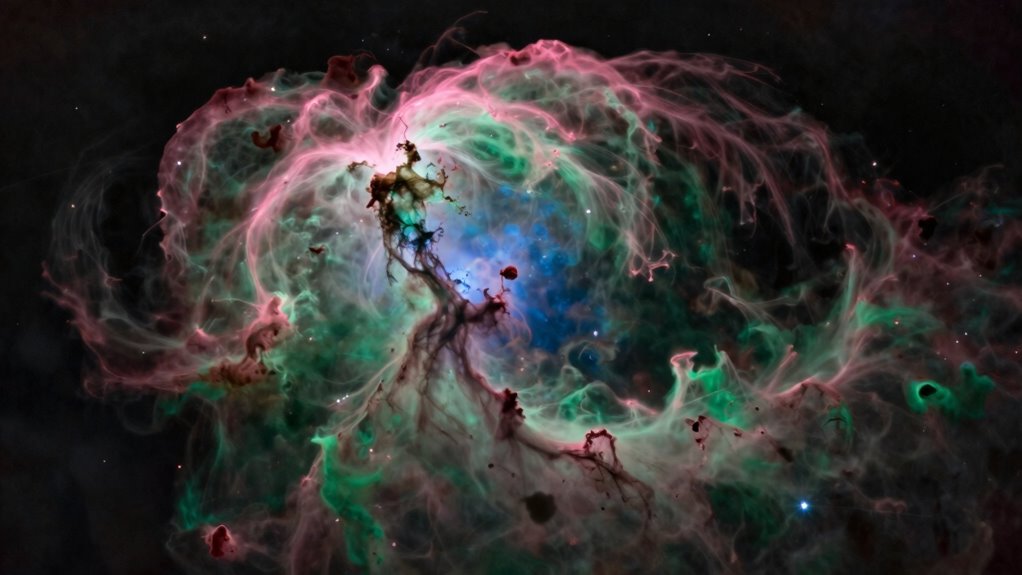
You should use LRGB filters when you want natural color balance in your deep-sky images. This approach is ideal if your goal is to capture visible detail that closely resembles what the eye sees. It’s especially useful for objects where accurate color representation enhances the overall image quality. Additionally, employing eco-friendly practices in your imaging setup can contribute to a more sustainable approach to astrophotography.
Achieving Natural Color Balance
Achieving a natural color balance in deep-sky imaging often depends on choosing the right filter set for your target. LRGB filters excel at producing accurate, true-to-life colors, which is essential if you aim for high color accuracy. They work well with equipment that offers good sensitivity to broad-spectrum light, ensuring your images reflect what the eye would see. Additionally, LRGB imaging allows for better control over each color channel, helping you balance hues naturally. Compatibility is key—your camera and filter wheel should support the LRGB filters without issues. Use LRGB when you want realistic colors that closely match the natural appearance of deep-sky objects, especially when your equipment can efficiently capture broad-spectrum light, maximizing natural color reproduction.
Suitable for Visible Detail
Using LRGB filters is particularly advantageous when capturing visible details in deep-sky objects. They enable you to highlight fine structures, such as dust lanes or star clusters, while maintaining natural color balance. Proper color calibration guarantees these details appear true-to-life, which is vital for realistic images. Equipment compatibility also matters; LRGB filters work well with most standard imaging setups, making them versatile for different telescopes and cameras. Consider these points:
- Use LRGB when you want natural, detailed images that emphasize visible features.
- Ensure your filters are properly calibrated for accurate color representation.
- Confirm your equipment supports LRGB filters to avoid compatibility issues. Additionally, achieving color accuracy enhances the overall quality of your images, making them more visually striking.
This approach helps you achieve detailed, natural-looking images that reveal the true beauty of your deep-sky targets.
deep sky astrophotography camera
As an affiliate, we earn on qualifying purchases.
As an affiliate, we earn on qualifying purchases.
Why Choose SHO Narrowband Filters for High-Contrast Shots?
Sure! Here’s the revised content with the requested modifications:
—
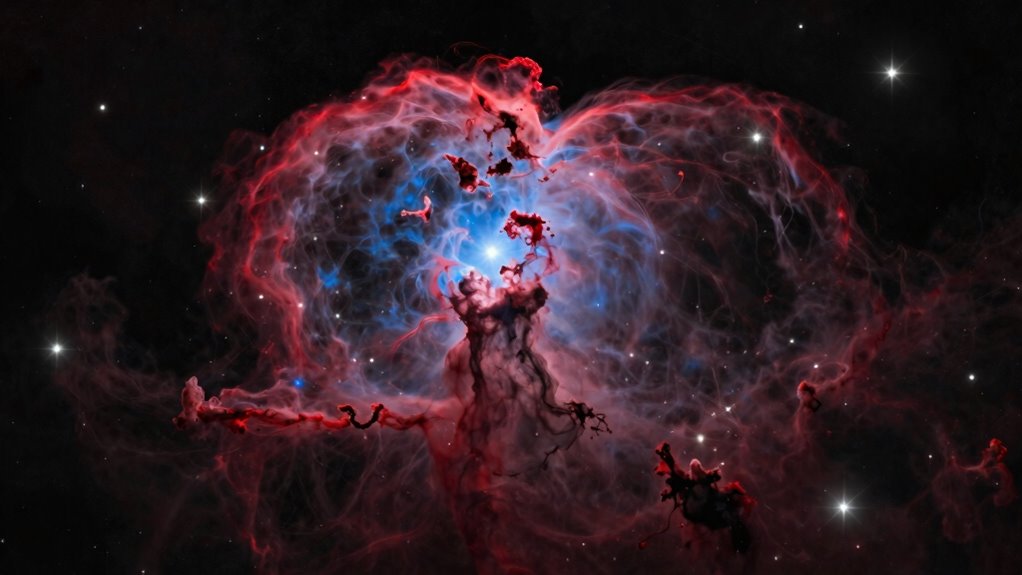
SHO narrowband filters are ideal for high-contrast shots because they enhance fine details and improve overall contrast. They also provide a better signal-to-noise ratio, making faint structures stand out more clearly. This combination helps you capture stunning images of complex nebulae with remarkable clarity. Additionally, these filters can be essential for retirement planning, ensuring that you have the right tools to achieve your imaging goals effectively. This is especially important in light of utilitarian principles that emphasize the best outcomes for maximizing photographic results. Proper piercing care is crucial for maintaining the quality of your gear and ensuring longevity in your equipment. Investing in performance parts can significantly elevate your photography, much like how a well-tuned engine enhances a car’s performance. Furthermore, utilizing template compatibility can streamline your workflow, allowing you to focus more on capturing breathtaking images without technical distractions.
—
Let me know if you need any further adjustments!
Enhanced Contrast and Detail
Narrowband filters like SHO excel at enhancing contrast and revealing fine details in high-contrast astrophotography scenes. They isolate specific wavelengths, making subtle features stand out sharply. This results in images with striking clarity and depth. When choosing SHO filters, consider these key points:
- Color calibration: SHO filters provide a natural color balance, reducing post-processing efforts for accurate tones. Additionally, employing standardized field programs can help streamline your imaging process. Moreover, ensuring your images reflect emotional needs can enhance the overall impact of your astrophotography.
- Equipment compatibility: Guarantee your camera and mount are compatible with narrowband imaging to maximize detail capture.
- Enhanced contrast: By filtering out light pollution and background glow, SHO boosts the visibility of intricate structures, revealing more detail in nebulae and other targets.
Additionally, using car protection accessories can ensure your equipment remains safe from environmental damage, allowing for uninterrupted astrophotography sessions. This approach allows you to capture stunning, high-contrast images with precise detail, making SHO filters ideal for dedicated astrophotographers.
Better Signal-to-Noise Ratio
High-contrast astrophotography demands a strong signal-to-noise ratio to produce clear, detailed images. SHO narrowband filters excel here because they isolate specific wavelengths, capturing faint details without introducing much noise. This results in better color accuracy, especially in high-contrast regions like nebulae. Additionally, SHO filters are compatible with most equipment, making them versatile for different setups. Since they focus on narrow spectral lines, you get cleaner signals, reducing the need for extensive post-processing to remove noise. This means you can achieve sharper, more vibrant images with less exposure time, boosting efficiency. Overall, SHO filters are ideal for capturing high-contrast scenes where signal clarity and precise color rendering are essential.
As an affiliate, we earn on qualifying purchases.
How Do Image Quality, Resolution, and Detail Differ Between Techniques?
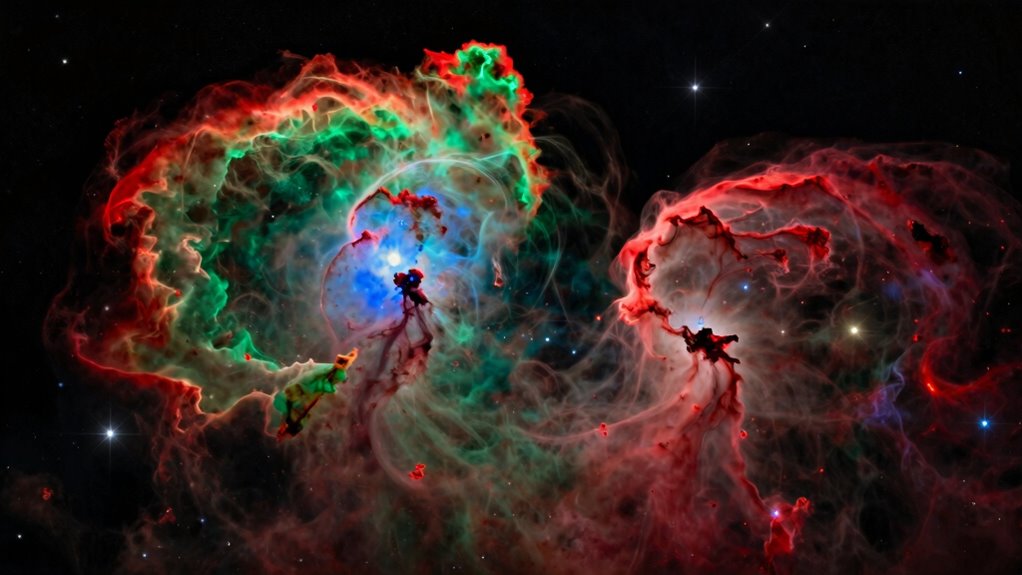
When comparing LRGB and SHO imaging techniques, it’s important to understand how each method impacts the overall image quality, resolution, and detail. LRGB often provides higher color accuracy and sharper images, highlighting fine details with increased image sharpness. SHO, on the other hand, emphasizes emission lines, which can sometimes reduce overall sharpness but enhance specific color details.
LRGB offers sharper, more natural images, while SHO emphasizes emission lines and specific spectral details.
Consider these key points:
- Resolution may be similar, but LRGB tends to reveal finer detail due to its balanced emphasis on luminance.
- Image sharpness is generally higher with LRGB because of its focus on the luminance channel.
- Color accuracy in LRGB produces more natural images, while SHO emphasizes specific spectral features, impacting perceived detail.
Both techniques influence image clarity differently based on their color strategy.
Which Technique Works Best in Different Imaging Conditions?
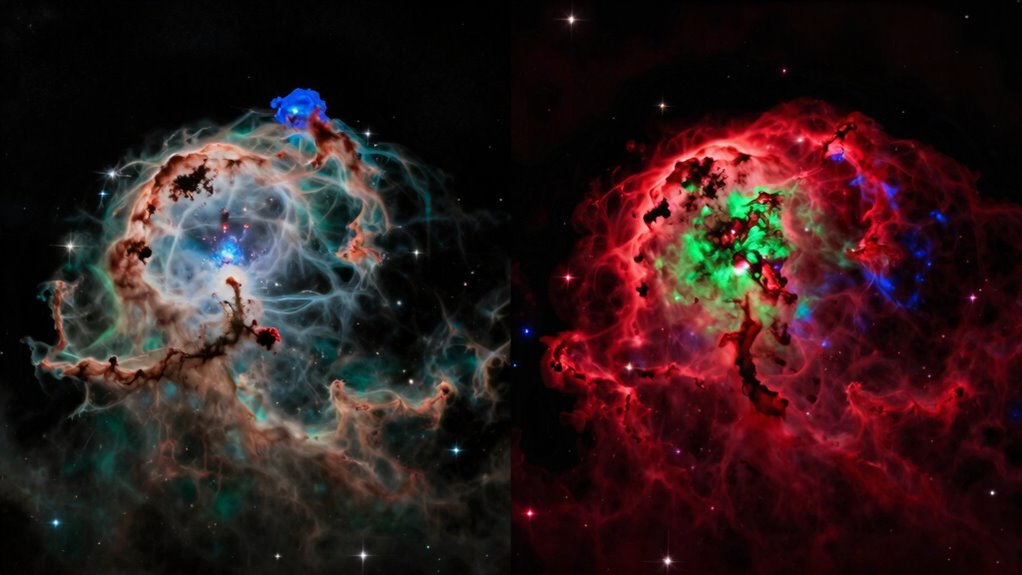
The effectiveness of LRGB or SHO imaging often depends on your specific observing conditions. Equipment considerations play a vital role; for example, narrowband SHO filters excel in light-polluted areas or when imaging nebulae through urban skies, while LRGB techniques might be better in clearer, darker skies for capturing fine details of galaxies or planets. Additionally, Milky Way shooting can greatly benefit from the LRGB technique in optimal conditions. Your artistic expression also influences your choice—if you prefer vibrant, natural colors, LRGB can deliver that, whereas SHO offers a striking, scientific look emphasizing emission lines. In conditions with variable seeing or limited exposure time, SHO’s ability to isolate specific wavelengths can produce clearer images. Ultimately, matching your equipment capabilities and artistic goals to the observing environment helps you select the most effective technique. Additionally, incorporating luxurious lifestyle products can enhance your overall experience while engaging in astrophotography, providing comfort and convenience during your sessions.
How Much Time and Effort Does Each Method Require in Post-Processing?
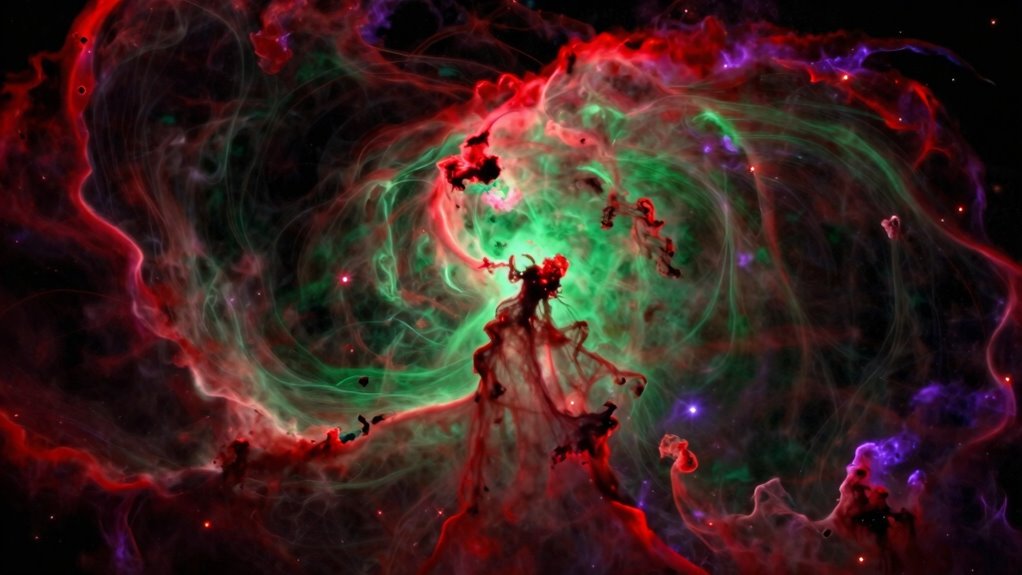
While both LRGB and SHO imaging require post-processing, the amount of time and effort can vary considerably depending on your astrophotography gear and image processing techniques. LRGB processing often involves combining luminance with RGB data, which can be quicker but demands careful alignment. SHO, using narrowband filters, typically requires more steps—like creating and blending separate hydrogen, sulfur, and oxygen channels.
You should consider:
- The complexity of your data—more channels mean more processing time.
- Your familiarity with image processing techniques—advanced methods can speed things up.
- The desired image quality—more detailed images often need extra refinement.
Ultimately, SHO may take longer but offers richer detail, while LRGB can be more straightforward for quicker results.
What Are the Cost and Equipment Considerations for LRGB and SHO?
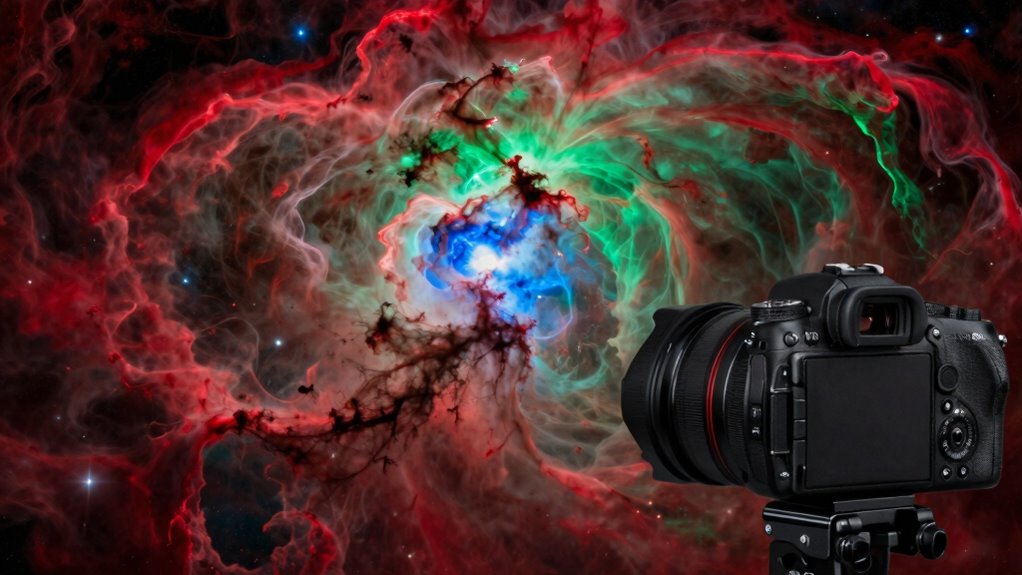
Choosing between LRGB and SHO imaging isn’t just about processing techniques; it also involves understanding the financial and equipment investments required. Equipment compatibility is key, as SHO often requires specialized filters that might not fit standard setups, potentially increasing costs. LRGB imaging typically uses standard RGB filters, which are more common and usually less expensive, making it more accessible if you already have compatible equipment. When considering a cost comparison, SHO filters tend to be pricier than LRGB filters due to their narrower bandwidths and specialized design. Additionally, both methods may demand different camera types or filter wheels, affecting your initial investment. Ultimately, your choice depends on your budget and existing equipment, but be prepared for potential extra costs with SHO to achieve excellent results. Investing in smart locks can also enhance your imaging setup’s security, ensuring your equipment remains safe. Incorporating sustainable practices into your imaging setup can also help mitigate environmental impacts associated with equipment production and usage. Furthermore, exploring halal culture can provide insights into diverse perspectives that may influence your artistic vision and approach to imaging.
How Do You Decide Which Color Strategy Fits Your Astrophotography Goals?
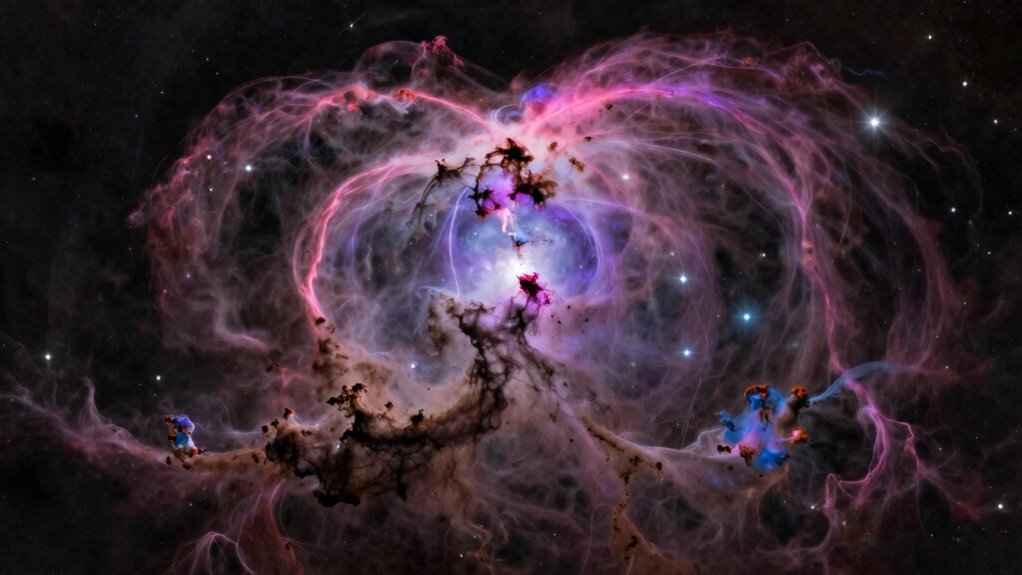
Deciding which color strategy best suits your astrophotography goals hinges on understanding your target objects and the level of detail you want to capture. A historical comparison reveals that LRGB often excels for planetary and galaxy imaging, while SHO shines with nebulae. Consider the technical challenges: SHO requires narrowband filters, which can be more complex but reveal intricate structures, whereas LRGB relies on broadbands, simplifying processing. To determine your fit:
- Identify your target objects—are they emission nebulae or galaxies?
- Assess your equipment’s capabilities—can you handle narrowband filters?
- Reflect on your desired image quality—do you want vivid colors or detailed structures?
Choosing the right strategy aligns with your goals, balancing technical feasibility and artistic vision.
Frequently Asked Questions
Can LRGB and SHO Be Combined for More Detailed Images?
Yes, you can combine LRGB and SHO for more detailed images. Using color blending techniques, you merge data from both methods to enhance image detail and color accuracy. This approach allows you to leverage the strengths of each strategy, resulting in a more thorough and visually striking image. It’s a powerful way to improve image enhancement, especially when capturing complex nebulae or deep-sky objects that benefit from multiple data sets.
What Are the Limitations of Each Technique for Beginners?
As a beginner, you’ll find LRGB techniques offer better color accuracy, but they demand more complex processing skills. SHO methods simplify processing, making it easier to learn, but may sacrifice some color precision. Limitations include the steep learning curve for LRGB and potential color inaccuracies with SHO. Start with SHO to grasp basic concepts, then explore LRGB to achieve more precise, detailed images as your skills improve.
How Do Atmospheric Conditions Affect LRGB and SHO Imaging?
You’ll find atmospheric distortion impacts both LRGB and SHO imaging, especially on clear nights when turbulence causes star twinkling. About 50% of amateur astronomers report that atmospheric conditions markedly reduce image quality. Light pollution effects worsen this, scattering light and lowering contrast. With poor conditions, your images may appear blurred or washed out, regardless of your chosen color strategy. To get the best results, aim for nights with minimal atmospheric distortion and reduced light pollution.
Are Specific Telescopes Better Suited for Either Method?
Some telescopes are better suited for specific imaging methods due to equipment compatibility and image processing needs. For LRGB imaging, telescopes with fast focal ratios and high-quality optics work well, providing sharp, detailed images. SHO imaging often benefits from telescopes that can handle narrowband filters, which improve contrast and detail in emission nebulae. Choose your equipment based on your target and the image processing methods you plan to use for peak results.
How Does Sensor Sensitivity Influence Technique Choice?
Sensor sensitivity and wavelength response considerably influence your technique choice. If your sensor has high sensitivity and broad wavelength response, it captures detailed color data, making LRGB ideal for accurate color reproduction. Conversely, if the sensor excels in narrow wavelengths, SHO imaging is better suited, emphasizing specific emission lines. Your decision hinges on your sensor’s capabilities, ensuring you choose a method that optimizes data quality for your astrophotography target.
Conclusion
Ultimately, choosing between LRGB and SHO depends on your goals and conditions. If you want natural colors and detailed images, LRGB is your go-to. For high-contrast, striking nebula shots, SHO shines. Remember, it’s not one size fits all—sometimes you need to think outside the box. Weigh the effort, costs, and your desired outcome carefully. After all, in astrophotography, you’re often better off striking the right balance than chasing every shiny object.
Halloween Picks
halloween
As an affiliate, we earn on qualifying purchases.