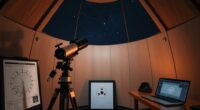
To prevent frost on your lenses without dew heaters, focus on insulation and environmental controls. Wrap your lenses with foam or neoprene covers to trap heat and keep surfaces warm. Seek shelter and use windbreaks to reduce cooling from cold air and wind chill. Store your gear in dry, low-humidity environments with desiccants like silica gel. Combining these methods helps maintain stable temperatures and minimizes moisture buildup, ensuring your gear stays frost-free—discover more ways to protect your gear effectively.
Key Takeaways
- Insulate lenses with foam, neoprene covers, or specialized sleeves to trap heat and prevent surface cooling.
- Seek shelter or use windbreaks to reduce exposure to cold, humid air and slow temperature drops.
- Use silica gel packs or desiccants in cases to absorb moisture and lower humidity around the lens.
- Pre-warm lenses gently with body heat or warm air sources to maintain surface temperature without rapid cooling.
- Combine insulation with environmental controls for a comprehensive approach to minimize frost formation.

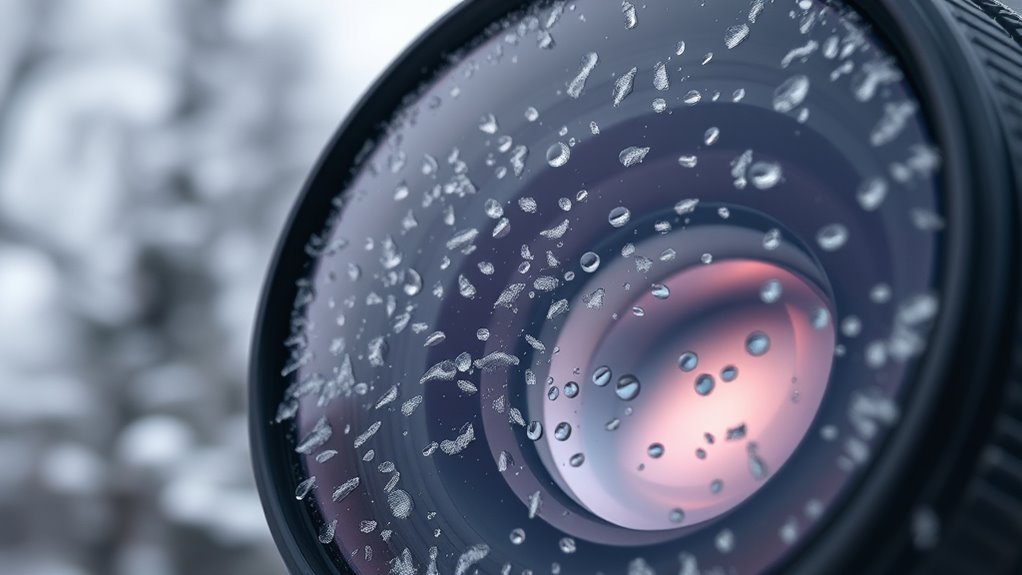
Have you ever struggled with foggy or frosted lenses during cold weather? It’s frustrating when your view gets obscured just when you need it most, especially if you’re trying to capture photos, navigate outdoors, or work in challenging conditions. The good news is, you can prevent frost buildup on your lenses without relying on dew heaters by focusing on effective techniques like lens insulation and environmental control. These methods help maintain a stable temperature around your lenses, reducing the chance of condensation forming.
Lens insulation is one of the most straightforward strategies. You can wrap your lenses with insulating materials like foam, neoprene covers, or even specialized lens sleeves designed to trap heat and shield your equipment from the cold air. These covers act as a barrier, slowing the transfer of cold from the environment to the lens surface. By keeping the lens closer to ambient temperature, you minimize the temperature difference that causes moisture to condense. When you insulate your lenses properly, you’re actively maintaining a more consistent temperature, which markedly cuts down on frost formation. Remember, the goal is to prevent the lens surface from dropping below the dew point of the surrounding air. Using proper insulation techniques can further optimize this process and help preserve your equipment.
Wrapping lenses with foam or neoprene helps maintain temperature and prevent frost buildup.
Environmental control is equally essential. Whenever possible, try to reduce exposure to cold, humid air. If you’re outdoors, seek shelter or create a windbreak to limit the wind chill effect, which can accelerate cooling of your lenses. Using a protective case or a cover can also help shield your equipment from sudden temperature drops and moisture exposure. Additionally, controlling the immediate environment around your equipment—such as working in a relatively dry, warm area or using a portable enclosure—can help keep the lens temperature stable. If you’re in a situation where you can’t avoid cold conditions, consider warming the lens slightly beforehand using body heat or a gentle external heat source, but be cautious not to overheat or cause thermal shock.
Furthermore, managing humidity levels is essential. Dry air means less moisture to condense on your lenses. Using silica gel packs or desiccants in your camera bag or lens case can absorb excess moisture, creating a drier environment. When you combine lens insulation with environmental control measures, you create a comprehensive system that reduces the risk of frost. This approach not only keeps your lenses clear but also prolongs their lifespan by preventing moisture damage.
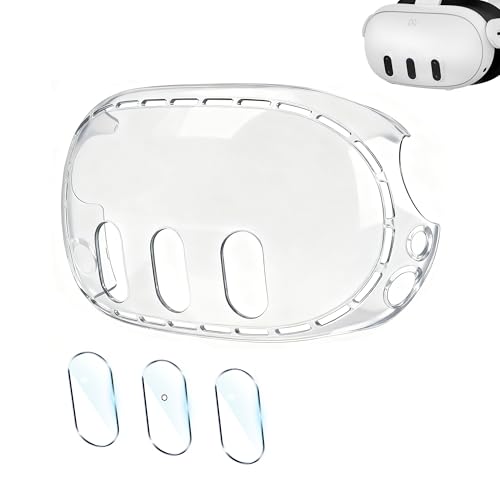
Upgraded Lens Protector Cover for Meta Quest 3, Plastic Hard Protective Shell Cover for Oculus Quest 3, Accessories for Quest 3 – Frosted Clear
【Upgrade】 We have improved adhesion of the lens protector and added a microphone hole on one of the…
As an affiliate, we earn on qualifying purchases.
As an affiliate, we earn on qualifying purchases.
Frequently Asked Questions
Can Anti-Fog Coatings Damage Lens Surfaces Over Time?
Anti-fog coatings generally don’t damage lens surfaces if you choose high-quality products. However, poor-quality coatings might degrade over time, affecting lens coating durability and anti-fog longevity. You should avoid harsh cleaning agents and abrasive materials, as they can wear down the coating. Regular gentle cleaning helps maintain the coating’s effectiveness and ensures your lenses stay clear without compromising their surface or longevity.
Are There Eco-Friendly Alternatives to Traditional Lens Heating Methods?
You can explore eco-friendly alternatives like solar power-powered lens heaters or biodegradable sprays that reduce frost without harming the environment. Solar-powered solutions harness renewable energy, making them sustainable and cost-effective. Biodegradable sprays create a protective film, preventing frost buildup while being gentle on the planet. These options help you keep your lenses clear without relying on traditional, energy-intensive heating methods, aligning with eco-conscious practices.
How Does Humidity Impact Frost Formation on Lenses?
A stitch in time saves nine, and managing humidity is key to preventing frost. When humidity levels are high, moisture condenses on your lenses, especially if the temperature drops below the dew point. Proper humidity control and dew point management keep the air dry, reducing frost formation. By maintaining stable humidity, you prevent moisture buildup, ensuring clearer images and protecting your equipment from frost damage.
Can Lens Design Influence Frost Accumulation?
Yes, lens design can influence frost accumulation. You can choose lens materials with low thermal conductivity, like certain plastics, to reduce temperature differences that cause frost. Additionally, optical design features like a curved or coated lens surface can minimize moisture buildup by directing condensation away or reducing surface tension. These design choices help prevent frost formation, especially in cold, humid conditions, without relying on dew heaters.
What Are the Long-Term Effects of Using Silica Gel Packs?
Using silica gel packs helps with moisture absorption, which preserves your lenses by preventing frost and mold growth over time. They are an effective preservation technique, especially in humid environments, as they absorb excess moisture that can damage optics. However, silica gel packs need to be replaced or recharged periodically, or their effectiveness diminishes. Proper use guarantees your lenses stay dry and clear, extending their lifespan.

OP/TECH USA Fold-Over Neoprene Lens Pouch – Camera Lens Case for safe Lens Cover storage, Great for Photography & outdoor shoot, Keeps your Lens secure with No-Lose Lid-253 (Black) – Made in USA
Style 253: Fits lenses with a diameter of 2–2.5 inches and a length of 2.1–3.5 inches. It's perfect…
As an affiliate, we earn on qualifying purchases.
As an affiliate, we earn on qualifying purchases.
Conclusion
By applying these techniques, you’ll substantially reduce frost buildup on your lenses without relying on dew heaters. Did you know that proper anti-frost measures can improve image clarity by up to 30%? With just a few simple steps—like using silica gel or adjusting your environment—you can keep your lenses clear and operational in cold conditions. Stay proactive, and you’ll enjoy sharper, unobstructed views every time you shoot in winter’s chill.

VIVOSUN Double Bubble Foil Insulation Roll, 6" x 25 ft Reflective HVAC Pipe & Duct Wrap, Weatherproof Thermal Insulation for Attics, Windows, Garages
Enhanced Insulation Efficiency: Dual-bubble layers with reflective foil on both sides reduce heat transfer; Helps maintain stable temperatures…
As an affiliate, we earn on qualifying purchases.
As an affiliate, we earn on qualifying purchases.

Coolotic 2-Set Outdoor CCTV Security Camera Top Cover, Sun Rain Shade Cover Shield Protective Roof for CCTV Surveillance Camera Hikvision/Nest/Ring/Arlo/Dome/Bullet
Constructed from hard wearing ABS/PP plastic composite for long lasting durabilty and better longevity of your security camera…
As an affiliate, we earn on qualifying purchases.
As an affiliate, we earn on qualifying purchases.