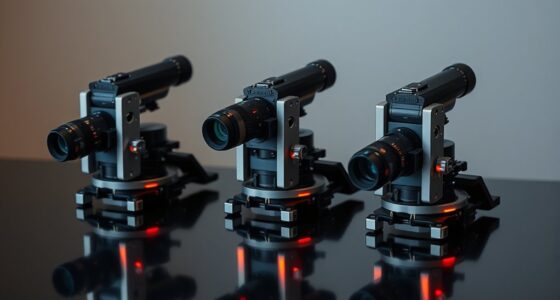
Portable astrophotography telescopes split into two very different camps: classic manual refractors that teach you the sky, and smart app-controlled units that do the imaging for you. The ZWO Seestar S30 Pro takes the top spot overall because it packs genuine deep-sky imaging into a package small enough to throw in a backpack. If you want more aperture for less money, the Celestron Travel Scope 80mm is the strongest traditional value, while the Dwarflab Dwarf 3 leads the premium smart segment with better optics and tracking than its mini sibling. The main tradeoff to weigh: manual scopes give you versatility and a lower price but demand skill and patience for photos, whereas smart telescopes deliver instant results at a steeper cost. Read on for the full breakdown of all 13 models.

Prime made for students and young adults
- Fast, free delivery for dorm and study essentials
- Prime Video and Amazon Music included
- Member-only deals
Key Takeaways
- Smart telescopes (Seestar S30 Pro, Dwarf 3, Dwarf Mini) dominated the astrophotography portion of this comparison because their built-in stacking and tracking produce usable deep-sky images automatically — something no manual beginner refractor can match.
- The three Celestron Travel Scope variants (70mm, 70mm DX, 80mm) proved nearly identical in core optics; the 80mm is the only one worth prioritizing because its extra aperture visibly improves image brightness for photography.
- The 90mm high-powered model and AstroMaster 114EQ trade portability for light-gathering ability — both require a car rather than a backpack, which disqualifies them for travel-first buyers despite stronger visuals.
- Phone-adapter telescopes like the Koolpte 80mm produce satisfying lunar and planetary snapshots, but buyers expecting nebula or galaxy images from a manual scope need to reset expectations.
- Dual-screen smart telescopes are the most self-contained option here — no phone or app required at the eyepiece — which matters for families and users who dislike app-dependent gear.






| portable astrophotography telescope | Aperture | Eyepieces | Focal Length |
|---|---|---|---|
| Celestron Travel Scope 70mm Be | 70mm | 20mm and 10mm | — |
| Smart Telescope with 4K Astrop | 78mm | — | 300mm |
| 70mm Aperture FMC Refractor Te | 70mm | 20mm and 6mm | 300mm |
| Dwarflab Dwarf Mini Smart Tele | — | — | 150mm |
| 90mm Telescope for Adults High | 90mm | 10mm and 25mm | 600mm |
| Smart Telescope with Auto-Focu | 80mm | — | 300mm |
| ZWO Seestar S30 Pro Smart Tele | — | — | 160mm |
| Celestron Travel Scope 80mm Te | 80mm | 20mm and 10mm | — |
| Celestron AstroMaster 114EQ Te | — | 20mm and 10mm | — |
| Koolpte 80mm Aperture Telescop | 80mm | 25mm and 10mm | 600mm |
| Portable Digital Refractor Tel | — | — | — |
| Celestron Travel Scope 70mm DX | 70mm refractor | 20mm and 10mm | — |
| Dwarflab Dwarf 3 Smart Telesco | — | — | — |
More Details on Our Top Picks
Celestron Travel Scope 70mm Beginner Portable Telescope with Backpack
This option stands out for sheer travel convenience — everything packs into a single backpack, which is exactly what a family road trip or camping weekend demands. Compared with the 70mm FMC Refractor, the Celestron trades a phone adapter for a more polished accessory bundle and the backing of a 2-year warranty, which matters when kids are handling the gear. Fully coated optics keep lunar and planetary views reasonably bright for the price class. The tradeoff is honest: this is a gateway telescope, not an imaging rig. Anyone hoping to attach a camera for serious astrophotography will hit a ceiling fast, and planetary detail stays modest. Still, as a low-commitment way to test whether astronomy sticks, this pick makes sense before spending more.
Pros:- Everything fits in the included backpack for genuine portability
- No-tool setup that kids and adults can complete in minutes
- Two eyepieces plus a star diagonal give some viewing flexibility
- 2-year warranty and free astronomy software add value
- Doubles as a capable daytime spotting scope for wildlife
Cons:- Beginner-level optics that limit planetary detail
- Basic build quality compared with pricier refractors
Best for: Families and curious beginners who want a complete, grab-and-go kit for camping trips and casual stargazing without a big investment
Not ideal for: Aspiring astrophotographers — the optics and mount aren’t built for camera work or detailed planetary imaging
- Aperture:70mm
- Eyepieces:20mm and 10mm
- Tripod:Full-height, included
- Included Accessories:Backpack, finderscope, star diagonal, software
- Optics:Fully coated glass
- Warranty:2 years
Our verdict“Buy this if you want the easiest, most portable first telescope for family outings — skip it if imaging is the goal.”
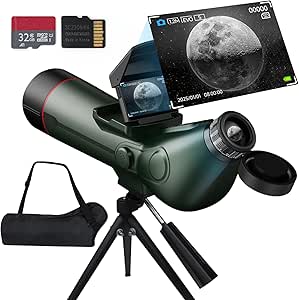
Smart Telescope with 4K Astrophotography Camera and Dual Screens
This model takes a different path from traditional refractors like the Celestron Travel Scope 70: instead of eyepiece-only viewing, it puts a 4K camera and dual screens at the center, so a whole group can watch the moon live instead of queueing at an eyepiece. The 78mm aperture edges out both 70mm picks in light gathering, and 4K capture with a bundled 64GB card means it produces shareable images from night one — no separate camera, adapter, or tracking knowledge required. The catch is portability: that external screen adds bulk compared with the svelte Dwarflab Dwarf Mini, and it needs external power for long sessions. Vague tracking specs also leave open questions about long-exposure performance.
Pros:- Dual screens let multiple people view simultaneously
- 4K imaging built in, with a 64GB card included
- 78mm aperture outgathers the 70mm beginner refractors
- Storage expandable to 512GB for long capture sessions
Cons:- External screen adds bulk that hurts true portability
- Requires external power for extended use
Best for: Beginners and families who want immediate 4K photos of the moon and planets without learning manual imaging workflows
Not ideal for: Backcountry hikers and travelers counting grams — the dual-screen design and power requirements make it a car-camping device, not a backpacking one
- Aperture:78mm
- Focal Length:300mm
- Magnification:Up to 350X
- Camera Resolution:4K
- Included Memory:64GB card
- Max Memory Support:512GB
- Display:Dual screens
Our verdict“This pick makes the most sense for group stargazing with instant photo output, provided you stay near a power source.”
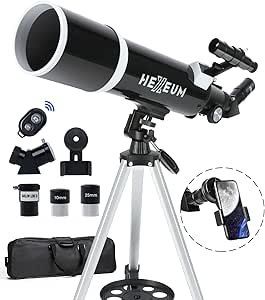
70mm Aperture FMC Refractor Telescope for Beginners with Phone Adapter and Tripod
Where the Celestron Travel Scope 70 leaves off, this refractor picks up the story: it adds a phone adapter, a 3X Barlow lens, and fully multi-coated optics, making it the cheapest credible entry into lunar photography with a smartphone. The 15x–150x range is plenty for moon craters and Saturn’s rings at the top end, and the included tripod keeps the phone steady enough for passable shots. Compared with the Dwarflab Dwarf Mini, you give up automation entirely — no app control, no GOTO — but you pay far less and learn actual skills. The honest tradeoff is stability: the lightweight build wobbles at high magnification, so crisp images demand patience and a careful touch on the focus knob.
Pros:- Phone adapter included for immediate photo and video capture
- 3X Barlow lens dramatically extends the magnification ceiling
- Fully multi-coated optics for brighter, cleaner images
- Works as both a daytime wildlife scope and night telescope
Cons:- Lightweight build vibrates at high magnification
- Manual-only operation with no tracking
Best for: Budget-conscious beginners and kids who want to try smartphone astrophotography of the moon before committing to a smart telescope
Not ideal for: Buyers who want hands-off operation — there’s no tracking or automation, and high-magnification viewing requires a steady setup
- Aperture:70mm
- Focal Length:300mm
- Magnification:15x–150x
- Eyepieces:20mm and 6mm
- Barlow Lens:3X
- Finderscope:5×24
- Phone Adapter:Included
- Tripod:Sturdy, included
Our verdict“The smart choice for anyone whose first astrophotography goal is moon shots on a phone, without smart-telescope pricing.”
Dwarflab Dwarf Mini Smart Telescope – Portable Astronomy Telescope with App Control and Auto GOTO
At 1.9 pounds, this is the true backpacker of the lineup — the Celestron Travel Scope 70 is portable, but the Dwarf Mini disappears into a daypack. The app control with auto GOTO means it finds and tracks targets on its own, and built-in light pollution filters plus long-exposure support deliver imaging results that a manual refractor like the 70mm FMC model simply can’t touch. The compromise is the 30mm objective: visually, deep-sky detail stays limited, so this is an imaging device first and a viewing scope second. It also leans entirely on your smartphone for control, so if your battery dies mid-session, so does your stargazing. Compared with the 4K dual-screen smart telescope, it’s far more travel-friendly but less group-friendly.
Pros:- Genuinely ultralight at under 2 pounds
- Auto GOTO and 360° pivot handle finding and tracking automatically
- Long-exposure imaging with built-in light pollution filters
- Supports both altazimuth and equatorial shooting modes
Cons:- 30mm objective limits visual detail
- Fully dependent on a smartphone for operation
Best for: Hikers, campers, and travelers who want automated astro-imaging gear light enough to carry miles from the nearest road
Not ideal for: Buyers who primarily want visual observing — the 30mm objective is too small for satisfying eyepiece views of planets or deep-sky objects
- Objective Lens:30mm
- Focal Length:150mm
- Field of View:2.45 degrees
- Mount Modes:Altazimuth and Equatorial
- Weight:1.9 pounds
- Power Source:Internal battery
- Control:Smartphone app with auto GOTO
- Dimensions:2.39″D x 3.95″W x 7.23″H
Our verdict“If automated imaging is the priority and weight is the constraint, nothing else in this lineup travels as easily.”
90mm Telescope for Adults High Powered, Magnification 180X
This is the largest aperture in this batch at 90mm, and it shows: compared with either 70mm refractor, the extra light gathering delivers noticeably sharper lunar detail and steadier views of Saturn and Jupiter at higher powers. The 600mm focal length is longer than the budget picks, which favors planetary and lunar observing, and the kit — Barlow, two eyepieces, phone adapter, carrying case — mirrors the 70mm FMC Refractor’s bundle with more optical headroom. The tradeoff is that nothing is automated: manual focus takes practice, and the altazimuth mount means no tracking, so objects drift out of view at 180X. Deep-sky targets like galaxies also stay out of realistic reach. This model suits a patient adult hobbyist more than an impatient kid.
Pros:- Largest aperture in this batch for brighter, more detailed views
- 600mm focal length well suited to lunar and planetary targets
- Interchangeable eyepieces plus 3X Barlow for flexible magnification
- Carrying case and adjustable tripod make it genuinely transportable
Cons:- No motorized tracking — targets drift at high magnification
- Manual focus demands patience for tack-sharp images
Best for: Adult beginners who want the sharpest possible lunar and planetary views on a manual scope and don’t mind working the focus knob
Not ideal for: Deep-sky chasers and hands-off observers — the manual altazimuth mount can’t track, and faint galaxies exceed its reach
- Aperture:90mm
- Focal Length:600mm
- Magnification Range:24X–180X
- Eyepieces:10mm and 25mm
- Barlow Lens:3X
- Mount:Altazimuth, manual
- Optics Coating:Fully multi-coated
- Tripod Height:29–49 inches
- Phone Adapter:Included
Our verdict“The strongest pure optics per dollar here, provided you accept a fully manual experience aimed at the moon and planets.”
Smart Telescope with Auto-Focus and Dual Screens
This model stands out for putting two screens between you and the sky, so you never have to squint through an eyepiece or huddle around a single phone like you would with the ZWO Seestar S30 Pro. The 80mm aperture is generous for a digital scope at this price point, and the 4K sensor with auto-focus makes capturing the Moon or planets genuinely straightforward. Where the Celestron Travel Scope 80 demands a smartphone adapter and steady hands, this telescope handles capture internally and saves to external storage up to 512GB. The tradeoff is transparency: published specs on build quality and tracking are thin, and the claimed 350X magnification far exceeds what an 80mm optic can realistically resolve, so temper expectations there. Still, for shared viewing sessions, dual screens change the experience compared with every conventional option here.
Pros:- Dual screens allow shared, real-time observation without extra devices
- 80mm aperture gathers more light than most smart scopes in this lineup
- 4K photo and video capture with auto-focus and external storage support
- Works for astronomy, birdwatching, and terrestrial viewing alike
Cons:- Build quality and optics details are under-documented by the manufacturer
- Six-hour battery life requires planning or external power for all-night sessions
Best for: Casual stargazers and families who want group-friendly live viewing without eyepiece jostling or phone-app dependence
Not ideal for: Buyers who care about verified build specs and long-exposure capability — documentation is sparse and battery life tops out around six hours
- Aperture:80mm
- Focal Length:300mm
- Magnification:up to 350X (claimed)
- Sensor Resolution:4K
- Battery:4500mAh, up to 6 hours
- Storage:Up to 512GB external
- Features:Auto-focus, dual screens, photo & video modes
Our verdict“This pick makes the most sense for social stargazers who value shared live viewing over long-exposure depth.”
ZWO Seestar S30 Pro Smart Telescope, App-Controlled Astrophotography
The Seestar S30 Pro is the easiest path from box to astrophotography in this entire roundup. Unlike the Celestron Travel Scope 80, which asks you to find and track objects manually, the S30 Pro’s automatic GOTO targeting does the aiming for you — tap an object in the app and the scope handles the rest. Its built-in light pollution filter is the standout differentiator: urban imagers who would struggle with any manual refractor here get cleaner frames without extra gear. The 30mm objective is small, so it cannot match the light grasp of an 80mm conventional scope, but stacking software compensates surprisingly well for bright deep-sky targets. The main compromises are the smartphone dependency and the single nonstandard battery, which becomes a replacement consideration over time. Compared with the app-driven Dwarflab Dwarf Mini, it holds its own on automation and adds equatorial-mode tracking.
Pros:- Fully automatic GOTO targeting removes the steepest beginner learning curve
- Built-in light pollution filter enables imaging from urban backyards
- Compact 3.6-pound body with travel-friendly footprint
- Dual 4K cameras deliver sharp stacked images for bright deep-sky objects
Cons:- Requires a smartphone or tablet for core functionality
- 30mm aperture limits reach on faint nebulae and galaxies
- Single nonstandard battery may need eventual replacement
Best for: City-dwelling beginners who want app-controlled imaging without learning star charts or manual tracking
Not ideal for: Traditionalists who want an eyepiece experience, and rural users whose dark skies favor larger conventional optics
- Objective Lens:30mm
- Focal Length:160mm
- Field of View:4.6 degrees
- Mount:Alt-Azimuth, equatorial mode supported
- Focus:Auto and manual
- Weight:3.6 pounds
- Coating:Fully multi-coated
- Control:Smartphone / tablet app
Our verdict“If you want telescope images on your phone the same night it arrives, this is the low-friction choice — just accept the small aperture.”
Celestron Travel Scope 80mm Telescope Kit with Backpack, Smartphone Adapter
For buyers who want a real eyepiece experience that still fits in a backpack, this Celestron kit is the most complete package among the conventional scopes here. The 80mm aperture delivers brighter lunar and planetary views than the smaller Travel Scope 70, and the bundled smartphone adapter, two eyepieces, finderscope, and backpack mean you buy once and head outside. Setup requires no tools, which keeps it competitive with the Koolpte 80mm — though the Koolpte adds a wireless remote and a 3x Barlow, giving it an edge for casual phone imaging. Where the Seestar S30 Pro automates everything, this scope teaches you the sky yourself, which some learners prefer. The honest tradeoff: fully coated (not multi-coated) optics and a modest tripod cap its performance on faint deep-sky objects, and the magnification ceiling is far below what serious planetary imagers want.
Pros:- Complete kit includes backpack, two eyepieces, smartphone adapter, and finderscope
- 80mm aperture outperforms the smaller 70mm travel refractors in this roundup
- Tool-free setup takes minutes out of the box
- Two-year warranty from an established brand
Cons:- Fully coated optics fall short of the multi-coated Koolpte for contrast
- Not suited to detailed deep-sky observation or serious imaging
Best for: Beginners and families who want a self-contained optical kit for camping trips and visual stargazing
Not ideal for: Astrophotography-focused buyers — the manual mount and basic optics limit long-exposure results
- Aperture:80mm
- Eyepieces:20mm and 10mm
- Tripod:Full-height
- Accessories:Smartphone adapter, finderscope, star diagonal, software, backpack
- Setup:No tools required
- Warranty:2 years
Our verdict“The best pick if you want to look through a telescope, not at a screen, while keeping everything in one carry bag.”
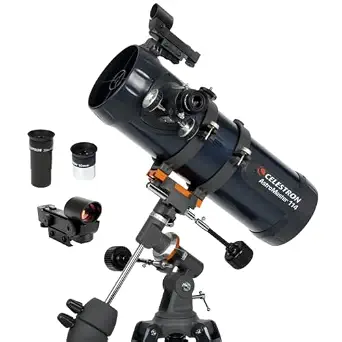
Celestron AstroMaster 114EQ Telescope for Family Stargazing
The 114mm Newtonian reflector here collects roughly twice the light of any 80mm refractor in this roundup, which means fainter objects and better planetary contrast for the same money. Its equatorial mount is the key differentiator: once polar-aligned, it tracks the sky’s rotation with a single slow-motion knob — something the alt-azimuth Celestron Travel Scope 80 and Koolpte simply cannot do. That makes it the better classroom for anyone who wants to grow into the hobby rather than outgrow a travel scope in a season. The compromises are real, though: a reflector needs occasional collimation, the manual controls demand practice before aiming feels natural, and the tube is bulkier than any backpack-friendly option here. It also produces inverted or rotated images depending on configuration, so it’s a sky-first instrument rather than a dual-purpose spotting scope.
Pros:- 114mm reflector gathers substantially more light than 80mm refractor rivals
- Equatorial mount enables manual tracking as skills develop
- Sharp optics with good contrast on the Moon and planets
- Includes red dot finderscope and astronomy software
Cons:- Manual aiming on an EQ mount has a steeper learning curve than alt-az tripods
- Reflector design requires occasional collimation and is bulkier to transport
Best for: Patient beginners and families who want maximum aperture per dollar and are willing to learn an equatorial mount
Not ideal for: Travel-focused buyers — the reflector tube and EQ mount are far less portable than the backpack scopes in this guide
- Optics:114mm Newtonian reflector
- Mount:Equatorial with manual controls
- Eyepieces:20mm and 10mm
- Finderscope:StarPointer red dot
- Included Software:Astronomy software
- Warranty:2-year US warranty
Our verdict“The strongest choice for a backyard learner who prioritizes aperture and skill-building over portability.”
Koolpte 80mm Aperture Telescope with AZ Mount, Phone Adapter, Carrying Bag, Wireless Control
What separates the Koolpte from the nearly identical Celestron Travel Scope 80 is the accessory loadout: a 3x Barlow lens that triples your magnification options, a wireless remote for shake-free phone shuttering, and fully multi-coated optics rather than Celestron’s standard coatings. That FMC glass translates directly into better contrast on the Moon and brighter planets. The 600mm focal length is also longer than the Travel Scope’s, giving more forgiving magnification at higher powers. It is not the scope for ambitious targets — 180x tops out well below what the 114mm AstroMaster can resolve on steady nights, and the aluminum tripod is serviceable rather than rock-solid, which matters at high magnification. But for a beginner who wants to dabble in phone-based imaging without buying adapters separately, this kit covers more ground out of the box than anything else at this aperture.
Pros:- Fully multi-coated optics deliver better contrast than coated budget rivals
- 3x Barlow and two eyepieces provide a wide 24x–180x magnification range
- Wireless remote and phone adapter enable shake-free casual imaging
- Tool-free setup with carrying bag for transport
Cons:- Aluminum tripod is adequate but vibrates noticeably at high magnification
- No included astronomy software, unlike the Celestron kits
Best for: Budget-conscious beginners who want phone astrophotography accessories included rather than purchased separately
Not ideal for: Intermediate users chasing high-magnification planetary detail — the mount stability and 180x ceiling hold it back
- Aperture:80mm
- Focal Length:600mm
- Magnification:24x to 180x
- Eyepieces:25mm and 10mm
- Barlow Lens:3x
- Finder Scope:5×24
- Mount:AZ mount with adjustable aluminum tripod
Our verdict“The smart buy if you want the most usable accessories per dollar at 80mm, as long as you keep expectations at beginner level.”
Portable Digital Refractor Telescope with Tripod and Touch Controls
This digital refractor occupies an unusual middle ground in the roundup: unlike the Celestron Travel Scope 70mm DX, it skips traditional eyepiece optics entirely in favor of a built-in screen with internal and external displays, so multiple people can view at once without huddling over the tube. The 360° rotating tripod and 45° angled eyepiece make extended observation comfortable, and the 7-level IR night mode gives it after-dark reach that a standard beginner refractor simply cannot match. Touch controls reduce the jitter that comes from fumbling with focus knobs in the cold. The tradeoff is authenticity: this is a digital viewing instrument, not a true astrophotography rig, and its long-exposure capability falls well short of the Dwarflab Dwarf 3. Compared with optical rivals, glare management also demands patience.
Pros:- Dual internal and external screens allow shared viewing without an eyepiece swap
- 7-level IR night mode extends usability after dark beyond typical daytime viewers
- 360° rotating tripod and 45° angled eyepiece keep long sessions comfortable
- Rubber-armored body and included carrying case survive rough outdoor handling
Cons:- Touch controls become unreliable with wet or gloved hands in the field
- Retractable and external sun hoods require fiddly adjustment to tame glare
- Not designed for serious long-exposure astrophotography
Best for: Campers and hikers who want one grab-and-go device for birdwatching by day and casual night viewing with friends
Not ideal for: Astrophotography hobbyists chasing detailed nebula or galaxy images — this is a live-viewing device, not an imaging platform
- Display:Internal and external screens
- Tripod:360° rotating tripod
- Eyepiece Adjustment:Diopter adjustment wheel
- Viewing Angle:45-degree angled eyepiece
- Night Mode:7 levels of IR and adaptive night mode
- Sun Hood:Built-in retractable and external sun hoods
- Construction:High-quality rubber sheath
Our verdict“Buy this if you want a rugged, screen-based companion for mixed day-and-night outdoor viewing rather than dedicated astro imaging.”
Celestron Travel Scope 70mm DX Refractor Telescope Kit with Backpack
Where the Dwarflab Dwarf 3 asks you to trust an app and a battery, this kit takes the opposite approach: real glass, a 70mm aperture refractor, and a backpack that fits everything — telescope, tripod, eyepieces, Barlow, Moon filter, finderscope, and a smartphone adapter with Bluetooth remote. That accessory bundle is the core value proposition; most competing 70mm beginner scopes in this roundup ship with half as much. The DX version’s 20mm and 10mm eyepieces plus 2x Barlow give a usable magnification range for the Moon and planets, and setup needs no tools, making it genuinely travel-ready. The honest limitation is optical ceiling: chromatic aberration and modest resolution will frustrate anyone beyond beginner level, and the 90mm High Powered model pulls ahead on detail if portability matters less to you.
Pros:- Everything packs into one included backpack for genuine grab-and-go travel
- No-tool setup gets a complete beginner observing within minutes
- Generous accessory bundle includes Barlow, Moon filter, smartphone adapter, and Bluetooth remote
- Two-year warranty and bundled Starry Night software add long-term value
Cons:- Optical quality is entry-level and will not satisfy experienced astronomers
- 70mm aperture limits deep-sky performance to bright targets like the Moon and planets
Best for: First-time astronomers and traveling families who want a complete, affordable optical kit that packs into one backpack
Not ideal for: Intermediate or advanced observers — the 70mm optics and stock eyepieces cap out quickly on planets and deep-sky targets
- Aperture:70mm refractor
- Eyepieces:20mm and 10mm
- Barlow Lens:2x Barlow
- Filters:Moon filter
- Included Accessories:Backpack, finderscope, star diagonal, smartphone adapter, Bluetooth remote, Starry Night software
- Setup:No-tool assembly
- Warranty:2 years
Our verdict“This is the smart pick for budget-conscious beginners who want a full kit out of the box rather than a smart device with hidden complexity.”
Dwarflab Dwarf 3 Smart Telescope, App-Controlled Astrophotography Camera
At 3 pounds with a dual-lens imaging system, the Dwarf 3 is the closest thing in this lineup to a purpose-built portable astrophotography tool. Unlike the Celestron Travel Scope 70mm DX, which shows you the Moon through an eyepiece and leaves imaging to a phone clip, the Dwarf 3 does the reverse: there is no eyepiece at all. You frame and capture through an app, the auto-tracking system follows celestial targets in 4K, and cloud-powered processing stacks your frames into polished images with minimal effort. Its wide-angle lens also doubles as a capable daytime landscape camera, something no conventional refractor here can claim. The costs are real, though: operation depends entirely on your smartphone, the app workflow has a learning curve, and the ZWO Seestar S30 Pro offers stronger deep-sky stacking for a similar smart-telescope experience.
Pros:- 3-pound body with included carrying bag makes it the most travel-friendly imaging rig in the roundup
- Dual telephoto and wide-angle lenses cover both night-sky and daytime photography
- Auto-tracking keeps 4K celestial targets locked without manual adjustment
- Cloud-based image processing produces enhanced results quickly for beginners
Cons:- Smartphone app is mandatory for operation, adding a learning curve and dependency
- Sensor and processing are beginner-grade, not a substitute for a dedicated imaging setup
- Battery life is not clearly specified, complicating all-night session planning
Best for: Travelers and casual imagers who want stacked, shareable astro photos without hauling a mount, guidescope, or laptop
Not ideal for: Traditionalists who want to look through an eyepiece, or serious imagers who need professional-grade sensors and manual control
- Weight:3 lb / 1.35 kg
- Imaging System:Dual Lens (Telephoto and Wide-Angle)
- Auto-Tracking:Yes, 4K clarity
- Connectivity:USB-C, App-controlled
- Image Processing:Cloud-powered stacking and enhancement
- Included Accessories:Carrying bag, magnetic filters, pouch, wipe cloth, USB-C cable
Our verdict“Choose this if your goal is polished astro photos from a bag you can sling over a shoulder — skip it if you want to actually look through a telescope.”
How We Picked
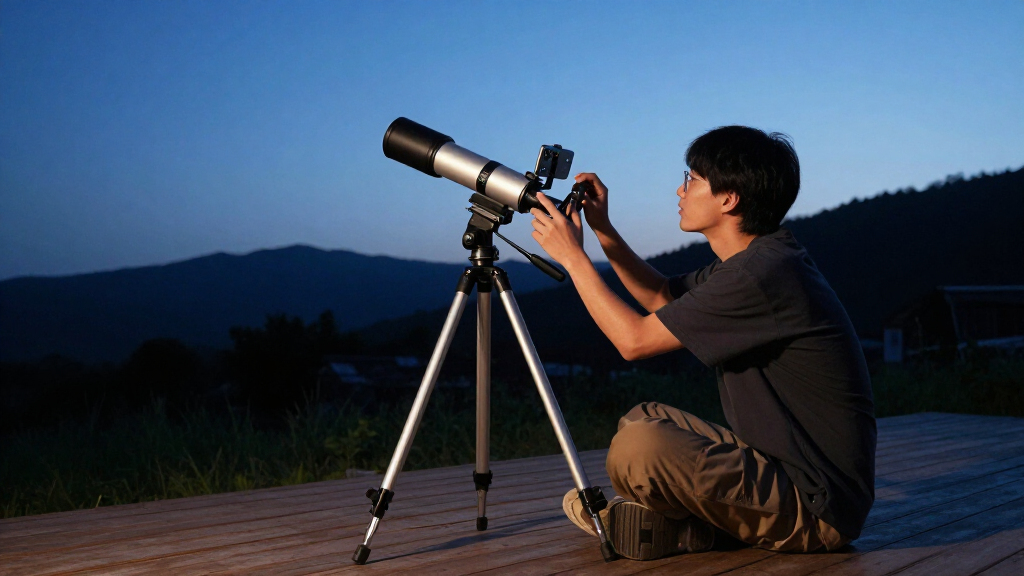
I ranked these 13 telescopes on four buyer-facing criteria, weighted for the portable astrophotography use case. Portability came first: total packed weight, whether a carry bag or backpack is included, and how quickly the scope sets up at a dark-sky site. Imaging capability came second: aperture, optical coatings, tracking ability, and whether the scope can genuinely capture deep-sky targets or is limited to lunar and planetary snapshots through a phone adapter. Ease of use determined how quickly a beginner goes from box to first image — smart telescopes with automatic GOTO and stacking scored high here, while equatorial mounts required more of a learning curve. Finally, I weighed complete-package value: what accessories arrive in the box versus what you will inevitably buy separately.
The ranking logic follows a simple principle: a telescope that ranks well for portable astrophotography must actually deliver images, not just views. That is why the smart telescopes cluster at the top despite higher prices, the larger manual reflectors sit mid-pack despite strong optics, and the ultra-budget 70mm kits land lower — they are fine visual scopes but weak imaging platforms. Within each tier, I ordered models by how well their specific strengths match the travel-imaging buyer rather than by raw specifications alone.
Factors to Consider When Choosing Portable Astrophotography Telescopes
Choosing a portable astrophotography telescope is mostly about matching your expectations to the right technology — most disappointment in this hobby comes from buying gear that was never capable of the images the buyer had in mind.Smart Telescope vs. Manual Scope: Decide This First
This single decision shapes everything else, including budget and the kinds of images you can capture. A smart telescope like the Seestar or Dwarf series handles alignment, tracking, and image stacking automatically, which is the only realistic way a small portable optic captures faint nebulae. A manual refractor with a phone adapter can produce sharp shots of the Moon, Jupiter, and Saturn, but expect frustration if you point it at galaxies — the phone sensor and wobbly alt-azimuth mount cannot gather or track enough light. The common mistake is assuming a bigger magnification number on the box translates to astrophotography ability; it does not. Magnification is largely irrelevant for imaging — aperture and tracking are what matter. If sharing the hobby with kids or non-technical family members matters, the smart route removes nearly every setup barrier.
Aperture and Optics: What Actually Determines Image Quality
Aperture controls how much light your scope collects, and light is everything in astrophotography. A 70mm refractor will show crisp lunar detail but struggles with faint deep-sky objects; 80mm to 90mm marks the practical sweet spot for a scope you still want to carry; reflectors like the 114mm AstroMaster gather far more light but sacrifice the backpack form factor. Fully multi-coated (FMC) optics matter more than buyers expect — uncoated or partially coated lenses lose light at every air-to-glass surface, which directly dims your photos. Also check the focal ratio: short focal ratios (f/5 to f/7) give wider, brighter fields suited to nebulae, while long focal ratios favor planets. A frequent buying error is prioritizing a high advertised magnification like 180X over aperture — any small scope can push magnification, but the image just gets dimmer and blurrier past its useful limit.
True Portability: Weight, Packability, and Setup Time
Manufacturer marketing uses “portable” loosely, so define it yourself before buying. A backpack-friendly setup means under roughly 8 pounds packed, an included carry case, and a setup you can complete in under five minutes at a dark site. The Travel Scope series and mini smart telescopes genuinely meet this bar; the 90mm and 114EQ models are car-portable instead, requiring a vehicle and a flat setup surface. Consider how you will actually travel: airline baggage limits, hiking distance to your observing spot, and whether the tripod is stable enough that a breeze will not blur your exposures. Also weigh setup time at night — fumbling with an equatorial mount’s counterweights and polar alignment in the dark is where many beginners abandon the hobby. If your realistic observing window is an hour after work, choose the scope you can deploy in minutes.
Mounts and Tracking: The Hidden Dealbreaker for Photos
The mount determines whether astrophotography is even possible, and it is the component beginners most often overlook. Earth’s rotation means any exposure longer than a fraction of a second will trail unless the mount tracks the sky — a basic alt-azimuth tripod cannot do this, no matter how good the telescope on top of it. Smart telescopes solve this internally with built-in tracking and automatic stacking of short exposures, which is precisely why they punch above their aperture. Equatorial mounts like the AstroMaster 114EQ’s can track mechanically, but they demand polar alignment knowledge and careful balancing. If you choose a manual scope and want deep-sky photos later, you may end up buying a separate star tracker — an added cost and more gear to carry. Factor the mount’s real capability into your decision rather than treating it as an included accessory.
Connectivity and App Ecosystem
For smart telescopes, the app is half the product, so evaluate it as seriously as the optics. Look for live stacking previews, a searchable target catalog, manual exposure control for when you outgrow automatic mode, and reliable firmware updates from an established company — ZWO and Dwarflab both have track records here. Check whether the telescope needs Wi-Fi or cell signal to function; most create their own local network, but some features depend on connectivity you may not have at a remote dark site. Dual-screen models add value for group viewing since everyone sees the image without huddling over one phone. One overlooked point: app-controlled gear becomes e-waste if the manufacturer abandons the software, so brand longevity matters more with smart telescopes than with any traditional scope.
Budget Realism: What to Expect at Each Price Tier
Aligning spending with expectations prevents the most common regret in this category. Budget manual kits deliver good visual observing and phone snapshots of the Moon, but the bundled eyepieces and tripods are usually the weakest links — plan to upgrade them eventually, which erodes the initial savings. Mid-range 80mm refractor kits hit a genuine value sweet spot for beginners willing to learn manually. Smart telescopes cost more up front but include the camera, tracking, filters, and processing pipeline that would cost far more to assemble separately from a traditional setup. The mistake to avoid is buying a cheap scope expecting smart-telescope results; no accessory can add automatic tracking and stacking to a manual alt-azimuth kit. Decide whether you are buying a visual telescope that dabbles in photography or an imaging device that happens to be portable — they are different products at different prices.
Frequently Asked Questions
Can I really do astrophotography with a beginner telescope and a phone adapter?
Yes, but only for bright solar-system targets — and setting that expectation correctly is half the battle. A phone adapter on a 70mm or 80mm refractor can capture satisfying images of the Moon’s craters, Jupiter’s cloud bands, and Saturn’s rings with practice. What it cannot do is capture nebulae or galaxies, because a handheld-style phone exposure on an unmotorized mount will trail and collect far too little light. The other challenge is alignment: centering your phone’s camera over the eyepiece takes patience, and vibrations from touching the screen blur shots. If deep-sky imaging is the goal, a smart telescope with built-in tracking is the honest answer, not a phone adapter on a manual scope.
Is a smart telescope worth it if I already own a smartphone with a great camera?
A smartphone camera, however good, cannot substitute for a telescope’s optics and tracking — the two solve different problems. Your phone excels at processing and convenience but has a tiny lens and sensor that gather minimal light from faint celestial objects. A smart telescope combines aperture, magnification, motorized tracking, and automatic image stacking, then sends the processed result to that same phone. Think of the phone as the display and controller, and the smart telescope as the actual imaging instrument. For buyers who want deep-sky photos without learning traditional astrophotography workflows, this combination is genuinely the fastest path to results.
What is the practical difference between the 70mm and 80mm Travel Scope models?
The difference is modest but real, and it shows up most in photography. An 80mm aperture collects about 30 percent more light than 70mm, which translates to brighter images and fainter visible detail — meaningful when you are already at the low end of usable aperture. Both models share the same backpack format, similar tripods, and comparable accessories, so portability is identical. The 70mm costs less and handles the Moon and planets respectably, making it fine for casual visual use or as a child’s first scope. If astrophotography is part of your plan, though, the 80mm is the smarter buy because every millimeter of aperture directly improves what your camera can record.
Do I need a GoTo or equatorial mount for astrophotography?
For anything beyond brief lunar and planetary shots, yes — some form of tracking is mandatory. An alt-azimuth mount on a standard tripod cannot follow the sky’s rotation, so longer exposures become star trails rather than images. Equatorial mounts track mechanically and are the traditional route, but they require polar alignment and balancing skills that take several sessions to learn. GoTo systems, whether in a smart telescope or a conventional computerized mount, find and track targets automatically, which removes both the learning curve and the frustration. The tradeoff is complexity and cost: GoTo gear needs power at remote sites, usually meaning a portable battery joins your kit. For portable astrophotography specifically, integrated GoTo tracking is what makes the category practical.
How portable do these telescopes need to be for air travel or hiking?
Backpack-style kits like the Travel Scope series and compact smart telescopes handle air travel well, fitting in carry-on luggage and staying under airline weight limits with room to spare. For hiking, aim for a total kit under ten pounds and check whether the tripod is included in that figure — some listed weights conveniently exclude it. Smart telescopes add a battery consideration: they need charging capacity for multi-night trips, so a power bank may be part of your packed weight. Also protect the optics in transit; a hard case or the included backpack matters more than it seems after a baggage handler encounter. The larger models in this lineup, like the 90mm and 114EQ, really assume car transport and are poor matches for anything involving trails or planes.
Conclusion
The right choice here depends less on specifications and more on what kind of astrophotographer you want to be. Best overall goes to the ZWO Seestar S30 Pro, which balances genuine deep-sky capability, app control, and a truly portable footprint better than anything else in this lineup. Best premium is the Dwarflab Dwarf 3 for buyers who want larger optics and refined tracking in a smart package. Best value belongs to the Celestron Travel Scope 80mm, which delivers the most usable aperture and accessories per dollar of any traditional kit here. Best for beginners splits by personality: the Dwarflab Dwarf Mini suits anyone who wants images on night one with zero learning curve, while the Koolpte 80mm kit rewards beginners who want to learn the sky manually with wireless control as a bridge between the two worlds. For family stargazing, the Celestron AstroMaster 114EQ offers the most light-gathering power if portability is not your priority, and the dual-screen smart telescopes are the strongest pick for group viewing without phones. Skip the ultra-budget 70mm kits unless visual lunar observing is genuinely all you want — for photography, aperture and tracking are worth paying for.
Fall Picks
fall essentials
As an affiliate, we earn on qualifying purchases.