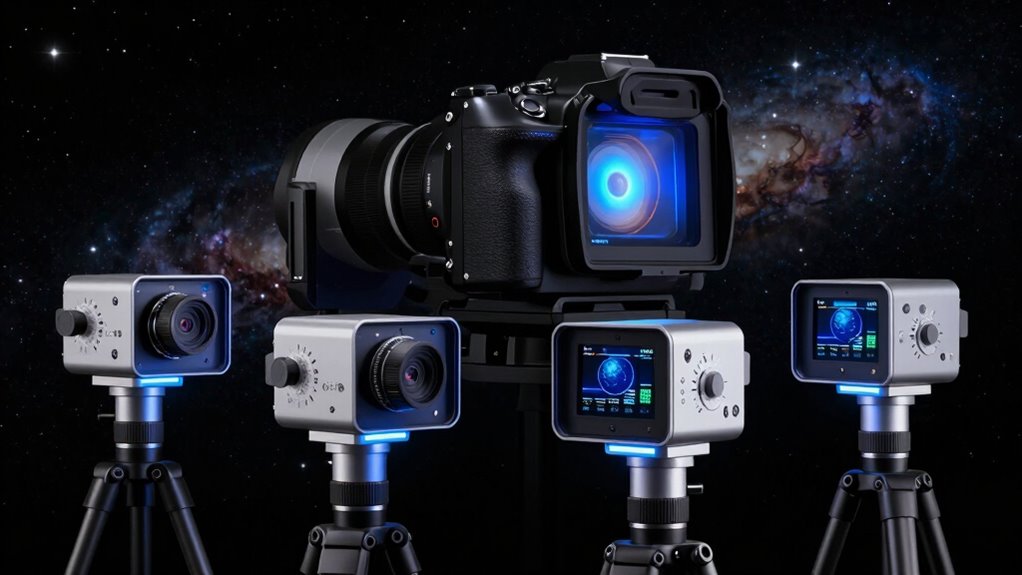
Choosing the right electronic autofocuser for astrophotography depends heavily on your skill level, equipment compatibility, and specific imaging goals. Among the top options, the ZWO EAFN Electronic Automatic Focuser stands out for its high-precision focusing and heavy load support, making it ideal for dedicated astrophotographers. Meanwhile, the ZWO Seestar S30 Pro offers an excellent balance of ease of use and advanced features for beginners and urban astronomers. For those seeking portability and versatility, the DWARFLAB Dwarf 3 combines smart auto-tracking with dual lenses for both day and night imaging. This guide compares these options and more, highlighting their strengths and tradeoffs to help you make an informed choice.

Prime made for students and young adults
- Fast, free delivery for dorm and study essentials
- Prime Video and Amazon Music included
- Member-only deals
Key Takeaways
- High-precision focusers like the ZWO EAFN are best for dedicated astrophotographers using heavy setups.
- Compact, app-controlled telescopes like the Dwarf 3 excel for portable, all-in-one imaging solutions.
- Dual-screen and AI-enhanced models simplify real-time viewing and urban astrophotography for beginners.
- Tradeoffs often involve complexity, size, and compatibility—consider your setup and skill level carefully.
- Budget options tend to sacrifice some automation features, so weigh convenience against cost.
| ZWO EAFN Electronic Automatic Focuser, USB-C, 11 lbs Load Capacity |  | Best for Precision and Heavy Equipment | Load Capacity: 11 lbs | Connectivity: USB-C | Compatibility: ASIAIR, ASCOM, INDI | VIEW ON AMAZON | See Our Full Breakdown |
| Smart Telescope with 4K Astrophotography Camera and Dual Screens |  | Best for Beginners and Urban Use | Focal Length: 300mm | Aperture: 78mm | Magnification: up to 350X | VIEW ON AMAZON | See Our Full Breakdown |
| DWARFLAB Dwarf 3 Smart Telescope, App-Controlled Astrophotography Camera |  | Best for Portability and Versatility | Weight: 3 lbs / 1.35 kg | Lens System: Dual lens (telephoto and wide-angle) | Auto-Tracking: Yes | VIEW ON AMAZON | See Our Full Breakdown |
| ZWO Seestar S30 Pro Smart Telescope, App-Controlled Astrophotography |  | Best for Beginners and Urban Environments | Weight: 3.64 lbs | Imaging: Dual-camera 4K | Features: Automatic GOTO, AI Smart Imaging | VIEW ON AMAZON | See Our Full Breakdown |
| electronic autofocusers for astrophotography | Connectivity | Weight |
|---|---|---|
| ZWO EAFN Electronic Automatic | USB-C | — |
| Smart Telescope with 4K Astrop | — | — |
| DWARFLAB Dwarf 3 Smart Telesco | USB-C | 3 lbs / 1.35 kg |
| ZWO Seestar S30 Pro Smart Tele | App-controlled | 3.64 lbs |
More Details on Our Top Picks
ZWO EAFN Electronic Automatic Focuser, USB-C, 11 lbs Load Capacity
The ZWO EAFN stands out for its high-precision micron-level focusing, supporting equipment up to 11 lbs. Its USB-C connection simplifies power and data transfer, making it a reliable choice for serious astrophotographers. Compared to simpler focusers, the EAFN offers superior accuracy and software compatibility (ASIAIR, ASCOM, INDI), but it may require additional accessories for full functionality. Its robust metal housing ensures durability, though this model is primarily designed for dedicated astrophotography rather than casual or beginner use.
Pros:- Micron-level focusing accuracy for sharp images
- Supports up to 11 lbs of equipment, ideal for complex setups
- USB-C interface for streamlined connectivity
- Compatible with major astronomy software platforms
Cons:- Requires additional accessories for full operation
- Limited standalone usability for casual users
- Primarily designed for focused astrophotography tasks
Best for: Professional astrophotographers or those with heavy optical setups needing precise control.
Not ideal for: Beginners or casual users who want plug-and-play simplicity without additional accessories.
- Load Capacity:11 lbs
- Connectivity:USB-C
- Compatibility:ASIAIR, ASCOM, INDI
- Motor:High-precision stepper
- Housing:Metal
- Additional features:Temperature sensor port, optional hand controller
Our verdict“A top-tier choice for experienced astrophotographers demanding high precision and load capacity.”
Smart Telescope with 4K Astrophotography Camera and Dual Screens
The Smart Telescope with 4K Camera offers an accessible entry point with dual-screen display for real-time viewing and capturing stunning images. Its 350x magnification and 4K imaging support make it suitable for beginners and kids exploring the night sky, especially in urban environments. Unlike dedicated focusers, this telescope emphasizes ease of use with automatic GOTO and app control, though it’s somewhat bulky and limited in tracking capabilities. Its support for large storage (up to 512GB) is a plus for those recording lengthy sessions, but its setup complexity and reliance on external power can be drawbacks for casual outdoor use.
Pros:- Dual-screen display for easy real-time viewing
- High magnification with 4K imaging
- Ideal for educational and beginner use
- Supports large external storage for images and videos
Cons:- Bulky design requiring ample setup space
- Limited detail on motorized tracking features
- External power necessary for prolonged use
Best for: Beginners, kids, and urban astronomers seeking an all-in-one imaging experience.
Not ideal for: Advanced astrophotographers requiring precise focus and heavy equipment support.
- Focal Length:300mm
- Aperture:78mm
- Magnification:up to 350X
- Camera Resolution:4K
- Memory Card Support:up to 512GB
- Included Memory Card:64GB
Our verdict“A user-friendly, versatile option perfect for newcomers and urban settings but less suited for heavy-duty astrophotography.”
DWARFLAB Dwarf 3 Smart Telescope, App-Controlled Astrophotography Camera
The DWARFLAB Dwarf 3 emphasizes portability and ease of use, packing dual lenses for day and night photography into a compact form. Its smart auto-tracking and cloud-powered image processing make it accessible for users of all levels, especially those who want a lightweight solution for outdoor adventures. While it offers impressive 4K clarity and dual imaging modes, it relies on a smartphone app and internet connectivity for full functionality, which could limit its use in remote areas. Its relatively limited battery information also warrants consideration for extended sessions.
Pros:- Lightweight and portable for outdoor use
- Dual lenses for day and night photography
- Smart auto-tracking and cloud image processing
- User-friendly app interface
Cons:- Dependent on internet and app connectivity
- Uncertain battery life for long sessions
- Learning curve for those unfamiliar with smartphone controls
Best for: Outdoor enthusiasts and casual photographers looking for a multi-purpose, portable device.
Not ideal for: Dedicated astrophotographers needing high-precision focus or heavy equipment support.
- Weight:3 lbs / 1.35 kg
- Lens System:Dual lens (telephoto and wide-angle)
- Auto-Tracking:Yes
- Resolution:4K
- Connectivity:USB-C
- App Compatibility:Yes
Our verdict“A flexible, portable option suited for casual and outdoor imaging, but less precise for professional astrophotography.”
ZWO Seestar S30 Pro Smart Telescope, App-Controlled Astrophotography
The ZWO Seestar S30 Pro simplifies celestial imaging with automatic GOTO, AI-enhanced photo quality, and app control. Its dual-camera 4K system provides sharp images, making it ideal for urban astrophotographers or those new to the hobby. Compared to traditional focusers, it offers a more integrated experience, but its deep-sky imaging is somewhat limited when stationary, and reliance on a smartphone app may introduce a learning curve for some users. Nonetheless, its portability and user-friendly features make it a strong choice for entry-level and casual astrophotographers.
Pros:- Automatic GOTO and AI-assisted imaging
- Compact and lightweight for portability
- Excellent for urban environments with light pollution filters
- Easy app control for seamless operation
Cons:- Limited deep-sky imaging capabilities when stationary
- Dependent on smartphone app and internet
- Potential learning curve for advanced features
Best for: Beginners, urban dwellers, and those seeking an all-in-one, easy-to-operate system.
Not ideal for: Users wanting detailed control over focus and heavy equipment compatibility.
- Weight:3.64 lbs
- Imaging:Dual-camera 4K
- Features:Automatic GOTO, AI Smart Imaging
- Connectivity:App-controlled
- Light Pollution Filters:Yes
Our verdict“A straightforward, accessible telescope that balances ease of use with decent imaging, best suited for beginners and city astronomers.”

How We Picked
Our selection process focused on the core needs of astrophotography autofocusers: precision, compatibility, ease of use, and versatility. We prioritized products with proven integration into popular astronomy software, robust build quality, and features that address common astrophotography challenges such as heavy load support and accurate, repeatable focus. We also considered user reviews and expert insights, ensuring each model offers a distinct role—from professional-grade equipment to beginner-friendly options—so that every type of user finds a suitable fit.
| electronic autofocusers for astrophotography | Connectivity |
|---|---|
| ZWO EAFN Electronic Automatic | USB-C |
| Smart Telescope with 4K Astrop | — |
| DWARFLAB Dwarf 3 Smart Telesco | USB-C |
| ZWO Seestar S30 Pro Smart Tele | App-controlled |
Factors to Consider When Choosing Electronic Autofocusers For Astrophotography
When selecting an electronic autofocuser for astrophotography, consider how your specific needs align with features like precision, load capacity, portability, and software compatibility. Beginners benefit from models with automation and easy controls, while advanced users prioritize accuracy and heavy equipment support. Compatibility with your existing setup and software ecosystem also plays a key role. Understanding the tradeoffs between complexity, size, and automation helps ensure you choose an autofocuser that enhances your imaging workflow without adding unnecessary complications.
Precision and Load Capacity
For astrophotography, the ability to achieve pinpoint focus consistently is critical. High-precision focusers like the ZWO EAFN excel here, supporting micron-level accuracy. If you use heavy optical setups, load capacity becomes equally important, as underpowered focusers can struggle or introduce vibrations. Balance your need for precision with the weight of your gear to avoid performance issues.
Ease of Use and Automation
Beginners or urban astrophotographers often prefer autofocusers with built-in automation, app control, and straightforward interfaces. These features reduce setup time and minimize user error. Conversely, more experienced users might favor manual control options or software integrations that allow fine-tuning and scripting for complex imaging sequences.
Portability and Compatibility
If you prioritize portability, lightweight and compact autofocusers or integrated telescopes like the Dwarf 3 are preferable. Compatibility with your existing equipment and software ecosystem ensures seamless operation, especially when integrating into complex setups or automation workflows. Always check maximum load ratings and connection interfaces before purchasing.
Frequently Asked Questions
What is an electronic autofocuser for astrophotography?
An electronic autofocuser is a device that automatically adjusts the focus of your telescope or camera to achieve sharp, pinpoint images of celestial objects. It typically connects to your camera or telescope via a USB or other interface and can be controlled through dedicated software or apps. This automation reduces the need for manual focusing, especially during long imaging sessions where small adjustments are necessary.
How does a high-precision focuser improve astrophotography?
A high-precision focuser provides micron-level adjustment granularity, which is vital for capturing detailed astrophotos without blurring caused by slight focus shifts. It ensures that images are sharp from edge to edge and reduces frustration during extended exposures. Such focusers are especially beneficial when working with heavy or high-magnification setups where manual focus becomes difficult to maintain accurately.
Are app-controlled telescopes suitable for beginners?
Yes, app-controlled telescopes are generally well-suited for beginners because they simplify operation through automatic tracking, GOTO features, and intuitive interfaces. They often include guided controls and real-time feedback, making it easier to learn the basics of astrophotography without needing to master complex hardware adjustments immediately. However, some learning curve may remain with app navigation and setup procedures.
Can I use these autofocusers with my existing telescope?
Most autofocusers are compatible with standard telescope mounts and cameras, but it’s essential to verify the load capacity, connection interfaces, and software compatibility. Focusers like the ZWO EAFN are designed to integrate smoothly with many popular systems, while portable options like the Dwarf 3 are more self-contained. Always check specifications and compatibility guides before purchasing to avoid integration issues.
What tradeoffs should I consider when choosing an autofocuser?
Tradeoffs often involve balancing precision, complexity, and portability. High-precision focusers support heavy gear but may require more setup and compatibility considerations. Simpler, app-controlled telescopes are easier to operate but may lack the fine-tuning needed for professional results. Budget options may sacrifice automation features, so consider whether ease of use or technical control aligns better with your goals.
Conclusion
For dedicated astrophotographers with complex, heavy setups, the ZWO EAFN offers unmatched precision and load support, justifying its higher price. Beginners or urban astronomers seeking ease of use will find the ZWO Seestar S30 Pro or DWARFLAB Dwarf 3 more suitable, with their automation and portability features. Casual users and those exploring astrophotography as a hobby should prioritize models that balance simplicity with effective results, while advanced users should look for options that integrate seamlessly into demanding workflows. By matching your experience level and specific needs with these characteristics, you’ll make a more confident, rewarding investment.